Senate Republicans Block Biden's Supreme Court Pick
Confirmation vote fails along party lines in divided chamber
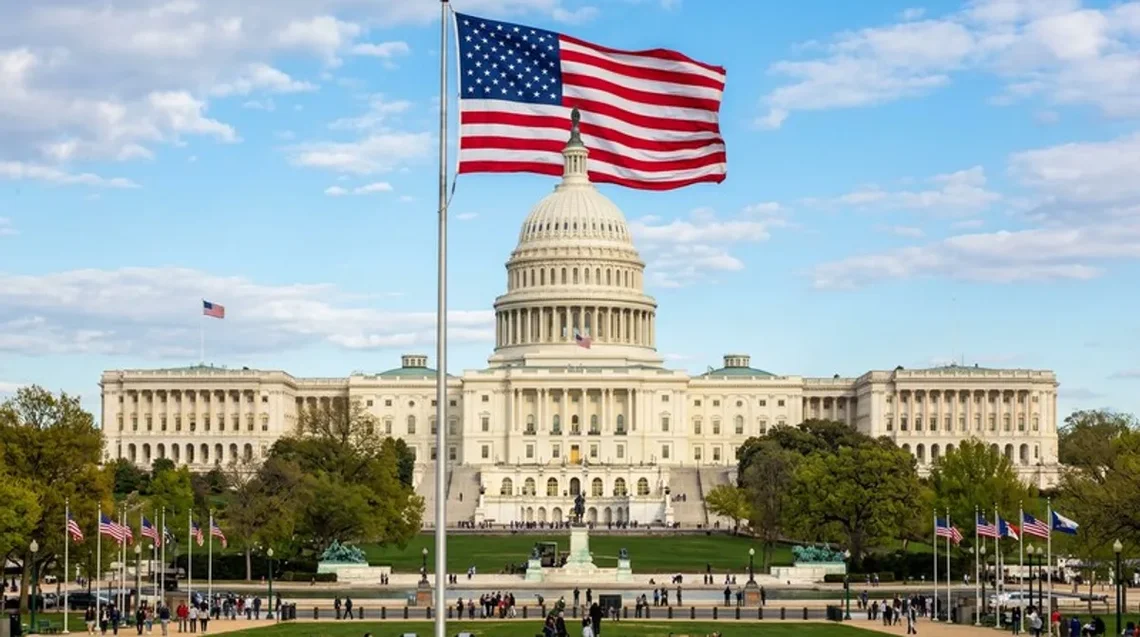
Senate Republicans have voted to block President Joe Biden's nominee to the Supreme Court, defeating the confirmation in a strictly party-line vote that underscores the deepening partisan divide gripping Capitol Hill. The failed vote marks a significant setback for the White House and reignites a fierce national debate over the future composition of the nation's highest court.
Key Positions: Republicans argue the nomination represents an ideological overreach and have vowed to prevent any further leftward shift on the Supreme Court bench, citing concerns over judicial philosophy and the pace of confirmation hearings. Democrats contend the obstruction is an unprecedented abuse of Senate procedure designed solely to deny the President his constitutional authority to appoint justices. White House officials have condemned the vote as "an affront to democratic norms" and indicated the administration is reviewing all available options, including the possibility of renominating the same candidate in the next legislative session, according to senior administration officials.
The Vote and Its Immediate Fallout
The confirmation vote concluded in a near-perfect partisan split, with every Republican senator voting against advancing the nomination and virtually every Democrat voting in favour. No crossover votes were recorded on the Republican side, and Senate Majority Leader Chuck Schumer took to the chamber floor immediately following the result to denounce what he described as a "nakedly political act of obstruction."
The nominee, widely regarded by legal scholars as a qualified candidate with extensive federal judiciary experience, failed to secure the 51 votes needed for confirmation under current Senate rules. The final tally reflected the razor-thin partisan margins that have defined legislative battles in Washington throughout the current Congress, according to Senate records.
Related Articles
| Vote Category | Result | Notes |
|---|---|---|
| Final Confirmation Vote – Yes | 48 | All Democratic caucus members |
| Final Confirmation Vote – No | 51 | All Republican senators |
| Public approval of Senate confirmation process | 34% | Source: Gallup |
| Americans who say Supreme Court is "too political" | 61% | Source: Pew Research |
| Senate cloture votes invoked this Congress | 47 | Source: Congressional Record |
Republican Senators Cite Judicial Philosophy Concerns
Senior Republican senators issued statements following the vote arguing that the nominee's record on the federal bench demonstrated a pattern of judicial activism inconsistent with what they describe as strict constitutional interpretation. Senate Minority — now at times majority — leaders have consistently framed their opposition not as obstruction but as a legitimate exercise of the Senate's advise-and-consent authority, officials said.
Republican leadership further pointed to the ideological balance of the current court and argued that the confirmation would fundamentally alter legal precedents on issues ranging from executive power to regulatory authority, according to statements released by multiple Republican Senate offices.
White House Response and Political Calculus
The Biden administration responded swiftly and forcefully. White House press secretary officials characterised the vote as a continuation of a pattern of Republican obstruction that has repeatedly stalled the President's legislative and judicial agenda. The administration is understood to be assessing whether to renominate the candidate or put forward an alternative name, according to people familiar with the internal deliberations.
This episode fits a broader pattern of institutional confrontation that has defined the relationship between the White House and Senate Republicans. Democrats have pointed to similar blockades on fiscal legislation, including disputes covered in reporting on how Senate Republicans blocked Biden's budget plan, as evidence of a coordinated strategy of legislative paralysis.
Presidential Authority Under Scrutiny
Constitutional scholars and former White House counsel officials told reporters that the failed vote raises broader questions about the limits of presidential power in a closely divided Congress. The Constitution grants the President the power to nominate justices, but the Senate retains full authority to confirm or reject, a balance that critics on both sides argue has become increasingly weaponised along partisan lines.
Legal analysts noted that the procedural landscape has shifted dramatically in recent years following the elimination of the judicial filibuster for Supreme Court nominations, meaning a simple majority is now sufficient — or in this case, a simple majority in opposition is enough to block confirmation outright (Source: Congressional Research Service).
The Broader Pattern of Senate Obstruction
Political analysts note that this Supreme Court defeat is far from an isolated incident. The Biden administration has faced a persistent wall of Republican opposition on judicial nominations, Cabinet appointments, immigration policy, and fiscal legislation. Observers following Capitol Hill have documented a consistent Republican strategy of deploying procedural tools to delay or defeat the President's agenda across virtually every policy domain.
For context, Senate Republicans have also moved to obstruct key White House personnel in other areas of government. Reporting on how Senate Republicans blocked Biden's latest Cabinet pick highlights a parallel strategy applied to executive branch appointments, further constraining the administration's ability to staff key agencies and implement policy priorities.
Polling Shows Public Frustration With Senate Dysfunction
Public opinion data paint a stark picture of voter dissatisfaction with the Senate's handling of confirmation proceedings. According to Gallup polling, only 34 percent of Americans currently approve of the way the Senate conducts judicial confirmation hearings, a historic low that reflects widespread frustration with partisan gridlock. Separate Pew Research data indicate that 61 percent of Americans believe the Supreme Court has become "too political," a sentiment that transcends party affiliation and reflects deep public concern about the integrity of the institution (Source: Pew Research).
The confirmation battle is also likely to energise the Democratic base heading into the next electoral cycle, with party officials already signalling that Republican obstruction of judicial nominees will feature prominently in their campaign messaging, according to Democratic strategists speaking on background.
Implications for the Supreme Court's Future Composition
The failed confirmation leaves the Supreme Court's current composition unchanged, a fact that Republicans privately celebrate and Democrats publicly condemn. The ideological balance of the court has been a defining issue in American politics for decades, and the defeat of this nominee ensures that the existing makeup will persist for the foreseeable future.
Legal experts told reporters affiliated with AP and Reuters that the vacancy — or the absence of a new appointment — will have tangible consequences for cases currently on the court's docket, including matters related to administrative law, environmental regulation, and civil rights protections. The precise downstream legal impact will depend on how existing justices approach pending cases, analysts said.
Senate Rules and the Nuclear Option Debate
The failed vote has renewed calls from some progressive Democrats to explore further modifications to Senate rules, including eliminating remaining procedural hurdles that can slow or complicate the confirmation process. However, moderate Democrats have consistently resisted such changes, arguing that the long-term institutional integrity of the Senate outweighs short-term political gains.
Senate historians and procedural experts noted that the chamber has already undergone significant rule changes in recent years regarding judicial confirmations, and further modifications would require buy-in from a caucus that remains internally divided on the question of Senate reform (Source: Congressional Research Service).
Fiscal and Immigration Battles as Context
The Supreme Court blockade does not exist in a vacuum. Republicans have pursued a similar strategy of procedural opposition across multiple high-stakes policy fronts during the current Congress. On the budgetary front, earlier reporting on how Senate Republicans blocked Biden's budget deal illustrates the extent to which fiscal confrontations have mirrored the judicial standoff in tone and tactics.
Immigration has been another major flashpoint. A separate legislative dispute has seen Republicans deploy analogous blocking tactics in a controversy detailed in coverage of how Senate Republicans blocked Biden's immigration bill, a fight that similarly ended without resolution and left a significant policy gap in its wake.
Analysts at the Brookings Institution and Congressional Budget Office have separately noted that protracted legislative and confirmation battles carry real institutional costs, including delayed judicial proceedings in lower federal courts that rely on Supreme Court guidance, and broader erosion of public confidence in governmental function (Source: Congressional Budget Office).
What Comes Next
With the confirmation vote now formally concluded, the White House faces a choice: renominate the same candidate, put forward a new name, or wait for a more favourable political environment. Senior Democratic officials indicated to reporters from AP that a decision is expected within weeks, though no formal timeline has been announced.
Republican senators, for their part, have shown no indication of softening their opposition to any nominee they regard as ideologically unsuitable. Senate Republican leadership issued a statement following the vote reaffirming their commitment to what they described as "protecting the independence and integrity of the judiciary," officials said.
For voting Americans, the episode crystallises a broader question about whether Washington's institutions remain capable of functioning under conditions of acute partisan polarisation. As both parties position themselves for the next electoral contest, the battle over the Supreme Court — its composition, its legitimacy, and the process by which its members are chosen — looks set to remain one of the defining fault lines of American political life. The defeated nomination may be the end of one confirmation fight, but by all available evidence, it is far from the last.