Senate Republicans Block Democratic Budget Deal
Fiscal negotiations stall as November midterms loom
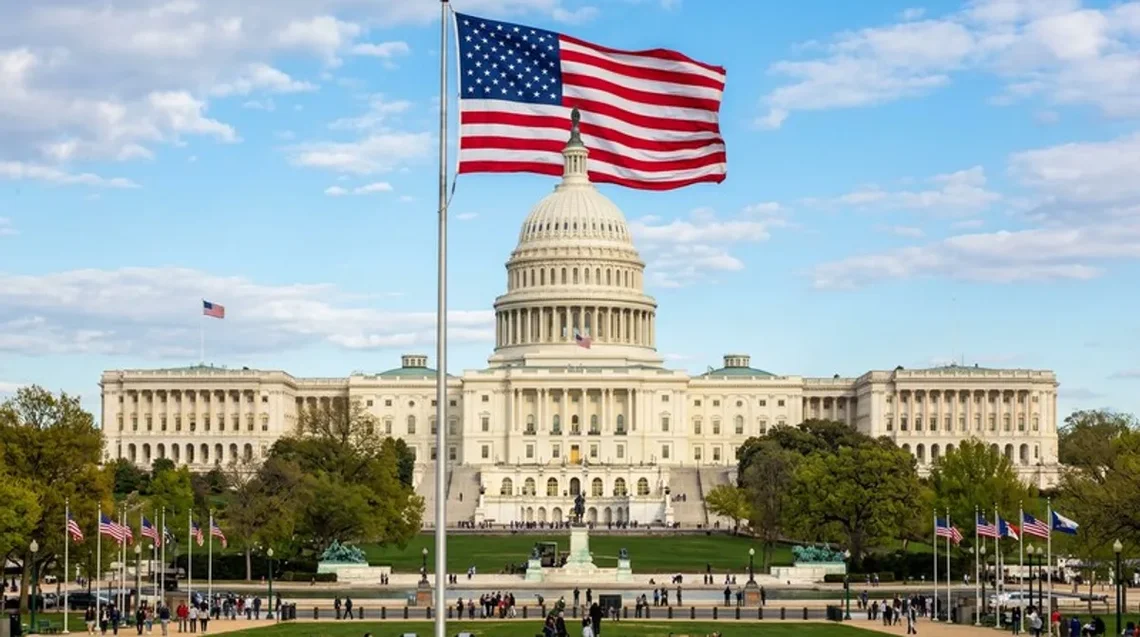
Senate Republicans used procedural manoeuvres to block a Democratic budget resolution from advancing to a full floor vote, deepening a fiscal impasse that threatens government funding and renewing partisan hostilities on Capitol Hill as the November midterm elections draw closer. The move, which fell largely along party lines, underscored the increasingly difficult path toward any bipartisan spending agreement in a deeply divided Congress.
Key Positions: Republicans argue the Democratic budget proposal authorises excessive discretionary spending and fails to address long-term deficit reduction, insisting any deal must include meaningful cuts to non-defence programmes. Democrats contend the budget framework is a responsible investment in social infrastructure, healthcare, and clean energy, and accuse Republicans of manufacturing a crisis for electoral purposes. White House officials have expressed frustration with the blockade, urging Senate leadership to negotiate in good faith and warning that a prolonged stalemate risks a government shutdown and economic uncertainty heading into the final quarter of the fiscal year.
The Senate Vote and Its Immediate Fallout
The procedural vote failed to clear the 60-vote threshold required to advance under Senate rules, with the final tally falling short after all present Republican senators voted in opposition, according to official Senate records. A small number of moderate Democrats had privately signalled reservations about the package's overall price tag, but ultimately voted in favour of moving the legislation forward, officials said.
Breakdown of the Vote
| Party | Votes in Favour | Votes Against | Not Voting / Absent |
|---|---|---|---|
| Democrats (incl. Independents caucusing with Democrats) | 48 | 0 | 3 |
| Republicans | 0 | 49 | 1 |
| Total | 48 | 49 | 4 |
The vote tally reflects a chamber locked in near-total partisan alignment on fiscal matters, a pattern consistent with previous budget confrontations. For additional context on the ongoing pattern of legislative obstruction, see reporting on how Senate Republicans Block Spending Bill in Budget Standoff, which outlines earlier episodes in the current cycle of fiscal brinkmanship.
Related Articles
What Was in the Democratic Budget Proposal
The Democratic budget resolution called for increased federal investment across several major policy areas, including expanded Medicaid provisions, climate and clean energy initiatives, and new funding streams for public housing and childcare infrastructure. According to analysis from the Congressional Budget Office, the proposal as written would have added to the near-term deficit while projecting savings over a longer budget window through revised corporate tax provisions and adjustments to prescription drug pricing mechanisms (Source: Congressional Budget Office).
Spending Priorities and Deficit Projections
| Policy Area | Proposed Spending Allocation | Projected 10-Year Impact |
|---|---|---|
| Climate and Clean Energy | $369 billion | Deficit reduction via tax credits offset |
| Healthcare and Medicaid | $200 billion | Increased near-term outlay |
| Housing and Childcare | $150 billion | Neutral to slight deficit increase |
| Corporate Tax Revenue (offset) | +$300 billion (revenue) | Partial deficit reduction |
Republican critics disputed those projections, arguing the CBO's scoring relied on optimistic revenue assumptions that were unlikely to materialise in practice. Senate Minority leaders reiterated their position that any new spending must be offset dollar-for-dollar, officials said.
Republican Strategy and the Midterm Calculus
For Republican leadership, blocking the Democratic budget serves a dual purpose: it denies the White House a legislative victory in the months immediately preceding the midterms, and it allows the party to campaign on a platform of fiscal restraint and opposition to what it characterises as reckless government expansion. Party strategists have consistently pointed to inflation and the cost of living as among the most potent electoral messages available to Republican candidates, according to party communications reviewed by reporters covering the campaign trail.
Public Opinion on Federal Spending
Polling data suggests the Republican calculus has some grounding in public sentiment, though the picture is more nuanced than either party's messaging implies. A Gallup survey found that a majority of Americans express concern about federal deficit levels, yet the same data indicated strong public support for government investment in healthcare and infrastructure when those items are polled individually (Source: Gallup). A separate Pew Research Center analysis found that partisan identity remains the single strongest predictor of how Americans evaluate the federal budget, with bipartisan agreement on fiscal priorities virtually absent at the national level (Source: Pew Research Center).
Republican senators facing competitive re-election contests in swing states have largely aligned with party leadership on the vote, calculating that opposing new spending programmes carries less electoral risk than breaking with the caucus. Independent analysts noted, however, that the strategy also exposes the party to criticism for legislative inaction should a government shutdown materialise.
Democratic Response and Path Forward
Senior Democratic officials expressed sharp criticism of the Republican blockade, framing the procedural vote as an obstruction of necessary governance rather than principled fiscal opposition. Senate Majority leadership indicated it would explore available procedural options, including whether elements of the budget framework could be advanced through reconciliation — a process that requires only a simple majority — though the precise legislative architecture for such a move remained unclear, officials said.
The Reconciliation Question
The prospect of a reconciliation-based approach has generated significant internal debate within the Democratic caucus, according to reporting by the Associated Press (Source: AP). Several moderate Democratic senators have previously expressed reservations about using the budget reconciliation process to pass large spending packages unilaterally, arguing it deepens partisan divisions without producing durable policy. Progressive members of the caucus, by contrast, have urged leadership to use every available procedural tool to advance the president's domestic agenda before the midterms narrow the legislative window further.
The White House has not publicly committed to a specific procedural pathway, with officials indicating ongoing consultations with Senate leadership on the available options. Reuters reported that senior administration figures have held informal meetings with key moderate Democratic senators in an effort to identify the contours of a revised package that could attract broader support within the caucus (Source: Reuters).
This episode follows a now-established pattern of Republican procedural opposition to Democratic fiscal legislation. Readers can review earlier related reporting on how Senate Republicans Block Democratic Budget Plan in prior legislative sessions, as well as the broader context of Senate Republicans Block Biden Budget Deal, which examines the recurring cycle of budget confrontations between the two chambers.
Broader Legislative Gridlock and Immigration Parallels
The budget standoff does not exist in isolation. It mirrors a broader pattern of legislative paralysis on Capitol Hill that has affected multiple major policy areas this congressional session. The dynamics at play in the budget fight — procedural votes, cloture failures, and a 60-vote filibuster threshold that effectively requires bipartisan cooperation — are the same mechanisms that have stalled action on immigration reform, gun legislation, and electoral security measures.
The Filibuster as a Governing Obstacle
Critics of the Senate's procedural rules have renewed calls to reform or abolish the legislative filibuster in response to the latest blockade, arguing that the 60-vote threshold renders meaningful governance impossible in a polarised chamber. Defenders of the rule contend it serves as a necessary check on simple-majority overreach and forces negotiation between the parties, though recent sessions have produced little evidence of such negotiation yielding results on major fiscal legislation.
The pattern of obstruction extends to other policy domains. The failure of bipartisan talks on border and migration policy earlier this session offers a direct parallel; reporting on how Senate Republicans block Democratic immigration bill illustrates the consistency with which procedural tools have been deployed to prevent Democratic legislative priorities from advancing to a final vote.
Government Shutdown Risk and Economic Implications
With the current fiscal year's funding deadline approaching and no budget resolution in place, the risk of a partial or full government shutdown has moved from theoretical to operationally significant. Federal agency heads have been directed to begin preliminary contingency planning, officials familiar with the matter said. A shutdown would trigger automatic furloughs of non-essential federal workers, suspend a range of government services, and introduce uncertainty into financial markets already navigating elevated interest rates and inflationary pressures.
Economic Indicators and Market Sensitivity
| Indicator | Current Status | Shutdown Impact (Estimated) |
|---|---|---|
| Federal Workforce Affected | ~800,000 non-essential employees | Furlough or delayed pay |
| GDP Impact (per week of shutdown) | Baseline growth trajectory | Approx. -0.1% to -0.2% weekly drag |
| Credit Rating Sensitivity | Stable outlook | Potential negative watch flag |
| Consumer Confidence Index | Below pre-pandemic average | Further downward pressure expected |
The Congressional Budget Office has previously estimated that extended government shutdowns carry measurable economic costs that are not fully recovered once operations resume, given the disruption to federal contracting, grant disbursements, and regulatory functions (Source: Congressional Budget Office). Those findings have added urgency to calls for a negotiated resolution, though as of the most recent reporting, no formal bipartisan talks have resumed.
For further background on the legislative confrontations that have defined this Congress on spending matters, see the related coverage of Senate Republicans Block Biden Budget Plan, which details the earlier iterations of this fiscal conflict and the political dynamics that have prevented resolution.
With the midterm election calendar tightening the window for legislative action, the Senate's failure to advance a budget resolution this week leaves both parties entrenched in positions they show little appetite to abandon. Unless a negotiated compromise emerges from informal talks or Democratic leadership identifies a viable reconciliation pathway, the prospects for a concluded budget agreement before the election recess remain, by most assessments on Capitol Hill, remote.