Senate Republicans Block Spending Bill Ahead of Recess
Budget negotiations stall as fiscal deadline approaches
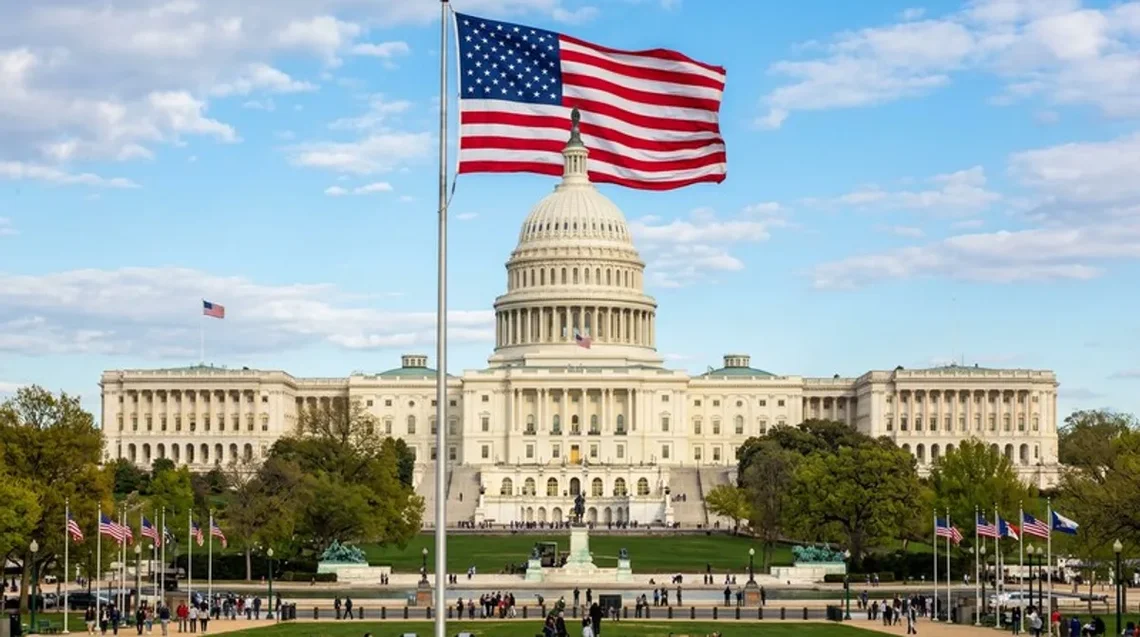
Senate Republicans blocked a sweeping government spending bill on Wednesday, voting along party lines to prevent the legislation from advancing to a full floor debate, as a critical fiscal deadline draws closer and bipartisan negotiations show few signs of progress. The procedural defeat leaves federal agencies facing renewed uncertainty over funding levels and raises fresh questions about Congress's ability to avert a government shutdown before the end of the current fiscal cycle.
Key Positions: Republicans argue the spending bill contains excessive domestic discretionary increases and fails to address what they describe as unsustainable deficit trajectories, demanding deeper cuts before any agreement can proceed. Democrats contend the bill reflects reasonable compromises already negotiated in committee and warn that Republican obstruction risks disrupting essential federal services and harming millions of Americans who depend on federal programs. White House officials have called on Senate leadership to return to negotiations immediately, indicating the President remains willing to discuss targeted adjustments but will not accept what press secretary communications describe as politically motivated austerity measures.
The Senate Vote: What Happened and Why It Matters
The spending measure failed to clear the 60-vote threshold required to overcome a filibuster and proceed to a full Senate debate, falling short by a margin that underscored the deep partisan divisions over fiscal priorities. The vote came less than 48 hours before the upper chamber was scheduled to begin a scheduled recess, a timing that critics said reflected a deliberate strategic choice by Republican leadership to run out the clock on negotiations, according to Democratic aides familiar with discussions on the floor.
The Procedural Mechanics of the Block
Under Senate rules, a cloture motion — the procedural vehicle used to end debate and advance legislation — requires the support of at least 60 senators. With Republicans holding a narrow majority, Democrats needed to peel off a significant number of Republican votes to move the bill forward. None crossed the aisle, according to vote tallies reviewed by ZenNews UK. Senate Majority Leader and Republican leadership declined immediate comment following the vote, officials said, though a prepared statement indicated the caucus remained committed to "responsible stewardship of taxpayer funds."
Related Articles
Recess Timing Draws Democratic Criticism
Democratic leadership was swift to condemn the decision to allow senators to leave Washington without resolving the budget impasse. Senate Minority Leader representatives accused Republican leadership of prioritising a political retreat over the financial stability of the federal government, according to statements circulated by Democratic communications staff. The recess is scheduled to last approximately one week, a period that budget analysts note could meaningfully compress the remaining window for legislative action before funding authorities expire.
| Metric | Figure | Source |
|---|---|---|
| Cloture vote result (Yes/No) | 47 – 53 | Senate floor records |
| Votes needed to advance | 60 | Senate procedural rules |
| Projected federal deficit (current fiscal year) | $1.9 trillion | Congressional Budget Office |
| Discretionary spending increase proposed | Approx. 6% above current levels | Congressional Budget Office |
| Public approval of Congress (overall) | 17% | Gallup |
| Share of Americans who say reducing deficit is a top priority | 57% | Pew Research |
| Days remaining until current continuing resolution expires | Approximately 21 | AP reporting |
Republican Arguments: Spending Discipline and Deficit Concerns
Republican senators who spoke ahead of the vote characterised the blocked legislation as fiscally irresponsible at a moment when the national debt and annual deficit projections are at levels that demand legislative restraint rather than expansion. Several members of the caucus pointed directly to Congressional Budget Office projections showing the federal deficit remaining well above historical norms as justification for their opposition, officials said.
The Deficit as a Political Rallying Point
The Congressional Budget Office has assessed that mandatory spending growth, driven primarily by entitlement programmes and interest payments on the national debt, will continue to crowd out discretionary investment in coming years absent significant legislative intervention (Source: Congressional Budget Office). Republican senators have sought to use these projections to build public pressure for steeper cuts to non-defence discretionary spending, areas that include housing assistance, environmental programmes, and portions of the social safety net that Democrats have resisted reducing.
Polling data from Pew Research indicates that a majority of Americans — 57 percent — identify reducing the federal deficit as a top national priority, a figure that Republican strategists have cited publicly when defending the caucus position on spending negotiations (Source: Pew Research). However, the same survey data shows that majorities also oppose specific cuts to Medicaid, education funding, and veterans' services, a tension that has complicated the Republican messaging strategy on Capitol Hill.
Democratic Position: Shutdown Risk and Programme Impacts
Democrats framed the Republican procedural block as a reckless political manoeuvre that puts millions of Americans at risk of losing access to federally funded services, from nutrition assistance to scientific research grants. Senate Democratic caucus members argued on the floor that the spending levels in the blocked bill had already been substantially reduced from initial proposals as part of good-faith negotiations, and that further concessions would amount to a capitulation to demands that have no serious policy foundation, according to statements from Democratic offices reviewed by Reuters.
The Human Cost of a Potential Shutdown
Federal workers, contractors, and beneficiaries of federal programmes would face immediate disruption if Congress fails to pass either a full-year spending package or a new continuing resolution before the current funding authority lapses. Budget analysts have estimated that even a brief shutdown lasting one to two weeks generates economic disruption worth several billion dollars in deferred activity and administrative costs, according to AP reporting drawing on previous shutdown analyses. The effects fall disproportionately on lower-income workers and communities with higher concentrations of federal employment, data show.
The spending standoff also has parallels to repeated legislative failures on other high-profile Senate priorities. Earlier this session, immigration reform legislation met a similar fate when the chamber failed to achieve the votes needed to advance a comprehensive border and asylum overhaul. That pattern of partisan blockades has drawn criticism from government efficiency advocates who argue the Senate's procedural rules increasingly prevent the body from functioning as a deliberative legislative institution.
White House Response and the Path Forward
White House officials responded to the Senate vote with a statement calling on both chambers to return to the negotiating table without preconditions, indicating the administration's support for a short-term continuing resolution as a bridging mechanism while broader spending talks continue, officials said. The White House has privately acknowledged that a full-year omnibus agreement before the recess window closes is unlikely, according to two individuals with knowledge of internal discussions, though neither would speak on the record given the sensitivity of ongoing negotiations.
The administration has also pointed to the broader legislative environment as context for the current impasse. The blocking of judicial reform legislation earlier this term demonstrated that Republican leadership is prepared to use procedural tools consistently to prevent Democratic-aligned priorities from advancing, a posture that the White House has argued makes bipartisan governance functionally impossible under current Senate norms.
Continuing Resolution as a Stop-Gap
Congressional aides from both parties have indicated that a short-term continuing resolution — a measure that maintains current spending levels temporarily without resolving underlying disagreements — is the most likely outcome before the current fiscal deadline, according to Reuters. Such an outcome would defer the fundamental budget dispute rather than resolve it, and would represent the latest in a long sequence of fiscal stop-gaps that budget experts have repeatedly criticised as a failure of legislative planning (Source: Congressional Budget Office).
A continuing resolution would keep the government open but would not provide agencies with the planning certainty needed to execute multi-year contracts, hire personnel, or begin new programme initiatives, officials at several federal departments have noted. The practical effect is a form of managed paralysis in which the government technically remains funded but operationally constrained.
The Broader Pattern of Senate Gridlock
Wednesday's vote is the latest in a recurring pattern of Senate procedural deadlock that has defined the current legislative session across multiple policy areas. Immigration legislation has been among the most prominent casualties of the partisan standoff. Efforts to advance border security and asylum reform have collapsed repeatedly in the chamber, with immigration legislation failing in a party-line vote that mirrored almost exactly the dynamics seen in Wednesday's spending bill defeat.
Observers of congressional procedure have noted that the 60-vote cloture threshold, designed originally to protect minority rights and encourage deliberation, has increasingly become a routine tool for wholesale legislative obstruction regardless of the underlying policy merits. Gallup data show that congressional approval ratings have declined to historically low levels — 17 percent — in part as a result of public frustration with legislative dysfunction (Source: Gallup).
Electoral Implications of Budget Battles
The political stakes attached to the spending fight extend beyond the immediate fiscal question. Republican strategists are acutely aware that government shutdowns have historically produced negative public reactions directed at the party perceived as most responsible for the impasse. A recent Gallup survey found that when shutdowns occur, public blame is distributed in ways that correlate strongly with media framing and presidential messaging, making the communications battle as consequential as the legislative one (Source: Gallup).
Senate seats currently held by Republicans in competitive states add another layer of calculation. Members facing re-election in states where federal employment is concentrated have, according to AP reporting, privately expressed concern about being associated with a shutdown that disrupts the livelihoods of constituents. The push-and-pull between caucus discipline and individual political survival has complicated Republican leadership's ability to maintain a unified front in spending negotiations.
Democratic strategists have also sought to tie the spending impasse to earlier Republican procedural blocks in order to construct a broader narrative of legislative obstruction. The repeated use of filibuster procedures to defeat legislation on immigration — including a high-profile instance where Senate Republicans blocked Democratic immigration legislation amid intense public debate — has provided Democrats with a ready template for characterising the current budget blockade as part of a consistent governing philosophy rather than a one-off disagreement over fiscal figures.
What Comes Next: The Clock Is Running
With the Senate departing for recess and approximately three weeks remaining before current funding authority expires, the legislative path forward is narrow. Congressional negotiators from both parties are expected to hold staff-level discussions during the recess period, though the absence of senators from Washington limits the political pressure that often produces last-minute breakthroughs, officials familiar with the process said.
If no agreement is reached upon senators' return, leadership on both sides will face an acute choice between accepting a continuing resolution that satisfies neither party's priorities or allowing the government to enter a shutdown that carries unpredictable political consequences. The Congressional Budget Office has made clear that recurring reliance on continuing resolutions carries its own fiscal costs, including inefficiencies in agency operations and the postponement of programme improvements that accumulate over time (Source: Congressional Budget Office).
Budget analysts and Senate observers who spoke to AP described the current standoff as one of the more consequential fiscal moments of the current session, given the convergence of a tight deadline, a partisan environment with little trust between leadership offices, and a public that polls show is simultaneously concerned about deficit levels and resistant to reductions in specific federal programmes (Source: AP). Whether the recess produces informal progress or simply delays a reckoning remains to be seen, but the arithmetic of the Senate floor has not changed — and without 60 votes, no spending bill goes anywhere.