Senate Stalls on Immigration Bill as Election Looms
Border policy becomes flashpoint in midterm battle
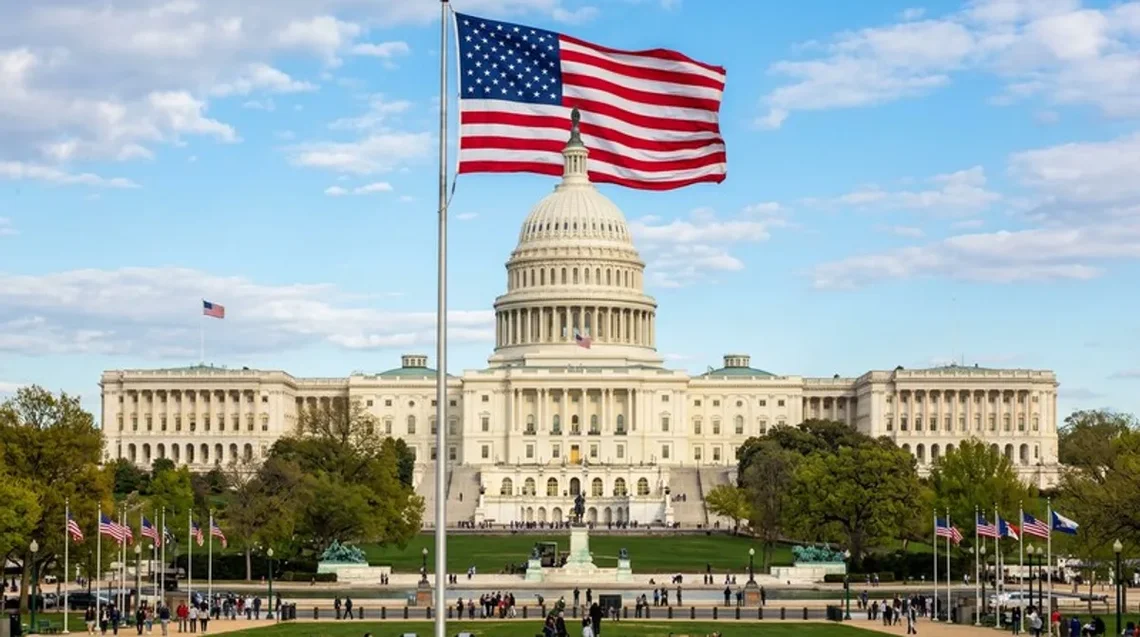
The United States Senate has once again failed to advance a major immigration overhaul bill, with negotiations collapsing along party lines as both chambers brace for what analysts describe as one of the most contentious midterm election cycles in recent memory. Border security and immigration enforcement have emerged as the dominant fault lines in a legislative battle that now threatens to define the composition of the next Congress.
With polling consistently showing immigration among the top three concerns for American voters, neither party has shown willingness to offer the concessions required for a workable bipartisan deal, leaving the legislative calendar in gridlock and millions of people — from undocumented long-term residents to asylum seekers — in a sustained state of legal uncertainty. (Source: Gallup)
Key Positions: Republicans are demanding tighter border enforcement measures, expanded detention capacity, and significant reductions in asylum eligibility before agreeing to any pathway to legal status for existing undocumented residents. Democrats insist on a dual-track approach that pairs border security funding with protections for DACA recipients and a broader regularisation framework. White House officials have publicly backed the Democratic framework while signalling a degree of flexibility on enforcement language, though no formal compromise proposal has been tabled.
A Legislature Divided: The Mechanics of the Stall
The proximate cause of the current impasse is a procedural vote that fell short of the 60-vote threshold required to advance debate in the Senate, a familiar outcome in a chamber where immigration legislation has repeatedly died on the floor. The bill in question — a broad reform package drafted by a bipartisan working group — would have combined substantial investment in border infrastructure with a conditional path to citizenship for certain undocumented individuals who have resided in the country for a defined period.
Related Articles
Cloture Votes and the Filibuster Question
The cloture motion failed, with the final tally reflecting a strict party-line division. Senate Republicans argued the bill's enforcement provisions were inadequate and that any legalisation mechanism would act as a "pull factor," encouraging further unauthorised crossings. This dynamic — in which Senate Republicans block immigration reform citing enforcement concerns — has now repeated itself across multiple legislative sessions, according to congressional records.
On the Democratic side, members of the progressive caucus had their own reservations, with several senators arguing the bill's detention funding provisions were excessive and that the pathway to citizenship was too narrow to address the full scope of the undocumented population. This intra-party tension has similarly created complications in previous sessions, when Senate Democrats blocked a Republican immigration bill that paired enforcement funding with more limited relief measures.
The Role of Senate Leadership
Senate leadership on both sides of the aisle has largely allowed the immigration debate to proceed without strong intervention, a strategic calculation that reflects the political calculus of the approaching election. Majority and minority leadership offices declined to outline specific counterproposals, according to congressional aides familiar with the discussions. Floor scheduling has been used by both parties as a tool to either elevate or suppress immigration votes depending on what best serves their respective electoral narratives at a given moment.
Electoral Stakes: Border Policy on the Campaign Trail
The failure to legislate has not happened in a political vacuum. Campaign operatives on both sides have moved quickly to frame the Senate stall for their respective bases, with immigration now featuring prominently in television advertising, town hall events, and direct mail campaigns across competitive Senate and House districts.
Republican Messaging Strategy
Republican candidates in swing states have leaned heavily on images and statistics related to illegal crossings at the southern border, framing the current administration's posture as dangerously permissive. Internal polling shared with Republican National Committee donors reportedly shows border security outperforms other issues — including inflation — as a top motivator for Republican base turnout. Campaign messaging has also emphasised what operatives describe as Democratic obstruction on enforcement-first proposals, pointing to instances where Senate Republicans blocked an immigration bill in a party-line vote as a counterpoint to Democratic narratives about GOP intransigence.
Democratic Countermessaging
Democratic strategists, meanwhile, have sought to reframe the immigration debate around humanitarian concerns and the economic contributions of immigrant communities, citing Congressional Budget Office analyses suggesting that pathways to legal status for undocumented workers would increase federal tax revenues and reduce pressure on public services over a ten-year window. (Source: Congressional Budget Office) The party has also sought to draw a contrast on the question of DACA — the Deferred Action for Childhood Arrivals programme — highlighting the personal stories of so-called Dreamers who face an unresolved legal status despite having lived in the United States for the majority of their lives.
It is worth noting that this battle has not been entirely one-directional. In a separate legislative episode, when the previous administration was in office, Senate Democrats blocked a Trump-era immigration bill that critics argued would have dramatically curtailed legal immigration levels while doing little to address the existing undocumented population.
| Metric | Figure | Source |
|---|---|---|
| Americans citing immigration as a top national concern | 28% | Gallup |
| Senate cloture vote threshold (required) | 60 votes | U.S. Senate Rules |
| Americans favouring stricter border enforcement | 53% | Pew Research |
| Americans supporting a path to citizenship for undocumented immigrants | 57% | Pew Research |
| Estimated undocumented population in the United States | Approx. 11 million | Pew Research |
| CBO projected 10-year revenue gain from legalisation pathway | Reported as significant positive | Congressional Budget Office |
| Senate seats up for election in current cycle | 34 | U.S. Senate |
White House Position: Advocacy Without Leverage
The administration has been vocal in its support for comprehensive immigration reform but has struggled to translate rhetorical commitment into legislative outcomes. Senior White House officials, speaking on background to reporters, acknowledged that the executive branch has limited tools to compel Senate action and that the path forward depends on members of both parties finding a political incentive to negotiate rather than to stall. (Source: AP)
Executive Action as a Pressure Valve
With legislation stalled, the administration has continued to rely on executive orders and agency-level policy adjustments to manage border conditions and enforcement priorities. Critics on the right argue these measures amount to selective enforcement of existing law, while critics on the left contend they have in some instances adopted the punitive framing of previous administrations. Legal challenges to several executive immigration measures are currently working through the federal court system, adding another layer of uncertainty to an already complicated policy landscape.
The administration has also used bilateral diplomatic engagement with governments in Central America and Mexico to address what officials describe as the "root causes" of migration, directing foreign assistance funding toward economic development and governance programmes in key sending countries. Independent assessments of this strategy's effectiveness remain mixed, with some analysts noting that structural conditions driving emigration are unlikely to shift meaningfully within a single electoral cycle. (Source: Reuters)
Budget Politics Complicate the Picture
The immigration stalemate does not exist in isolation from broader congressional dysfunction. Appropriations battles have further complicated the legislative environment, with border-related funding repeatedly entangled in larger spending negotiations. In a related legislative episode, partisan conflict over federal spending contributed to a separate breakdown, in which Senate Republicans blocked a Democratic budget plan that included supplemental immigration enforcement and processing funds.
The Congressional Budget Office has repeatedly flagged the cost implications of the current situation — in which immigration courts face severe backlogs, detention facilities operate under capacity pressure, and federal agencies lack stable multiyear funding to process asylum claims efficiently. The cost of inaction, CBO analyses suggest, is not zero; it accumulates across multiple federal departments and creates downstream expenditures that dwarf the upfront costs of a legislative resolution. (Source: Congressional Budget Office)
Appropriations as a Bargaining Chip
Members of the Senate Appropriations Committee have at various points attempted to attach immigration policy riders to must-pass spending legislation, a tactic that has historically generated brief windows of negotiating intensity before collapsing under the weight of ideological distance between the parties. Congressional aides on both sides of the aisle told reporters that no such vehicle is currently in active negotiation, though the possibility has not been formally ruled out as the end-of-fiscal-year deadline approaches.
Public Opinion: A More Nuanced Picture Than Either Party Admits
Polling data consistently complicates the clean narratives that both parties prefer to project on immigration. Pew Research Center surveys show majorities of Americans simultaneously supporting stronger border enforcement and a pathway to legal status for long-term undocumented residents — a combination that neither current legislative proposal fully accommodates. (Source: Pew Research)
Gallup's tracking data shows that concern about immigration spikes in response to media coverage of border conditions and political rhetoric, then recedes when other economic or national security issues dominate the news cycle. This volatility makes immigration a double-edged political instrument: potent as a mobilisation tool but unstable as a governing mandate. (Source: Gallup)
Among Latino voters — a demographic both parties have invested significant resources in courting — opinion is similarly fragmented. Pew Research data shows significant variation by national origin, generation, and socioeconomic status in how Latino Americans prioritise and frame immigration as a policy issue, with many ranking healthcare, education, and economic opportunity above immigration when asked to rank their top concerns. (Source: Pew Research)
What Comes Next: An Election Before a Solution
With the legislative calendar now offering little realistic runway before members pivot fully to campaign mode, congressional observers and immigration advocates have largely set aside hopes for a comprehensive deal before the election. The more likely scenario, officials and analysts said, is that the composition of the next Senate will determine whether a genuine negotiation becomes possible — or whether the cycle of procedural failure simply continues into yet another Congress.
For the millions of people whose lives are directly shaped by federal immigration law — those awaiting asylum decisions, those living under temporary protected status, those whose DACA renewals remain contingent on administrative continuity — the stall in Washington represents not an abstract policy failure but a prolonged and material uncertainty. As both parties prepare their closing arguments to voters, the human cost of legislative gridlock remains largely absent from the campaign messaging of either side. What remains is a familiar Washington tableau: a problem too politically useful to solve and too complex to simply ignore, suspended indefinitely between elections while the institution most responsible for resolving it continues to adjourn without a vote.