UK Delays Net Zero Target Review Amid Energy Costs
Government pushes back climate policy deadline as inflation pressures mount
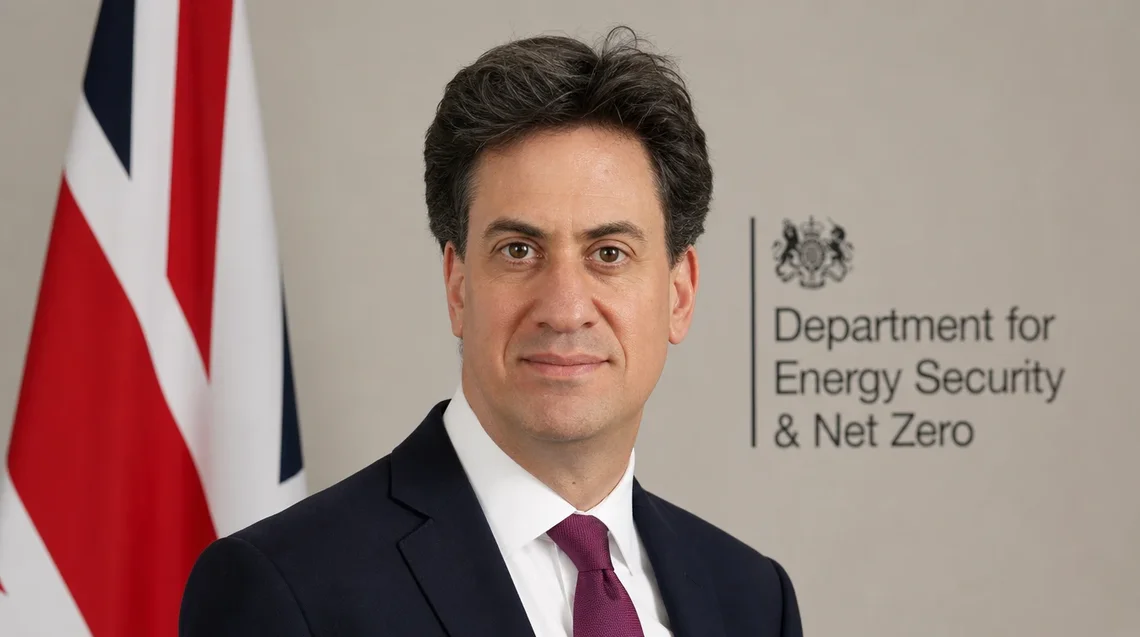
The UK government has postponed a scheduled review of its net zero policy framework, citing mounting pressure on household energy bills and the broader economic strain of post-pandemic inflation, raising fresh questions about Britain's credibility as a global climate leader. The delay, confirmed by officials close to the Department for Energy Security and Net Zero, affects a statutory review process that was intended to assess whether current carbon budgets remain aligned with the government's legal commitment to reach net zero greenhouse gas emissions by 2050.
The decision arrives at a sensitive moment. Britain has already drawn criticism from climate analysts and independent advisers for missing interim emissions milestones, and the postponement adds to a pattern of slippage that analysts say risks undermining investor confidence in clean energy infrastructure. According to Carbon Brief, the UK's progress on decarbonisation has slowed measurably in recent years, with transport and heating sectors proving particularly resistant to policy-driven transformation.
Climate figure: The UK's total greenhouse gas emissions currently stand at approximately 417 million tonnes of CO₂ equivalent per year, according to the latest data from the Department for Energy Security and Net Zero. The legally binding target requires an 81% reduction from 1990 levels by 2035 under the sixth carbon budget, as recommended by the Climate Change Committee. Global average temperatures have already risen by approximately 1.2°C above pre-industrial levels, according to the IPCC Sixth Assessment Report, making near-term policy action increasingly critical to limiting further warming.
Why the Review Was Delayed
Government officials have framed the postponement as a pragmatic response to economic conditions rather than a retreat from climate commitments. Energy prices remain elevated compared to pre-crisis levels, and Treasury analysis is said to have raised concerns that accelerating certain decarbonisation mandates — particularly those affecting home heating and petrol vehicles — could deepen cost pressures on lower-income households, officials said.
Related Articles
The Role of Inflation and Energy Bills
Retail energy prices in the UK have remained structurally higher following the global energy supply disruptions of recent years, driven in part by the UK's continued dependence on wholesale gas markets. The International Energy Agency has repeatedly noted that countries with higher renewable energy penetration tend to be more insulated from such price shocks over time, yet the transition itself carries upfront costs that governments are increasingly reluctant to accelerate during periods of economic stress. (Source: IEA)
The energy price guarantee and subsequent support schemes have cost the public finances tens of billions of pounds, leaving less fiscal headroom for the green investment incentives that climate advisers say are necessary to meet carbon budget targets. Officials said the Treasury's position has hardened around avoiding any further near-term cost pressures on consumers, even where long-term decarbonisation benefits are well established.
Statutory Obligations and Legal Risk
Under the Climate Change Act, the government is legally required to set and review carbon budgets at regular intervals and to publish credible delivery plans. The Climate Change Committee, the independent statutory body advising parliament, has previously warned that the government's existing policy measures are insufficient to meet the fourth and fifth carbon budgets. A delayed review does not remove the legal obligation, but it compresses the timeframe available for corrective action and may increase the risk of judicial review, according to environmental law specialists cited in reporting by the Guardian Environment desk. (Source: Guardian Environment)
International Context and Competitiveness Pressures
Britain's policy hesitation comes against a backdrop of accelerating clean energy investment globally. The United States Inflation Reduction Act has redirected hundreds of billions of dollars toward domestic clean manufacturing, and the European Union's Green Deal Industrial Plan has sought to match that ambition. Both frameworks create competitiveness pressures that analysts say the UK cannot afford to ignore for long without risking the loss of clean technology investment to rival jurisdictions.
Where the UK Stands Relative to Peers
| Country / Bloc | Net Zero Target Year | Current Policy Status | Renewable Share of Electricity (%) |
|---|---|---|---|
| United Kingdom | 2050 | Review delayed; carbon budgets under pressure | ~42% |
| Germany | 2045 | Accelerating offshore wind; coal phaseout ongoing | ~52% |
| France | 2050 | Nuclear expansion; EV transition targets maintained | ~25% (excl. nuclear) |
| Denmark | 2050 | On track; 70% emissions cut target by 2030 | ~60% |
| United States | 2050 | IRA driving rapid clean investment growth | ~22% |
| European Union | 2050 | Fit for 55 package advancing; 55% cut by 2030 | ~45% |
Data compiled from IEA, Carbon Brief, and national government statistical releases. Figures reflect recently available annual estimates. (Source: IEA, Carbon Brief)
The Pattern of Missed Targets
The review delay does not exist in isolation. It is the latest in a sequence of policy setbacks that climate analysts have tracked closely. As reported previously on ZenNewsUK, UK misses interim net zero emissions target, with official data confirming that Britain fell short of a key carbon budget milestone for the first time. That shortfall was followed by further analysis showing that the gap between ambition and delivery had grown substantially, detailed in coverage of how the UK misses net zero interim target by wide margin, according to data published by the Office for National Statistics and the Climate Change Committee.
The cumulative effect of these misses has placed the government in an increasingly difficult position with respect to its 2035 carbon budget obligations. Analysis by the Climate Change Committee and independent researchers cited by Carbon Brief suggests that without a step-change in policy delivery, particularly in buildings, transport, and agriculture, the sixth carbon budget will also be missed. (Source: Carbon Brief)
Sectoral Breakdown of the Shortfall
Transport remains the largest single source of greenhouse gas emissions in the UK, accounting for roughly 26% of the total, with the pace of electric vehicle uptake having slowed relative to earlier projections. The buildings sector, which depends heavily on a transition away from gas boilers toward heat pumps, has seen installation rates well below the levels required by government targets. Industrial decarbonisation, while progressing in some subsectors, faces persistent challenges around hydrogen availability and carbon capture infrastructure timelines, officials said. Research published in Nature Climate Change has highlighted that sectoral delays in high-emitting industries tend to compound over time, making later-period abatement progressively more expensive. (Source: Nature)
Grid Infrastructure and the Transition Challenge
Underlying many of these sectoral challenges is the question of whether Britain's electricity grid can be upgraded quickly enough to support the electrification of heating, transport, and industry simultaneously. ZenNewsUK has previously reported on how the UK delays net zero targets amid grid transition challenges, with network operators warning that connection queues for new renewable generation projects have stretched to a decade in some regions.
At the same time, the government has articulated an ambition to decarbonise the power sector at pace, as covered in reporting on how the UK accelerates net zero grid overhaul amid climate targets, with significant new offshore wind capacity contracted and grid investment commitments made. The tension between these two narratives — acceleration in some areas, delay in others — reflects what analysts describe as a structural inconsistency in climate policy execution. (Source: IEA)
Investment Signals and Market Uncertainty
Policy delays carry a cost that extends beyond emissions accounting. Clean energy investors and infrastructure developers have cited regulatory uncertainty as a material risk factor when making capital allocation decisions in the UK market, according to industry groups cited in reporting by the Guardian Environment. When review timelines shift and policy commitments appear conditional on economic conditions, the cost of capital for clean infrastructure projects tends to rise, partially offsetting the intended benefits of government support schemes. The IEA has noted in successive World Energy Investment reports that stable, long-term policy frameworks are among the most significant determinants of private clean energy investment flows. (Source: IEA)
Political Dimensions and Parliamentary Scrutiny
The delay has drawn criticism from opposition parties and from within the government's own parliamentary benches, with several MPs publicly calling for the review to proceed on its original schedule. The Environmental Audit Committee is understood to be examining the decision, and the Climate Change Committee is expected to comment formally in its next progress report to parliament, officials said.
Proponents of the delay within government have argued that rushing a policy review during a period of acute economic pressure risks producing a document that is politically undeliverable and therefore counterproductive. Critics counter that deferral itself sends a negative signal to markets and to international partners ahead of further UN climate negotiations, and that it raises serious questions about whether the UK's legally binding commitments are backed by genuine policy intent. Coverage of how the UK misses interim net zero target, raises 2035 questions has already explored the downstream implications of persistent policy drift for Britain's mid-decade obligations.
The Climate Change Committee's Position
The Climate Change Committee, which was established under the Climate Change Act as the independent statutory adviser to government and parliament, has consistently maintained that the UK's current policy package is insufficient to meet its own carbon budgets. Its most recent annual progress report described the gap between policy ambition and delivery as "concrete and widening," and it has called for urgent action on heat pump deployment, EV incentives, and planning reform to unlock renewable generation. The committee has not publicly endorsed the review delay and is expected to address the matter directly in forthcoming parliamentary testimony, according to sources familiar with the committee's schedule. (Source: Climate Change Committee)
What Comes Next
Officials have indicated that the review will proceed once the government's broader fiscal position is assessed following the next spending round. That timeline, while not formally confirmed, implies a delay of several months at minimum. Climate policy analysts at Carbon Brief and elsewhere have warned that such a window, while seemingly short, could have material consequences for the pipeline of policy instruments — from boiler upgrade grants to clean heat incentives — that depend on a confirmed long-term framework to attract supply chain investment. (Source: Carbon Brief)
The IPCC has made clear in its Sixth Assessment Report that the window for action consistent with limiting warming to 1.5°C above pre-industrial levels is narrowing sharply, and that near-term policy decisions taken this decade will determine the trajectory of emissions for the remainder of the century. For Britain, a country that has historically positioned itself as a climate leader — hosting COP26 and championing ambitious carbon budgets — the practical question is whether short-term economic caution is recalibrating that leadership role, or merely delaying it. The answer, climate analysts say, will become evident not in the timing of the next policy review, but in the measurable emissions trajectory that follows it.