Ukraine launches major offensive as Russia digs in
Fighting intensifies along eastern front lines
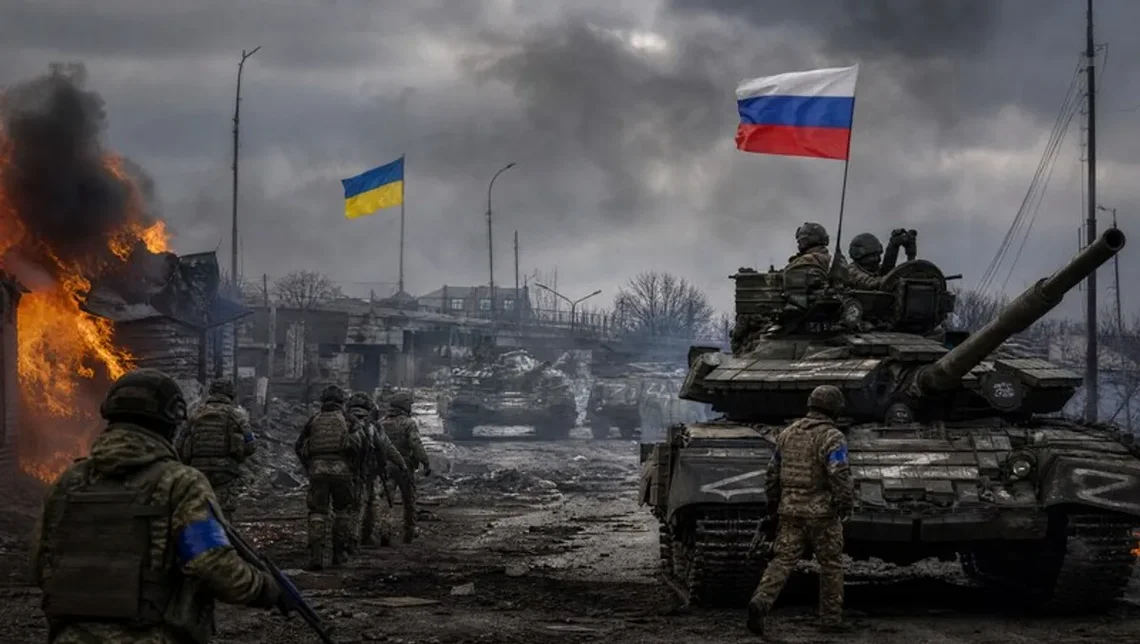
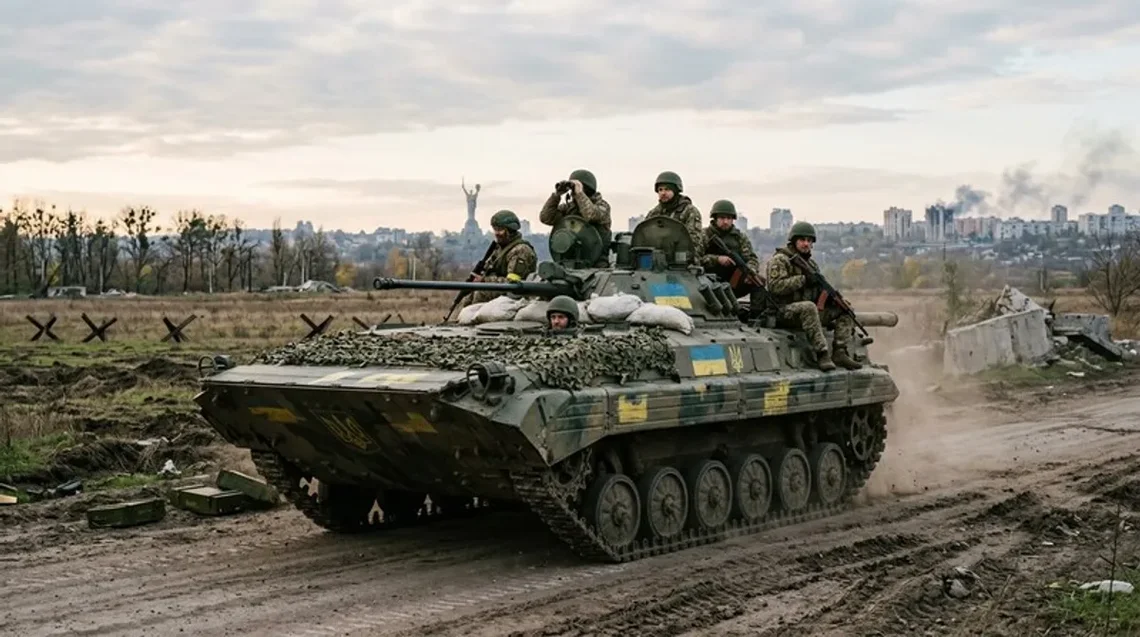
Ukrainian forces have launched a significant offensive push along the eastern front, targeting Russian defensive lines in the Donetsk and Zaporizhzhia regions as Kyiv seeks to exploit what military analysts describe as overstretched Russian supply chains and degraded troop morale. The renewed offensive marks one of the most concerted Ukrainian ground operations in recent months, drawing intense international scrutiny and raising urgent questions about the conflict's trajectory heading into winter.
Key Context: Russia currently occupies approximately 18 percent of Ukrainian territory, including large portions of Donetsk, Luhansk, Zaporizhzhia, and Kherson oblasts. Ukraine's armed forces are estimated at over 700,000 active personnel, supported by Western military aid packages totalling more than $200 billion since the full-scale invasion began. The eastern front stretches roughly 1,000 kilometres, making it one of the longest active conflict lines in Europe since the Second World War. (Source: UN Office for the Coordination of Humanitarian Affairs; Reuters)
The Shape of the Offensive
Ukrainian commanders have confirmed coordinated ground assaults along multiple axes in the eastern theatre, with particular pressure reported near Avdiivka, Pokrovsk, and positions south of Kupiansk. According to Ukrainian military officials, the operation combines armoured infantry advances with sustained drone and artillery campaigns targeting Russian logistics hubs and ammunition depots behind the front lines.
Drone and Electronic Warfare Dimensions
A defining feature of the current push is Ukraine's expanded use of first-person-view drones, long-range strike drones, and electronic warfare systems that have disrupted Russian communications infrastructure. According to AP reporting, Ukrainian forces have deployed domestically produced strike drones capable of reaching targets up to 1,500 kilometres inside Russian-held territory, complicating Moscow's ability to rotate forces and resupply frontline units. Analysts at the Institute for the Study of War noted that Russian defensive preparations, while formidable in places, show signs of thin reserve coverage in certain sectors.
Related Articles
Ground Conditions and Terrain Challenges
Military analysts caution that the seasonal transition presents significant tactical obstacles. The autumn mud season — known historically as rasputitsa — traditionally hampers mechanised movement across the flat, open terrain of eastern Ukraine. Officials said Ukrainian planners have attempted to time certain assault phases around ground hardness, but supply and mobility constraints remain acute, particularly in areas where Russian forces have laid extensive minefields and constructed multi-layered defensive trenches reminiscent of First World War-era fortifications. (Source: Foreign Policy)
Russia's Defensive Posture
Moscow has invested heavily in static defensive infrastructure along the eastern and southern fronts. Satellite imagery analysed by open-source intelligence groups shows extensive dragon's-teeth anti-tank barriers, reinforced trench networks, and pre-positioned artillery systems stretching across dozens of kilometres. Russian military bloggers — whose candid assessments have at times diverged from official Kremlin statements — have acknowledged Ukrainian pressure in several sectors while insisting that reserves are being moved to stabilise threatened positions.
North Korean Troop Involvement
Among the most significant recent developments has been credible reporting, confirmed by South Korean intelligence and later acknowledged by NATO officials, that North Korean troops have been deployed to support Russian operations in the Kursk region. According to Reuters, an estimated 10,000 to 12,000 North Korean soldiers have been positioned in Russian territory, raising the spectre of direct third-party military participation in the conflict. Western governments condemned the deployment as a dangerous escalation, with senior NATO officials warning that it signals deepening military cooperation between Pyongyang and Moscow. Ukrainian officials called the development a direct challenge to international security norms. (Source: Reuters; AP)
International Response and NATO Posture
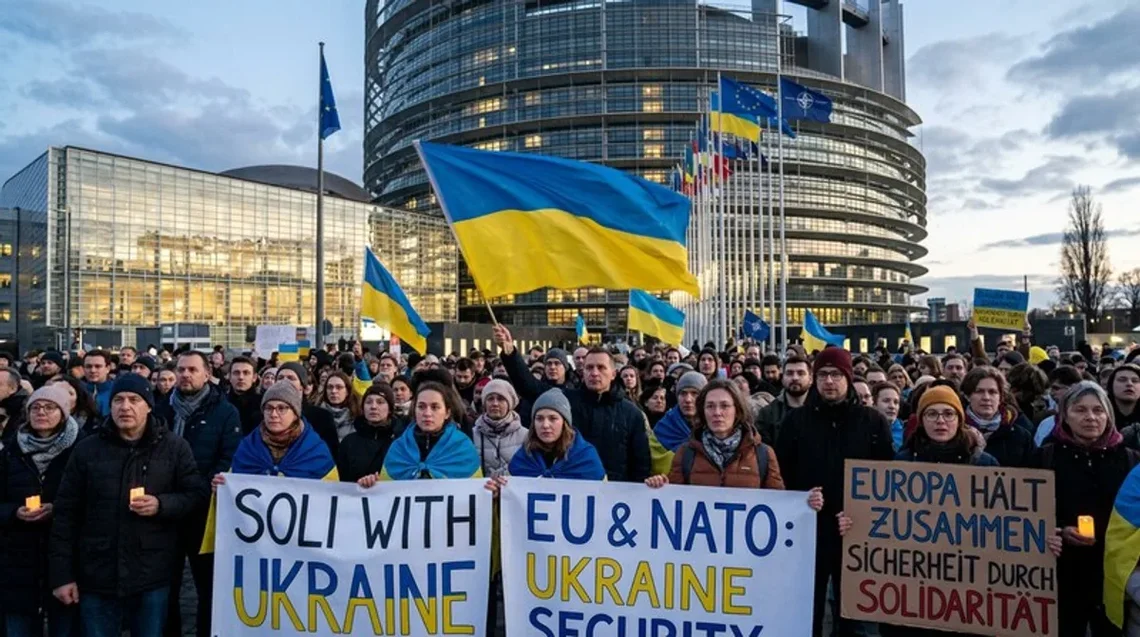
The latest offensive has triggered renewed debate among Ukraine's Western backers over the scope and speed of military assistance. The United States, Germany, France, and the United Kingdom have all reiterated commitments to sustaining support for Kyiv, though internal discussions over the provision of longer-range weapons systems and permission to strike targets inside Russian territory continue to generate diplomatic tension within the alliance.
For context on how allied commitments have evolved alongside Ukrainian battlefield operations, see earlier reporting on Ukraine's major counteroffensive as NATO pledges additional aid, which details the trajectory of Western support packages over recent operational cycles.
Western Arms Supply Debates
Washington's internal deliberations over permitting Ukraine to use US-supplied ATACMS missiles for deep strikes inside Russia have been closely watched. According to AP sources familiar with the discussions, the Biden administration has moved incrementally toward expanding strike permissions, though significant political constraints remain. European allies have similarly navigated their own domestic political pressures, with Germany's coalition government facing particular scrutiny over Taurus cruise missile provisions. Defence analysts cited in Foreign Policy argue that delays in weapons decisions have materially affected Ukrainian operational planning on timelines that cannot easily be recovered.
| Period | Ukrainian Action | Russian Response | Outcome / Status |
|---|---|---|---|
| Spring (earlier this year) | Defensive consolidation; limited local counterattacks | Intensified pressure on Avdiivka axis | Territorial losses for Ukraine in Donetsk sector |
| Summer (this year) | Kursk incursion; cross-border offensive | Emergency redeployment of units from Donetsk | Ukraine holds portions of Kursk Oblast; front stress |
| Autumn (current) | Multi-axis eastern offensive; intensified drone campaign | North Korean troop deployment; reinforced defences | Ongoing; outcome uncertain |
| Winter (projected) | Anticipated infrastructure strikes; defensive positioning | Continued missile and drone attacks on Ukrainian cities | Humanitarian situation critical; diplomatic pressure rising |
Humanitarian and Civilian Impact
The UN Office for the Coordination of Humanitarian Affairs has documented a sharp deterioration in civilian conditions across frontline oblasts. Millions of Ukrainians in the Donetsk, Zaporizhzhia, and Kherson regions remain exposed to active hostilities, with critical infrastructure — including power grids, water systems, and medical facilities — subjected to repeated Russian missile and drone strikes. According to OCHA data, the number of people requiring humanitarian assistance inside Ukraine currently exceeds 14 million, while the global displacement figure for Ukrainian refugees stands at more than six million, the largest displacement crisis in Europe since the mid-twentieth century. (Source: UN OCHA)
Energy Infrastructure Attacks
Russian targeting of Ukraine's energy grid has intensified ahead of winter, with coordinated strikes against thermal and hydroelectric facilities reported across multiple regions. Ukrainian energy officials said the damage to generating capacity has been severe, with rolling blackouts affecting large population centres. European energy security analysts have warned that Ukrainian infrastructure destruction will have knock-on effects for regional stability, particularly as cold weather increases civilian heating demands. (Source: Reuters)
What This Means for the UK and Europe
For Britain and its European partners, the intensification of fighting carries direct and consequential implications. At the strategic level, a protracted and inconclusive conflict keeps European security architecture under sustained stress, stretching NATO resources and demanding continued political consensus in capitals where public fatigue is measurable. The UK government has pledged ongoing military and financial support to Ukraine, including artillery systems, air defence components, and training programmes for Ukrainian personnel. Officials in London have framed this commitment in terms of collective European security — the argument being that a Russian victory, or a settlement imposed on Ukraine through coercion, would embolden revisionist behaviour across the continent.
Economically, the conflict continues to weigh on European energy markets, trade routes, and agricultural supply chains. Ukraine and Russia together historically accounted for a substantial proportion of global wheat and sunflower oil exports; disruption to that supply has contributed to food price pressures in Europe, the Middle East, and sub-Saharan Africa. British consumers, already navigating elevated food costs, remain indirectly exposed to these dynamics. (Source: UN Food and Agriculture Organization; Reuters)
European defence ministries are also accelerating military procurement and readiness programmes, with NATO members under pressure to reach and exceed the two percent of GDP defence spending threshold. The UK, which already meets that benchmark, has signalled willingness to expand its contribution, though domestic fiscal constraints impose real limits on ambition. Analysts at Foreign Policy have argued that European strategic autonomy — the capacity to manage continental security without total dependence on Washington — is being stress-tested in real time by the Ukrainian conflict.
For a broader understanding of how successive offensive phases have unfolded and what the eastern campaign has historically entailed, readers can review detailed earlier analyses including coverage of Ukraine's major counteroffensive in eastern regions and the ground-level reporting on Ukraine's major counteroffensive in eastern Donbas. Earlier reporting on periods when Russian forces faced significant pressure is also documented in coverage of Ukraine's new offensive as Russia digs in.
Outlook: A Conflict Without a Near-Term Resolution
Military analysts and diplomatic observers broadly agree that neither side currently possesses the offensive capability to achieve a decisive breakthrough or a forced resolution. Ukraine lacks the manpower and equipment density for a rapid, war-ending counteroffensive without a step-change in Western support; Russia, meanwhile, has absorbed extraordinary casualties — estimates range from 200,000 to over 300,000 killed or seriously wounded, according to Western intelligence assessments cited by Reuters — and faces mounting economic pressure from sanctions, but retains the political will and demographic depth to sustain attritional warfare for an extended period.
Diplomatic channels remain largely frozen. Back-channel discussions involving intermediaries from Turkey, the UAE, and several African nations have so far produced no framework acceptable to both parties. Ukraine's official position, codified in President Zelensky's ten-point peace formula, demands full territorial restoration and security guarantees. Moscow has shown no indication of withdrawing from occupied territories as a precondition for talks. With both positions hardened, the prospect of negotiations in the near term remains remote, and the eastern front is likely to remain the defining theatre of a conflict that has already reshaped European security, global energy markets, and the international rules-based order. (Source: Reuters; AP; Foreign Policy)