UN Security Council deadlocked on Gaza aid as humanitarian crisis deepens
Russia and China block Western resolution on cross-border relief
The United Nations Security Council remains paralysed over the worsening humanitarian catastrophe in Gaza, after Russia and China vetoed a Western-backed draft resolution that would have authorised expanded cross-border aid access to the besieged Palestinian territory. The deadlock, the latest in a series of failed votes, has drawn sharp condemnation from relief agencies who warn that civilians face starvation and preventable death on a mass scale.
Key Context: The UN Security Council has fifteen members, five of which hold permanent veto power: the United States, the United Kingdom, France, Russia, and China. A single veto from any permanent member kills a resolution outright, regardless of broader support. Russia and China have repeatedly used this power to block Western-drafted resolutions on Gaza, while the United States has previously vetoed resolutions critical of Israel's military campaign. The result is a structurally deadlocked council unable to produce binding humanitarian mandates for one of the world's most acute crises. (Source: United Nations)
The Vote and Its Immediate Fallout
The Western-backed resolution, co-sponsored by the United Kingdom, France, and the United States, called for the immediate and sustained opening of all viable land, sea, and air routes into Gaza for humanitarian relief. It also sought the deployment of independent UN monitors to verify aid distribution and demanded a temporary halt to hostilities in areas where relief convoys were operating, officials said.
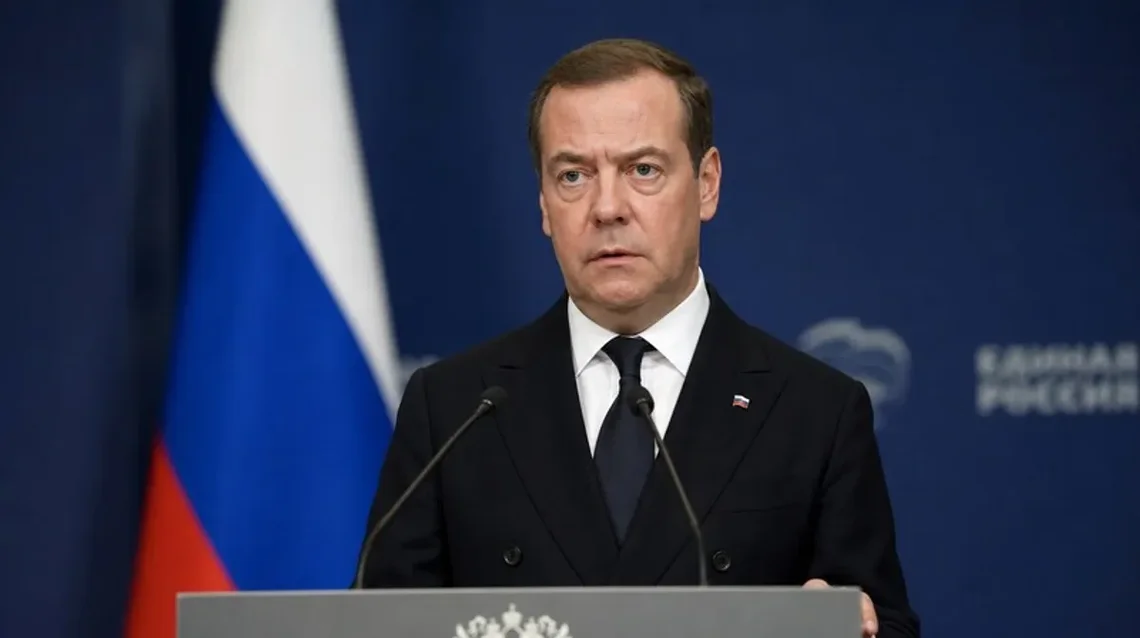
Russia's ambassador to the UN described the resolution as a "geopolitical instrument dressed in humanitarian language," arguing it would compromise Israeli security arrangements negotiated with regional partners. China's representative echoed those concerns, insisting the text did not adequately address what Beijing characterised as the "root cause" of the conflict. Both countries abstained on procedural grounds before ultimately casting vetoes, according to diplomatic accounts reviewed by Reuters.
Related Articles
Western Response and Council Dynamics
Britain's UN ambassador said the veto was "a moral failure of historic proportions," adding that every day of delay translated into preventable deaths among Gaza's civilian population. The United States, which has previously found itself on the opposite side of similar votes, this time voted in favour, marking a notable shift in posture that foreign policy analysts described as significant, if not decisive. The council vote ended with nine members in favour, two against, and four abstentions, according to AP.
This pattern of deadlock is not new. Readers following the council's repeated failures will recognise the structural dysfunction that has defined its response. Previous reporting on the UN Security Council deadlocked on Gaza aid access documented how similar vetoes in earlier sessions left aid agencies scrambling for alternative legal frameworks, including General Assembly emergency resolutions that carry moral but not binding weight.
The Scale of the Humanitarian Emergency
The United Nations Office for the Coordination of Humanitarian Affairs has described conditions in Gaza as among the most severe it has documented anywhere in the world in recent decades. Food insecurity affects virtually the entire population of approximately 2.3 million people. Acute malnutrition rates among children under five have reached levels not seen in the region in living memory, according to UN reports.
Aid Access and Obstruction
The number of aid trucks able to enter Gaza on a daily basis remains a fraction of what agencies say is required to meet basic subsistence needs. The World Food Programme has repeatedly reported that convoys approved for entry are frequently turned back at crossing points, subject to lengthy inspection delays, or looted before reaching distribution centres. The UN's humanitarian chief has called the situation a "man-made famine" driven not by a lack of available food globally, but by systematic obstruction of delivery mechanisms. (Source: United Nations Office for the Coordination of Humanitarian Affairs)
Medical Infrastructure in Collapse
Hospitals across Gaza are operating well below capacity due to supply shortages, structural damage, and staff displacement. The World Health Organisation has flagged critical shortages of anaesthetics, blood products, antibiotics, and basic surgical equipment. Patients with treatable conditions are dying in facilities that lack the resources to treat them, WHO officials said. The collapse of the medical system compounds the food crisis, as malnourished individuals are far more vulnerable to disease outbreaks, which are accelerating given the deterioration of water and sanitation infrastructure.
Geopolitical Fault Lines at the Council Table
The Security Council's failure on Gaza is not merely procedural — it reflects deep and widening geopolitical divisions that have made the body increasingly dysfunctional across multiple crisis theatres. Russia and China have consistently argued that Western nations use humanitarian resolutions as vehicles for regime change or strategic repositioning, a charge Western diplomats reject as a cynical pretext for enabling impunity.
For context, earlier analysis of the UN Security Council deadlocked on Gaza aid renewal established how the council's rotating non-permanent members — including several from the Global South — have grown increasingly frustrated with the binary logic of great-power competition overriding urgent human need. Several non-permanent members have begun calling for structural UN reform, including limiting veto use in situations involving mass atrocity or humanitarian catastrophe. (Source: Foreign Policy)
The Role of Regional Powers
Arab states at the council and in broader UN forums have pressed for a ceasefire-first approach, arguing that aid delivery cannot be meaningfully secured without an end to active hostilities. Egypt and Jordan, both critical transit and logistics partners for aid operations, have signalled growing alarm at the pace of civilian casualties and displacement toward their borders. Both countries have warned that the regional destabilisation risk is reaching a tipping point, officials said. Qatar, which has served as a key mediation channel, has continued back-channel engagement, though the diplomatic space has narrowed considerably following repeated breakdowns in ceasefire negotiations, according to Reuters.
The General Assembly and Alternative Frameworks
With the Security Council blocked, attention has again turned to the UN General Assembly, which can pass emergency resolutions under the "Uniting for Peace" mechanism originally invoked during the Korean War. While such resolutions carry no binding legal force, they provide political legitimacy and can shape the conditions under which international law is interpreted and applied.
The General Assembly has already passed multiple non-binding resolutions calling for humanitarian pauses and aid access. Their practical impact has been limited, but diplomats say they serve an important norm-setting function. The pattern of council deadlock followed by assembly action has become a recurring cycle, as previously documented in coverage of the UN Security Council deadlocked over Gaza aid extension, which outlined how legal scholars have begun questioning whether the council's dysfunction may eventually trigger demands for treaty-level reform. (Source: Foreign Policy)
NGO and Agency Responses
Major humanitarian organisations including Médecins Sans Frontières, Oxfam, and Save the Children have issued increasingly urgent statements, describing the Security Council's failure as a collective abandonment of international humanitarian law principles. Several have called on member states to explore alternative legal mechanisms to compel access, including invoking the International Court of Justice's advisory jurisdiction. The ICJ has already issued provisional measures in a related genocide case, though compliance and enforcement remain contested. (Source: Reuters)
| Security Council Vote | Resolution Focus | Outcome | Vetoed By | In Favour |
|---|---|---|---|---|
| Early phase of conflict | Humanitarian pause | Vetoed | United States | 12 members |
| Mid-conflict period | Ceasefire demand | Vetoed | United States | 13 members |
| Aid access resolution (recent) | Cross-border aid corridors | Passed (limited scope) | N/A | 14 members |
| Aid renewal vote | Extension of aid mechanism | Vetoed | Russia, China | 11 members |
| Current resolution | Expanded cross-border relief | Vetoed | Russia, China | 9 members |
What This Means for the UK and Europe
For Britain and its European partners, the Security Council deadlock creates both a diplomatic and a domestic political challenge. The UK's co-sponsorship of the failed resolution signals a foreign policy posture aimed at reasserting Britain's multilateral credentials in the post-Brexit era, but without enforcement mechanisms, such gestures risk appearing performative to critics both at home and abroad.
The UK government has pledged additional humanitarian funding for Gaza operations, including contributions channelled through UNRWA, the UN agency for Palestinian refugees. However, that funding relationship has itself been subject to controversy following allegations — denied by the agency — of staff involvement in attacks. The UK temporarily suspended some funding before partially restoring it following independent reviews, officials said. (Source: Reuters, AP)
Across the European Union, the crisis has deepened fractures between member states. Countries such as Ireland and Spain have adopted more explicitly pro-Palestinian positions, including recognising Palestinian statehood, while Germany and Austria have maintained stronger alignments with Israel's security narrative. The divergence complicates the EU's ability to speak with a unified voice in multilateral forums, which in turn weakens European leverage at the Security Council and in wider diplomatic processes.
For European publics, the images and data emerging from Gaza have sustained prolonged protest movements and placed governments under pressure to take more assertive action. The failure of the Security Council to act has in some capitals intensified calls for arms embargo measures, targeted sanctions, or the suspension of trade agreements. None of these measures have reached legislative conclusion, but the political pressure is real and growing, according to analysts cited by Foreign Policy.
Further context on the evolving legal and diplomatic dimensions of this crisis can be found in earlier ZenNewsUK coverage of the UN Security Council deadlocked on Gaza aid extension and the UN Security Council deadlocked over Gaza aid access, which together trace the full arc of the council's repeated failures to translate political language into operational relief.
Outlook: Reform or Irrelevance?
The repeated failure of the Security Council to act on Gaza has renewed a long-standing debate about the fitness of the UN's central security architecture for the challenges of contemporary conflict. Critics argue that a body designed in the immediate aftermath of the Second World War, with veto powers lodged among the victorious allied powers, is structurally incapable of addressing crises in which one or more of those powers has a direct stake in the outcome.
Reform proposals abound — from limiting veto use in mass atrocity situations, to expanding permanent membership to reflect contemporary geopolitical realities, to empowering the General Assembly with greater authority. All face the fundamental obstacle that any structural change to the UN Charter requires the consent of all five permanent members, each of whom has strong institutional incentives to preserve their veto. (Source: Foreign Policy)
For the people of Gaza, the geopolitical abstraction of institutional reform offers no immediate relief. Aid agencies warn that without a dramatic improvement in access within weeks, mortality from starvation and disease-related causes will accelerate sharply. The Security Council's deadlock is not a procedural footnote — it is, in the assessment of virtually every major humanitarian body currently operating in the field, a contributing factor to a preventable catastrophe unfolding in real time.