Starmer Unveils Major NHS Reform Plan Amid Funding Row
Labour pushes restructuring as waiting lists remain elevated

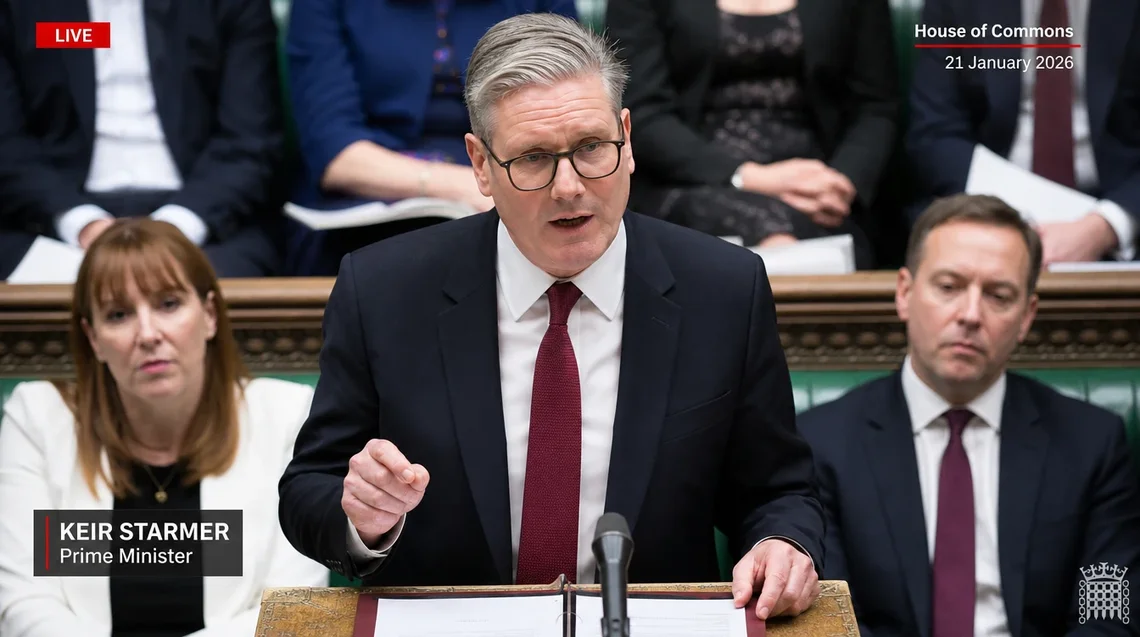
Sir Keir Starmer has set out the most sweeping proposed restructuring of the National Health Service in a generation, pledging to overhaul commissioning structures, shift care out of hospitals and into community settings, and tie NHS leadership more directly to government performance targets — all while a deepening row over the scale of funding required threatens to overshadow the policy's ambitions. With NHS England waiting lists still numbering in the millions, ministers face pressure from all sides to demonstrate that structural reform without sufficient capital will deliver results where previous administrations have repeatedly fallen short.
The Core Proposals
At the centre of the government's announcement is a commitment to reorganise the NHS's administrative architecture, reducing the number of integrated care boards and shifting decision-making authority back toward central government oversight. The plan, presented by Health Secretary Wes Streeting alongside the Prime Minister, also includes a renewed push to move outpatient appointments and diagnostic services away from acute hospital sites and into primary and community care, an ambition successive governments have articulated but struggled to execute at scale.
Shifting Care Into the Community
Officials said the community care element of the plan is intended to reduce pressure on accident and emergency departments, which have seen sustained increases in attendance in recent periods. The government argues that treating more patients closer to home will free up hospital beds and cut the cost per episode of care. Independent health economists have noted, however, that community-based care models require significant upfront capital investment in premises, staffing and technology before savings materialise — a tension the government's current spending envelope has not yet resolved, according to analysis published by the King's Fund and the Health Foundation.
Restructuring NHS England
The announcement also confirmed earlier reporting that NHS England, the arm's-length body responsible for commissioning services, will be brought into closer alignment with the Department of Health and Social Care. Officials said this would reduce duplication and improve accountability. Critics — including some within the health service — have warned that collapsing the distance between operational management and ministerial control risks politicising day-to-day clinical and commissioning decisions. The British Medical Association indicated it would be watching implementation carefully, though it stopped short of outright opposition to the structural changes.
Related Articles
Party Positions: Labour argues that root-and-branch restructuring is necessary to break cycles of underperformance, pointing to sustained waiting list growth under the previous government and committing to use both structural reform and increased investment to bring lists down. Conservatives have accused Labour of using reorganisation as a political distraction, arguing that structural upheaval historically disrupts services rather than improving them, and calling for a focus on workforce retention and existing hospital capacity instead. Lib Dems have broadly supported the ambition to shift care into community settings but have demanded greater clarity on the funding commitments underpinning the plan, with party health spokesperson Helen Morgan calling for a fully costed ten-year capital investment schedule before Parliament votes on the proposals.
The Funding Row
No aspect of the announcement has generated more political heat than the question of how the restructuring will be paid for. The Treasury has allocated additional resource to health in the current spending round, but health economists and opposition politicians alike argue the figures fall short of what the scale of reform demands. The Guardian reported this week that internal Department of Health modelling suggests the community care transition alone could require capital spending well beyond what has been publicly committed, citing figures that officials have neither confirmed nor denied.
Treasury Constraints and Departmental Pressure
Senior Labour figures privately acknowledge that the Chancellor's fiscal rules constrain the headroom available for new NHS capital commitments, leaving ministers dependent on efficiency savings within the system to fund a significant portion of the programme. The Office for National Statistics has recorded sustained real-terms growth in NHS spending over the current Parliament, but health sector analysts note that demand — driven by an ageing population and a backlog built up during and after the pandemic period — continues to outpace funding increases. Ipsos polling conducted recently found that the NHS remains the single issue on which voters most frequently say they want to see government action, with 67 per cent of respondents rating it as a top-three priority (Source: Ipsos).
For further detail on the financial framework underpinning the government's health agenda, see our earlier coverage: Starmer Government Unveils Major NHS Funding Plan and Starmer Government Unveils Major NHS Funding Overhaul.
Waiting Lists: The Political Pressure Point
NHS England waiting list data remain a constant reference point in parliamentary exchanges. The most recent figures, published by NHS England and analysed by the Office for National Statistics, show that while the headline number of patients waiting for elective treatment has shown modest month-on-month variation, the proportion waiting beyond 18 weeks — the NHS constitutional standard — remains well above the target threshold (Source: Office for National Statistics). The government has set a specific target to return to the 18-week standard within this Parliament, a commitment that health service managers have described as ambitious given current resource levels.
Opposition Scrutiny at the Despatch Box
Conservative leader Kemi Badenoch used Prime Minister's Questions to press Starmer directly on the waiting list figures, arguing that the restructuring plan was announcement without delivery. Starmer responded by pointing to the previous government's record on waiting lists and arguing that structural reform was a prerequisite for sustainable improvement, not a substitute for it. The exchange drew predictable partisan responses from backbenchers on both sides, but parliamentary observers noted that a number of Labour MPs on the health select committee have themselves asked ministers for more granular data on how the reform timetable maps onto waiting list reduction milestones.
| Indicator | Current Figure / Finding | Source |
|---|---|---|
| Patients on elective waiting list | Approximately 7.5 million (latest published data) | NHS England / ONS |
| Proportion waiting beyond 18 weeks | Below constitutional 92% target | NHS England |
| Voters rating NHS a top-three priority | 67% | Ipsos |
| Government approval on NHS handling | Net negative among swing voters | YouGov |
| Integrated care boards to be reduced | From 42 to approximately 28 (proposed) | DHSC officials |
| Real-terms NHS spending increase (current Parliament) | Approximately 3.1% per annum | HM Treasury / OBR |
Reception From Health Professionals and Unions
The response from within the health service has been mixed. NHS Confederation chief executive Matthew Taylor welcomed the ambition to reduce administrative complexity but urged the government to ensure that frontline services are protected during what he described as an inevitably disruptive transition period. The Royal College of Nursing reiterated its call for a fully funded workforce plan to sit alongside any structural reform, noting that staffing shortages remain the primary constraint on reducing waiting times in many trusts. The BBC reported that several trust chief executives, speaking on background, expressed concern that the reorganisation of integrated care boards would create a period of uncertainty for commissioning decisions already in train.
GP and Primary Care Response
Among GPs, reaction has been cautiously sceptical. The British Medical Association's GP committee has argued that shifting more care into primary settings without a corresponding increase in GP numbers and practice infrastructure risks overwhelming a sector already operating under significant pressure. NHS data show GP appointment volumes have risen consistently in recent periods even as the number of fully qualified GPs has grown only marginally, a disparity that underpins the profession's concerns about the community care element of the reform plan. Officials said the government intends to publish a separate primary care workforce strategy in the coming months.
Analysis of the political and funding pressures facing the administration is available in our reporting: Starmer's NHS Plan Faces Funding Scrutiny.
Parliamentary and Legislative Path
The government has indicated it intends to legislate for elements of the reform — particularly the restructuring of NHS England's governance — within the current parliamentary session. A Health and Care (Reform) Bill is expected to be introduced in the Lords before the Commons recess, though officials declined to give a precise timetable. The legislative path is not expected to be straightforward: while Labour's Commons majority is substantial, the Lords retains the capacity to delay and amend health legislation, and crossbench peers with health policy expertise have already signalled they will seek detailed scrutiny of the governance provisions.
Select Committee Oversight
The Health and Social Care Select Committee has written to the Secretary of State requesting that ministers appear before it to give oral evidence on the reform timetable, funding assumptions and workforce implications before the Bill receives its second reading. The committee, chaired by a Labour backbencher, has in recent months demonstrated a willingness to scrutinise the government's health record with a degree of independence that ministers have at times found uncomfortable. YouGov polling shows the public retains moderately high expectations of parliamentary scrutiny of health policy, with a majority saying select committees should have stronger powers to compel ministers to appear (Source: YouGov).
For the full context of the government's evolving NHS agenda, readers can also refer to Starmer pledges major NHS overhaul amid funding row and Starmer government unveils NHS funding plan.
What Comes Next
Ministers face a narrow political window in which to demonstrate that the reform programme is generating tangible improvements in patient experience before the next set of NHS performance figures land in the public domain. The government has staked considerable political capital on health as a defining domestic issue, and officials acknowledge that the gap between structural announcements and measurable outcomes on waiting lists will be closely watched by voters and opposition politicians alike. Whether the scale of the funding committed ultimately matches the scale of the ambition Starmer has articulated remains the central — and as yet unanswered — question hanging over a reform programme that is likely to define a substantial portion of this Parliament's domestic legacy.