Starmer Charts Course on NHS Reform Amid Funding Row
Labour outlines restructuring plan as backbench concerns mount
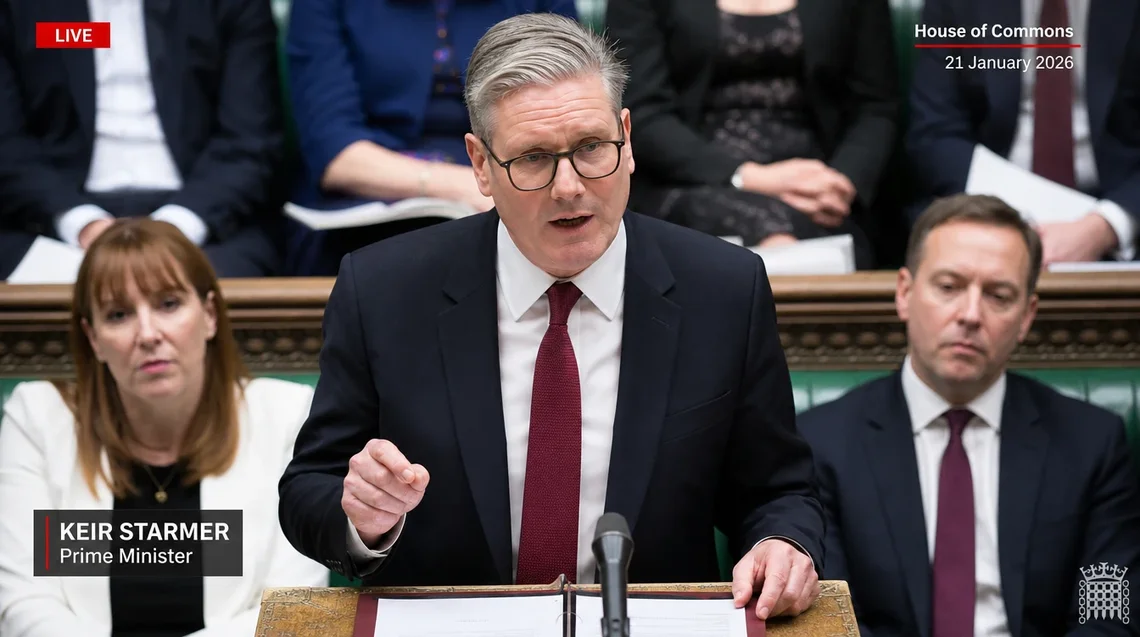
Sir Keir Starmer's government has set out its most detailed blueprint yet for restructuring the National Health Service, outlining a package of organisational changes and long-term funding commitments as mounting pressure from Labour backbenchers threatens to complicate the plan's passage through Parliament. The announcement comes as NHS waiting lists remain at historically elevated levels, with official figures placing the number of patients awaiting elective treatment in England at more than seven million, according to NHS England data.
The Prime Minister has staked considerable political capital on delivering visible improvement to health services before the next general election cycle, but the reform agenda has exposed deep tensions within his own parliamentary party over the pace of change, the role of private providers, and the adequacy of the funding settlement attached to the proposals.
Party Positions: Labour supports a phased restructuring of integrated care systems alongside increased capital investment, arguing the current architecture is too bureaucratic to deliver timely care; Conservatives have criticised the plan as insufficiently ambitious on private-sector involvement and warn the funding envelope does not match stated ambitions; Lib Dems back greater transparency in NHS commissioning and have tabled amendments calling for independently verified waiting-list targets to be written into statute.
The Reform Blueprint: What the Government Is Proposing
Downing Street and the Department of Health and Social Care have outlined a programme centred on three principal pillars: consolidating integrated care boards to reduce administrative duplication, redirecting capital spending toward diagnostic infrastructure, and expanding community-based and primary care capacity to divert pressure from acute hospital trusts. Officials said the aim is to reduce the share of NHS activity delivered in large district general hospitals and shift more routine care into primary and community settings.
Related Articles
Integrated Care Board Consolidation
The government has indicated it intends to reduce the number of integrated care boards operating across England, having concluded that the current configuration — which was itself a product of recent structural reorganisation — has generated administrative overhead without producing commensurate gains in patient-facing services. Officials said the merger process would be managed over a multi-year timetable to avoid the disruption associated with previous large-scale NHS reorganisations. Critics within the health policy community have questioned whether further structural change will deliver improvement or merely shift management costs around the system.
Diagnostic Investment and Technology
A significant portion of the capital commitment is earmarked for diagnostic capacity, including additional community diagnostic centres and investment in imaging and pathology technology. The government argues that bottlenecks in diagnostics represent one of the primary constraints on the system's ability to reduce waiting times, a position supported by analysis from NHS England and the Health Foundation. Separately, ministers have referenced the potential role of artificial intelligence in supporting radiological reporting, though officials stopped short of committing to specific deployment timelines.
Backbench Pressure and Internal Labour Divisions
The political challenge for the Prime Minister is as significant as the operational one. A cohort of Labour backbenchers has expressed reservations about elements of the reform package, particularly provisions that would allow greater independent-sector involvement in NHS-funded treatment pathways. According to reporting by the Guardian and the BBC, a number of MPs have written to Health Secretary Wes Streeting raising concerns about the ideological direction of reform and the risk that market mechanisms could entrench inequality in access to care.
The Independent Sector Question
The independent-sector question has become the sharpest point of internal friction. Streeting has argued publicly that excluding independent providers from NHS commissioning on ideological grounds is inconsistent with the objective of reducing waiting times as quickly as possible, and that patients should not be denied treatment because of the institutional identity of the provider. That argument has not satisfied all colleagues. A number of MPs with trade union-affiliated constituency associations have indicated they will scrutinise any legislation closely, and some have suggested they would consider abstaining or voting against specific clauses if the independent-sector provisions are not modified.
The Funding Dispute
Running alongside the structural debate is a more fundamental argument about money. Treasury officials and the Department of Health have sought to present the funding settlement attached to the reform package as historically significant, but independent health finance analysts and NHS trust leaders have been more circumspect. The Nuffield Trust and the Health Foundation have both published assessments suggesting that, when adjusted for demographic pressures and the cost of workforce pay settlements, the real-terms increase in day-to-day NHS spending is more modest than headline figures imply.
Capital vs. Revenue Tensions
A recurring concern among NHS managers and health economists is the persistent imbalance between capital and revenue budgets. While the government has emphasised capital commitments — for diagnostic centres, hospital maintenance, and technology — operational leaders have argued that without sufficient revenue funding for staff, equipment, and day-to-day running costs, capital investment cannot be fully utilised. One senior trust executive, quoted anonymously in Health Service Journal, described the situation as receiving new tools without the workforce to operate them.
| Indicator | Figure | Source |
|---|---|---|
| Patients awaiting elective treatment (England) | Over 7 million | NHS England / Office for National Statistics |
| Public satisfaction with NHS (overall) | Lowest recorded level in survey history | British Social Attitudes Survey (The King's Fund / NatCen) |
| Voters citing NHS as top priority | Approx. 52% | YouGov / Ipsos polling data |
| Labour lead on NHS management competence | Narrowed from +18 points to +9 points since general election | Ipsos Issues Index |
| NHS workforce vacancy rate (clinical staff) | Approximately 8% | NHS England workforce statistics |
Opposition Response and Parliamentary Arithmetic
The Conservatives have sought to exploit Labour's internal difficulties, arguing that the government's reform programme is ideologically incoherent — simultaneously promising to reduce bureaucracy while expanding state oversight, and invoking private-sector capacity without fully committing to the commissioning freedoms that would make that capacity effective. Shadow Health Secretary Edward Argar has called the plan "a reorganisation dressed up as a revolution," according to BBC political coverage.
The Liberal Democrats have adopted a different line of attack, focusing less on the structural questions and more on accountability and measurability. The party has proposed amendments to forthcoming health legislation that would require the government to publish independently verified quarterly assessments of progress against waiting-time targets, with ministerial accountability attached to missed milestones. That position has attracted sympathy from some Labour MPs who are less ideologically opposed to reform but want stronger parliamentary oversight mechanisms built into any legislation.
Parliamentary Timetable
Government business managers are understood to be working through the sequencing of health-related legislation carefully, aware that a government defeat or a damaging rebellion on the floor of the House would hand opponents a significant political narrative. Whips are reported to be in intensive discussions with the groups of backbenchers most likely to cause difficulty, offering assurances about the scale of independent-sector involvement and the possibility of statutory safeguards. Whether those assurances will prove sufficient remains unclear ahead of the bill's committee stage.
Public Opinion and the Political Stakes
For a government that won its parliamentary majority in significant part on a platform of NHS renewal, the polling data represent a warning signal. YouGov and Ipsos surveys conducted recently show that while the NHS remains the single issue most frequently cited by voters as their top national priority, Labour's lead over the Conservatives on the question of NHS management competence has narrowed materially since the general election. (Source: Ipsos Issues Index)
Public satisfaction with the NHS has also declined to the lowest level recorded in the long-running British Social Attitudes Survey, a data series administered by NatCen Social Research and analysed by the King's Fund and the Nuffield Trust. Officials are acutely aware that the political window for demonstrating tangible improvement in waiting times and patient experience is not unlimited, and that a mid-term assessment of health service performance will be a central battleground at the next election.
For more context on the evolution of this policy agenda, see our earlier coverage of how Starmer charts course on NHS reform as waiting lists persist, and the detailed breakdown of Starmer's major NHS reform plan amid the funding row. Readers following the legislative process may also wish to consult our report on how Starmer pushes the NHS reform bill amid funding pressure, as well as our ongoing tracking of NHS waiting list targets and timelines and the government's separate commitment covered in our piece on how Starmer pledges an NHS funding boost amid the wider reform debate.
Outlook
The coming weeks will test whether the government can hold together a workable parliamentary majority for its health legislation while simultaneously managing the expectations of a public that has consistently placed NHS performance at or near the top of its list of political priorities. Officials have indicated the Prime Minister intends to make a further statement on NHS reform ahead of the next NHS England board meeting, at which the detail of integrated care board consolidation is expected to be formally presented to the health system. Whether that statement will satisfy backbench concerns or sharpen them will be one of the defining domestic political questions of the parliamentary term.
What remains clear from the data, from opposition scrutiny, and from voices inside the Labour parliamentary party is that the government's NHS reform agenda, however it is ultimately packaged, will be judged not on the elegance of its structural logic but on whether patients wait less time, see more clinicians, and receive faster diagnoses. On those measures, the evidence to date has not yet moved decisively in the government's favour. (Source: Office for National Statistics; NHS England; BBC News political reporting; Guardian health desk)