EU tightens Russia sanctions over Ukraine arms escalation
Brussels moves to block new tech exports amid renewed fighting
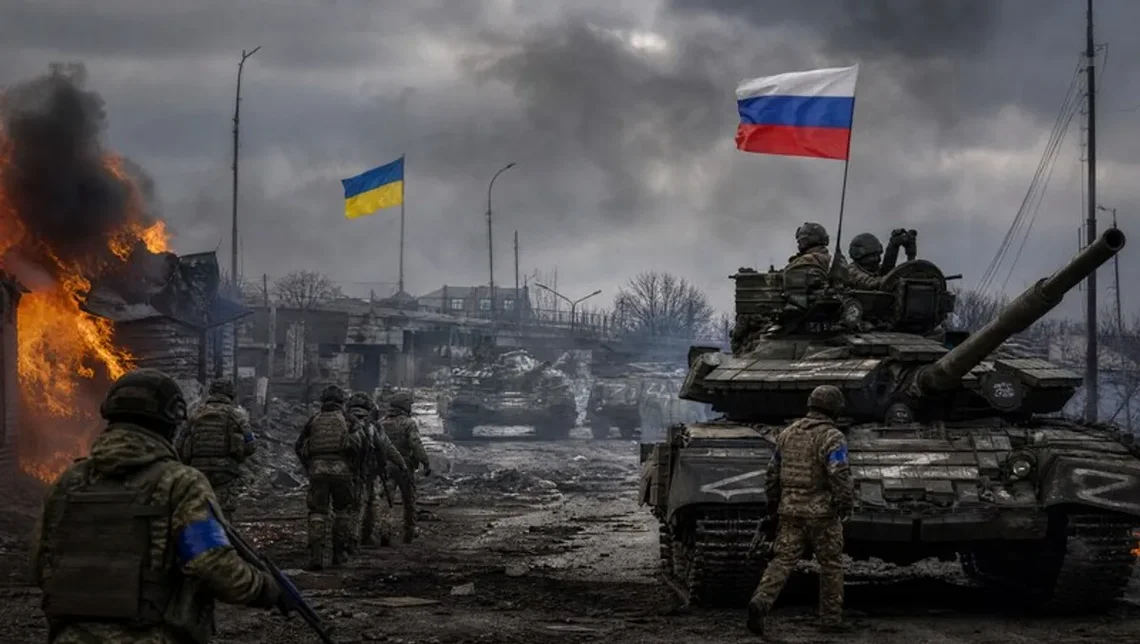
The European Union has approved a sweeping new package of sanctions against Russia, targeting dual-use technologies, electronics components, and defence-related exports, as fighting intensifies across multiple fronts in Ukraine and Western governments grow increasingly alarmed by what officials describe as an accelerating Russian arms build-up. The measures, confirmed by senior EU diplomats and reported by Reuters and AP, represent the bloc's most comprehensive export restriction regime since the conflict began.
Key Context: The EU has now adopted more than a dozen successive sanctions packages against Russia since the full-scale invasion of Ukraine began. Each successive round has attempted to close loopholes exploited by Russian defence procurement networks, including third-country routes through Central Asia and the Gulf. The latest package specifically targets microelectronics, battlefield drone components, and propellant chemicals identified by EU technical experts as critical to Russian weapons production. (Source: European Commission)
What the New Sanctions Package Contains
The latest measures extend existing controls on semiconductor exports and add dozens of new entities to the EU's asset-freeze and travel-ban lists, according to officials cited by Reuters. The package also introduces fresh restrictions on the export of machine tools, aviation components, and specific chemical precursors that Western intelligence assessments have linked to Russian artillery and missile programmes.
EU foreign policy chief officials confirmed that the package had been agreed by qualified majority among member states, with certain targeted exemptions negotiated for humanitarian and civilian energy supply contexts. The bloc simultaneously issued updated guidance to European financial institutions on correspondent banking relationships that may indirectly facilitate sanctioned transactions. (Source: European Commission)
Related Articles
Dual-Use Technology Controls
A significant share of the new export restrictions concerns dual-use goods — items with legitimate civilian applications that can also serve military purposes. Western governments, including EU member states and the United Kingdom, have spent considerable diplomatic capital over the past year pressuring third-country intermediaries suspected of re-exporting restricted technologies to Russia. According to data published by the Kyiv School of Economics and cited in Foreign Policy, a substantial proportion of Western-origin components recovered from Russian weapons systems on Ukrainian battlefields arrived via non-EU transit countries.
The new controls are designed to extend accountability upstream, requiring European exporters to conduct enhanced due-diligence checks on end-users and to apply stricter know-your-customer procedures to shipments destined for a defined list of high-risk jurisdictions. Officials said enforcement responsibility would rest with national customs authorities, coordinated through an EU-level monitoring mechanism.
Entities and Individuals Listed
More than eighty additional entities — including Russian state-linked procurement firms, intermediaries operating in third countries, and several individuals identified as facilitating arms-related financial flows — have been added to the EU's consolidated sanctions list in this round, officials said. The listings were accompanied by asset freezes and, where applicable, EU entry bans. (Source: Council of the European Union)
The Strategic Context: Arms Escalation on the Front Lines
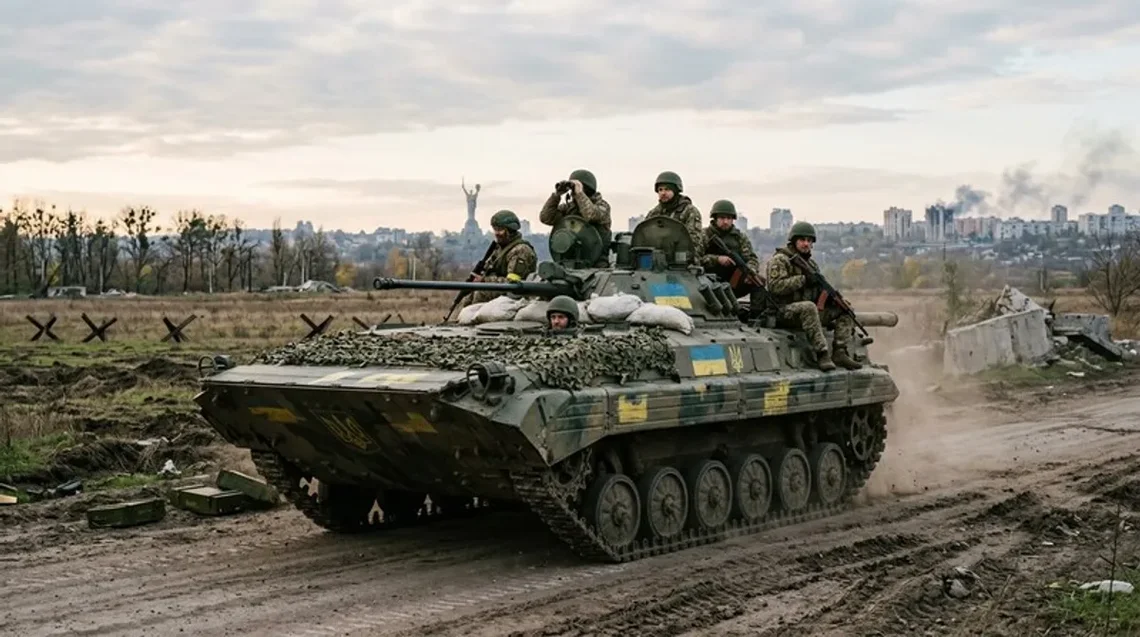
The timing of the sanctions package reflects deep concern in Brussels and NATO capitals about the trajectory of the conflict. Ukrainian military officials and independent analysts have documented a sustained increase in Russian drone and missile strikes against civilian infrastructure, alongside a significant uptick in ground offensive pressure in the east of the country. AP correspondents embedded with Ukrainian units in recent weeks have reported intense combat activity and ammunition strain on the Ukrainian side.
Western Intelligence Assessments
Senior officials from multiple EU member states, speaking to reporters on condition of anonymity, said Western intelligence services had assessed that Russian defence production — though hobbled by earlier sanctions — had adapted through third-party procurement channels more effectively than initially forecast. Foreign Policy has reported extensively on the role of firms in countries including the UAE, Turkey, and several Central Asian states as intermediary nodes in Russian defence supply chains, a dynamic the new EU restrictions explicitly seek to disrupt.
A UN Panel of Experts report cited by AP noted that battlefield evidence from recovered weapons systems pointed to the continued availability to Russian forces of foreign-sourced precision components, despite multiple rounds of Western export controls. The panel called on member states to strengthen enforcement mechanisms and share technical intelligence more systematically. (Source: United Nations)
Implications for the United Kingdom
Although the United Kingdom is no longer an EU member state, British sanctions policy has closely tracked Brussels on Russia-related measures, with His Majesty's Treasury and the Foreign, Commonwealth and Development Office issuing parallel designations in most major rounds. Analysts and former officials have consistently argued that the effectiveness of Western sanctions depends substantially on their geographic coherence — gaps in one jurisdiction create arbitrage opportunities for Russian procurement networks.
The UK's Office of Financial Sanctions Implementation has previously coordinated with EU counterparts on enforcement actions, and City of London compliance professionals are expected to review the new EU listings carefully for their implications on correspondent banking and trade finance operations with affected jurisdictions. (Source: HM Treasury)
For British businesses, the practical consequence is that any firm with EU-based subsidiaries, EU-currency transactions, or supply chains touching EU exporters will need to assess exposure to the new measures. The reputational and legal risks of inadvertent sanctions violations have grown considerably, legal professionals note, as enforcement has become more active across both EU member states and the UK. Readers following the broader arc of Western economic pressure on Moscow may wish to consult earlier coverage, including analysis of how EU tightens Russia sanctions over Ukraine supply lines disrupted Russian logistics networks in previous rounds.
European Energy and Economic Exposure
Sanctions fatigue — the risk that successive measures lose political momentum and economic bite — remains a genuine concern among analysts tracking the conflict. Several EU member states, particularly those in Central and Southern Europe, retain significant economic exposure to Russia through residual energy contracts, and have periodically sought carve-outs or delayed implementation of specific measures. (Source: International Energy Agency)
Energy Transition Pressures
The European Commission has maintained that the overall direction of EU policy is to reduce Russian energy dependency to zero over the medium term, but the pace of transition varies significantly by country. For context on how successive sanctions rounds have interacted with energy market pressures, the article EU Tightens Russia Sanctions Over Ukraine Stalemate provides a useful framework for understanding the political economy of EU decision-making on this file.
Natural gas prices in European wholesale markets have remained volatile, and any further escalation of sanctions — particularly measures touching the energy sector more directly — will be watched closely by governments managing household energy cost pressures. Officials have signalled that the current package deliberately avoids measures that would materially tighten energy restrictions, reflecting the sensitivity of that issue within the bloc.
International Reactions and Diplomatic Fallout
Moscow's response to the new package, as conveyed through official statements reported by Reuters, was to characterise the measures as illegal under international trade law and to threaten unspecified retaliatory actions against European economic interests. Russia's foreign ministry has made comparable statements in response to every previous sanctions round, and the practical effect of Russian counter-measures to date has been assessed by most analysts as limited. (Source: Reuters)
Washington welcomed the EU package, with the US State Department issuing a statement noting alignment with American export control measures recently updated by the Bureau of Industry and Security. The coordinated Western approach has been a consistent feature of the sanctions architecture, though analysts note persistent gaps in enforcement capacity at national level across several EU member states. For background on how this diplomatic alignment has evolved, readers can review reporting on how Russia Faces New Western Sanctions Over Ukraine in earlier phases of the conflict.
Third-Country Pressure
Perhaps the most consequential long-term question raised by the latest sanctions round is whether the EU can effectively extend its enforcement reach to third-country intermediaries without triggering broader trade disputes. Brussels has, according to officials cited by AP, delivered formal diplomatic démarches to several governments whose territories have been identified as transit points for restricted goods. The response from those governments has been mixed, with some taking partial enforcement action and others signalling limited willingness to subordinate their own trade interests to Western sanctions objectives. (Source: AP)
| Sanctions Round | Primary Focus | Entities Listed (Cumulative) | Key Sector Targeted | UK Alignment |
|---|---|---|---|---|
| Early packages (rounds 1–4) | Financial sector, oligarchs | ~500 | Banking, luxury goods | Full parallel measures |
| Mid-phase (rounds 5–8) | Energy, transport, media | ~1,200 | Oil products, aviation | Broadly aligned, some divergence |
| Recent rounds (9–12) | Dual-use tech, arms components | ~1,800 | Electronics, machinery | Coordinated designations |
| Current package | Microelectronics, drone parts, chemicals | ~1,880+ | Defence supply chain | Parallel review underway |
What Comes Next: Enforcement and Escalation Risk
The credibility of the new sanctions package will ultimately rest on implementation. EU officials and independent analysts broadly agree that the political will to designate new entities has, in most rounds, outpaced the institutional capacity to enforce the resulting restrictions at national customs and financial intelligence levels. The Commission has proposed additional resources for a dedicated sanctions enforcement coordination body, though that proposal remains subject to member state agreement on funding. (Source: European Commission)
For Ukraine, the measures represent a meaningful signal of sustained Western commitment, though Kyiv's officials have consistently argued that the pace of sanctions implementation needs to accelerate to match the pace of Russian adaptation. Ukrainian government representatives have publicly called for more aggressive targeting of Russian energy revenues and for secondary sanctions pressure on third-country intermediaries — a step the EU has so far declined to take formally, in part to avoid straining relationships with emerging market partners. (Source: Reuters)
Further reporting on the evolution of Western economic pressure on Moscow is available in coverage of EU Tightens Russia Sanctions Over Ukraine Escalation and the analysis published around EU Tightens Russia Sanctions Over Ukraine Offensive, both of which provide comparative context for the current round's scope and ambition.
As the conflict grinds forward and both sides adapt to the constraints imposed by successive rounds of Western measures, the fundamental question facing policymakers in Brussels, London, and Washington is not whether sanctions have had an effect — the evidence that they have constrained Russian economic capacity is reasonably well-established in independent economic analysis — but whether they can be made to operate at sufficient speed and scale to materially alter the military balance before the conflict's next phase of escalation reshapes the diplomatic landscape entirely.