Senate Deadlocked on Budget Deal as Deadline Looms
Republicans, Democrats clash over spending priorities
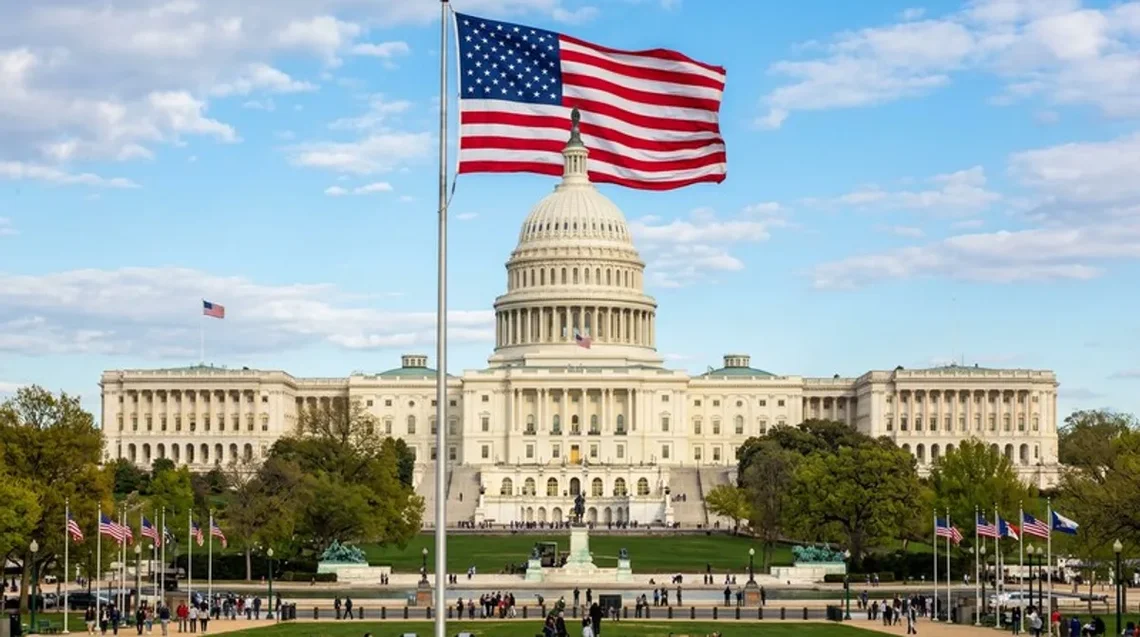
The United States Senate remained locked in a bitter standoff over federal spending levels this week, with negotiators from both parties unable to bridge deep divisions over discretionary spending caps, defence allocations, and social programme funding as a government shutdown deadline drew closer. The impasse, described by senior lawmakers as one of the most intractable budget confrontations in recent memory, threatened to trigger a partial shutdown affecting hundreds of thousands of federal workers and a wide range of public services.
Key Positions: Republicans are demanding deeper cuts to non-defence discretionary spending, stricter enforcement of existing spending caps, and reductions to climate and green energy programmes funded through recent legislation. Democrats are insisting on preserving funding for social safety net programmes, education, housing assistance, and healthcare subsidies, while opposing cuts to the Internal Revenue Service's expanded enforcement budget. The White House has signalled it will not accept legislation that rolls back key domestic investment priorities, while urging both chambers to reach a bipartisan agreement before the deadline.
The State of Negotiations
Senate Majority and Minority leaders held a series of closed-door meetings this week in an effort to avert a shutdown, but sources familiar with the discussions said the two sides remained far apart on the core numbers. Republican negotiators were pushing for overall non-defence discretionary spending to be held below levels agreed in previous continuing resolutions, while Democrats argued that any further reductions would cause measurable harm to federal programmes already operating under constrained budgets, officials said.
Where Talks Broke Down
According to congressional aides speaking on condition of anonymity, the most contentious sticking point involved a Republican demand to claw back unspent funds allocated under major climate and infrastructure legislation passed in recent congressional sessions. Democrats flatly rejected that approach, characterising it as an attempt to legislate through the appropriations process. A parallel dispute over defence spending levels — with Republicans seeking higher allocations than the White House proposed — further complicated the arithmetic of any potential compromise, officials said.
Related Articles
The Congressional Budget Office has previously warned that extended continuing resolutions, which fund the government at flat levels when full appropriations bills are not enacted, result in inefficiencies across federal agencies and complicate multi-year programme planning. (Source: Congressional Budget Office)
Senate Vote Tallies and the Path to 60
Under Senate rules, any spending legislation requires 60 votes to advance past a procedural cloture threshold, meaning at least some degree of bipartisan cooperation is mathematically essential. With the chamber currently divided, party-line votes have repeatedly failed to clear that barrier, leaving the floor schedule in disarray and leadership scrambling for a workable coalition, according to reporting by the Associated Press. (Source: AP)
Recent Procedural Votes
| Vote Description | Result | Yes Votes | No Votes | Threshold Required |
|---|---|---|---|---|
| Republican Spending Framework Cloture | Failed | 49 | 51 | 60 |
| Democratic Continuing Resolution Cloture | Failed | 47 | 53 | 60 |
| Bipartisan Framework Motion to Proceed | Pending | — | — | 60 |
| Previous Continuing Resolution (Short-Term) | Passed | 73 | 24 | 60 |
The pattern of failed cloture votes echoed earlier confrontations documented extensively this session. Readers tracking the Senate's ongoing procedural battles can find additional context in coverage of how a Senate deadlock on spending nearly derailed operations ahead of a previous recess, as well as the broader historical record of Republican efforts to block budget agreements in recent legislative cycles.
Republican Priorities and Internal Party Pressure
Senate Republicans entered this round of negotiations under significant pressure from the House's more conservative wing, which has insisted that the upper chamber hold the line on spending reductions rather than accept what some members have characterised as cosmetic cuts. Leadership aides acknowledged privately that maintaining caucus unity was proving difficult, with a handful of moderate Republican senators from competitive states expressing concern about the political optics of a shutdown, according to Reuters. (Source: Reuters)
Conservative Demands vs. Governing Reality
Hard-line conservatives have pointed to projections showing that the federal deficit will continue to expand under current baseline spending trajectories, arguing that structural reductions are necessary to avoid a long-term fiscal crisis. The Congressional Budget Office's most recent baseline projections support the general trajectory of those concerns, showing that mandatory spending growth combined with interest payments on the national debt will consume an ever-larger share of federal revenues over the coming decade. (Source: Congressional Budget Office)
However, budget analysts and moderate Republicans alike have cautioned that pursuing across-the-board discretionary cuts without addressing mandatory spending — which includes Social Security, Medicare, and Medicaid — does relatively little to alter the long-term fiscal picture, and carries significant political risk in an election environment, officials said.
Democratic Strategy and Public Opinion
Democratic leaders have sought to frame the standoff as a Republican-manufactured crisis, arguing that their own proposals represent a reasonable middle ground that protects essential services without abandoning fiscal discipline. Senate Democratic caucus members have been instructed by leadership to emphasise the human cost of proposed cuts, particularly in areas such as housing vouchers, heating assistance for low-income families, and community health centres, aides said.
What Polling Shows
Public opinion data suggests that the political terrain is complicated for both parties. Gallup polling has consistently found that a majority of Americans express concern about federal spending and the national debt, but simultaneously oppose specific cuts to social programmes such as Medicare and education funding when those reductions are described concretely. (Source: Gallup) Pew Research Center surveys have similarly documented a persistent gap between abstract public support for deficit reduction and opposition to the programme-level cuts required to achieve it. (Source: Pew Research Center)
That tension has created political incentives for both parties to be seen as the responsible actor while avoiding blame for a shutdown. Polling conducted in the weeks leading up to previous shutdown episodes has generally shown that the public assigns blame diffusely but that extended shutdowns tend to damage the party perceived as the primary obstacle, according to Gallup historical data. (Source: Gallup)
Shutdown Mechanics and Federal Impact
Should negotiators fail to reach an agreement before the current funding authority expires, federal agencies would be required to begin orderly shutdown procedures, furloughing employees deemed non-essential and suspending a broad range of government services. Essential services — including air traffic control, military operations, border enforcement, and law enforcement — would continue, funded by separate authorisations or emergency authority, officials said.
The economic disruption associated with even a brief shutdown is well-documented. The Congressional Budget Office has estimated that past shutdowns imposed measurable costs on the broader economy through disrupted contractor payments, delayed federal grants, and the suppressed spending of furloughed workers. (Source: Congressional Budget Office) Reuters has reported that financial markets have historically reacted with limited short-term volatility to shutdown threats but have shown more significant responses when deadlines have been missed without a clear resolution in sight. (Source: Reuters)
Agencies Most Exposed
Among the agencies facing the most immediate operational disruption in the event of a lapse in appropriations are the Department of Housing and Urban Development, the Environmental Protection Agency, the Internal Revenue Service, and the National Parks Service, according to guidance documents reviewed by congressional staffers. Several of these agencies are already operating below pre-pandemic staffing levels, meaning a shutdown would compound existing capacity constraints, officials said.
The dispute over border-related spending has further entangled the broader budget fight, with Republicans seeking to attach immigration enforcement provisions to any continuing resolution or omnibus bill. That dynamic mirrors earlier confrontations detailed in reporting on Senate paralysis over border security provisions and the recurring cycle of standoffs covered in analysis of Senate border funding disputes ahead of prior recesses.
What Happens Next
Congressional leaders from both chambers were expected to resume formal negotiations under time pressure, with the possibility of a short-term continuing resolution — lasting anywhere from two weeks to 45 days — emerging as the most likely near-term off-ramp if a broader agreement cannot be reached. Such an approach would defer the fundamental dispute without resolving it, a pattern that has become increasingly common in recent years and one that budget watchdog groups have criticised as damaging to the coherent management of federal programmes, officials said.
The White House has continued to urge Congress to act, with administration officials telling reporters that the President would sign a short-term extension if necessary to avoid a shutdown but preferred a longer-term solution that provided agencies with greater planning certainty. That position left open the question of whether a clean continuing resolution could attract the 60 Senate votes necessary for cloture, given Republican demands for policy riders and spending reductions, aides said.
For a broader understanding of the legislative history underpinning the current impasse, prior coverage examining the Senate's recurring deadline crises on spending legislation offers essential context on how this standoff fits into a longer pattern of appropriations brinkmanship that has defined fiscal governance in Washington in recent years.
With the clock running down and neither party showing significant movement toward the other's position, the prospect of at least a brief shutdown could not be ruled out, and senior appropriators on both sides of the aisle acknowledged privately that the path to a durable, full-year budget agreement remained uncertain at best, according to sources familiar with the discussions.