Senate Republicans Block Democratic Budget Proposal
Party divide deepens over spending priorities
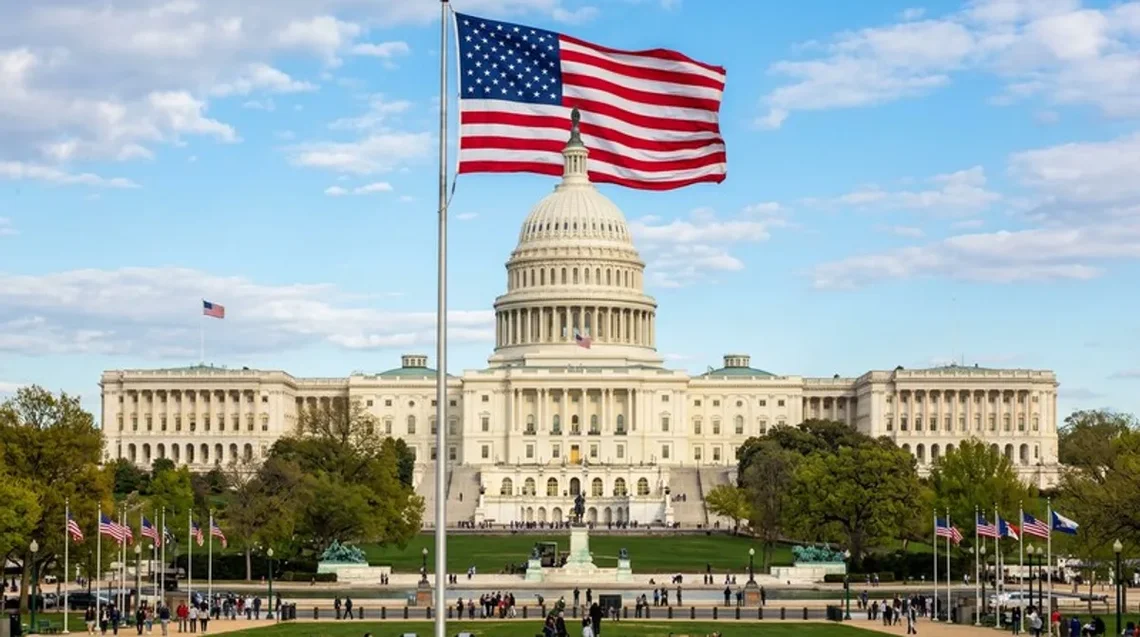
Senate Republicans voted to block a Democratic budget proposal this week, rejecting a package that would have increased federal spending on social programmes, healthcare, and climate initiatives by hundreds of billions of dollars. The procedural vote fell largely along party lines, deepening an already pronounced divide over the federal government's spending priorities and setting the stage for a prolonged fiscal standoff on Capitol Hill.
Key Positions: Republicans argue the Democratic proposal represents unsustainable deficit spending that would accelerate inflation and burden future generations with unmanageable debt. Democrats contend the plan is a necessary investment in working families, healthcare access, and climate resilience, warning that inaction will cost more in the long run. The White House has backed the Democratic framework, urging senators to advance the legislation and accusing Republicans of prioritising tax breaks for the wealthy over essential public services.
The Vote and Its Immediate Fallout
The Senate voted along a near-uniform party line to invoke cloture on the Democratic budget resolution, with the motion failing to reach the 60-vote threshold required to advance. Republicans held firm, with only a negligible number of members crossing the aisle, according to congressional records. The outcome was widely anticipated but nonetheless marked a significant moment in the ongoing battle over federal fiscal policy.
Procedural Mechanics and the Filibuster
The vote underscored the persistent role of the Senate filibuster as a structural barrier to legislation championed by the majority party. Democrats, who have argued for limiting or reforming the filibuster in specific budget contexts, found themselves once again unable to secure the supermajority necessary to proceed. Senate Majority leadership indicated it would continue to seek alternative legislative pathways, including budget reconciliation, officials said. The procedural complexity of the Senate means that even a budget resolution — a non-binding blueprint — can become mired in partisan obstruction before substantive debate begins.
Related Articles
| Category | Detail | Figure / Outcome |
|---|---|---|
| Cloture Vote Result | Votes in favour | 51 (fell short of 60-vote threshold) |
| Cloture Vote Result | Votes against | 49 |
| Proposed Democratic Spending Increase | Total additional expenditure (est.) | $3.5 trillion over ten years |
| CBO Deficit Projection | Baseline federal deficit (current fiscal year) | Approx. $1.9 trillion (Source: Congressional Budget Office) |
| Public Approval: Government Spending | Americans who favour increased social spending | 54% (Source: Gallup) |
| Public Approval: Deficit Reduction Priority | Americans prioritising deficit reduction | 47% (Source: Pew Research) |
| Republican Party-Line Hold | GOP senators voting against cloture | 49 of 49 |
Republican Arguments: Deficit Concerns and Fiscal Restraint
Senate Republicans framed their opposition in terms of long-term fiscal sustainability, arguing that the Democratic proposal would add trillions to the national debt at a moment when federal borrowing costs are already elevated. Senior Republican senators told reporters that the plan represented a fundamental misreading of economic conditions, pointing to persistently high interest rates and warnings from the Congressional Budget Office about the trajectory of the federal deficit.
GOP Priorities: Tax Policy and Economic Growth
Republicans have pushed an alternative fiscal vision centred on extending existing tax provisions — including elements of previous tax legislation — while reducing discretionary spending. Their argument, broadly, is that lower taxes and reduced regulatory burden stimulate private sector growth in ways that government spending cannot replicate. Critics of this position, however, note that independent analyses have repeatedly questioned whether such tax measures pay for themselves through increased economic activity, according to data published by the Congressional Budget Office (Source: Congressional Budget Office).
For related analysis of how this standoff fits into a broader pattern of fiscal confrontation, see Senate Republicans Block Democratic Budget Plan, which traces the legislative history of similar clashes in recent congressional sessions.
Democratic Response: Social Investment and the Cost of Inaction
Democratic leaders responded to the vote with pointed criticism, arguing that the Republican position amounted to protecting the interests of corporations and high-income earners at the expense of ordinary Americans. Senate Democrats contended that the proposed spending on childcare, healthcare subsidies, and clean energy infrastructure would generate long-term economic returns and reduce inequality, citing independent economic projections.
Healthcare and Climate as Flashpoints
Among the most contested elements of the Democratic proposal were substantial allocations for expanding Medicaid coverage, subsidising prescription drug costs, and funding clean energy transition programmes. Republicans argued these provisions represented government overreach into sectors better managed by market forces. Democrats countered that the healthcare provisions alone would reduce long-term federal outlays by lowering emergency care costs for the uninsured, officials said.
The climate spending component drew particularly sharp Republican criticism, with several senators characterising it as economically damaging to energy-producing states. Democrats argued the investment was essential to meeting international climate commitments and positioning the American economy competitively for the coming decades. Independent analysts have noted that the budgetary impact of climate spending is highly sensitive to assumptions about future energy prices and policy continuity (Source: Congressional Budget Office).
Readers seeking context on a comparable earlier confrontation between the two parties may find relevant background at Senate Republicans Block Biden Budget Proposal.
White House Position and Executive Pressure
The White House issued a statement expressing strong disappointment with the Senate outcome, reiterating its support for the Democratic framework and calling on Republican senators to engage in good-faith negotiations. Administration officials argued that the Republican blockade was part of a deliberate strategy to deny the majority party any legislative achievements on domestic policy, rather than a principled response to specific spending concerns, according to senior administration officials.
Presidential Messaging and Public Opinion
Polling data indicate that the White House faces a complicated public opinion landscape on budget issues. While a majority of Americans express support for increased spending on social programmes in the abstract, that support tends to erode when respondents are presented with the associated costs or deficit implications (Source: Gallup). Separately, Pew Research data show that public trust in the federal government's ability to spend money efficiently remains persistently low, complicating the Democratic messaging strategy (Source: Pew Research).
Administration officials have sought to reframe the debate around specific, tangible benefits — reduced drug prices, expanded childcare access, job creation in clean energy sectors — rather than aggregate spending totals, a communications approach designed to counteract the Republican narrative about reckless fiscal expansion.
Broader Political Context and Congressional Dynamics
The budget standoff is unfolding against a backdrop of significant electoral uncertainty, with control of both chambers of Congress potentially in play in upcoming elections. Both parties are acutely aware that fiscal debates will serve as a central battleground in those contests, shaping candidate positioning and voter mobilisation strategies across competitive districts and states.
Budget disputes of this nature have a long history in the modern Senate, and this confrontation follows a recognisable pattern. For a detailed account of a directly comparable earlier episode, see Senate GOP Blocks Democratic Budget Proposal, which examines the legislative and political dynamics of a previous Senate vote on Democratic fiscal priorities.
Reconciliation as a Potential Workaround
With the regular legislative pathway blocked, Democratic strategists are once again evaluating the viability of budget reconciliation, a procedural mechanism that allows certain fiscal legislation to pass the Senate with a simple majority rather than the 60-vote supermajority required under normal rules. Reconciliation is subject to significant restrictions — the Byrd Rule limits what provisions can be included — meaning that a reconciliation vehicle would require careful legislative construction to survive parliamentary challenge, officials said.
Congressional analysts note that the reconciliation process is itself politically fraught, as it requires near-unanimous Democratic caucus support in a chamber where ideological differences between moderate and progressive members remain significant. Earlier attempts to pass major legislation through reconciliation demonstrated the fragility of that coalition, according to reporting by the Associated Press (Source: AP).
Implications for Federal Spending and Governance
The failure of the budget resolution does not immediately trigger a government shutdown or disrupt existing appropriations, but it leaves the federal government without an agreed-upon fiscal framework for the period ahead. Absent a budget resolution, Congress operates under a continuing resolution or ad hoc appropriations process — a scenario that limits new programme spending and creates institutional uncertainty for federal agencies engaged in multi-year planning.
Analysts at major research institutions have noted that repeated failures to pass full-year budgets through regular order have compounding effects on government efficiency, procurement cycles, and workforce planning across federal departments. The Congressional Budget Office has previously documented the costs — both fiscal and operational — associated with governing by continuing resolution rather than through a fully enacted budget (Source: Congressional Budget Office).
Reuters has reported that financial markets are monitoring the budget standoff, with particular attention to whether the impasse could complicate the federal debt ceiling debate expected to intensify in the months ahead (Source: Reuters). A prolonged fiscal standoff, analysts warn, risks contributing to credit rating uncertainty and elevated borrowing costs for the federal government at a moment when the national debt is already at historically elevated levels.
For readers interested in how parallel budget confrontations have developed over time, the legislative record documented at Senate Republicans Block Democratic Budget Deal provides additional context on the recurring nature of these partisan standoffs and their legislative aftermath.
The immediate path forward remains uncertain. Senate Democratic leadership has indicated it will continue to pursue the budget priorities through whatever legislative mechanisms remain available, while Republicans have signalled no willingness to negotiate on the core spending figures at the centre of the dispute. With both sides showing limited flexibility and the electoral calendar beginning to shape political calculations, a resolution that commands genuine bipartisan support appears distant. The outcome of this standoff will likely define the contours of federal domestic policy for the foreseeable future, and its political reverberations are expected to extend well beyond Capitol Hill.