Senate delays immigration bill amid partisan clash
Democrats, Republicans gridlocked over border provisions
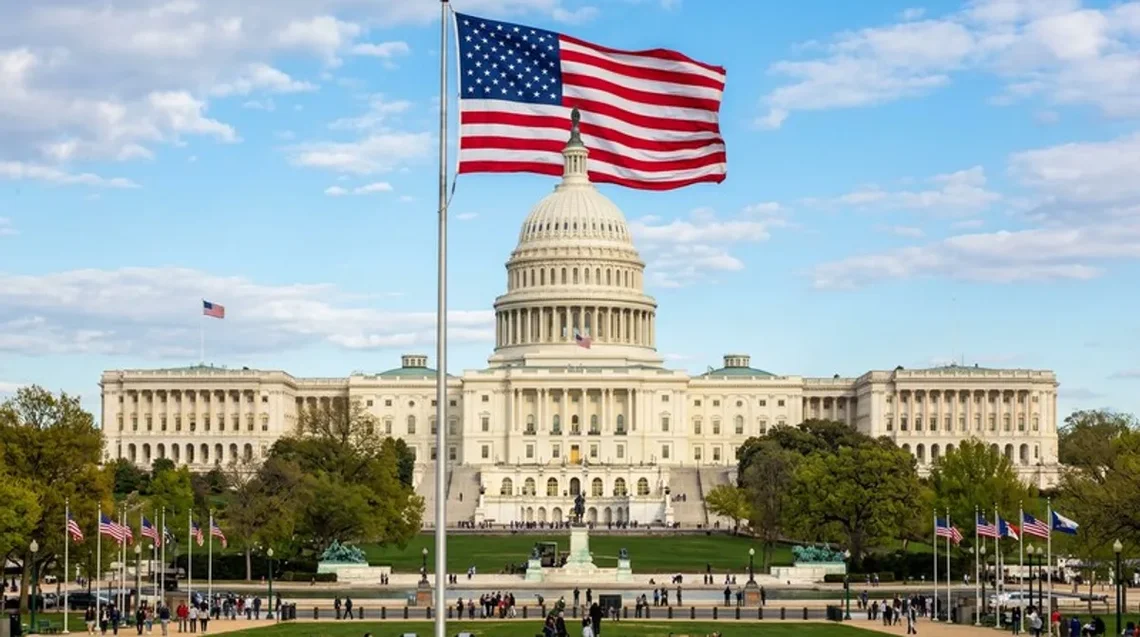
The United States Senate has stalled on a sweeping immigration overhaul bill, with lawmakers unable to bridge a deepening partisan divide over border security provisions, enforcement mechanisms, and pathways for undocumented migrants already living in the country. The legislative impasse, which has consumed weeks of floor debate, signals that comprehensive immigration reform remains as elusive as ever on Capitol Hill — despite mounting pressure from both parties to address record levels of migration at the southern border.
Key Positions: Republicans are demanding stricter enforcement triggers, expanded detention capacity, and accelerated deportation proceedings before agreeing to any legal status provisions; Democrats insist that any bill must include a defined pathway to citizenship for long-term undocumented residents and reject what they describe as punitive enforcement-only measures; the White House has called for a bipartisan solution but has stopped short of publicly endorsing any specific Senate text, leaving negotiators without a clear executive anchor.
The Breakdown on the Senate Floor
Procedural votes on the immigration package have repeatedly fallen short of the 60-vote threshold required to advance legislation through the Senate, exposing the fragility of any cross-aisle coalition on the issue. The most recent cloture vote ended with the chamber divided almost entirely along party lines, with only a handful of senators from either side crossing over — far fewer than negotiators had projected when talks intensified in recent weeks.
Procedural Maneuvering and Cloture Failures
Senate Majority leadership attempted to bring the bill to the floor under a structured amendment process designed to give both parties opportunities to offer modifications, but Republican leadership declined to participate on those terms, officials said. The procedural impasse mirrors patterns seen in earlier attempts at immigration legislation, including several high-profile failures in recent congressional sessions. According to reporting by the Associated Press, senior Republican aides indicated their conference was unwilling to advance any bill that did not include mandatory numerical caps on asylum claims — a provision Democrats have characterised as incompatible with existing international legal obligations. (Source: AP)
Related Articles
For further background on how similar dynamics have played out in recent sessions, see the reporting on Senate Republicans blocking immigration legislation in a partisan vote, which documented comparable procedural standoffs under previous legislative calendars.
Republican Demands: Enforcement First
Senate Republicans, led by their conference leadership, have coalesced around a set of non-negotiable demands that centre on operational control of the southern border before any expansion of legal protections for migrants. Their position has been reinforced by sustained pressure from conservative advocacy groups and a base that polls suggest is deeply sceptical of any bill perceived as amnesty.
Key Republican Provisions
Among the measures Republicans are insisting upon are a statutory "emergency authority" trigger that would allow executive branch officials to summarily restrict asylum claims when daily crossing numbers exceed a defined threshold, increased funding for Immigration and Customs Enforcement detention facilities, and mandatory cooperation agreements between federal immigration agencies and state and local law enforcement. GOP senators have also pushed for expedited removal proceedings to be extended further into the interior of the country — a significant expansion of existing authority that immigration lawyers and civil liberties organisations have sharply criticised.
According to data compiled by the Congressional Budget Office, expanded detention and enforcement operations of the scale Republicans are proposing would carry a substantial multi-year budgetary cost, though exact figures are contingent on implementation timelines and the volume of cases processed through an expanded immigration court system. (Source: Congressional Budget Office)
The ongoing Republican posture on border security echoes the position documented in coverage of Senate Republicans blocking comprehensive immigration reform — a pattern that analysts say reflects both ideological conviction and political calculation heading into a competitive electoral environment.
Democratic Objections: Pathway and Process
Senate Democrats have countered that a bill focused exclusively or predominantly on enforcement represents a fundamental misreading of the immigration system's structural failures. Democratic senators argue that without a durable legal pathway for the estimated eleven million undocumented individuals currently residing in the United States, enforcement-only measures will simply produce repeated cycles of crisis without addressing root causes.
The Citizenship Pathway Debate
At the centre of Democratic objections is a proposed provision — which Republican negotiators have flatly rejected — that would establish a multi-year conditional legal status for undocumented individuals who have resided continuously in the country for a defined period, with eventual eligibility for permanent residency and, thereafter, citizenship. Democrats have argued that such a mechanism is both economically rational and morally necessary, citing research from Pew Research Center indicating that a substantial majority of the undocumented population has lived in the United States for more than a decade and has significant family, economic, and community ties. (Source: Pew Research Center)
Progressive members of the Democratic caucus have gone further, warning that they will not support any final bill that trades a weakened citizenship pathway for enforcement expansions they describe as draconian. That internal pressure has complicated the negotiating position of moderate Democrats who had hoped to find a compromise formula acceptable to at least ten Republican senators — the minimum required to clear a filibuster.
The pattern of Democratic resistance to enforcement-heavy Republican proposals is documented in detail in coverage of Senate Democrats blocking a GOP immigration bill that similarly foundered on questions of legal status and enforcement scope.
Public Opinion and the Political Landscape
The partisan deadlock in the Senate is playing out against a backdrop of complex and at times contradictory public opinion on immigration. National polling consistently shows that large majorities of Americans favour both stronger border enforcement and some form of legal status for long-term undocumented residents — a combination that neither party's current legislative position fully reflects.
What Polling Shows
According to Gallup polling data, public concern about immigration has risen significantly in recent periods, with immigration now ranking among the top policy priorities cited by American adults — a shift that has intensified pressure on Congress to act but has not produced agreement on the direction of any legislation. The same data show that self-identified Republicans and Democrats hold sharply divergent views on enforcement mechanisms, with Republicans significantly more likely to prioritise border security as a precondition for any broader reform and Democrats more likely to prioritise legal protections and humanitarian considerations. (Source: Gallup)
Reuters reporting has noted that the political salience of immigration has grown in states well beyond the southern border, including traditionally purple states where candidates from both parties are recalibrating their messaging in response to constituent concern. (Source: Reuters)
| Measure | Figure | Source |
|---|---|---|
| Most recent Senate cloture vote (immigration bill) | Failed: approximately 48–49 (below 60-vote threshold) | Senate records / AP |
| Americans who say immigration is a "top priority" | Approx. 55% (up from 35% in prior survey period) | Gallup |
| US undocumented population estimate | Approx. 11 million individuals | Pew Research Center |
| Share of undocumented residents in US for 10+ years | Approx. 66% | Pew Research Center |
| Projected CBO cost of expanded detention (multi-year) | Tens of billions USD (range dependent on implementation scope) | Congressional Budget Office |
| Republicans prioritising border enforcement first | Approx. 78% | Gallup |
| Democrats prioritising legal protections first | Approx. 61% | Gallup |
White House Role and Executive Options
The Biden administration — and more recently, the Trump administration — has at various points invoked executive authority to modify immigration enforcement and processing procedures when Congress has failed to legislate, a pattern that critics on both sides argue reflects the dysfunction of the legislative branch on the issue. The current White House has signalled a preference for a legislative solution but has not publicly committed to a specific Senate text, leaving floor managers without clear executive direction and reducing the political cost to individual senators of walking away from negotiations.
Limits of Executive Action
Legal analysts and former administration officials have consistently noted that executive actions on immigration — whether executive orders, agency rule changes, or prosecutorial discretion policies — are inherently vulnerable to legal challenge and can be reversed by a subsequent administration, making them an unreliable substitute for durable statutory reform. The Congressional Budget Office has separately observed that enforcement-focused executive actions do not address the underlying structural pressures on the immigration court system, which carries a backlog of cases numbering in the millions. (Source: Congressional Budget Office)
The dynamic between executive action and congressional stalemate has been a recurring theme in immigration politics. The legislative history of Senate Republicans blocking immigration legislation in a party-line vote illustrates how repeated floor failures have historically pushed administrations of both parties toward executive workarounds that satisfy neither side of the debate.
Prospects for Compromise and the Path Ahead
With no imminent breakthrough visible on the Senate floor, attention has shifted to whether a smaller, more targeted package — addressing specific elements such as immigration court funding, asylum processing timelines, or legal work authorisation — might be able to attract sufficient bipartisan support to advance. Several moderate senators from both parties have reportedly begun informal discussions along those lines, though no formal framework has emerged publicly, officials said.
Analysts caution, however, that the political incentives militating against compromise remain powerful. For Republicans, being seen to deliver border security measures is a core electoral commitment, while for Democrats, any bill perceived as abandoning undocumented communities risks significant backlash from an energised progressive base. The mathematical reality of the Senate — where sixty votes are required to break a filibuster and partisan polarisation has narrowed the pool of potential cross-aisle votes to a handful of members — means that the structural obstacles to any comprehensive bill remain formidable regardless of the goodwill of individual negotiators.
As the Senate prepares to turn its attention to other legislative priorities — including government funding deadlines and foreign policy authorisations — the immigration bill appears likely to remain in procedural limbo for the foreseeable future. Whether the mounting political pressure from constituents, advocacy organisations, and executive branch officials will eventually prove sufficient to force a genuine compromise remains, for now, an open question. What is not in doubt is that the cost of continued inaction — measured in border processing backlogs, strained federal resources, and the unresolved status of millions of residents — continues to accumulate with each week the Senate fails to act.