Senate Republicans Block Biden Budget Deal
Spending talks collapse ahead of fiscal deadline
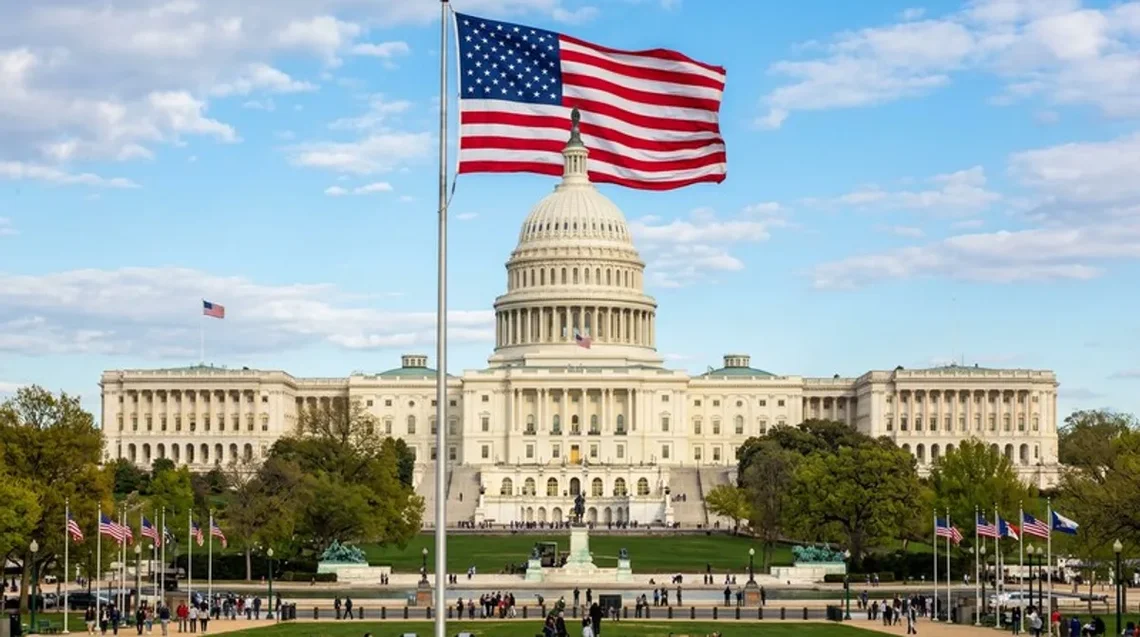
Senate Republicans voted along strict party lines to block a bipartisan budget framework negotiated between the White House and congressional Democrats, sending fiscal talks into disarray with a government funding deadline rapidly approaching. The procedural vote, which failed to clear the 60-vote threshold required for cloture, marks one of the most significant legislative collapses of the current congressional session and raises fresh questions about Washington's ability to govern amid deepening partisan fractures.
Key Positions: Republicans argue the proposed spending levels are fiscally irresponsible and fail to address what they describe as runaway government growth, insisting on deeper cuts to non-defence discretionary programmes before any deal can advance. Democrats contend the framework represented a reasonable compromise already conceding ground on overall spending caps, and accuse Republicans of manufacturing a crisis to extract politically motivated concessions. White House officials said President Biden remains committed to reaching a bipartisan agreement and called on Republican leadership to return to the negotiating table without preconditions, warning that a government shutdown would harm working Americans and damage the country's international standing.
The Vote and Its Immediate Fallout
The cloture motion to proceed with debate on the budget resolution failed by a vote of 47 to 51, with every Republican senator voting in opposition and two Democratic senators crossing the aisle in dissent. The result effectively shelves the spending framework for the foreseeable future, leaving appropriations committees without a binding top-line figure around which to organise the twelve annual spending bills required to fund the federal government.
Procedural Breakdown
Senate Majority Leader Chuck Schumer moved to force the vote after weeks of back-channel negotiations between White House budget director Shalanda Young and senior Republican appropriators produced what aides described as a near-final agreement on discretionary spending caps. The deal had been widely expected to pass in a modified form, making the scale of Republican opposition a significant surprise even to veteran Hill observers. Republican leadership indicated their caucus was unwilling to advance any measure that did not include additional restrictions on mandatory spending, a demand Democrats have consistently rejected as a non-starter.
Related Articles
Republican Strategy
Senior Republican senators made clear after the vote that their opposition was not merely procedural. Minority Leader Mitch McConnell told reporters the caucus viewed the current fiscal trajectory as unsustainable and would not lend credibility to a process they believe understates the long-term deficit consequences of continued spending at current levels. Several conservative members cited projections from the Congressional Budget Office, which has warned that the federal deficit is on a path to exceed $2 trillion annually within the current decade, as justification for their position. (Source: Congressional Budget Office)
| Vote Breakdown | For Cloture | Against Cloture | Not Voting |
|---|---|---|---|
| Democrats | 45 | 2 | 1 |
| Republicans | 0 | 49 | 2 |
| Independents | 2 | 0 | 0 |
| Total | 47 | 51 | 3 |
Budget Figures at the Heart of the Dispute
The framework that Republicans blocked would have set total discretionary spending at approximately $1.59 trillion for the coming fiscal year, split roughly evenly between defence and non-defence programmes. Democrats had already accepted a nominal freeze on non-defence spending compared to current levels — a significant concession from the White House's initial position — but Republicans pushed for cuts of between eight and ten per cent in real terms, a demand the administration said would gut programmes serving veterans, low-income families, and federal scientific research.
Spending Cap Negotiations
The gap between the two sides ultimately centred on a dispute over roughly $80 billion in non-defence discretionary spending. Republican appropriators argued that any deal acceptable to their conference had to include caps enforceable by automatic sequestration mechanisms, similar to the framework used in the Budget Control Act. Democratic appropriators countered that sequestration triggers had caused documented harm to agency functioning throughout the previous decade and were not a model worth repeating. According to senior Hill aides speaking on condition of anonymity, negotiations collapsed when it became clear Republican leadership would not grant appropriators the flexibility to present the deal to their members as a genuine compromise. (Source: Reuters)
| Spending Category | White House Proposal | Republican Counter | Difference |
|---|---|---|---|
| Defence Discretionary | $886bn | $895bn | +$9bn |
| Non-Defence Discretionary | $704bn | $624bn | -$80bn |
| Total Discretionary | $1.59tn | $1.52tn | -$70bn |
Public Opinion and the Political Stakes
The collapse of budget talks arrives at a moment of considerable public frustration with congressional dysfunction. A survey conducted by Gallup found that approval of Congress stands near historic lows, with a majority of Americans across partisan lines expressing dissatisfaction with the pace and quality of legislative output from Capitol Hill. The same polling found that government spending and the federal deficit rank among the top five economic concerns for American voters heading into the next electoral cycle. (Source: Gallup)
Partisan Perception Gaps
Research from Pew Research Center shows a wide divergence in how Republican and Democratic voters perceive the core problem. Republican-leaning respondents consistently identify overall spending levels as the primary fiscal concern, while Democratic-leaning respondents place greater emphasis on protecting social safety net programmes and investing in infrastructure and clean energy. This divergence in voter priorities maps almost precisely onto the negotiating positions that caused the current collapse, suggesting neither side faces significant electoral pressure to compromise in the near term. (Source: Pew Research Center)
Analysts note that the political risk calculation for Republicans is relatively straightforward: blocking a Biden budget deal plays well with a primary electorate that has consistently demanded fiscal austerity and minimal accommodation of Democratic priorities. For Democrats, the calculus is more complex. A government shutdown — the logical endpoint of continued deadlock — typically generates negative headlines for all parties, but polling data suggests voters disproportionately assign blame to whichever party they believe is being obstructionist. According to analysis cited by the Associated Press, that assignment of blame has shifted more than once during recent shutdown episodes, making confident predictions about electoral consequences unreliable. (Source: AP)
Shutdown Risk and Congressional Calendar
With the current continuing resolution funding the government set to expire, congressional leaders have limited time to either negotiate a new stopgap measure or reach a substantive agreement on full-year appropriations. Leadership aides in both chambers said discussions about a short-term continuing resolution are underway, though Republicans in the House have resisted additional stopgap measures, arguing that they simply defer difficult decisions without resolving the underlying fiscal dispute.
House Republican Complications
The dynamics in the Senate cannot be fully understood without reference to the House, where a slim Republican majority has consistently limited Speaker Mike Johnson's negotiating flexibility. The House Freedom Caucus has made clear it will not support any spending agreement that does not include significant reductions from current levels, and several of its members have threatened to move against Johnson's speakership if he is seen as capitulating to Democratic demands. This internal Republican pressure has effectively constrained the ability of Senate Republican leadership to accept even modest compromises, as any deal negotiated in the upper chamber would ultimately need to pass the lower chamber where the ideological margin for manoeuvre is extremely narrow. The pattern mirrors legislative breakdowns seen in earlier confrontations over immigration policy, including the Senate Republicans blocking immigration reform in a vote that similarly exposed the gap between what negotiators could agree upon and what the broader Republican conference would accept.
Similar dynamics were at play when the Senate Republicans blocked the immigration bill in a party-line vote, a result that analysts said reflected the same structural constraint now complicating budget talks: the Senate Republican conference lacks the internal consensus to support any measure that could be characterised as a compromise with the Biden administration.
White House Response and Path Forward
Senior administration officials said the President was briefed on the vote shortly after the result was announced and expressed frustration with what the White House characterised as Republican intransigence. Press secretary Karine Jean-Pierre told reporters at the daily briefing that the administration remained open to negotiations but would not accept a framework that, in her words, hollowed out investments that Americans depend on. Officials declined to specify whether the White House would consider any additional concessions on the non-defence spending figure as part of a renewed negotiating effort.
Democratic Legislative Options
Democratic senators huddled after the vote to assess their options. Among the scenarios under active discussion, according to aides familiar with the conversations, is an attempt to pass a clean continuing resolution through the end of the fiscal year while simultaneously mounting a public pressure campaign to highlight the programmes that would be cut under the Republican counter-proposal. There is also discussion of linking the budget dispute to broader legislative priorities, though procedural constraints in the Senate make that approach complicated. Democrats faced a similar strategic dilemma during earlier confrontations with the Republican majority, including when Senate Republicans blocked the Democratic budget plan in a vote that eventually forced a renegotiation of appropriations timelines extending well into the following calendar year.
Budget analysts noted that the collapse of talks is not without precedent. Earlier confrontations examined by historians of congressional procedure show that some of the most consequential appropriations agreements in recent decades emerged only after a period of apparent total breakdown, as external pressure from markets, federal agency heads, and constituent groups ultimately compelled both sides to return to the table. Whether that dynamic will repeat itself in the current environment is an open question, but there is little indication at this stage that either party is prepared to offer the concessions that a durable agreement would require.
Broader Legislative Context
The budget collapse does not occur in isolation. It is the latest in a sequence of high-profile legislative failures that have characterised relations between the administration and the Republican-controlled House. As previously reported, Senate Republicans blocked a Democratic immigration bill earlier in the session after months of bipartisan negotiations appeared to be nearing a conclusion, a breakdown that drew sustained criticism from border state officials in both parties. The recurrence of this pattern — negotiations advancing to a late stage before collapsing under pressure from conservative hardliners — has led several veteran appropriators and former budget directors to question whether the current congressional configuration is structurally capable of producing the kind of compromise legislation that routine government funding requires.
For the moment, federal agencies are operating under instructions to begin preliminary contingency planning for a potential funding lapse, a process that involves identifying which personnel and programmes would be classified as essential and therefore permitted to continue operating without appropriated funds. Whether those contingency plans will need to be activated depends on whether congressional leaders can find a path through a political environment that has, once again, proven more resistant to resolution than most observers anticipated.