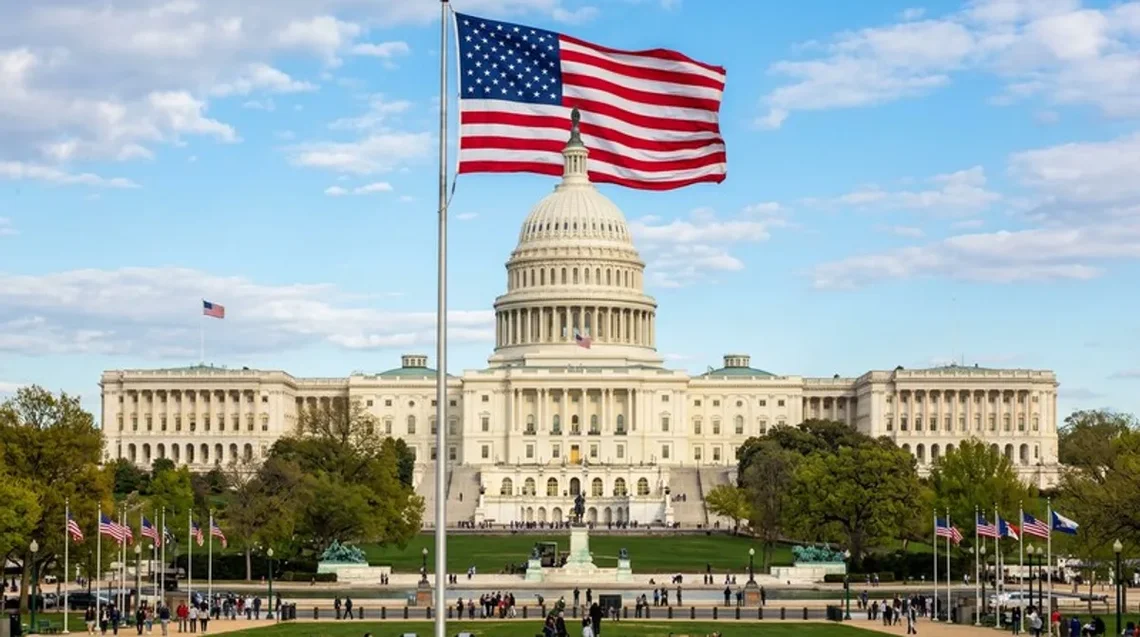
Senate Democrats block immigration bill over border spending
Party divide widens on enforcement versus humanitarian concerns

Senate Democrats blocked a Republican-backed immigration and border security bill on Wednesday, with the measure falling short of the 60-vote threshold needed to advance in a procedurally fractured chamber. The failed vote, which ended 48 to 49 in favour of advancement, underscores a deepening partisan divide over whether federal immigration policy should prioritise enforcement infrastructure or humanitarian protections for migrants and asylum seekers.
Key Positions: Republicans argue the legislation would close critical loopholes in asylum law, increase deportation capacity, and fund additional Border Patrol personnel; Democrats contend the bill allocates disproportionate resources to enforcement while gutting legal pathways for asylum seekers and stripping due process protections; White House officials have urged the Senate to pass border security legislation swiftly, warning that executive action alone is insufficient to address current migration flows along the southern border.
A Vote That Exposes the Fault Lines
The bill, introduced by a coalition of Republican senators and co-sponsored by a small number of independents, sought to appropriate several billion dollars in new border infrastructure funding, expand the use of expedited removal proceedings, and impose stricter limits on the use of humanitarian parole. Democratic leadership argued the measure was drafted without meaningful bipartisan input and would effectively dismantle safeguards that have governed asylum processing for decades.
The Procedural Battle
Under Senate rules, a cloture vote requiring 60 votes is necessary to end debate and proceed to a final vote on most major legislation. The bill's sponsors failed to secure a single Democratic crossover vote, leaving the measure well short of the supermajority threshold. Senate Majority Leader Chuck Schumer announced the result from the chamber floor and called on Republicans to return to negotiations. Republican leadership, in turn, accused Democrats of obstructing border security for political reasons, officials said.
Related Articles
This is not the first time such legislation has stalled in the upper chamber. A review of recent congressional history shows a recurring pattern of competing bills dying in procedural votes. Readers following earlier episodes of this ongoing legislative impasse can refer to previous reporting on how Senate Democrats blocked a Trump-era immigration bill and the circumstances that have repeatedly frustrated enforcement-focused legislation.
What the Bill Would Have Done
The legislation contained several key provisions that attracted both support and fierce opposition. Supporters argued the package was the most comprehensive border security investment proposed in years, while critics said its enforcement-heavy framework would expose vulnerable populations to accelerated deportation without adequate legal recourse.
Enforcement and Infrastructure Provisions
The bill called for an additional 1,500 Border Patrol agents, expansion of immigration detention facilities along the southern border, and new technology for surveillance and processing. It also proposed changes to Title 8 statute that would have limited the ability of immigration judges to grant continuances in removal cases, a provision that immigration attorneys described as particularly concerning for due process, according to reporting by the Associated Press (Source: Associated Press).
A Congressional Budget Office analysis of similar legislation estimated that expanded enforcement provisions could reduce net migration over a ten-year window by several hundred thousand individuals, though the same analysis noted increased costs associated with detention and deportation infrastructure (Source: Congressional Budget Office).
Asylum and Humanitarian Pathway Changes
Perhaps the most contentious section of the bill would have curtailed the credible fear standard used in initial asylum screenings — the legal threshold that determines whether a migrant's claim is sufficient to advance to a full hearing. Civil liberties organisations and refugee advocates warned the proposed changes could result in the rapid return of individuals with genuine protection needs to countries where they face serious harm. Democratic senators cited these concerns directly in floor speeches, describing the provisions as incompatible with United States obligations under international refugee law.
| Metric | Figure | Source |
|---|---|---|
| Cloture vote result (Yes/No) | 48 – 49 | U.S. Senate |
| Votes needed to advance | 60 | Senate Procedure |
| Americans who say immigration is a top priority | 28% | Gallup |
| Americans who favour stricter border enforcement | 55% | Pew Research |
| Americans who support a pathway to legal status for long-term residents | 73% | Pew Research |
| Estimated 10-year cost of enforcement provisions | $28 billion | Congressional Budget Office |
| Democratic crossover votes secured | 0 | U.S. Senate |
Democratic Opposition: Strategy or Principle?
The unanimous Democratic opposition to Wednesday's cloture vote reflects both ideological conviction and tactical calculation. Senior Democratic senators insisted the bill represented a fundamental departure from humanitarian norms, but several moderate members privately acknowledged the political cost of appearing soft on border security ahead of competitive elections, according to sources familiar with the internal discussions.
The Progressive-Moderate Tension Within the Party
Progressive members of the Democratic caucus have consistently argued that enforcement spending without commensurate investment in immigration courts, legal aid, and processing capacity merely displaces rather than solves the problems at the border. They point to a backlog exceeding three million pending immigration cases in the United States immigration court system as evidence that enforcement alone is insufficient. Moderate Democrats, by contrast, have been more willing to consider targeted enforcement measures, provided they are coupled with legal pathway expansions — a condition the Republican bill did not meet, officials said.
The internal party tension on this issue mirrors dynamics that have played out in earlier congressional sessions. Analysis of the vote also invites comparison to how Senate Democrats blocked a GOP immigration bill in a prior session, when similar enforcement-only framing proved equally untenable to the minority caucus.
Republican Reaction and the Path Forward
Senate Republican leadership responded to Wednesday's failed vote with pointed criticism, arguing that Democrats had once again chosen political posturing over border security. Senator Mitch McConnell and other senior Republicans held a news conference shortly after the vote, where they called on the White House to pursue aggressive executive action in the absence of legislation, officials said.
Prospects for Bipartisan Compromise
The prospects for a bipartisan compromise in the near term appear limited. A small group of senators from both parties had previously attempted to negotiate a package combining enforcement funding with a partial restoration of humanitarian parole and additional immigration judge appointments. Those negotiations collapsed earlier this year after facing opposition from hardline members on both sides, according to reporting by Reuters (Source: Reuters).
Analysts note that the current configuration of the Senate makes it structurally difficult to pass immigration legislation without meaningful bipartisan cooperation, given the 60-vote cloture requirement. This pattern is consistent with a longer trend in which immigration reform bills have repeatedly failed at the procedural stage regardless of which party controls the chamber. The historical record on this point is extensively documented: the cycle of legislative failures extends to Republican-sponsored measures as well, as seen when Senate Republicans blocked an immigration reform bill put forward by Democrats in a prior Congress.
Public Opinion and the Electoral Stakes
Public polling presents a complicated picture for both parties. Data from Pew Research show that a majority of Americans favour stricter border enforcement, yet a substantially larger majority simultaneously support a pathway to legal status for undocumented individuals who have lived in the United States for an extended period (Source: Pew Research). Gallup polling indicates that immigration ranks among the top policy concerns for a significant segment of the electorate, though it consistently trails economic issues in overall salience (Source: Gallup).
Swing State Vulnerabilities
For Democratic senators facing re-election in competitive states, Wednesday's vote carries electoral risk. Republican campaign committees are already preparing advertisements highlighting Democratic opposition to what they describe as straightforward border security legislation. Democratic strategists, however, argue that framing enforcement-only bills as comprehensive solutions misrepresents the complexity of immigration management and that voters ultimately respond to results rather than votes, officials said.
The White House has sought to navigate the political terrain carefully, publicly endorsing bipartisan border legislation while stopping short of explicitly endorsing any specific Republican measure. Administration officials have continued to defend executive actions taken recently as lawful and necessary, even as Republicans argue those measures do not go far enough.
Legislative History and What Comes Next
Wednesday's vote is the latest in a long series of immigration-related legislative failures spanning multiple congressional sessions. Comprehensive immigration reform has eluded Congress for more than two decades, with major efforts collapsing at various stages of the legislative process. The most recent high-profile bipartisan attempt, a Senate negotiated package from earlier this year, was withdrawn before a vote after facing opposition from within both caucuses.
Senate Republican leaders have indicated they intend to bring similar legislation back to the floor in coming weeks, a procedural tactic designed to keep the issue prominent in the public debate. Democrats have signalled they will continue to oppose enforcement-only frameworks, with leadership stating they remain open to negotiations on a comprehensive package that includes both security and legal pathway components. Whether those competing positions can be reconciled remains the central question facing both parties as the legislative calendar shortens.
For context on how this most recent failure compares with earlier attempts in the current Congress, see previous coverage of how Senate Democrats blocked the latest Trump immigration bill — a reminder that the current stalemate has deep and repeated roots in this Congress alone. Whether the political will exists on either side to bridge the enforcement-versus-humanitarian divide before the next election cycle remains, by all available evidence, deeply uncertain.