Senate Divided Over Immigration Bill as Recess Looms
Competing proposals clash over border enforcement funding
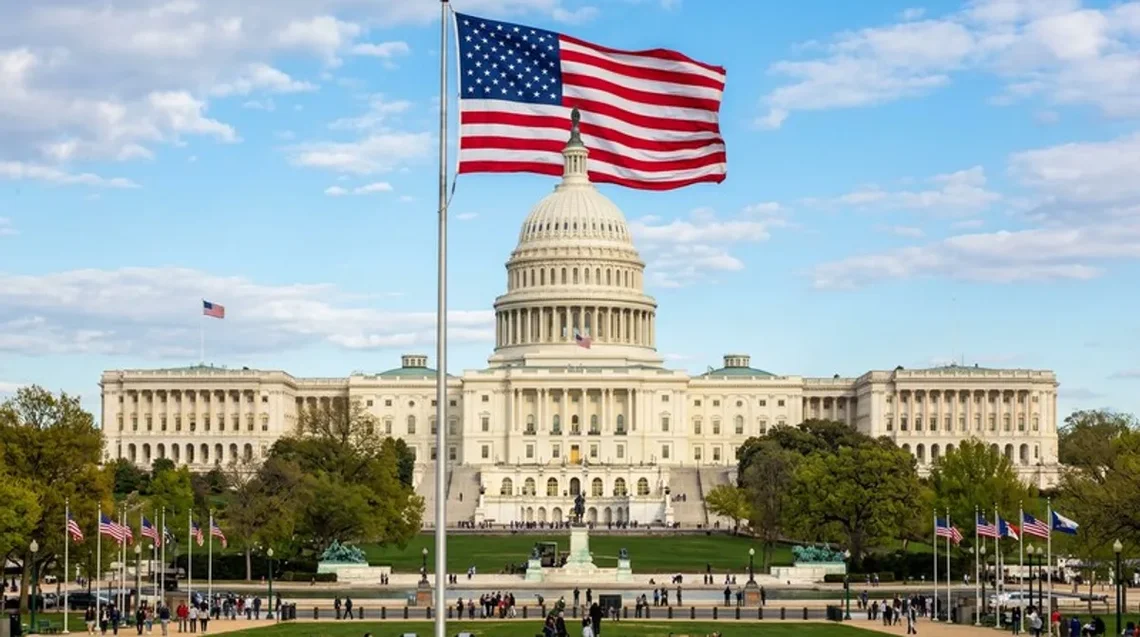
The United States Senate remains sharply divided over a sweeping immigration and border security bill, with competing Republican and Democratic proposals clashing over funding levels, enforcement mechanisms, and asylum procedures as lawmakers face mounting pressure to reach a deal before a scheduled congressional recess. The standoff threatens to leave border policy in a state of limbo, frustrating both parties' core constituencies and reigniting one of the most contentious debates in American political life.
Key Positions: Republicans are demanding significantly higher allocations for border patrol staffing, physical barriers, and expedited deportation authority, insisting that without robust enforcement measures any legislative framework will fail to deter illegal crossings. Democrats argue that enforcement-only approaches are both costly and constitutionally dubious, calling instead for a balanced package that expands legal immigration pathways, modernises the asylum adjudication system, and provides a route to legal status for long-term undocumented residents. The White House has signalled openness to a bipartisan framework but has stopped short of endorsing specific Senate proposals, leaving negotiators without a clear executive anchor as talks intensify.
The State of Play on Capitol Hill
Senate leaders from both parties have traded competing proposals over recent weeks, with neither side yet securing the 60 votes required to advance legislation past a procedural filibuster threshold. The dynamic mirrors a pattern of recurring legislative breakdowns that has defined immigration policymaking for more than two decades, according to analysts tracking the negotiations.
Senior Republican senators have coalesced around a proposal centred on sharp increases in funding for Customs and Border Protection, expanded use of expedited removal proceedings, and stricter limits on parole authority — the executive power that allows the administration to permit certain migrants to enter the country temporarily. Democrats have countered that such measures, taken in isolation, would strip vulnerable asylum seekers of due process protections and place an undue administrative burden on immigration courts already operating at significant backlogs.
Related Articles
This latest legislative clash follows a series of high-profile failures in recent sessions. Readers tracking the broader pattern of congressional inaction can refer to earlier reporting on how Senate inaction on immigration has repeatedly intersected with electoral pressure, complicating the calculus for members facing competitive races.
The Filibuster Problem
The 60-vote threshold in the Senate remains the central structural obstacle to progress, and neither party currently holds sufficient cross-aisle support to clear it. Republican leadership has floated the idea of procedural manoeuvres to advance the bill with a simple majority, but such a move would require unanimous consent from the Republican caucus — a prospect that remains uncertain given ongoing internal disagreements over which provisions to prioritise, officials said.
Recess Pressure and the Legislative Clock
The looming congressional recess is intensifying pressure on negotiators, with Senate leadership acknowledging that failure to act before the break could effectively shelve serious legislative activity for an extended period. Several moderate senators from both parties have urged party leaders to extend floor debate time and allow amendment votes, arguing that a narrow, targeted package addressing the most acute operational needs at the border might be achievable even in the limited window remaining, according to congressional aides familiar with the discussions.
Funding Disputes at the Core of the Disagreement
At the centre of the legislative fight is a fundamental disagreement over how much federal money should be allocated to border enforcement infrastructure versus immigration court processing and humanitarian support systems. Republicans have proposed figures running into the tens of billions of dollars for physical barriers, surveillance technology, and additional Border Patrol agents. Democrats have challenged those numbers as fiscally excessive and operationally unrealistic, pointing to longstanding recruitment and retention problems within Customs and Border Protection that they argue would prevent rapid scaling of personnel regardless of appropriations levels.
An analysis by the Congressional Budget Office of prior border security proposals found that large-scale infrastructure investments tended to produce modest reductions in unlawful crossings over the short term while generating significant long-term maintenance costs — a finding that Democratic negotiators have repeatedly cited in floor speeches as evidence that enforcement spending alone does not resolve the underlying drivers of migration (Source: Congressional Budget Office).
Republican Priorities on Enforcement
Republican senators pushing the bill's enforcement provisions argue that the current administration has failed to use existing statutory authorities to their full extent, resulting in what they characterise as a permissive border environment that has encouraged record numbers of crossings in recent years. Their proposal includes mandatory detention for certain categories of migrants pending adjudication, stricter limits on the use of humanitarian parole, and new authority for state governors to take a more active role in border management — a provision that critics say raises significant constitutional questions about the separation of federal and state powers in immigration enforcement.
Democratic Counterproposals
Senate Democrats, while acknowledging the need for improved border management, have insisted that any acceptable legislation must include provisions to clear the existing backlog of immigration court cases — currently running into the millions of pending matters — by hiring additional immigration judges and support staff. They have also called for restoration of certain humanitarian protections that were curtailed in recent years and for a dedicated legal pathway for migrants who arrived in the country as minors and have since established long-term community ties, according to legislative summaries reviewed by this correspondent.
What the Polling Shows
Public opinion on immigration remains deeply polarised but contains nuances that both parties claim support their respective positions. Survey data consistently show that majorities of Americans support stricter border enforcement, but similar majorities also express support for legal pathways and humane treatment of asylum seekers — a combination of views that reflects the genuine complexity of the policy debate rather than a clear mandate for either party's approach (Source: Gallup).
| Metric | Figure | Source |
|---|---|---|
| Americans who say immigration is an "extremely important" policy issue | 55% | Gallup |
| Americans who support stricter border enforcement measures | 62% | Pew Research Center |
| Americans who support a legal pathway for long-term undocumented residents | 57% | Pew Research Center |
| Senate votes needed to clear filibuster threshold | 60 | U.S. Senate procedural rules |
| Estimated pending immigration court cases (backlog) | 3.5 million+ | Congressional Budget Office |
| Proposed Republican border enforcement appropriation (approximate) | $40 billion+ | AP |
A Pew Research Center survey conducted recently found that immigration has become one of the top-rated concerns among registered voters, with the issue ranking particularly high among Republican-leaning respondents but also rising notably among independent voters — a shift that both parties are factoring into their legislative strategies as the next electoral cycle draws closer (Source: Pew Research Center).
A History of Legislative Failure
The current impasse is far from unprecedented. The Senate has repeatedly advanced bipartisan immigration frameworks only to see them collapse under pressure from ideological flanks within both parties or from the House of Representatives, which has historically taken a harder line on enforcement-only approaches. Previous attempts at comprehensive reform have generated considerable legislative momentum before stalling at critical procedural junctures.
The pattern of Republican obstruction on bipartisan frameworks has been extensively documented in prior congressional sessions. Reporting on how Republican senators have blocked immigration reform at key legislative moments provides important context for understanding the structural barriers facing current negotiators.
Equally, Democratic opposition to enforcement-heavy bills has contributed to the gridlock from the other direction. Coverage of how Senate Democrats have blocked GOP immigration bills in recent sessions illustrates the degree to which neither party has been willing to accept the other's core conditions as the price of a deal.
The Role of External Pressure Groups
Advocacy organisations on both sides of the debate have been intensively lobbying Senate offices ahead of the recess deadline. Immigration restriction groups aligned with the Republican base have warned senators against accepting any bill that includes what they characterise as "amnesty" provisions, while immigrant rights organisations and faith-based advocacy networks have pressured Democratic senators not to concede on due process protections or humanitarian support measures, according to lobbying disclosures and statements from advocacy groups reviewed by this correspondent.
White House Positioning and Executive Action
The administration's approach to the legislative standoff has been characterised by studied ambiguity. White House officials have repeatedly stated their preference for a legislative solution over executive action, arguing that only an act of Congress can produce durable, legally defensible immigration policy. However, the administration has simultaneously moved to expand the use of certain executive authorities at the border, a strategy that critics on both sides say undermines the urgency of the congressional process.
Reuters has reported that senior administration officials have held separate back-channel conversations with both Republican and Democratic negotiators, attempting to identify the minimum set of provisions acceptable to each side that might form the nucleus of a compromise bill (Source: Reuters). Those talks have not yet produced a publicly announced framework, and administration officials have declined to characterise their status in detail.
The spending dimensions of the immigration debate also intersect with the broader fiscal pressures confronting the Senate, as detailed in coverage of the Senate's parallel deadlock over the federal spending bill, where appropriations disagreements have further complicated the legislative calendar and reduced the available floor time for immigration debate.
Outlook and Next Steps
Senate Majority leadership has indicated it intends to bring at least one immigration measure to the floor for a procedural vote before the recess, even if that vote is expected to fall short of the 60-vote threshold — a tactic designed to establish a public record of where individual senators stand on the issue ahead of the next electoral cycle. Both parties are acutely aware that a failed vote can be as politically useful as a successful one, depending on how it is framed to home-state constituencies.
Whether a genuine compromise can emerge in the limited time remaining is regarded by veteran Senate observers as unlikely in the immediate term, though several centrist members from competitive states have not abandoned negotiations. The trajectory of the talks will depend heavily on whether party leadership on either side concludes that a partial deal serves their political interests better than continued stalemate — a calculation that, in the current environment, remains genuinely uncertain, according to aides on both sides of the aisle familiar with the internal deliberations.
For now, the Senate remains what it has repeatedly been on the question of immigration: a chamber in which the political will for comprehensive reform is perpetually claimed by its members yet consistently eludes the institutional mechanisms required to produce it. With the recess clock running and neither side prepared to yield on its fundamental demands, the prospect of meaningful legislative action on border policy appears, once again, to be receding into the middle distance of American political life.