Senate GOP Blocks Democratic Budget Proposal
Spending impasse threatens government funding deadline
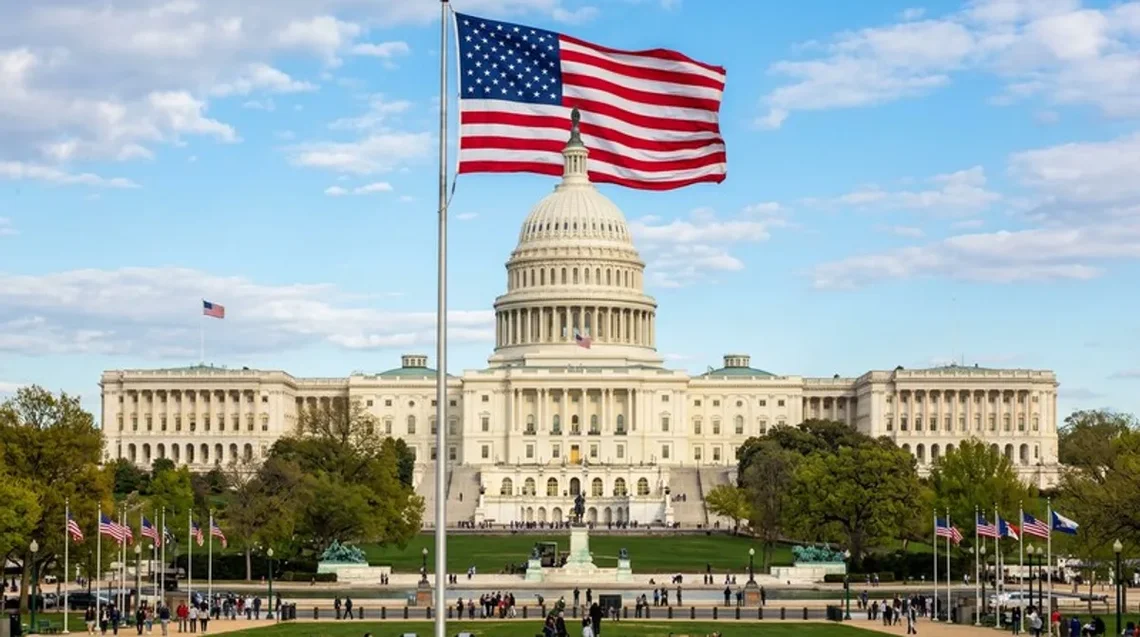
Senate Republicans have blocked a Democratic budget proposal in a party-line procedural vote, deepening a spending impasse that now threatens to push the federal government toward a funding deadline with no clear resolution in sight. The move, which came after hours of floor debate, underscores the widening fiscal gulf between the two parties at a moment when government agencies face mounting uncertainty over their operational budgets.
The motion to proceed failed along strict partisan lines, with not a single Republican crossing the aisle to support the Democratic framework. Senate Majority Leader Chuck Schumer condemned the outcome as a "deliberate act of fiscal sabotage," while Republican leaders argued the Democratic plan represented reckless and unaffordable spending that American taxpayers could not sustain, according to statements from both party offices.
Key Positions: Republicans argue the Democratic budget proposal dramatically expands federal spending without adequate offsets, worsening the national deficit, and have called for cuts to discretionary programmes as a prerequisite for any bipartisan agreement. Democrats contend that Republican demands would gut funding for healthcare, education, and social safety net programmes relied upon by millions of Americans, and insist that new revenue measures must be part of any final deal. The White House has expressed strong support for the Democratic framework, warning that Republican obstruction risks triggering a government shutdown that would harm federal workers, contractors, and the delivery of essential public services.
The Vote and Its Immediate Fallout
The procedural vote, which required 60 votes to advance under Senate rules, fell well short of that threshold. The final tally reflected a chamber as divided as at any point in recent memory on questions of federal fiscal policy.
Related Articles
How the Numbers Broke Down
| Vote Category | Result | Threshold Required |
|---|---|---|
| Votes in Favour (Democrats) | 47 | 60 needed to proceed |
| Votes Against (Republicans) | 51 | — |
| Republican crossover votes | 0 | — |
| Democratic defections | 0 | — |
| Projected annual deficit under Democratic plan (CBO estimate) | $1.9 trillion | — |
| Projected annual deficit under Republican alternative | $1.5 trillion | — |
| Days until current continuing resolution expires | Fewer than 30 | — |
Officials from the Congressional Budget Office have projected that without a new funding agreement, several non-essential government functions would begin to wind down operations within weeks of the current continuing resolution lapsing. (Source: Congressional Budget Office)
Republican Justification
Senate Minority — now Majority — Republicans framed the vote as a necessary stand against what they characterised as a structurally imbalanced spending blueprint. Senior Republican appropriators said the Democratic plan relied too heavily on one-time accounting manoeuvres and failed to address the long-term trajectory of mandatory spending. GOP leaders also pushed back against proposed increases in domestic discretionary funding, which they argued would add hundreds of billions to the national debt over the coming decade, officials said.
This pattern of Republican procedural resistance is consistent with earlier episodes. As documented in previous reporting on how Senate Republicans block Biden budget proposals, the party has consistently used its ability to deny cloture as a structural brake on Democratic fiscal ambitions, regardless of White House pressure.
Democratic Response and the Path Forward
Democratic leaders emerged from the chamber visibly frustrated, with several members describing the Republican position as negotiating in bad faith. Schumer and senior appropriators on the Democratic side have insisted they are prepared to negotiate but will not accept a final agreement that eliminates or dramatically reduces funding for Medicaid, housing assistance, or Title I education grants.
White House Pressure Campaign
Administration officials have spent recent weeks lobbying moderate Republicans behind the scenes in an effort to peel off at least a handful of votes, according to sources familiar with the discussions. Those efforts have so far yielded no public commitments from the Republican side, and White House officials acknowledged that the prospects for a near-term breakthrough remain uncertain. The administration has also declined to publicly endorse any fallback option, such as another short-term continuing resolution, though budget officials have privately signalled that a clean stopgap measure may ultimately prove unavoidable.
The current standoff echoes earlier confrontations between the two chambers and the executive branch. Observers tracking the pattern note the similarities to previous legislative clashes examined in coverage of Senate Republicans blocking Democratic budget plans, where similar procedural tools were deployed to halt Democratic spending frameworks from advancing to a full floor vote.
Public Opinion and the Political Stakes
The budget standoff arrives at a politically delicate moment for both parties. Recent polling data suggests voters remain deeply ambivalent about both parties' fiscal credibility, even as the practical consequences of a potential shutdown loom larger in news coverage.
| Survey Question | Result | Source |
|---|---|---|
| Approve of Congress's handling of the budget | 18% | Gallup |
| Blame Republicans more for shutdown risk | 38% | Pew Research |
| Blame Democrats more for shutdown risk | 29% | Pew Research |
| Blame both parties equally | 26% | Pew Research |
| Say reducing the deficit is a top priority | 57% | Gallup |
| Oppose cuts to Social Security and Medicare | 71% | Pew Research |
(Source: Gallup, Pew Research Center)
Swing State Dynamics
Political analysts tracking competitive Senate and House races note that the shutdown risk creates particular vulnerabilities in states where large numbers of federal workers, military contractors, and government benefit recipients form a significant portion of the electorate. Republicans holding seats in states with substantial federal employment bases face potential backlash if a shutdown materialises, while Democrats in fiscally conservative districts must navigate constituent scepticism about unchecked spending growth, according to analysts cited by AP. (Source: Associated Press)
The Mechanics of a Potential Government Shutdown
Should Congress fail to pass either a full-year appropriations package or a new continuing resolution before the current funding authority lapses, a broad range of federal activities would be affected. Essential services — including military operations, law enforcement, and air traffic control — would continue under emergency authority, but hundreds of thousands of federal workers in non-essential roles could be placed on furlough without pay.
Agency-Level Impacts
Budget analysts and agency officials have outlined a cascading series of consequences in the event of a prolonged shutdown. National parks and monuments would close to visitors. Processing of new Social Security applications and passport renewals would slow significantly. Federal courts would operate on reduced capacity after exhausting available carry-forward funds. Small business loan approvals and rural housing assistance programmes administered by several cabinet departments would halt, officials said.
The Congressional Budget Office has previously documented that government shutdowns impose measurable economic costs, including lost productivity, delayed contract work, and disruption to financial markets, that ultimately exceed the nominal savings achieved from halting government operations. (Source: Congressional Budget Office)
Reuters has reported that financial markets have begun pricing in a modest increase in short-term risk associated with the funding uncertainty, though bond markets have not yet signalled the kind of acute distress seen during more prolonged historical shutdowns. (Source: Reuters)
Legislative Manoeuvres and the Coming Weeks
With the deadline approaching, Senate leaders from both parties are expected to engage in a fresh round of negotiations, though the precise contours of any potential compromise remain unclear. Democratic appropriators have signalled a willingness to reduce the overall topline number in their proposal if Republicans agree to drop demands for cuts to specific social programmes. Republicans, for their part, have insisted that any agreement must include enforceable spending caps extending multiple years into the future.
The Continuing Resolution Option
A short-term continuing resolution — essentially a temporary extension of existing funding levels — remains the most likely near-term outcome if substantive negotiations stall. Such a measure would buy additional time for negotiations without triggering a shutdown, but would also delay resolution of the underlying disagreements and frustrate members of both parties who have insisted they want a full-year funding agreement. Leaders in both chambers have publicly discouraged reliance on yet another stopgap, even as aides acknowledge it may prove unavoidable.
The episode fits into a broader arc of legislative confrontation that has defined recent congressional sessions. Previous standoffs over appropriations have followed broadly similar trajectories, as detailed in reporting on Senate Republicans blocking Democratic budget deals in prior sessions, with short-term measures repeatedly serving as the instrument of last resort when substantive compromise proved elusive.
Budget analysts and veteran appropriators note that the window for reaching a negotiated full-year deal is narrowing rapidly. With both chambers facing packed legislative calendars and members increasingly focused on electoral considerations, the probability of a clean, bipartisan spending agreement diminishes with each passing week. Whether party leaders can find a formula acceptable to both conservative Republicans and progressive Democrats — constituencies that have each drawn firm lines — will determine whether the federal government enters the coming weeks operating normally or facing a partial shutdown of uncertain duration.