Senate Republicans block Biden judicial nominee
Party-line vote stalls circuit court confirmation
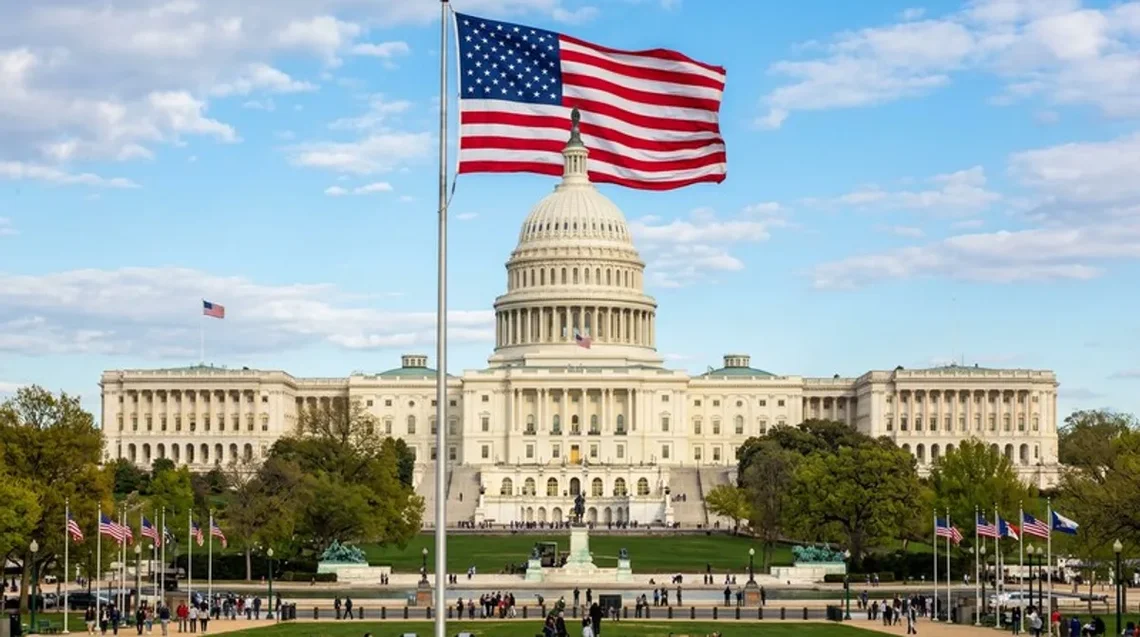
Senate Republicans blocked one of President Biden's circuit court nominees in a party-line vote, the latest in a series of confirmation battles that has deepened the partisan divide over the federal judiciary and stalled the administration's effort to reshape the courts. The vote underscored the degree to which judicial confirmations have become a central front in the broader war between the two parties over the direction of American law and governance.
Key Positions: Republicans argue the nominee holds views outside the judicial mainstream and that the Senate has a constitutional duty to scrutinise lifetime appointments with the highest scrutiny; Democrats contend the blockade is a continuation of a years-long Republican strategy to deny Democratic presidents their legitimate authority to fill vacancies; White House officials said the obstruction is undermining the functioning of the federal judiciary and leaving courts with dangerously high caseloads.
The Vote and Its Immediate Consequences
The confirmation vote fell entirely along party lines, with no Republican senator crossing the aisle to support the nominee. The result halted what the White House had characterised as a critical appointment to a circuit court handling a significant volume of appellate cases. The vacancy has remained open for an extended period, contributing to what court administrators have described as a mounting backlog of appeals that affect thousands of litigants each year.
Vote Tally and Senate Arithmetic
| Category | Votes / Figure | Notes |
|---|---|---|
| Votes in favour of confirmation | 48 | All Democratic and independent senators caucusing with Democrats |
| Votes against confirmation | 49 | All Republican senators present |
| Senators not voting | 3 | Absences cited for scheduling and health reasons |
| Circuit court vacancies (current) | 17 | As reported by the Administrative Office of US Courts |
| Biden judicial confirmations to date | Approx. 200+ | Across district and circuit courts; Source: Congressional Research Service |
| Public approval of Senate confirmation process | 28% | Described as "working well"; Source: Gallup |
Senate Majority Leader Chuck Schumer indicated following the vote that Democrats would continue to push forward on remaining nominees before the current congressional term concludes, according to statements reported by the Associated Press (Source: AP). The failed cloture motion means the nominee cannot advance without a further procedural vote, which leadership aides said is unlikely to be scheduled in the near term given the current legislative calendar.
Related Articles
Republican Objections and Senate Strategy
Republican senators who spoke ahead of the vote cited the nominee's prior legal writings and rulings as evidence of what they described as a judicial philosophy that strays beyond constitutional boundaries. Several members of the Senate Judiciary Committee issued statements arguing that the nominee had expressed views on administrative law and executive authority that they contend are incompatible with an impartial interpretation of statute.
Judicial Philosophy at the Centre of Debate
The Republican case against the nominee focused heavily on opinions and academic work touching on regulatory authority, an area of law that has attracted intense political scrutiny since the Supreme Court's recent decisions limiting the power of federal agencies. Republican senators argued that a nominee who has expressed scepticism of those rulings should not be elevated to a court that hears appeals in cases directly affecting regulatory enforcement, according to statements entered into the Congressional Record.
This approach mirrors the strategy Republicans employed during the confirmation of several other Biden nominees, including battles over district court seats and, more significantly, the administration's earlier efforts to confirm picks for courts with jurisdiction over major policy questions. The pattern reflects what legal scholars at several institutions have described as an increasingly ideological approach to the confirmation process by both parties, though Republicans have notably deployed it more aggressively during periods of divided or narrow Senate control. (Source: Pew Research)
This vote follows a broader pattern of obstruction. Readers can review how similar dynamics played out in the context of Senate Republicans blocking judicial reform legislation, which would have expanded the number of federal judgeships available for presidential appointment.
Democratic Response and White House Reaction
White House officials responded sharply to the vote, characterising it as the latest in a sustained effort to prevent a Democratic president from exercising his constitutional prerogative to nominate and seek confirmation of federal judges. Press office statements accused Senate Republicans of prioritising partisan advantage over the functioning of a federal court system that is, by multiple institutional measures, operating under strain.
Vacancy Crisis and Caseload Pressures
The Administrative Office of the United States Courts has repeatedly flagged the consequences of prolonged vacancies at the circuit level, noting that sitting judges are required to absorb the caseload that would ordinarily be distributed across a fuller bench. In circuits where vacancies have persisted for more than eighteen months, average case resolution times have increased significantly, affecting civil litigants, criminal appeals, and immigration cases alike, data show.
Senate Democrats pointed to these figures during floor debate, with members of the Judiciary Committee arguing that Republican obstruction is not merely a political manoeuvre but a structural harm to the administration of justice. Senator Dick Durbin, the committee's chairman, stated that the nominee was "eminently qualified" and had received support from legal professionals across the political spectrum during the committee review process, according to reports by Reuters (Source: Reuters).
The White House confirmation battles over the judiciary are closely connected to broader disputes over the administration's agenda. The administration has similarly faced resistance in other legislative domains, as seen when Senate Republicans blocked the Biden budget plan, a vote that analysts said reflected the same underlying partisan calculus now driving judicial confirmations.
Historical Context and the Normalisation of Blockades
The confirmation wars that have defined recent Congresses did not begin with the current administration. Political scientists and legal historians trace the modern era of intense judicial confirmation battles to the late twentieth century, with escalation occurring in successive administrations as each party responded to actions by the other. The decision by Senate Republicans under Mitch McConnell to decline a hearing for Supreme Court nominee Merrick Garland is widely regarded as a watershed moment, one that Democrats argue fundamentally altered the norms governing the confirmation process. (Source: Pew Research)
Escalation Through Successive Administrations
Data compiled by the Congressional Research Service show that circuit court confirmation timelines have lengthened substantially over recent decades, with nominees now waiting an average of several months longer for floor votes than their counterparts in earlier eras. The increased use of procedural tools, including holds, filibuster threats, and the scheduling authority of majority leadership, has transformed what was once a largely routine process into a high-stakes political contest. (Source: Congressional Research Service)
Observers note that the current Republican strategy on circuit court nominees is part of a coherent long-term approach to the federal bench that has been refined over multiple election cycles. Conservative legal organisations have invested heavily in building a pipeline of ideologically vetted candidates for federal appointments, meaning that each confirmation battle carries significance beyond the individual nominee. The stakes are amplified at the circuit level because circuit courts are the final word on the vast majority of federal legal questions — the Supreme Court accepts fewer than one hundred cases annually from a pool of thousands of petitions.
The judicial confirmation conflict intersects with a range of other administration priorities. The same coalition of Senate Republicans that blocked this nomination has also moved to obstruct other White House initiatives, including efforts tracked in our coverage of how Senate Republicans blocked Biden's latest Cabinet pick, a pattern that White House officials say reflects a deliberate strategy of maximal resistance.
Polling and Public Opinion on Judicial Confirmations
Public opinion on the Senate confirmation process has shifted meaningfully in recent years, with surveys indicating declining confidence in the institutional integrity of the process. A Gallup survey found that fewer than three in ten Americans describe the Senate confirmation process as working well, a figure that has declined over successive election cycles as high-profile confirmation battles have attracted sustained media attention and partisan mobilisation. (Source: Gallup)
Pew Research data indicate that views on judicial confirmations have become increasingly polarised along party lines, with Republican and Democratic respondents offering starkly different assessments of whether the Senate is fulfilling its constitutional role. A significant majority of self-identified Democrats view Republican blockades of Biden nominees as an abuse of Senate procedure, while a comparable majority of Republicans describe the scrutiny of nominees as appropriate and necessary. (Source: Pew Research)
Generational and Demographic Divisions
Younger voters and college-educated respondents across party lines express higher levels of concern about vacancies on federal courts and their impact on access to justice, according to survey data compiled across multiple polling cycles. However, the same data show that the confirmation process ranks below economic concerns, healthcare, and immigration in terms of primary voter motivation, a finding that may partly explain why Republican senators face limited electoral risk from pursuing confirmation blockades even when public opinion nominally favours expedient treatment of nominees. (Source: Pew Research)
Outlook: Remaining Nominees and the Legislative Calendar
The Biden administration has indicated it will continue to advance judicial nominees for Senate consideration in the remaining months of the current congressional term. White House counsel's office officials said a list of additional circuit and district court nominees is being prepared for transmission to the Senate Judiciary Committee, though the procedural obstacles facing each nomination are expected to be substantial given the current partisan composition of the chamber.
Senate Democratic leadership has signalled a willingness to use extended session hours and weekend votes to advance nominees, a tactic previously deployed during periods of high legislative priority. Whether that approach can overcome Republican procedural resistance on the floor remains uncertain, however, particularly as both parties increasingly direct their energies toward positioning for the next electoral cycle.
The confirmation battle also exists within a wider context of Republican legislative resistance that has defined this Congress. The same strategic alignment that produced this vote has been visible across multiple policy domains, from fiscal legislation to border policy, as chronicled in reporting on how Senate Republicans blocked the Biden immigration bill, a defeat the White House described at the time as a politically motivated act of obstruction rather than a substantive policy disagreement.
Legal advocacy organisations on both sides of the ideological spectrum are monitoring the remaining vacancies closely. For the administration, each unfilled seat represents both a practical gap in judicial capacity and a symbolic failure to consolidate a lasting imprint on the courts. For Senate Republicans, the blockades represent a continuation of a judicial strategy that has, over time, produced a federal judiciary with a composition their base regards as more favourable to conservative legal priorities. The current vote, unremarkable in isolation, is thus best understood as one episode in a decade-long struggle over the institutional future of the American federal courts — a struggle that shows no sign of resolution.