Senate Republicans Block Fresh Spending Compromise
Fiscal year negotiations stall amid election-year tensions
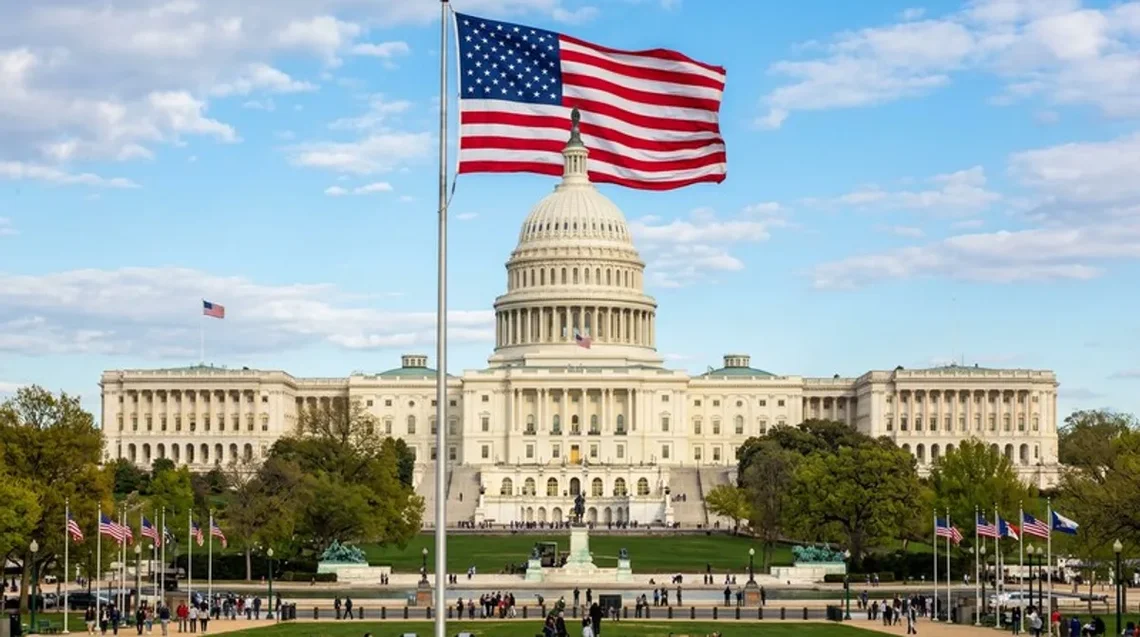
Senate Republicans blocked a bipartisan spending compromise on Wednesday, dealing a significant blow to efforts to resolve the federal government's protracted fiscal standoff and raising fresh fears of a government shutdown before the end of the fiscal year. The procedural vote failed 47 to 51, short of the 60 votes required to advance the measure under Senate rules, with Republican leadership holding firm against what they described as unsustainable spending levels embedded in the package.
The collapse of the latest negotiations leaves Congress with diminishing time to avert a lapse in government funding, deepening an already fraught political environment heading into a consequential election cycle. Senate Majority Leader Chuck Schumer condemned the vote from the chamber floor, accusing Republicans of prioritising political manoeuvring over the economic wellbeing of American families, according to pool reports from the Senate chamber.
Key Positions: Republicans argue the compromise fails to rein in discretionary spending and lacks sufficient enforcement mechanisms on border security provisions attached to the package; Democrats maintain the deal represents the furthest-reaching compromise achievable in a divided legislature and accuse Republicans of bad-faith negotiating; the White House has signalled it supports the framework negotiated by Senate Democrats but stopped short of threatening a veto of any alternative Republican-backed measure, according to administration officials.
The Vote and Its Immediate Fallout
Procedural Failure and the Cloture Threshold
The vote to invoke cloture — the parliamentary mechanism that cuts off debate and allows a bill to proceed to a full floor vote — required 60 affirmative votes under longstanding Senate rules. With only 47 senators voting in favour, the compromise package fell well short of that threshold. A handful of Republican moderates joined most Democrats in supporting the motion, but the bloc proved insufficient to break the partisan gridlock that has defined congressional fiscal debates throughout this congressional session.
Related Articles
Senate Minority Whip John Thune confirmed in remarks to reporters that the Republican conference had agreed to hold the line against the package, citing concerns about discretionary spending caps that they argued allowed too much flexibility for future appropriations increases. Democrats had framed those same provisions as essential guardrails that would deliver meaningful budget discipline over a multi-year period, officials said.
This episode mirrors the dynamics documented in Senate Republicans blocking a spending bill ahead of recess, a pattern that analysts say has become a defining feature of recent congressional sessions, in which recesses and electoral calendars are weaponised as leverage points by whichever minority party calculates it benefits from delay.
The Numbers Behind the Standoff
| Vote Category | Count | Notes |
|---|---|---|
| Yea (Cloture) | 47 | 45 Democrats, 2 Republicans |
| Nay | 51 | 49 Republicans, 2 Democrats |
| Votes Required for Cloture | 60 | Senate procedural threshold |
| Proposed Package Discretionary Spending | $1.66 trillion | Annualised rate, per CBO scoring |
| Republican Counter Proposal | $1.47 trillion | Reflects pre-COVID baseline, party officials said |
| Public Support for Compromise Spending Deal | 54% | Among registered voters (Source: Gallup) |
| Congressional Approval Rating | 17% | Broadly negative, sustained low (Source: Gallup) |
What Was in the Compromise Package
Defence and Non-Defence Discretionary Provisions
The bipartisan framework, assembled over several weeks of closed-door negotiations between senior appropriators on both sides of the aisle, proposed total discretionary spending of approximately $1.66 trillion for the coming fiscal year, according to a preliminary score published by the Congressional Budget Office. The package maintained the defence spending increases sought by a majority of senators in both parties while making smaller nominal increases to domestic programmes including housing assistance, Head Start, and veterans' healthcare.
Senior Democratic negotiators argued the deal reflected genuine concessions on their part, including agreeing to hold non-defence discretionary spending essentially flat in real terms after accounting for inflation — a significant climbdown from their opening position, officials familiar with the negotiations said. Republicans countered that flat nominal growth still represented an effective increase in government's footprint when measured against the growth of the broader economy.
Supplemental Security and Border Provisions
A secondary element of the package that drew particular Republican ire was a set of border security supplemental provisions attached to the spending measure. Democrats included enhanced funding for immigration court processing and additional Border Patrol personnel, which they argued addressed Republican concerns about border management. Republicans insisted the provisions were insufficient and, in some cases, counterproductive, arguing they effectively codified what the GOP characterised as a failed approach to border enforcement.
The political tension over border policy as it intersects with appropriations legislation has been a recurring theme in recent congressional battles. Observers noted parallels to earlier standoffs chronicled in coverage of Senate Republicans blocking an immigration bill compromise, in which similar disputes over the relationship between border funding and policy changes derailed a separate legislative effort that had attracted notable bipartisan support in committee before collapsing on the Senate floor.
Election-Year Politics and the Shutdown Calendar
Strategic Considerations for Both Parties
With a highly contested election approaching, both parties have compelling political incentives to either resolve or prolong the spending impasse. Republican strategists argue that blocking a Democratic-framed spending package reinforces their message about fiscal discipline and government overreach, positioning their candidates favourably in competitive districts where deficit concerns resonate strongly with independent voters.
Democrats, conversely, are betting that the public will assign blame for any government shutdown to Republican obstructionism. Data from Pew Research indicate that voters consistently rank government dysfunction and congressional gridlock among the top concerns driving their dissatisfaction with Washington, suggesting both parties face risks if the standoff produces a shutdown. A Pew Research survey found that 61 per cent of American adults believe elected officials in Washington put partisan interests ahead of the national interest most or all of the time (Source: Pew Research Center).
The dynamic also resembles the legislative environment described in reporting on Senate Republicans blocking a spending bill in a previous budget standoff, suggesting that the current impasse is less an aberration than a structural feature of the contemporary congressional environment, in which divided government and hardened partisan sorting make large-scale appropriations agreements increasingly difficult to achieve.
White House Pressure and Its Limits
Administration officials have been cautious in their public messaging, unwilling to overly personalise the dispute or make ultimatums that could complicate behind-the-scenes negotiations. The President expressed general support for the compromise framework in brief remarks to reporters, calling on Congress to "get the job done for the American people," according to pool reports from the White House briefing room.
However, the White House's leverage in these negotiations remains limited. Without the capacity to compel Senate Republicans to change their procedural calculus, the administration is largely dependent on the public pressure dynamic — and on whether a sufficient number of Republican senators from competitive states judge that continued obstruction carries greater electoral risk than a deal. According to reporting by the Associated Press, senior White House officials have been in direct contact with the offices of several Republican appropriators in swing states, though those conversations have not yet produced visible movement (Source: Associated Press).
Reactions from Key Stakeholders
Advocacy Groups and Outside Pressure
The failure of the spending compromise drew swift condemnation from a broad coalition of advocacy organisations spanning veterans' groups, child welfare advocates, housing nonprofits, and small business associations, all of whom had endorsed the bipartisan framework as a reasonable basis for a final agreement. The Veterans of Foreign Wars issued a statement expressing alarm at the prospect of further spending uncertainty, which advocacy officials said risked delaying critical infrastructure investments at veterans' medical facilities.
Business groups, including the US Chamber of Commerce and the National Federation of Independent Business, were more circumspect. While expressing concern about government shutdown risks and the uncertainty associated with continuing resolutions, some business advocacy officials declined to endorse either the Democratic-framed package or the Republican alternative, instead calling broadly for a long-term funding agreement that provides regulatory and fiscal predictability.
Budget analysts at independent institutions noted that the sustained use of continuing resolutions — the stopgap measures that fund government when full appropriations are not passed — imposes meaningful costs on federal agencies, hampering long-term planning and, in some cases, legally restricting agencies from beginning new programmes or initiatives even when funding is technically available, according to analyses reviewed by Reuters (Source: Reuters).
What Comes Next
Continuing Resolution Scenarios and the Shutdown Threat
With the current spending authority set to expire at the end of the fiscal year, Congress faces a narrowing window to either pass full-year appropriations, agree a further continuing resolution to extend existing funding levels, or allow a lapse in government funding — a government shutdown — that would furlough hundreds of thousands of federal workers and suspend non-essential government services.
Senate leadership on both sides have declined to say publicly whether they expect a further continuing resolution to be advanced in coming weeks. Republican leadership has indicated it would consider a short-term extension only if it was paired with spending cuts or policy riders that the Democratic-controlled Senate leadership has categorically rejected. That standoff over the terms of any stopgap measure effectively mirrors the standoff over the full-year package, suggesting there is currently no clear path to resolution through normal legislative channels.
House Republicans have separately passed a set of individual appropriations bills at lower spending levels than those in the Senate compromise, but those measures are not expected to receive Senate floor time under Democratic leadership and have been described by administration officials as a non-starter for White House signature even in the hypothetical event they cleared the Senate.
Cross-Chamber Dynamics
The tension between Senate and House Republican approaches adds a further layer of complexity to any potential resolution. House conservatives, emboldened by their narrow majority, have pushed for deeper cuts than Senate Republicans have publicly endorsed, creating a situation where any deal that could pass the Senate with bipartisan support may face significant resistance in the House from members of the majority party's own ranks.
This pattern has antecedents beyond the spending debate. The difficulty of assembling a durable legislative coalition across both chambers in the current environment has been evident across multiple policy domains, including immigration reform. Observers have pointed to the collapse of reform efforts — as described in coverage of Senate Republicans blocking a fresh immigration reform bill — as illustrative of how internal party dynamics, particularly within the House Republican conference, complicate even negotiations that appear to show promise at the committee or bipartisan working group stage.
Broader Context and Implications
The failure of Wednesday's cloture vote is not simply a procedural setback — it reflects deeper structural tensions in American fiscal governance that have accumulated over successive congressional cycles. The Congressional Budget Office has consistently projected that current spending and revenue trajectories are fiscally unsustainable over the long term, yet the political dynamics of the contemporary Congress make the kind of comprehensive, bipartisan agreement that might address those projections extraordinarily difficult to achieve (Source: Congressional Budget Office).
Public attitudes toward Congress have remained stubbornly negative throughout this period. Gallup's tracking data show congressional approval consistently in the teens — a sustained low that reflects broadly held public frustration with the institution's capacity to deliver basic governance functions, including passing annual funding bills on time (Source: Gallup). That frustration, analysts note, does not automatically translate into electoral accountability for the parties most responsible for blocking legislation, because partisan polarisation means most incumbent legislators face greater risk in primaries from their ideological base than in general elections from an exasperated centre.
For now, the federal government's fiscal future remains unresolved, negotiations appear stalled, and the calendar continues to count down. Congressional leaders on both sides have indicated they intend to resume talks in coming days, but with deep disagreements over top-line numbers, policy riders, and the fundamental question of what constitutes a reasonable compromise in a divided legislature, the prospects for a rapid breakthrough remain, by most assessments in Washington, remote.