Senate Republicans Block Immigration Overhaul Bill
Democrats fail to advance comprehensive reform package
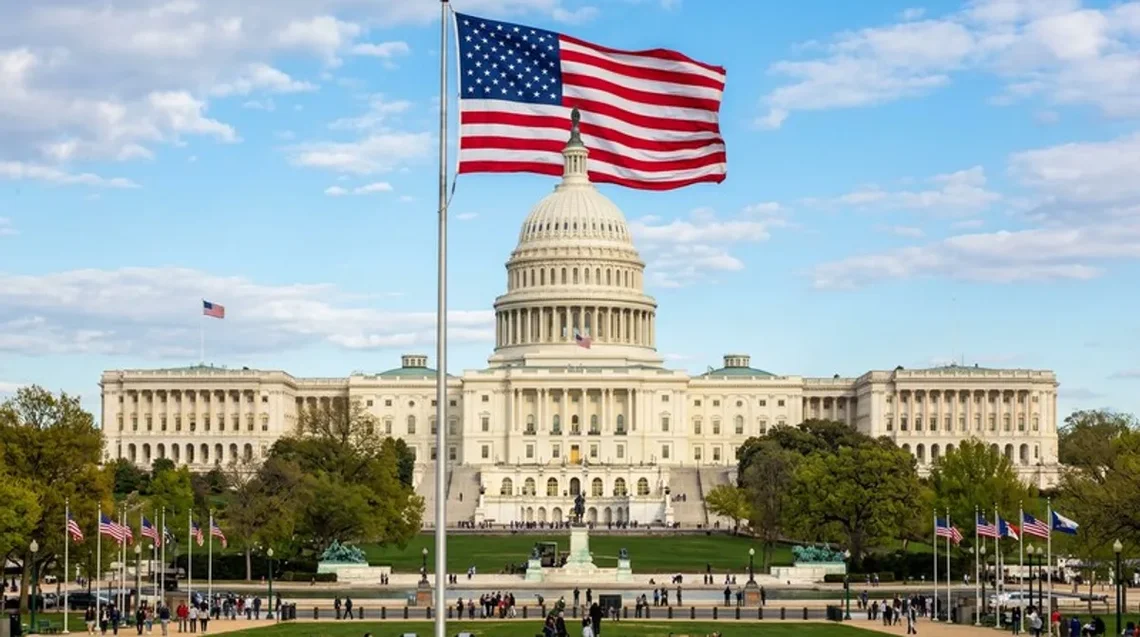
Senate Republicans blocked a sweeping Democratic immigration overhaul bill Wednesday, defeating the measure on a procedural vote that fell almost entirely along party lines and leaving the Biden administration's signature domestic policy push without a clear path forward. The bill, which would have provided a pathway to citizenship for millions of undocumented immigrants while also increasing border enforcement resources, failed to clear the 60-vote threshold required to advance past a filibuster, with the final tally standing at 48 votes in favour and 51 against. The outcome, widely anticipated by congressional observers, nonetheless marks a significant setback for Democrats who had argued the legislation represented the most comprehensive attempt at immigration reform in nearly two decades.
Key Positions: Republicans argue the bill rewards illegal entry, creates a "pull factor" at the southern border, and fails to address root causes of irregular migration. Democrats contend the legislation pairs meaningful enforcement upgrades with long-overdue humanitarian protections and would generate substantial economic benefits. White House officials said the administration remains committed to pursuing immigration reform through all available legislative avenues and urged Senate Republicans to return to the negotiating table.
The Vote and Its Immediate Aftermath
The cloture motion failed shortly after midday, with a single Republican senator — whose office did not respond to requests for comment — crossing the aisle to join all present Democrats. Senate Majority Leader Chuck Schumer immediately took to the chamber floor to condemn what he described as a politically motivated obstruction, while Senate Minority Leader Mitch McConnell argued the bill was fundamentally flawed and had been rushed to a floor vote without adequate committee scrutiny, officials said.
The White House issued a statement expressing disappointment but stopped short of declaring the legislative effort dead, with press secretary Karine Jean-Pierre telling reporters the president "has not given up on delivering results for the American people on this critical issue." The statement cited the Congressional Budget Office's previous analysis of comparable reform legislation, which projected that a pathway-to-citizenship programme could reduce the federal deficit by reducing the undocumented population's fiscal footprint while expanding the formal tax base. (Source: Congressional Budget Office)
Related Articles
Party-Line Breakdown
The near-unanimous Republican opposition reflects a political environment in which immigration enforcement has become an increasingly totemic issue for the GOP base. According to recent polling, Republican voters rank border security among their top three concerns heading into the next electoral cycle, a trend that has made it exceedingly difficult for Republican senators in competitive states to back any bill that includes an amnesty provision, regardless of its enforcement components. (Source: Gallup)
| Category | Votes In Favour | Votes Against | Not Voting |
|---|---|---|---|
| Democrats | 47 | 0 | 1 |
| Republicans | 1 | 51 | 0 |
| Independents (caucusing with Democrats) | 0 | 0 | 2 |
| Total | 48 | 51 | 3 |
What the Bill Would Have Done
The legislation, formally titled the American Dream and Promise Act of the current congressional session, represented a substantial rewrite of existing immigration statute. Its core provisions included an eight-year pathway to legal permanent residency for undocumented individuals who entered the United States before the age of eighteen, a separate track for those holding Temporary Protected Status, and a substantial increase in funding for immigration courts to address a backlog that has swelled to record levels in recent years.
Enforcement and Border Provisions
In an attempt to secure Republican votes, Democratic sponsors had incorporated a series of enforcement measures that earlier iterations of the bill notably lacked. These included additional funding for Customs and Border Protection personnel, expanded use of biometric entry-exit tracking at ports of entry, and stricter timelines for asylum adjudications. According to Reuters, the enforcement spending provisions were partially modelled on a bipartisan framework that briefly gained traction in the Senate several months prior before collapsing under pressure from Republican leadership. (Source: Reuters)
Nevertheless, Republican critics argued the enforcement provisions were insufficient and could be waived by the executive branch through regulatory discretion. Several GOP senators cited what they described as a lack of mandatory triggers — numerical thresholds at which new enforcement measures would automatically activate — as a structural defect that rendered the bill's security provisions effectively unenforceable over the long term.
Economic Impact Projections
Supporters of the legislation pointed to independent economic analysis suggesting a broad legalisation programme would yield significant fiscal and labour market dividends. The Congressional Budget Office has previously estimated that comprehensive immigration reform bills — including pathways to citizenship — tend to increase GDP, expand Social Security and Medicare tax contributions, and reduce long-run federal deficits by bringing workers into the formal economy. (Source: Congressional Budget Office) Opponents disputed these projections, arguing they failed to account for increased demand on public services and the potential displacement of lower-wage native-born workers.
Public Opinion and the Political Landscape
The public's view on immigration reform remains deeply divided, though recent data suggest majority support for a pathway to citizenship when paired with stricter enforcement, a nuance that is frequently lost in the broader political debate. According to Pew Research Centre analysis, a clear majority of Americans — including a substantial minority of self-identified Republicans — express support for allowing undocumented immigrants who arrived as children to remain in the country legally, provided they meet certain criteria. (Source: Pew Research Centre)
Approval Ratings and Electoral Implications
Gallup polling conducted recently shows that immigration has risen sharply as a top-of-mind concern for voters across party lines, though the nature of that concern differs markedly by political affiliation. Republican respondents overwhelmingly prioritise enforcement and what they describe as the rule of law, while Democratic respondents are more likely to emphasise humanitarian considerations and the economic contributions of immigrant communities. (Source: Gallup) Analysts note that this divergence makes bipartisan compromise structurally difficult to achieve in the current polarised environment, particularly as both parties position themselves ahead of the next national election cycle.
| Policy Position | Overall Support (%) | Republican Support (%) | Democrat Support (%) |
|---|---|---|---|
| Pathway to citizenship for DACA recipients | 74 | 53 | 91 |
| Increased border enforcement funding | 68 | 89 | 52 |
| Comprehensive immigration overhaul (combined approach) | 61 | 41 | 84 |
| Oppose pathway to citizenship entirely | 23 | 44 | 8 |
(Source: Pew Research Centre / Gallup composite)
Republican Arguments Against the Bill
Republican opposition was not monolithic in its specific objections, though a unifying thread ran through nearly all GOP statements: the contention that any legalisation provision incentivises future irregular migration by signalling that those who cross the border unlawfully will eventually be rewarded with legal status. Senate Republicans who spoke after the vote framed the issue primarily as one of border security and enforcement credibility, officials said.
Several Republican members pointed to the ongoing situation at the southern border, citing the elevated number of encounters recorded by Customs and Border Protection in recent months as evidence that current enforcement posture is inadequate and that the bill would compound rather than resolve existing pressures. According to AP reporting, Republican senators also raised concerns about the bill's asylum provisions, arguing they were insufficiently restrictive and would prolong the immigration court backlog rather than reducing it. (Source: AP)
For further context on the consistent pattern of Republican opposition to Democratic immigration legislation, see previous ZenNewsUK coverage: Senate Republicans block immigration bill in partisan vote, which details earlier procedural defeats on similar legislative packages during the current congressional period.
Democratic Response and Path Forward
Democratic senators emerging from Wednesday's vote struck a tone of measured defiance, arguing that the Republican filibuster would itself become a campaign issue in competitive Senate races across the country. Schumer signalled he would bring the bill back to the floor at a later date, a move widely interpreted as a procedural messaging exercise designed to force Republicans into a series of recorded votes ahead of the election cycle rather than as a genuine attempt to advance legislation at this stage.
Prospects for Bipartisan Compromise
A small group of senators from both parties has privately expressed interest in reviving discussions around a narrower, bipartisan package that would pair an expanded DACA fix with enhanced border security provisions, according to multiple congressional sources. However, those discussions remain at an early stage and face significant headwinds from party leadership on both sides. Any renewed bipartisan effort would need to satisfy Republican demands for binding enforcement triggers while preserving the core legalisation provisions that Democrats have insisted are non-negotiable.
Analysts note that the window for major legislative action is narrowing as the electoral calendar accelerates, making it increasingly unlikely that any sweeping immigration reform can pass through the Senate before the next election. Readers seeking additional background on prior votes in this legislative session may refer to ZenNewsUK's earlier reporting: Senate Republicans block Democratic immigration bill and Senate Republicans Block Immigration Bill in Party-Line Vote, both of which document the repeated procedural pattern that has defined immigration debate in the current Senate.
Broader Context: A Decades-Long Legislative Impasse
The failure of Wednesday's cloture vote is the latest chapter in what has become a decades-long legislative impasse over immigration policy in the United States. Comprehensive immigration reform has stalled repeatedly in the Senate, with the most recent near-miss occurring when a bipartisan framework backed by a significant group of senators collapsed in the final stages of negotiation following intense political pressure, according to AP. (Source: AP)
The inability of Congress to pass comprehensive reform has left the executive branch to manage the immigration system through an accumulating patchwork of executive actions, administrative rules, and agency directives — an approach that courts have periodically curtailed and that successive administrations of both parties have found structurally inadequate for a challenge of this scale and complexity. According to Pew Research Centre data, the undocumented population in the United States has remained broadly stable in size over the past decade, suggesting neither enforcement-only nor legalisation-only approaches have produced dramatic shifts in the underlying demographic reality that Congress continues to fail to address legislatively. (Source: Pew Research Centre)
For a comprehensive look at how this latest vote fits within the longer pattern of congressional inaction on immigration, see: Senate Republicans Block Biden Immigration Bill.
With the Senate now recessing for a scheduled break, the immediate prospects for renewed floor action on immigration appear limited. Democratic leaders have indicated they intend to use the recess period to build public pressure on Republicans through campaign-style events in swing states, while Republican leadership has shown no indication it intends to revisit its opposition to any bill that contains a citizenship pathway. The legislative stalemate that has defined immigration politics in Washington for the better part of two decades appears, for now, firmly intact.