Senate Republicans Block Spending Bill in Budget Standoff
Democrats push for compromise as deadline looms
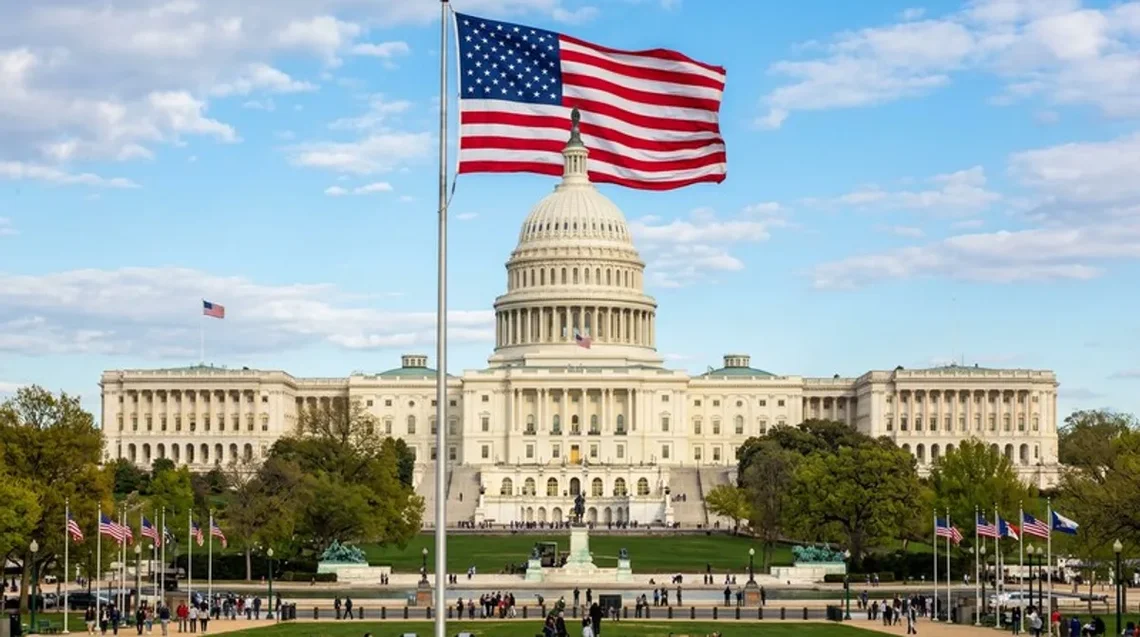
Senate Republicans blocked a sweeping government spending bill on a near party-line vote Thursday, deepening a budget standoff that threatens a federal shutdown as the congressional deadline approaches and Democratic leaders scramble to salvage a compromise. The procedural failure marks the latest in a string of high-stakes legislative clashes between the two parties over federal fiscal priorities, government spending levels, and the size of the national debt.
Key Positions: Republicans insist on deeper discretionary spending cuts, caps on non-defence outlays, and the elimination of what they describe as wasteful programme spending before agreeing to any continuing resolution or omnibus package. Democrats argue the proposed cuts would devastate social programmes, harm working families, and amount to ideological hostage-taking with the federal government's basic operations at stake. White House officials have urged Congress to act swiftly, warning that a shutdown would disrupt federal services, delay benefit payments to millions of Americans, and damage the country's international standing at a moment of significant global uncertainty.
The Vote and Its Immediate Aftermath
The bill failed to clear the sixty-vote threshold required to advance past a procedural hurdle in the Senate, with the final tally falling largely along party lines, according to congressional records. A small number of moderate members from both sides were reported to be in active negotiations, but their efforts were insufficient to break the impasse before the vote was called. Senate Majority Leader Chuck Schumer indicated that Democrats would continue pushing for a negotiated path forward, describing the Republican blockade as politically motivated and fiscally irresponsible, officials said.
Procedural Mechanics of the Blockade
Under Senate rules, most major spending legislation requires sixty votes to invoke cloture and end debate, a threshold that gives the minority party significant leverage when its membership remains unified. Republicans, who hold a majority in the chamber following recent electoral shifts, deployed that same mechanism to prevent the bill from reaching a final up-or-down vote. Parliamentary observers noted that the procedural blockade was consistent with tactics used in previous budget cycles, as detailed in coverage of the Senate Republicans blocking Democratic budget plans in prior sessions.
Related Articles
| Metric | Detail | Source |
|---|---|---|
| Cloture Vote Tally | 46 in favour, 53 opposed (approximate, party-line) | Congressional Records |
| Projected Federal Deficit (current fiscal year) | Approximately $1.9 trillion | Congressional Budget Office |
| Public approval: Congress handling of budget | 14% approve, 82% disapprove | Gallup |
| Share of Americans opposed to a government shutdown | 72% | Pew Research |
| Days until funding deadline | Fewer than 10 (as of vote date) | AP |
| Estimated daily cost of a shutdown to US economy | $300 million or more | Congressional Budget Office |
Republican Arguments: Fiscal Discipline and Spending Limits
Senate Republican leaders framed their opposition as a principled stand against what they described as unsustainable federal spending growth. Senior GOP members argued that the Democratic-backed bill would add hundreds of billions of dollars to the national debt over the coming decade without meaningful structural reforms to entitlement programmes or discretionary accounts, officials said. Republican conference members have repeatedly cited Congressional Budget Office projections showing the federal deficit on a trajectory that they argue is economically untenable without legislative intervention.
The Conservative Push for Spending Caps
A significant bloc within the Republican caucus has been pushing for statutory caps on both defence and non-defence discretionary spending, modelled on mechanisms used in previous deficit-reduction agreements. These members argued that a continuing resolution without accompanying reforms simply delays the structural reckoning the federal government faces, according to reporting by Reuters. The push for caps has created tension within the Republican conference itself, with some defence hawks resisting any framework that would constrain Pentagon funding at a time of elevated geopolitical risk.
Democratic Strategy: Compromise or Confrontation?
Democratic leaders faced a dual political challenge following the vote: maintaining party unity while searching for enough Republican crossover votes to reach the sixty-vote threshold. Senate Minority Whip and senior Democratic appropriators indicated they were prepared to negotiate on certain line items but drew firm lines around funding for Medicaid, food assistance programmes, and education spending, officials said. The White House issued a statement emphasising the administration's willingness to engage in good-faith discussions but stopped short of endorsing specific Republican demands.
Moderate Democrats and the Bipartisan Window
A small group of centrist Democrats signalled openness to targeted spending reductions in exchange for Republican support on priority social programmes, according to AP. These members, many of whom represent competitive states, have historically played a pivotal role in breaking legislative deadlocks. Political analysts noted that similar dynamics played out in earlier impasses, including those documented in coverage of Senate Republicans blocking Biden's budget plan, where a narrow bipartisan window ultimately failed to materialise in time to prevent a brief funding gap.
The Shutdown Risk: Federal Agencies and Public Services
Federal agency officials and budget experts warned that a shutdown of even a few days would have cascading consequences across government operations. The Congressional Budget Office has previously estimated that shutdowns impose significant direct costs on the federal government through lost productivity, delayed contract work, and administrative disruption, in addition to broader economic ripple effects. Hundreds of thousands of federal workers would face furloughs or delayed paycheques under a lapse in appropriations, officials said.
Impact on Key Programmes
Agencies including the Social Security Administration, the Department of Veterans Affairs, and the Internal Revenue Service would face significant operational constraints during a prolonged shutdown, according to Reuters. Veterans' benefits processing, tax refund disbursements, and federal loan guarantees are among the services most immediately affected. Pew Research data show that public concern about government shutdowns has grown substantially over successive standoffs, with majorities across party lines expressing frustration at Congress's repeated failure to pass timely appropriations.
Historical Context: A Pattern of Fiscal Brinkmanship
The current standoff is part of a broader pattern of congressional budget dysfunction that has recurred with increasing frequency over the past several decades. The United States has experienced numerous government shutdowns, several of which lasted for extended periods and generated significant political fallout for both parties. Analysts point out that the structural incentives driving this behaviour — including polarised party primaries, the sixty-vote Senate threshold, and the use of continuing resolutions as a substitute for full appropriations — have remained largely unchanged despite repeated calls for reform.
The latest blockade echoes dynamics seen in a series of recent legislative confrontations. Observers tracking Republican tactics in the upper chamber noted parallels to the episode covered in detail under Senate Republicans blocking spending bills ahead of recess, a recurring manoeuvre that critics argue is designed to maximise political pressure ahead of congressional breaks. The pattern is also visible in immigration-adjacent fiscal fights, where budget riders have complicated broader negotiations, as seen in previous reporting on Senate Republicans blocking immigration reform legislation that carried spending implications for border security and federal enforcement agencies.
The Role of the Congressional Budget Office
The Congressional Budget Office has played a central analytical role throughout the current standoff, providing independent scoring of competing budget proposals that both parties have cited selectively to support their positions. CBO's long-range projections showing debt-to-GDP ratios rising significantly over the coming decades have provided Republican members with a consistent rhetorical foundation for demanding structural spending reforms, while Democrats have pointed to CBO analyses showing that certain proposed cuts would reduce economic output and increase poverty rates among vulnerable populations (Source: Congressional Budget Office).
What Happens Next: Paths Forward and Political Consequences
Congressional leaders and White House aides were engaged in behind-the-scenes negotiations as the deadline drew closer, with several possible outcomes remaining on the table. A short-term continuing resolution — funding the government at current levels for a matter of weeks — appeared to be the most likely near-term vehicle for averting a shutdown, though Republican members have signalled varying degrees of willingness to support even a temporary measure without policy concessions attached. A full omnibus spending package covering the remainder of the fiscal year remained a more distant prospect given the depth of the disagreement on top-line figures.
Polling data from Gallup indicate that congressional approval ratings remain at historically low levels, with voters expressing broad dissatisfaction with the institution's handling of fiscal matters regardless of partisan affiliation (Source: Gallup). Pew Research surveys conducted recently showed that a substantial majority of Americans hold both parties responsible when shutdowns occur, a finding that has done little to alter the strategic calculations of congressional leaders on either side (Source: Pew Research). With the deadline now imminent, the pressure on negotiators to produce a workable agreement — or absorb the political consequences of failure — has rarely been more acute.