Senate Republicans Block Judicial Reform Bill
Democrats fail to advance court expansion measures
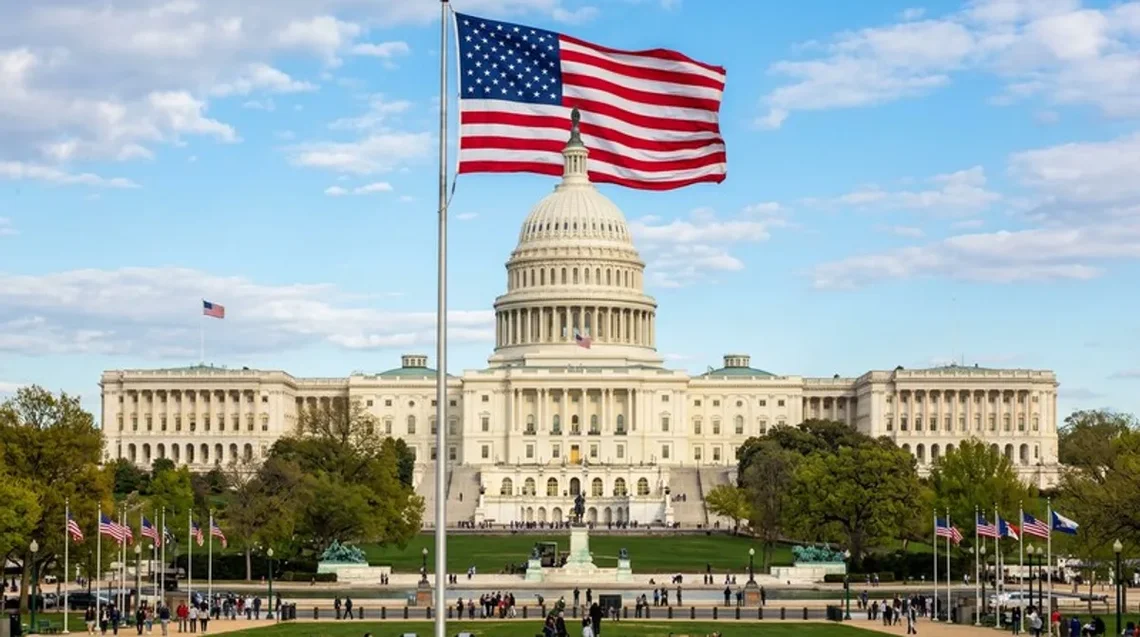
Senate Republicans blocked a sweeping Democratic judicial reform package on Wednesday, using a procedural filibuster vote to prevent the legislation from advancing to the floor — delivering a significant defeat to progressive lawmakers and the Biden administration's efforts to reshape the federal judiciary. The final vote was 47 to 51, falling well short of the 60-vote threshold required to invoke cloture and move the bill forward.
The legislation, formally titled the Judiciary Modernization and Reform Act, sought to expand the number of Supreme Court justices from nine to thirteen, impose binding ethics requirements on federal judges, and introduce term limits for Supreme Court justices. Senate Majority Leader Chuck Schumer (D-NY) brought the measure to the floor knowing it faced near-certain defeat, framing the vote as a tool to draw stark contrasts with Republicans ahead of upcoming electoral contests. Republicans countered that the bill represented a nakedly political attempt to pack the courts in Democrats' favour, and they held together in unanimous opposition.
Key Positions: Republicans argue the bill constitutes an unconstitutional power grab designed to install a politically sympathetic Supreme Court majority, and have vowed to block any court-expansion measure as long as they retain the votes to do so. Democrats contend the federal judiciary has been compromised by a series of ethically questionable appointments and that structural reform is essential to restoring public trust in the courts. The White House expressed support for the ethics provisions of the bill but stopped short of formally endorsing the court-expansion components, reflecting longstanding internal tensions within the Democratic coalition over the scope of judicial reform.
The Cloture Vote and Its Immediate Aftermath
Wednesday's procedural defeat came after three days of floor debate during which both parties delivered extended speeches for the benefit of the C-SPAN cameras and their respective fundraising operations. Senator Dick Durbin (D-IL), chairman of the Senate Judiciary Committee and the bill's lead sponsor, accused Republicans of shielding a Supreme Court that has, in his view, drifted dangerously out of step with democratic accountability. Republicans, led on the floor by Senate Minority Leader Mitch McConnell (R-KY), dismissed the exercise as theatre.
Related Articles
Party-Line Solidarity
Not a single Republican voted to advance the legislation. More significant politically, two moderate Democrats — Senators Joe Manchin of West Virginia and Kyrsten Sinema of Arizona, whose opposition to filibuster reform has repeatedly frustrated progressive priorities — did not vote to advance the measure either, though their stated reasons focused on the court-expansion provisions rather than the ethics components. Without those votes, Democratic leadership never had a realistic path to 60, officials said.
Procedural Context
Under Senate rules, advancing any legislation to a full floor debate requires 60 votes to end debate — a threshold Democrats have been unable to clear on a range of high-profile priorities, from immigration to voting rights to fiscal legislation. For context on how this pattern has played out across other policy domains, see coverage of how Senate Republicans blocked the Democratic budget plan, a vote that similarly collapsed along strict partisan lines and exposed the structural limitations facing the majority party.
| Vote Outcome | Yes (Advance) | No (Block) | Not Voting |
|---|---|---|---|
| Final Tally | 47 | 51 | 2 |
| Republican Senators | 0 | 49 | 0 |
| Democratic / Independent Senators | 47 | 2 | 2 |
| Threshold Required | 60 votes to invoke cloture | ||
What the Bill Actually Proposed
The Judiciary Modernization and Reform Act was among the most ambitious congressional attempts to alter the structure of the federal judiciary in decades. Its provisions went considerably further than previous reform proposals floated during earlier legislative sessions.
Court Expansion
The centrepiece of the legislation — and the element that drew the sharpest opposition — was a proposal to increase the Supreme Court from nine to thirteen justices. Proponents argued this would restore balance to a court that, in their assessment, was skewed by the confirmation of three justices during a single presidential term under circumstances they characterised as procedurally irregular. Opponents contended that expanding the court was historically without modern precedent and would invite future congresses to continue inflating the bench for political advantage. According to polling data compiled by Gallup, public support for court expansion sits at approximately 38 percent, while 53 percent of Americans oppose adding justices to the Supreme Court (Source: Gallup).
Ethics and Term Limits
The bill also sought to codify a binding code of conduct for Supreme Court justices — a provision that enjoyed somewhat broader bipartisan sympathy, though not enough to secure Republican floor votes. Under current arrangements, Supreme Court justices are not formally bound by the same judicial ethics code that applies to lower federal court judges, a gap that has drawn scrutiny following a series of investigative reports detailing undisclosed hospitality received by sitting justices. Additionally, the legislation proposed an eighteen-year active term limit for Supreme Court justices, after which they would move to senior status on lower federal courts. Pew Research Center data indicate that 67 percent of Americans support imposing term limits on Supreme Court justices, a level of public support that crosses partisan lines (Source: Pew Research Center).
Republican Opposition: A Unified Front
Senate Republicans presented a cohesive message throughout the debate, framing their opposition in constitutional rather than partisan terms. Senator Lindsey Graham (R-SC), a senior member of the Judiciary Committee, argued on the floor that Congress does not possess the constitutional authority to impose term limits on Article III judges, who are appointed for life under the Constitution's provisions. Legal scholars are divided on this point, with some arguing that legislative creativity could achieve the goal through senior-status arrangements without requiring a constitutional amendment, while others agree with Graham's more restrictive reading.
Strategic Calculations
Beyond constitutional arguments, Republican strategists have privately acknowledged that blocking judicial reform legislation plays well with their base, particularly evangelical and socially conservative voters who view the current Supreme Court's composition as a generational achievement. The party's unanimous vote is consistent with a broader legislative strategy of unified opposition that has characterised the current Congress, a pattern also visible in repeated blocking actions on immigration. The dynamics closely mirror what transpired when Senate Republicans blocked the immigration reform bill earlier this session — a vote that, like Wednesday's, fell along strict party lines and produced an identical rhetorical standoff between the two chambers.
Democratic Strategy and White House Response
Democratic leadership has been candid — at least internally — that the vote was as much about political positioning as legislative ambition. Schumer has deployed similar tactics on immigration, forcing Republicans into on-the-record votes that Democrats can subsequently deploy in campaign advertising. The strategy has had mixed results at the ballot box, with some swing-district Democrats expressing discomfort at being associated with court-expansion proposals that remain unpopular with independent voters.
The White House released a statement following the vote expressing the president's disappointment at the Senate's failure to advance the ethics provisions of the bill, which administration officials have repeatedly argued enjoy genuine bipartisan public support. The statement made no mention of the court-expansion components — a silence that spoke volumes about the political calculations being made inside the executive branch, officials familiar with the matter said.
Progressive Pressure and Intra-Party Tension
Progressive advocacy groups, including Demand Justice and Fix the Court, issued statements condemning both Republican opposition and what they characterised as insufficient commitment from centrist Democrats. The episode has reignited a long-running internal debate within the Democratic Party about whether structural reform of the judiciary should be treated as a core legislative priority or whether scarce political capital should be directed toward other policy areas. That tension is not new, but it has sharpened considerably in the wake of recent Supreme Court decisions that progressives regard as politically motivated.
Polling Landscape and Public Opinion
Public opinion on judicial reform is complex and frequently misunderstood by partisans on both sides. While majorities support specific provisions — such as ethics requirements and term limits — support for the court-expansion element specifically is a minority position across most demographic groups. A recent AP-NORC poll found that voters prioritise healthcare costs, economic concerns, and immigration far above judicial reform when ranking their top legislative concerns, suggesting the political salience of this issue may be more limited than its prominence in Washington discourse implies (Source: AP).
| Policy Proposal | Support (%) | Oppose (%) | No Opinion (%) |
|---|---|---|---|
| Binding ethics code for Supreme Court | 76 | 14 | 10 |
| 18-year term limits for justices | 67 | 22 | 11 |
| Expanding Supreme Court to 13 justices | 38 | 53 | 9 |
| Financial disclosure requirements | 81 | 11 | 8 |
Legislative Path Forward and Broader Implications
With the bill dead for the current legislative session, Democratic leaders face a choice about whether to pursue a narrowed package focused exclusively on the ethics provisions — which might conceivably attract a handful of Republican co-sponsors — or to continue using the broader bill as a campaign-trail cudgel. Senate Judiciary Committee aides indicated that Durbin is exploring options for standalone ethics legislation that could move through committee, though any such measure would face its own procedural hurdles on the floor.
Precedent from Other Blocked Legislation
The defeat fits a well-established pattern in the current Congress, in which significant Democratic priorities have been systematically blocked at the cloture stage. Observers tracking this trend will note parallels to the voting rights legislation that collapsed in similar fashion, as well as to the series of immigration measures that have met identical fates. Readers seeking additional context on how Republicans have deployed the filibuster across multiple policy domains may find relevant background in reporting on how Senate Republicans blocked the immigration bill in a party-line vote and, separately, in the account of how Senate Republicans blocked the Democratic immigration bill — episodes that together illustrate the systematic use of procedural tools to halt majority-party priorities.
According to Congressional Budget Office projections reviewed in connection with the legislation, the administrative and budgetary costs of adding four Supreme Court justices — including additional clerks, support staff, and infrastructure — would amount to a relatively modest sum compared to other legislative spending proposals, removing fiscal objections as a meaningful line of Republican critique (Source: Congressional Budget Office). Reuters reported that White House legal counsel's office had reviewed the constitutional questions raised by the term-limits provision and concluded internally that a properly drafted statute could withstand judicial scrutiny, though that analysis was never formally released (Source: Reuters).
Wednesday's vote will almost certainly not be the last word on judicial reform in Washington. The underlying political pressures that generated the legislation — public concern about ethics, partisan appointments, and the long-term direction of constitutional interpretation — show no sign of abating. Whether those pressures eventually produce the supermajority arithmetic necessary to move legislation through the Senate, however, remains a question that neither party's strategists currently believe they can answer with confidence.