Starmer Pledges Major NHS Overhaul Amid Staff Crisis
Labour government announces funding boost targeting doctor shortages

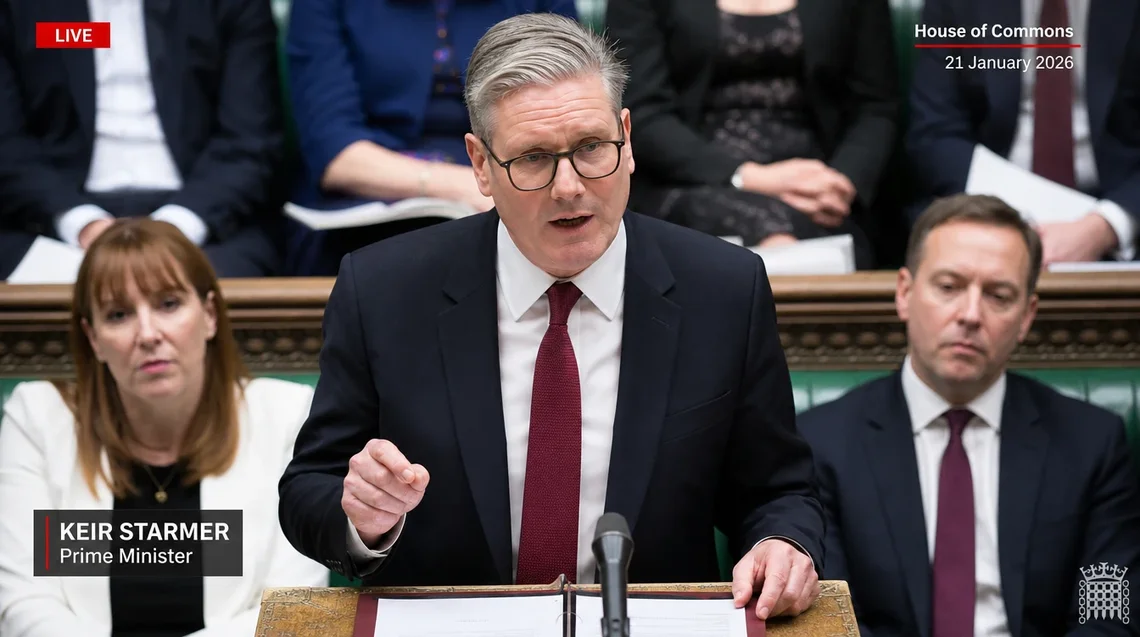
Prime Minister Keir Starmer has announced a sweeping overhaul of the National Health Service, pledging a multi-billion-pound funding injection aimed at tackling chronic doctor and nurse shortages that have left millions of patients waiting months for treatment. The announcement, made from Downing Street, represents the most ambitious NHS reform package a Labour government has attempted in over a decade, with officials saying the plan will target recruitment pipelines, GP availability, and hospital capacity simultaneously.
The pledge comes as NHS England data show waiting lists have reached record levels, with more than 7.5 million people currently on treatment backlogs — a figure the Office for National Statistics describes as placing the service under "sustained systemic strain." The government says the funding boost, to be confirmed in full at the next spending review, will be front-loaded into primary care and workforce development.
Party Positions: Labour argues the NHS requires immediate structural investment and a workforce expansion plan funded through progressive taxation, framing the overhaul as a generational commitment to public health. Conservatives contend that Labour's spending commitments are fiscally irresponsible and that the previous government had already initiated NHS recovery plans, pointing to pandemic-era infrastructure investments and the Long Term Workforce Plan commissioned under Rishi Sunak. Lib Dems broadly support increased NHS funding but have called for an independent NHS commissioner to oversee spending transparency, warning that without accountability mechanisms, new funding risks being absorbed by administrative costs rather than frontline care.
The Scale of the Crisis
Healthcare analysts and NHS trust leaders have for months been warning that without structural intervention, the service faces a compounding workforce emergency. According to NHS England, there are currently more than 100,000 unfilled vacancies across the health service, with particular shortages concentrated in general practice, mental health, and emergency medicine.
Related Articles
Waiting List Pressure
Patients waiting more than 18 weeks for elective treatment currently number in the millions, according to NHS England's most recent performance statistics. The target of treating patients within 18 weeks — a legally enshrined standard — has not been consistently met nationally since before the pandemic, officials said. Data compiled by the Guardian indicate that in some NHS trusts, patients are waiting more than two years for non-emergency procedures including orthopaedic surgery and ophthalmology.
The Office for National Statistics has flagged the relationship between long waiting times and worsening population health outcomes, noting that delays in diagnosis and treatment correlate with higher rates of preventable mortality in several condition categories (Source: Office for National Statistics).
Staff Morale and Retention
Retention is as critical as recruitment, NHS workforce leads have consistently argued. A survey conducted by Ipsos found that a significant proportion of NHS clinical staff are considering leaving the profession within the next two years, citing workload, pay, and a lack of career progression as primary drivers of attrition (Source: Ipsos). The government's announcement addresses retention specifically, with officials saying a new package of measures including enhanced continuing professional development funding and revised rostering flexibility will be introduced alongside the headline recruitment drive.
What the Government Has Announced
Downing Street confirmed that the overhaul includes several distinct policy strands, to be implemented in phases across the parliamentary term. The first strand focuses on expanding medical school places and fast-track training routes for nursing and allied health professionals. The second centres on reforming GP contract structures to incentivise practices to take on more patients and extend their operating hours.
Funding Breakdown
| Policy Area | Allocated Focus | Implementation Timeline |
|---|---|---|
| GP Recruitment & Retention | Primary Care Expansion | Phase One (Current Parliament) |
| Hospital Workforce | Acute Trust Staffing | Phase One / Phase Two |
| Mental Health Services | Community & Inpatient | Phase Two |
| Medical School Expansion | Training Pipeline | Long-term structural reform |
| Digital Infrastructure | NHS App & Records Integration | Ongoing |
| Social Care Interface | Discharge Pathway Reform | Phase Two |
Officials said the phased approach is designed to prevent the kind of structural dislocation that has historically accompanied large-scale NHS reorganisations, referencing the disruption caused by the Health and Social Care Act of the previous decade as a cautionary model. The Health Secretary is expected to provide further detail before the Commons in the coming days.
Political Reaction at Westminster
The announcement has drawn predictably sharp responses from across the House. Opposition frontbenchers challenged the Prime Minister during Prime Minister's Questions to commit to specific vacancy reduction targets, with the Conservative shadow health secretary arguing the package amounted to a rebranding of existing NHS England initiatives rather than genuinely new investment.
Conservative Counterarguments
The Conservatives have pointed to the Long Term Workforce Plan, commissioned under the previous government, as evidence that workforce strategy was already in motion before Labour came to power. Shadow ministers have questioned whether the new government's funding commitments represent genuinely additional resource or simply a reallocation of previously announced figures, a line of attack the BBC reported was gaining traction among some NHS trust finance directors (Source: BBC).
For more context on how Labour's approach to NHS funding has developed over recent months, see related coverage: Starmer pledges NHS overhaul amid funding crisis.
Liberal Democrat Position
Liberal Democrat health spokesperson Ed Davey has welcomed the broad direction of the announcement while pressing for independent scrutiny of how funds are deployed. The party has called for ring-fenced budgets for mental health provision and has been particularly vocal about what it describes as a postcode lottery in access to Child and Adolescent Mental Health Services. Lib Dem MPs are expected to table amendments during the legislative process demanding enhanced transparency reporting obligations on NHS trusts receiving new funds.
Public Opinion and the Political Stakes
For the Labour government, the NHS represents both its strongest political terrain and its most exposed vulnerability. Polling by YouGov conducted recently shows that healthcare consistently ranks as the single most important issue for British voters, with more than 60 percent of respondents rating NHS improvement as their top policy priority (Source: YouGov). The same polling indicates, however, that public confidence in any government's ability to meaningfully improve NHS performance has declined markedly over the past several years, reflecting accumulated frustration across party lines.
Labour's Electoral Calculation
Party strategists are acutely aware that NHS performance will be a defining measure of Labour's first-term legacy. Officials within Number 10 are said to believe that visible, near-term improvements in GP access — specifically same-day or next-day appointment availability — will be the metric by which ordinary voters judge the success or failure of the overhaul, rather than the macro-level staffing statistics that dominate media coverage. This explains why GP contract reform features so prominently in the Phase One announcements despite being technically complex and potentially contentious with the British Medical Association.
Analysts writing in the Guardian have noted that the political window for NHS reform is narrow — governments that fail to demonstrate measurable progress within the first two to three years of a parliament typically find the issue turns against them in the run-up to the subsequent general election (Source: Guardian).
For broader context on how this announcement fits within Labour's evolving health policy, readers can explore earlier reporting: Starmer pledges NHS overhaul as waiting lists grow and the detailed examination of funding disputes covered in Starmer pledges major NHS overhaul amid funding row.
International Context and Structural Comparisons
The United Kingdom is not alone in grappling with post-pandemic health service strain. Comparable OECD nations including Canada, France, and Australia are contending with similar workforce shortages and extended waiting times, according to data compiled by the Organisation for Economic Co-operation and Development. However, critics of the government's approach argue that international comparisons offer limited comfort to patients currently waiting for treatment and should not be used to normalise service degradation.
Overseas Recruitment Considerations
One dimension of the workforce strategy that has attracted scrutiny is the question of international recruitment. The NHS has historically relied on doctors and nurses trained abroad to fill domestic gaps, a practice that raises ethical questions about healthcare worker brain drain from lower-income countries. Officials said the new plan prioritises domestically trained staff but acknowledged that international recruitment will remain a component of workforce planning in the short to medium term, with enhanced ethical recruitment protocols to govern how overseas staff are sourced.
The announcement has also renewed calls from some quarters for a formal review of social care integration, with NHS leaders arguing that delayed hospital discharges — driven by inadequate social care capacity — are themselves a major driver of bed blocking and effective capacity reduction. Officials said the Phase Two elements of the reform package will address the NHS-social care interface directly, though a comprehensive social care funding settlement remains absent from current government commitments.
What Comes Next
The Health Secretary is expected to lay out the legislative framework for the overhaul in a forthcoming Commons statement, with secondary legislation anticipated to follow. NHS England will be required to produce implementation plans for each phase within set timeframes, officials said, with progress to be reported to Parliament on a rolling basis.
For detailed prior analysis of how workforce shortages have shaped this policy moment, see: Starmer pledges NHS investment amid staff shortage crisis.
The fundamental test of the government's NHS pledge will not be measured in announcements or legislative instruments but in whether patients — millions of whom are currently waiting in pain, uncertainty, and frustration — experience a tangible and sustained improvement in the care available to them. That verdict will be delivered not at Westminster, but in GP waiting rooms, emergency departments, and outpatient clinics across England, and it will take considerably longer than any political news cycle to fully emerge.