Starmer Faces NHS Pressure as Health Strikes Loom
Labour government seeks settlement with medical unions

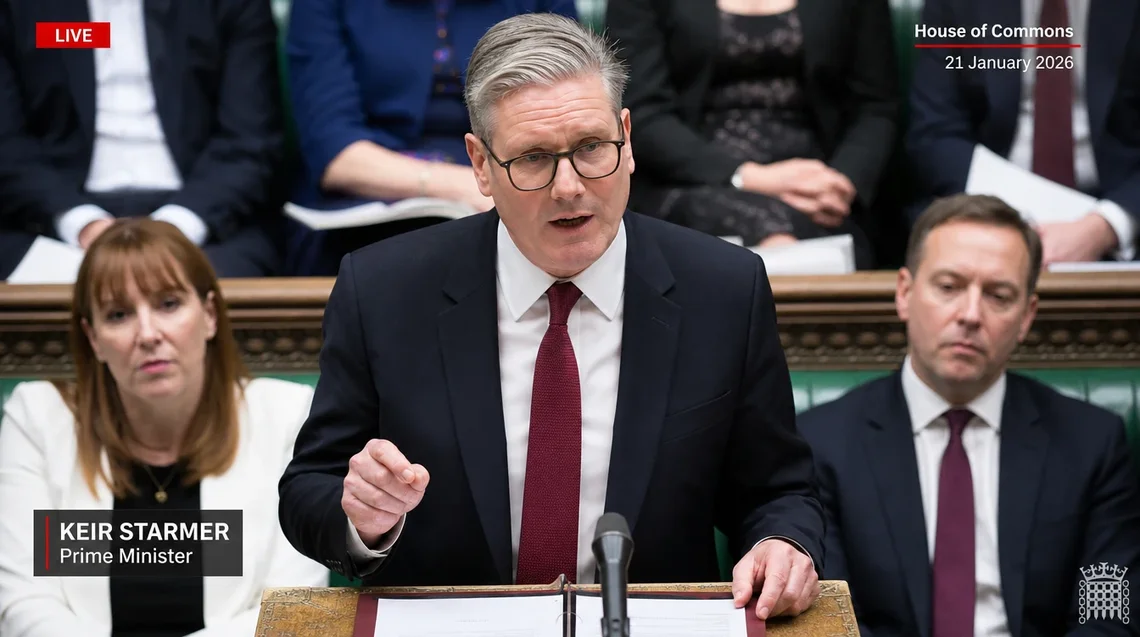
Sir Keir Starmer's government is facing mounting pressure from medical unions threatening co-ordinated industrial action across the National Health Service, as ministers scramble to secure a pay and conditions settlement before disruption to patient services becomes unavoidable. With NHS waiting lists remaining stubbornly high and public confidence in Labour's stewardship of the health service beginning to soften, Downing Street is being warned that a failure to act decisively risks repeating the prolonged standoff that damaged the previous Conservative administration.
Party Positions: Labour has pledged to negotiate in good faith with health unions and to prioritise NHS recovery, while insisting that any pay awards must be sustainable within existing fiscal limits. Conservatives have accused the government of lacking a credible workforce strategy and of inheriting — but failing to resolve — structural problems within NHS staffing. Lib Dems have called for an emergency cross-party health summit and greater transparency over the government's negotiating position with unions, arguing that patients cannot afford a repeat of previous years' strike disruption.
The State of Play: Unions, Demands and Deadlines
Senior figures within the British Medical Association and other health sector unions have been in formal talks with the Department of Health and Social Care for several weeks, according to officials familiar with the process. The talks cover pay uplift, rota conditions, and long-standing grievances over the value of consultant and junior doctor contracts that were at the centre of the previous wave of NHS strikes.
Junior Doctors and the Residual Pay Gap
Junior doctors — now formally reclassified as resident doctors under recent contractual changes — secured a multi-year pay deal under the previous government, but union representatives argue that real-terms pay remains significantly below where it stood over a decade ago. BMA representatives have said publicly that unless the trajectory of restoration continues under Labour, further action cannot be ruled out. The Department of Health has declined to give a precise timetable for the next stage of talks, officials said.
Related Articles
Data from the Office for National Statistics show that NHS pay has, in real terms, fallen substantially across most clinical grades over the past decade when adjusted for RPI inflation, a figure unions have consistently deployed in their public communications. (Source: Office for National Statistics)
Nursing and Allied Health Professions
The Royal College of Nursing has maintained a watching brief on its own potential industrial action mandate, and senior RCN officials have signalled that the union's leadership is monitoring whether Labour delivers meaningfully on commitments made during the general election campaign. Ambulance workers and allied health professionals represented by Unite and Unison have separately raised concerns over NHS staffing ratios and the impact on working conditions of sustained pressure on emergency departments.
Political Fallout and Public Opinion
Polling conducted by YouGov indicates that public satisfaction with the NHS has declined since Labour took office, with a plurality of respondents in recent surveys expressing concern that waiting times have not improved as quickly as the party promised during the campaign. (Source: YouGov) A separate Ipsos survey found that NHS management and staffing were among the top three issues cited by voters when asked what they believed the government was handling poorly. (Source: Ipsos)
| Metric | Figure | Source |
|---|---|---|
| Adults rating NHS as a top priority for government | 67% | Ipsos |
| Voters satisfied with Labour's NHS handling (net) | -12 points | YouGov |
| NHS England patients waiting over 18 weeks for treatment | Approx. 6 million | NHS England / ONS |
| Share of voters believing NHS strikes would resume | 49% | YouGov |
| Labour MPs who voted for additional NHS capital funding motion | Majority (government defeated amendment) | Hansard |
The Guardian has reported that some Labour backbenchers are privately expressing frustration at the pace of progress on NHS reform and warn that a further round of health strikes would be electorally damaging at a time when the government is already navigating significant economic headwinds. (Source: The Guardian) The BBC has separately reported that Wes Streeting, the Health Secretary, has held informal discussions with union general secretaries outside the formal negotiating framework in an attempt to establish what a workable settlement might look like. (Source: BBC)
Streeting's Strategic Challenge
Wes Streeting entered the Health Secretary role with a reputation as one of the party's more combative and reform-minded figures, and he has consistently argued that the NHS requires structural transformation — not merely additional funding — to deliver sustainable improvement. That position has brought him into periodic tension with union leaderships who argue that workforce morale and pay must come first.
The Reform Versus Resources Debate
Officials within the Department of Health insist that the government is pursuing a twin-track approach: pursuing the reform agenda set out in Lord Darzi's independent review of the NHS while simultaneously seeking to stabilise workforce relations. Critics argue, however, that the two objectives are difficult to reconcile when union trust remains fragile. For further context on how the government's spending commitments intersect with this pressure, see our coverage of how health spending disputes have deepened the political stakes for the Prime Minister.
The Treasury's position has been described by those briefed on internal discussions as cautious. Chancellor Rachel Reeves has made clear that the fiscal rules she set out must be adhered to, meaning any NHS pay settlement above the government's internal assumptions would require offsetting savings or productivity commitments from unions. That condition has, according to officials, slowed the pace of formal negotiations.
Waiting Lists: The Political Pressure Point
Perhaps no single issue carries more electoral weight for the government than NHS waiting times. Labour made explicit commitments during the general election to bring the number of patients waiting longer than 18 weeks for treatment down significantly, and progress has been slower than the original trajectory suggested.
Targets, Timelines and Accountability
NHS England's own operational plan sets out ambitions for waiting list reduction, but analysts and opposition politicians have pointed out that delivery is contingent on avoiding further industrial disruption. Each previous round of health strikes was estimated to have resulted in hundreds of thousands of appointment cancellations and procedure delays, compounding the backlog inherited from the pandemic period. Our earlier reporting on the overhaul facing fresh pressure on waiting times and on waiting list pressures more broadly sets out the structural scale of the challenge.
Shadow Health Secretary Victoria Atkins has used recent Prime Minister's Questions exchanges and Commons committee appearances to press ministers on specific milestones, arguing that the government has thus far failed to define measurable interim targets against which it can be held accountable. Health ministers have responded by pointing to additional investment in surgical hubs and weekend working capacity, though independent analysts have noted these measures require time to generate volume impact.
Industrial Action: What a Strike Would Mean
Should talks break down and unions proceed to ballot their members for industrial action, the practical consequences for the NHS would be severe. Previous rounds of junior doctor strikes alone resulted in the cancellation of well over one million appointments and procedures, according to NHS England figures cited by the BBC. (Source: BBC) A co-ordinated action involving multiple unions simultaneously — a scenario union officials have not explicitly ruled out — would be without modern precedent in scale.
Legal Framework and Minimum Service Levels
The previous government introduced minimum service level legislation for certain public services, including elements of health provision. It remains to be seen whether the current administration would invoke those powers in the event of industrial action, given Labour's historically close relationship with trade unions and the political complexity of doing so. Officials have declined to comment on contingency planning.
For analysis of how the swelling waiting list figures feed directly into this political dynamic, see our report on the consequences of waiting lists continuing to grow.
The Path to Settlement
Those with knowledge of the talks describe the current state of negotiations as "cautious but not collapsed," suggesting that both sides retain an interest in reaching agreement before any formal strike ballot is called. Key sticking points include the multi-year pay trajectory for resident doctors, the terms under which additional productivity commitments might be agreed, and the question of rota flexibility in secondary care settings.
Government officials have pointed to the speed with which Streeting moved to settle the previous round of strikes as evidence of Labour's good faith, and ministers argue that the broader reform agenda — including a shift toward more community and primary care provision — ultimately serves the interests of the workforce as well as patients. Union leaderships have broadly welcomed the reform direction in principle while insisting that structural change cannot be delivered on a workforce that feels undervalued.
The coming weeks are likely to prove decisive. If formal negotiations produce a framework agreement before any union moves to ballot, the government will be able to claim a significant early test passed. If talks stall, Starmer faces the prospect of NHS industrial action undermining one of the central pledges on which Labour sought its mandate — and a political crisis that, according to multiple reports and polling data, neither the government nor the health service can afford. Our ongoing coverage of the government's waiting list targets and the pressures bearing down on them will continue to track developments as they emerge.