Ukraine launches major offensive as Russia retreats
Kyiv forces push deeper into contested Donbas region
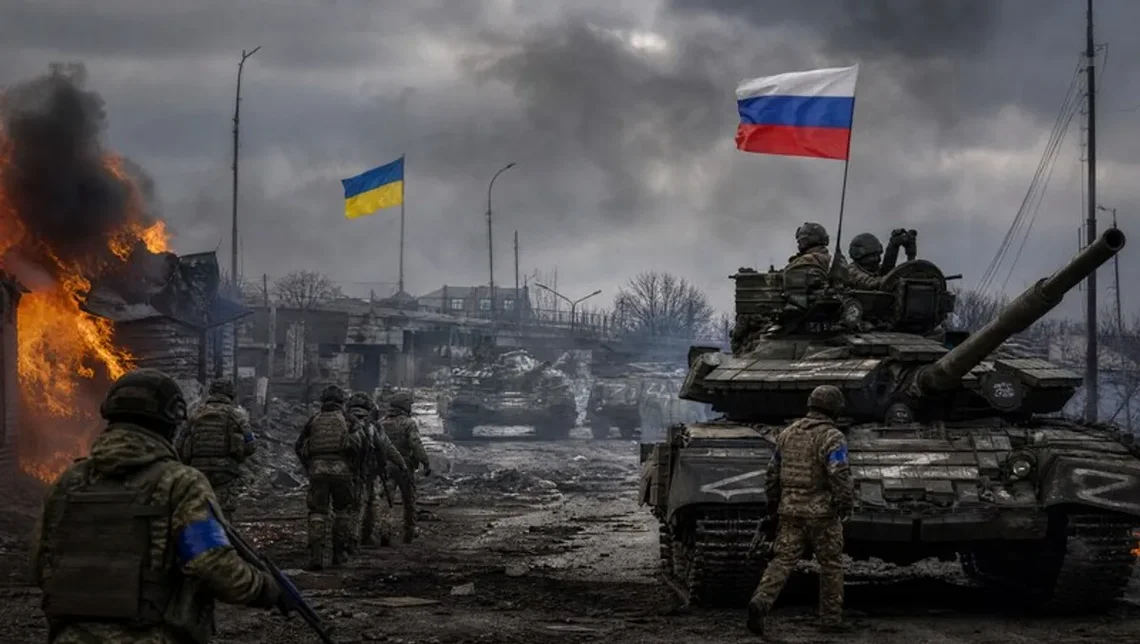
Ukrainian forces have launched a significant offensive push across multiple front lines in the contested Donbas region, with Kyiv's military command reporting the recapture of several villages and the forced withdrawal of Russian units from strategically important positions, according to Ukrainian military officials and reports from Reuters and the Associated Press. The operation represents one of the most coordinated Ukrainian ground advances in recent months, raising the stakes considerably for a conflict that continues to reshape European security.
Key Context: The Donbas region — comprising the oblasts of Donetsk and Luhansk — has been at the centre of the conflict since Russian forces escalated their military campaign. Russia has claimed annexation of both oblasts, along with Zaporizhzhia and Kherson, declarations universally rejected by Ukraine and condemned by the United Nations General Assembly. Control of the Donbas carries enormous symbolic weight for both sides, representing industrial heartland, energy infrastructure, and a critical land corridor.
Ukrainian Forces Reclaim Ground in Coordinated Push
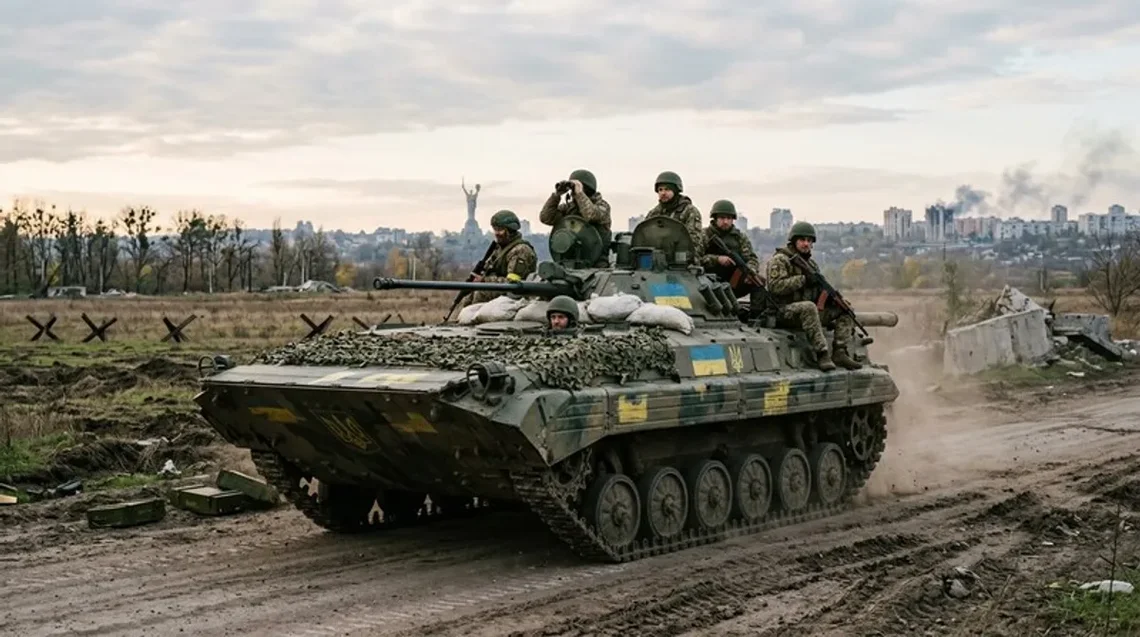
Ukrainian ground forces, supported by long-range artillery and drone strikes, have advanced along a broad arc in the eastern theatre, pressing Russian defensive lines that had remained largely static for several weeks. Military analysts and Ukrainian officials say the offensive combines infantry manoeuvres with systematic targeting of Russian logistics hubs, ammunition depots, and command nodes, a pattern consistent with the operational approach Kyiv has employed in previous counteroffensives (Source: Reuters).
Villages and Tactical Positions Retaken
Ukraine's General Staff confirmed that units from its ground forces reestablished control over a number of settlements in the Donetsk direction, though officials declined to specify exact locations for operational security reasons. Images and reports shared by independent conflict monitors, including accounts cited by the Associated Press, indicated that Ukrainian flags had been raised in at least three previously Russian-held villages. Analysts noted that even modest territorial gains in this sector carry disproportionate tactical value, as the terrain funnels supply lines and determines artillery range over wider areas.
Related Articles
For background on the evolving tactical picture across the broader eastern front, see our earlier report on Ukraine launches major counteroffensive in eastern regions.
Russian Withdrawal: Strategic Repositioning or Collapse?
Russian military bloggers — a community that has historically provided more candid assessments than official Kremlin channels — acknowledged pullbacks in several areas, framing the movements as "regrouping" rather than retreat. Western defence officials, speaking to Reuters on condition of anonymity, were less charitable, describing some of the Russian withdrawals as disorderly and indicative of degraded unit cohesion in affected sectors. Whether Russia is executing a deliberate elastic defence or absorbing genuine operational shock remains a central analytical question for NATO intelligence assessors (Source: AP).
The Broader Strategic Picture in Donbas
The current offensive did not emerge in isolation. It follows an extended period of attritional warfare in which both sides suffered significant casualties and equipment losses while territorial lines shifted only incrementally. Ukrainian commanders have spoken publicly about the importance of identifying and exploiting seams between Russian units — gaps in coordination that create windows for faster-moving ground operations.
Logistics and Western Military Aid
Analysts at Foreign Policy magazine and Western think tanks have argued that the sustainability of any Ukrainian offensive depends critically on the uninterrupted flow of ammunition, particularly artillery shells, from NATO member states. Recent deliveries of longer-range precision munitions have materially expanded Kyiv's ability to strike deep behind the contact line, degrading Russian artillery positions before infantry advance. NATO allies have continued to expand their support packages in response to evolving battlefield needs, a dynamic covered in our report on how NATO allies boost Ukraine aid amid renewed Russian offensive.
Ukraine has also drawn on battlefield lessons refined over many months of high-intensity combat. The integration of drone reconnaissance with ground assault units has become a defining feature of Ukrainian offensive tactics, allowing commanders to update targeting data in near real-time and reduce the vulnerability of advancing columns to Russian counter-battery fire (Source: Foreign Policy).
International and Diplomatic Reactions
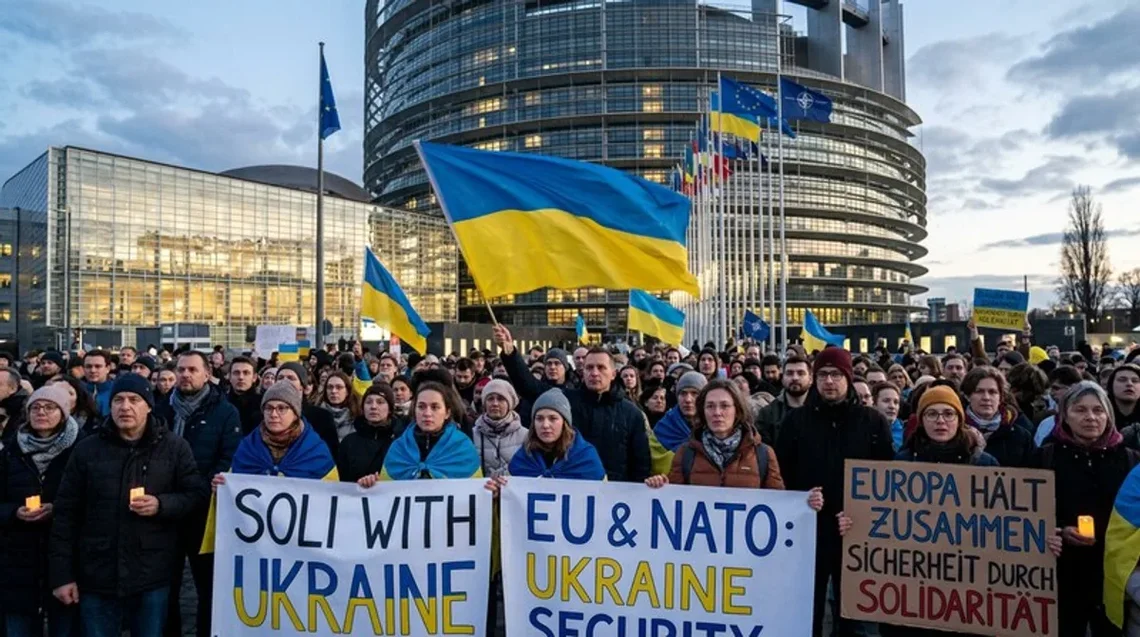
The offensive has prompted swift reactions from European capitals and Washington. Senior officials within the European Union reiterated their commitment to Ukraine's sovereignty and territorial integrity, describing the battlefield developments as evidence that Ukrainian forces can sustain effective operations with continued allied support. The UN Secretary-General's office, in a statement cited by Reuters, called again for adherence to international humanitarian law by all parties, noting ongoing concerns about civilian casualties in contested areas (Source: UN reports).
Russia's Official Response
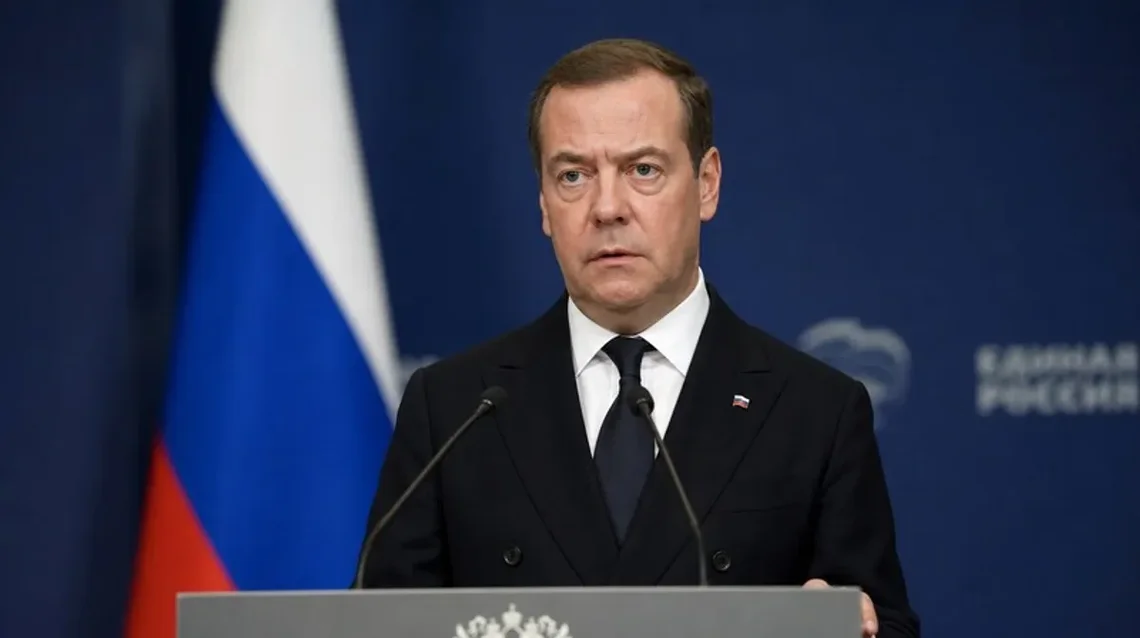
Moscow's Defence Ministry acknowledged "difficult" conditions on parts of the front but asserted that Russian forces were conducting planned tactical repositioning and inflicting heavy losses on advancing Ukrainian units. Independent verification of Russian casualty figures or Ukrainian losses provided by either side remains impossible, though Western governments and open-source analysts have generally found official Russian statements on battlefield outcomes to be unreliable (Source: Reuters).
The Kremlin's broader posture — including continued nuclear signalling and information operations directed at Western publics — has not materially shifted in response to the offensive, according to assessments from European security officials. Russia has consistently framed any Ukrainian military success as the product of Western interference rather than indigenous military capability, a narrative line that analysts say is designed primarily for domestic consumption.
European Security Implications
The trajectory of the Donbas offensive carries substantial implications for European security architecture that extend well beyond Ukraine's borders. NATO member states bordering Ukraine and Russia — Poland, the Baltic republics, Romania and Slovakia — are monitoring developments with particular vigilance, with several having accelerated their own defence spending and force posture adjustments in recent months.
What This Means for the United Kingdom
For the United Kingdom, the conflict's evolution carries both direct and indirect consequences. Britain has been among the most active Western supporters of Ukraine, providing air defence systems, armoured vehicles, and training to Ukrainian forces. UK defence officials have made clear that sustaining this support is a strategic priority, viewing a weakened or destabilised Ukraine as a long-term threat to European stability in which Britain retains a significant interest despite no longer being a European Union member.
Economically, the UK — like other European nations — continues to contend with the inflationary aftershocks of the energy market disruption caused by the conflict. British households and industry remain exposed to elevated energy costs, and any escalation that further disrupts European gas transit infrastructure would compound pressures that have only partially eased. City of London analysts have flagged ongoing volatility in commodity markets as a standing risk factor linked directly to the conflict's duration and intensity.
The EU's parallel measures have sought to deepen economic pressure on Moscow. Our report on how the EU tightens Russia sanctions over Ukraine offensive details the latest package of restrictions targeting Russian energy revenues and dual-use goods exports.
Humanitarian Situation on the Ground
As Ukrainian forces push forward, the humanitarian situation in newly contested areas is deteriorating sharply. The United Nations Office for the Coordination of Humanitarian Affairs has documented severe access restrictions for aid organisations operating near the contact line, with civilian infrastructure — including water systems, electricity grids, and healthcare facilities — sustaining repeated damage (Source: UN reports). Displacement of civilians continues, with international protection agencies reporting fresh waves of internal displacement as combat intensifies.
Civilian Populations Caught Between Front Lines
Residents in villages near active front lines face acute dangers from unexploded ordnance, indiscriminate shelling, and the breakdown of basic services. Ukrainian civil-military coordination teams have in some areas moved quickly to restore water and power following recapture of settlements, but the pace of stabilisation operations has struggled to match the speed of the military advance in certain sectors, according to humanitarian workers cited by the AP (Source: AP).
The conflict's civilian toll has been extensively documented in previous phases of the fighting. Readers can review the documented escalation patterns in our report on how Ukraine launches major counteroffensive in eastern Donbas.
Timeline and Key Developments
| Phase | Key Development | Outcome |
|---|---|---|
| Early Conflict Phase | Full-scale Russian invasion launched; Donbas fighting intensifies | Russian forces capture significant Luhansk territory; Donetsk contested |
| First Counteroffensive | Ukrainian forces retake Kharkiv oblast in rapid sweep | Russian forces withdraw to pre-existing lines; morale blow to Moscow |
| Southern Counteroffensive | Kherson city liberated by Ukrainian forces | Russia withdraws across Dnipro River; major symbolic defeat |
| Attritional Phase | Frontlines stabilise; intense fighting around Bakhmut, Avdiivka | Significant losses on both sides; minimal territorial change |
| Current Offensive | Kyiv launches multi-axis push in Donetsk direction | Several settlements recaptured; Russian units withdraw in some sectors |
Outlook: Can Ukraine Sustain Momentum?
The critical variable in determining how far this offensive can advance is whether Ukraine can maintain the operational tempo required to prevent Russian forces from consolidating new defensive lines. Historical precedent from earlier phases of the conflict, as well as the assessments of Western military analysts cited by Foreign Policy, suggests that offensive momentum in this type of industrial-scale warfare is extremely difficult to sustain beyond a limited window before defender advantages reassert themselves (Source: Foreign Policy).
Western governments face their own pressures. Public support for sustained military aid, while generally holding in the United Kingdom and across major EU member states, is not unlimited. The political cycles in multiple allied democracies are generating uncertainty about the durability of current commitment levels, a variable that Russian strategic planners are clearly factoring into their calculations, according to analysis published by European foreign policy institutions.
For context on how battlefield dynamics have previously shifted, see our earlier coverage of when Ukraine reported Russian advances in eastern offensive — a reminder that the conflict's direction has never been linear and that reversals remain a constant possibility for both sides.
What is unambiguous is that the latest Ukrainian advance has recalibrated the immediate battlefield calculus, demonstrated the continued operational capability of Kyiv's forces, and reaffirmed that the contest for the Donbas remains far from settled. For Europe and the United Kingdom, the message is equally clear: the security implications of this conflict are not diminishing, and the outcome will define the continent's strategic landscape for a generation.