Labour pledges NHS funding boost amid waiting list crisis
Starmer government seeks to address healthcare backlog ahead of summer recess
The Starmer government has announced a multi-billion-pound funding package for the National Health Service, aiming to cut waiting lists that currently stand at approximately 7.5 million cases in England — one of the most severe healthcare backlogs in the service's history. The announcement, made ahead of the parliamentary summer recess, represents the government's most significant domestic policy intervention since taking office and has drawn immediate responses from across the political spectrum.
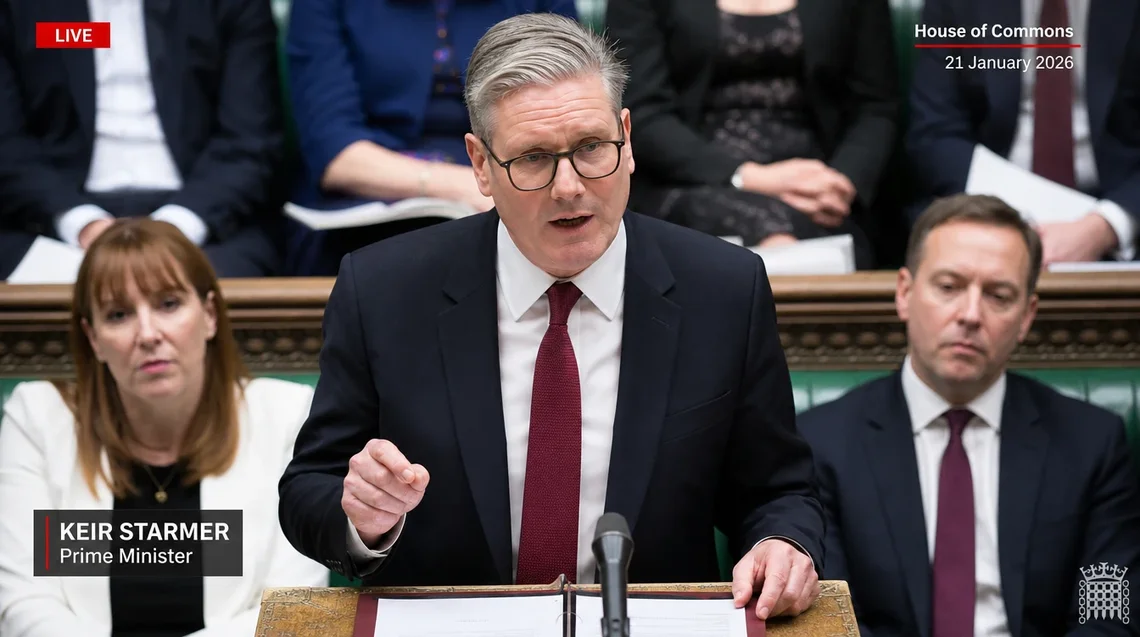
Health Secretary Wes Streeting outlined the investment in a statement to the Commons, linking the funding commitment to a broader programme of reform intended to shift care away from hospitals and into community settings. Officials said the package would target the longest-waiting patients first, with commitments to reduce waits of over 18 months as an initial benchmark before tackling the wider backlog.
Party Positions: Labour argues the NHS requires both sustained new investment and structural reform to address the waiting list crisis inherited from the previous administration, with ministers framing the funding boost as the first stage of a multi-year plan. Conservatives contend that Labour's approach duplicates spending commitments already made under the previous government and warn that without productivity reform, additional money alone will not clear the backlog within a single parliament. Lib Dems have broadly welcomed the funding increase but argue it does not go far enough, calling specifically for a dedicated mental health waiting list target and emergency investment in GP appointment capacity, which they describe as the frontline pressure point driving the wider crisis.
Scale of the Crisis
Figures published by NHS England confirm that the waiting list, though showing marginal month-on-month reductions in some specialties, remains at a historically elevated level. According to data cited by the Office for National Statistics, the number of patients waiting more than a year for treatment remains in the hundreds of thousands, with orthopaedics, ophthalmology, and ear, nose, and throat services among the worst-affected departments.
Related Articles
Post-Pandemic Accumulation
Health policy analysts note that the backlog was substantially worsened by the suspension of elective procedures during the pandemic, but that systemic undercapacity in staffing, estates, and diagnostic equipment has prevented the kind of rapid recovery seen in some comparable European healthcare systems. Officials said the new funding would include a ring-fenced allocation for diagnostic infrastructure, including additional MRI and CT scanning capacity, to address what ministers have described as a bottleneck at the point of clinical assessment. The Royal College of Surgeons and NHS Providers have both previously warned that diagnostic delays were extending overall wait times beyond the period attributable to treatment capacity alone. (Source: NHS England)
Regional Disparities
The geographic distribution of waiting times remains uneven, with NHS trusts in parts of the North West and South West of England recording some of the longest average waits, according to analysis published by The Guardian. Treasury officials acknowledged in background briefings that the funding formula attached to the new package would seek to weight allocations toward areas with the highest levels of deprivation and the greatest distance from NHS performance benchmarks, though full details of the distribution methodology have not yet been published. (Source: The Guardian)
What the Funding Package Contains
The government confirmed the investment would be structured across both capital and revenue streams, a distinction ministers were careful to emphasise after criticism that previous injections of NHS funding had been directed predominantly at day-to-day operational spending without addressing longer-term infrastructure deficits. Officials said a significant portion of the capital allocation would fund the long-delayed New Hospital Programme, though specific timelines were not confirmed at the time of the Commons statement.
Workforce Commitments
Streeting linked the funding announcement to the workforce plan previously published by NHS England, which sets out projections for the expansion of medical, nursing, and allied health professional training places over the next decade. Critics, including former NHS chief executives quoted in the BBC's political coverage, have questioned whether training pipeline timelines are compatible with the government's stated ambition to bring waiting lists to manageable levels within the current parliament. Officials said a further workforce implementation update would be published before the summer recess. (Source: BBC)
The government separately confirmed that negotiations with NHS junior doctors, following the resolution of the previous industrial dispute, remain ongoing with respect to contract reform and multi-year pay frameworks. Ministers have been cautious about connecting the two announcements directly, though political correspondents have noted that sustained industrial action would materially undermine the delivery of any waiting list reduction programme.
Political Context and Parliamentary Reception
The announcement was made in a politically charged atmosphere, with the Conservatives deploying their shadow health secretary to challenge the government on the specific source of funding and whether the package represents genuinely new money or a repackaging of commitments made in the autumn Budget. Labour ministers have pushed back on this characterisation, insisting the investment is additional and that its phased structure reflects responsible fiscal management rather than ambiguity about its scale.
Opposition Scrutiny
Liberal Democrat health spokesperson Daisy Cooper used an urgent question in the Commons to press ministers on mental health waiting times, which she argued were being systematically underprioritised relative to physical health pathways. The government's response acknowledged that the mental health backlog, currently affecting access to talking therapies and crisis services, requires a dedicated response, though no specific funding figure for mental health was confirmed in the initial package. (Source: Office for National Statistics)
The parliamentary debate also touched on the future of NHS productivity targets, with Treasury officials understood to have conditioned a portion of the funding on NHS England meeting quarterly productivity benchmarks to be set by the Department of Health and Social Care. This conditionality has attracted criticism from some Labour backbenchers, who argue it risks penalising NHS trusts in areas of greatest deprivation that face structural disadvantages unrelated to management performance.
Public and Polling Context
Public concern about NHS waiting times continues to rank among the top issues in regular political polling. According to YouGov tracker data, the NHS has featured in the top three voter priorities consistently throughout this year, with dissatisfaction levels remaining elevated despite awareness that the current government inherited the backlog from its predecessor. Ipsos research has similarly shown that while voters broadly blame the previous Conservative administration for the scale of the crisis, satisfaction with Labour's handling of the health brief has not yet moved decisively into positive territory, suggesting the government faces a credibility gap between announced policy and experienced service. (Source: YouGov; Source: Ipsos)
| Indicator | Current Position | Source |
|---|---|---|
| Total NHS England waiting list (approx.) | 7.5 million cases | NHS England |
| Patients waiting over 52 weeks | Approx. 300,000+ | NHS England / ONS |
| Voters ranking NHS as top issue | Consistently top 3 | YouGov tracker |
| Net satisfaction with Labour on NHS | Marginally negative | Ipsos |
| Voters blaming Conservatives for backlog | Majority in polling | YouGov |
| Government NHS funding increase (announced) | Multi-billion, phased | HM Treasury / DHSC |
Reform Agenda Alongside Investment
Ministers have been consistent in pairing the funding announcement with language about reform, seeking to pre-empt arguments that Labour's approach to the NHS is simply to spend more without addressing structural inefficiencies. Streeting has repeatedly described the health service as "broken" and in need of systemic change rather than incremental improvement, framing that has occasionally generated internal party friction with MPs and trade unions closer to the traditional NHS workforce.
Shifting Care Into the Community
The centrepiece of the reform narrative is a commitment to move a substantial volume of appointments and procedures out of acute hospital settings and into primary care and community health infrastructure. Officials said this shift, which mirrors recommendations made in several independent reviews of NHS long-term sustainability, would require capital investment in GP surgeries, community diagnostic centres, and integrated care board capacity — all of which are included, in principle, within the announced package. The detail of how integrated care boards will be held accountable for delivery has not yet been confirmed, and NHS Confederation officials have previously called for clarity on governance frameworks before committing to implementation timelines. For further background on the government's evolving position, see earlier reporting on how Labour pledges NHS overhaul as waiting lists hit record levels and the subsequent policy development outlined when Labour pledges major NHS funding boost amid reform push.
Trajectory and What Comes Next
With parliament due to rise for the summer recess shortly, ministers will not face sustained Commons scrutiny of the package for several weeks. The government is expected to publish a more detailed implementation plan in the autumn, alongside the Spending Review process, which will determine multi-year NHS budgets and set the financial envelope within which the waiting list programme must operate.
Health economists and NHS trust leaders have broadly welcomed the direction of the announcement while reserving judgement on its sufficiency until full figures and conditions are published. The concern most frequently expressed by NHS chief executives is not the principle of the investment but the pace of its release into the system, with previous experience suggesting that capital in particular can take multiple financial years to translate into delivered infrastructure. Earlier coverage tracking the evolution of these commitments provides useful context: the trajectory from initial promises documented in reporting on how Starmer pledges NHS overhaul as waiting lists grow through to the more detailed commitments outlined when examining how Labour pledges new NHS funding as waiting lists persist illustrates how the government's position has hardened over successive months. Analysis of the structural dimensions of the reform programme can also be found in earlier reporting on how Labour pledges NHS overhaul as waiting lists surge across multiple specialties.
The political stakes are considerable. Officials privately acknowledge that tangible, experiential improvements in NHS access — shorter waits, easier GP appointments, faster diagnostic results — are among the most important factors likely to determine whether the government's poll position on competence recovers ahead of the next electoral cycle. The funding announcement is a significant commitment, but Westminster correspondents across multiple outlets, including the BBC and The Guardian, have noted that the distance between a parliamentary announcement and a patient receiving faster treatment remains the fundamental political and operational challenge facing the Starmer government on health. (Source: BBC; Source: The Guardian)