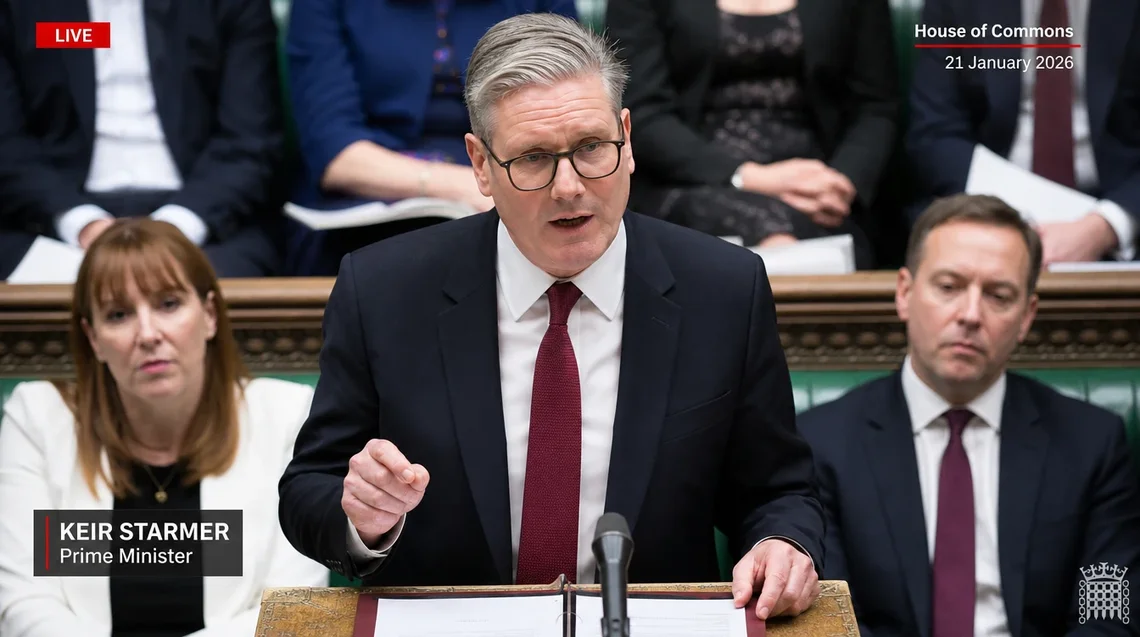
Starmer's NHS overhaul faces funding scrutiny
Labour pushes reform bill amid backbench concerns

Sir Keir Starmer's flagship NHS reform legislation is facing intensifying scrutiny over its funding model, with Treasury officials yet to confirm how a projected multibillion-pound investment will be sustained beyond the current spending review period. The bill, which promises the most significant restructuring of the health service in over a decade, is advancing through Parliament amid a widening rift between Downing Street and a vocal bloc of Labour backbenchers who argue the numbers do not add up.
Party Positions: Labour supports the NHS reform bill as a central manifesto commitment, arguing structural change and targeted investment will cut waiting times and modernise care pathways. Conservatives oppose the current framework, describing it as top-down reorganisation that repeats past mistakes and lacks credible long-term financial underpinning. Lib Dems have expressed conditional support for reform in principle but are pressing for independent fiscal scrutiny of all spending commitments before the bill passes its committee stage.
The Core of the Reform Agenda
The government's NHS overhaul centres on a series of structural changes to how integrated care systems operate, how hospital trusts are commissioned, and how primary care is linked to secondary and community services. Ministers describe the programme as essential to ending what they call a decade of managed decline under the previous administration, pointing to record waiting lists and deteriorating performance targets as the baseline against which the reforms will be judged.
What the Bill Proposes
According to Health Department briefings, the legislation would consolidate oversight functions currently spread across NHS England, regional bodies, and local trusts into a more streamlined accountability structure. Proponents argue this reduces bureaucratic duplication and directs more resources toward frontline care. Critics, including a number from within Labour's own parliamentary group, contend the reorganisation carries significant transition costs that have not been transparently accounted for in public documentation accompanying the bill.
Related Articles
The Health Secretary has publicly defended the proposals, insisting the structural changes are fiscally neutral over a five-year horizon. However, officials within NHS England have privately indicated that transition costs in the first two years could run significantly higher than government projections suggest, according to reporting by the Guardian.
For deeper background on the policy's origins, see Starmer pledges major NHS overhaul amid funding row, which outlined the original commitments made during the party's campaign period and how they have evolved since taking office.
Backbench Pressure Mounts
The rebellion within Labour's parliamentary ranks is not uniform in character but is substantial enough to cause concern for the government's whipping operation. At least forty Labour MPs have now either tabled written questions challenging the funding arithmetic or signed letters requesting a Commons debate on the NHS Workforce and Infrastructure Investment Plan — a companion document to the main reform bill. The figures represent a meaningful fraction of the government's working majority.
The Nature of Internal Dissent
Multiple backbenchers from seats with large concentrations of NHS workers have raised specific concerns about whether the bill adequately addresses pay progression and staffing ratios, beyond the headline investment figures. The government has pointed to a commitment to expand the medical and nursing workforce, but critics note that training pipeline timelines mean that any meaningful increase in staffing numbers will not materialise within the current Parliament.
The trajectory of this dissent is explored in detail in the analysis piece Starmer's NHS overhaul faces growing backbench revolt, which tracks how the internal opposition has grown since the bill's second reading. A more recent assessment of the parliamentary arithmetic can also be found in Starmer's NHS Overhaul Faces Backbench Revolt.
Senior whips have held a series of meetings with discontented MPs over recent weeks in an attempt to shore up support ahead of the committee stage vote. Whether those conversations have been sufficient to prevent amendments that could substantively alter the bill's framework remains an open question at Westminster, officials said.
Funding Questions and Treasury Tensions
Central to the row is a fundamental disagreement between the Health Department and HM Treasury over how the reform programme should be classified in public accounting terms. If the spending is categorised primarily as capital investment, it sits within different fiscal rules than resource expenditure, potentially giving the government more room to manoeuvre without breaching its own self-imposed fiscal guardrails. Treasury officials have not yet formally confirmed which accounting treatment will apply.
Independent Assessments of the Figures
The Office for Budget Responsibility has flagged NHS spending pressures as one of the primary long-term risks to the public finances, noting in its most recent fiscal sustainability analysis that demographic changes alone will require significantly increased health expenditure over the coming decades regardless of structural reform (Source: Office for National Statistics). The OBR's assessment adds weight to backbench arguments that the bill needs a more explicit multi-year funding guarantee rather than relying on spending review cycles.
Polling conducted by YouGov and published recently found that a majority of respondents support increased NHS funding in principle, but that confidence in the government's ability to manage the health service effectively has declined since the start of the parliamentary term (Source: YouGov). A separate survey by Ipsos found that NHS performance remains the single issue voters most frequently cite when asked about government priorities, ahead of cost of living and immigration (Source: Ipsos).
| Metric | Figure | Source |
|---|---|---|
| Voters citing NHS as top priority | 54% | Ipsos |
| Public confidence in government NHS management | 38% (approve) | YouGov |
| Labour MPs who have raised formal funding concerns | 40+ | Parliamentary records |
| Projected NHS waiting list (current estimate) | 7.6 million | NHS England / ONS |
| Conservative opposition votes at second reading | Unanimous | Hansard |
| Lib Dem abstentions at second reading | All Lib Dem MPs | Hansard |
Opposition Responses
The Conservatives have sought to exploit the government's internal difficulties, with the shadow health secretary repeatedly characterising the bill as a repeat of the top-down reorganisation they themselves were criticised for implementing during their years in government. The irony of that positioning has not been lost on observers at Westminster, and Labour ministers have been quick to make that point in chamber exchanges.
Liberal Democrat Approach
The Liberal Democrats occupy a distinct position in this debate. Rather than opposing reform outright, the party has tabled amendments calling for the Office for Budget Responsibility to conduct a full independent assessment of the bill's funding projections before it passes its report stage. That approach has found quiet sympathy among some Labour backbenchers who are reluctant to vote against their own government but want to signal disquiet through procedural mechanisms rather than outright rebellion.
The BBC reported that Lib Dem health spokespersons have been in informal contact with Labour MPs from both wings of the party as part of an effort to build cross-party pressure for greater fiscal transparency in the bill (Source: BBC).
Waiting Times: The Political Pressure Point
Beneath the parliamentary and accounting arguments lies a more immediate political reality: NHS waiting times remain stubbornly high, and the government's informal internal target of reducing the list substantially before the next general election is widely regarded at Westminster as extremely challenging. Health economists and NHS trust chief executives have been candid in public forums about the gap between ambition and delivery capacity.
Regional Disparities
According to data published by NHS England and cross-referenced against Office for National Statistics health outcome statistics, waiting time pressures are not evenly distributed across the country. Trusts in parts of the Midlands, the North West, and coastal areas of England face disproportionately long waits, particularly in orthopaedic and diagnostic services. This regional dimension gives backbench MPs from those areas particular constituency incentive to push for more granular funding commitments rather than national headline figures (Source: Office for National Statistics).
The waiting times dimension of the broader reform programme is examined in Starmer's NHS Overhaul Faces New Pressure on Waiting Times, which covers the latest performance data and the government's response to growing concern among NHS providers.
What Happens Next
The bill is expected to enter its committee stage within the coming weeks, at which point the formal amendment process will clarify how significant the internal Labour challenge truly is. The government will be keen to avoid any substantive changes that might be read as a concession to backbench or opposition pressure, but whips will also be conscious that forcing a defeat on a government amendment through mismanagement would carry serious political costs.
Downing Street officials have indicated that the Prime Minister remains personally committed to delivering the NHS reform programme as one of the defining domestic achievements of this Parliament. Whether the funding framework underpinning that ambition is sufficiently robust to survive parliamentary and public scrutiny is a question that neither ministers nor their critics have yet fully answered.
For a consolidated overview of the reform's trajectory and the key milestones ahead, readers can refer to Starmer's NHS Plan Faces Funding Scrutiny, which draws together the principal threads of the funding debate as it has developed since the legislation was introduced. The coming weeks at Westminster will determine whether the government can hold its parliamentary coalition together long enough to pass a bill it has staked considerable political credibility upon delivering.