Labour pledges new NHS funding as waiting lists persist
Starmer government announces £8bn investment package

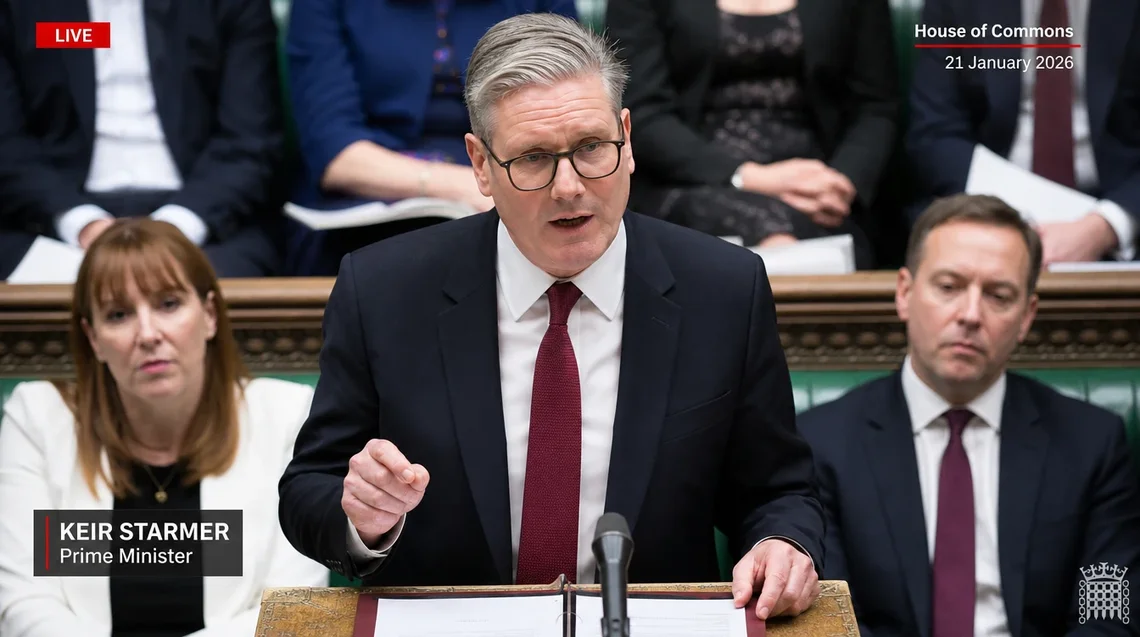
The government has committed £8 billion in new NHS funding as official figures show more than 7.5 million people remain on waiting lists across England, in what ministers are calling the most significant single injection of health service capital in over a decade. Prime Minister Sir Keir Starmer framed the announcement as essential to delivering on Labour's central election promise to "get the NHS back on its feet" after years of what the party describes as systemic underfunding and mismanagement under the previous Conservative administration.
The package, confirmed by the Department of Health and Social Care, will be directed at expanding surgical capacity, recruiting frontline clinical staff, and upgrading ageing hospital infrastructure across England and Wales. Health Secretary Wes Streeting told the Commons the investment would be funded through a combination of existing departmental budgets and new Treasury allocations, with full spending detail to be published alongside the next fiscal statement.
Party Positions: Labour argues the £8bn package is a necessary corrective to years of Conservative underfunding and will reduce waiting times within this parliament; Conservatives contend the announcement lacks credible delivery timelines and risks repeating previous cycles of NHS spending without structural reform, calling for independent oversight of how funds are distributed; Lib Dems broadly welcome the investment but insist it must be accompanied by a dedicated mental health ringfence and binding targets for rural and community health services, warning that urban acute trusts must not absorb funding at the expense of primary care.
The Scale of the Waiting List Crisis
England's NHS backlog has become one of the defining domestic policy challenges of the current parliament. According to NHS England data published this year, approximately 7.54 million pathways are currently open, with a significant proportion of patients waiting longer than the 18-week referral-to-treatment standard that successive governments have pledged to restore. The Office for National Statistics has noted the waiting list problem has tangible economic consequences, with inactivity linked to long-term illness remaining a drag on labour market participation (Source: Office for National Statistics).
Related Articles
Regional Disparities in Wait Times
The burden is not evenly distributed. Analysis published by NHS England indicates that trusts in the North East, parts of the Midlands, and certain coastal communities face considerably longer median waits than their London and South East counterparts. Officials said targeted capital from the new package would be weighted toward areas where waits are longest, though the precise allocation formula has not yet been released. Patient advocacy groups have cautioned that without robust regional ring-fencing, funding risks flowing disproportionately toward larger teaching hospitals with the administrative capacity to bid successfully for new resources.
Elective Recovery and Surgical Hubs
A central pillar of the investment involves expanding the network of dedicated elective surgical hubs — facilities designed to operate separately from emergency pressures. Ministers said a further twenty-plus hubs would be established or expanded under the new funding round, building on a model piloted under the previous administration. Independent health economists have cautioned that hub expansion alone will not resolve the backlog if workforce shortages in anaesthetics and theatre nursing are not simultaneously addressed, a point conceded by senior officials at a recent Treasury briefing, according to sources familiar with those discussions.
Political Context and Parliamentary Arithmetic
The announcement arrives at a moment of considerable political pressure on the Starmer government. Internal party polling, as well as public survey data, suggests voter confidence in Labour's NHS stewardship remains conditional rather than consolidated. A YouGov survey conducted recently found that while a majority of respondents support increased NHS spending in principle, fewer than half believed the current government had a credible plan to reduce waiting times within a single parliamentary term (Source: YouGov). A separate Ipsos poll indicated that NHS performance now ranks as the top concern for voters across all age groups, ahead of cost of living and immigration (Source: Ipsos).
For further background on the government's broader health reform agenda, see Starmer pledges NHS overhaul as waiting lists persist, which details earlier commitments made before the current funding announcement was formalised.
Commons Debate and Opposition Response
Shadow Health Secretary Edward Argar responded from the despatch box by arguing that the £8bn figure lacked granular breakdown and that previous NHS investment announcements had been subject to what he called "reclassification and recycling" of existing commitments. Argar called on the government to publish a full spending audit within 30 days, a demand Streeting rejected, saying the figures would be transparent in the forthcoming fiscal statement. The Liberal Democrats' health spokesperson welcomed the headline figure but pressed ministers on primary care and GP access, arguing that hospital-centric spending models had historically underserved rural constituencies.
Labour Backbench Pressure
Not all pressure on ministers comes from opposition benches. A cohort of Labour MPs representing constituencies with some of the worst waiting figures have privately raised concerns that the funding announcement, while welcome, does not adequately address systemic workforce planning failures that pre-date the current government. Several members of the Health Select Committee have indicated they intend to call NHS England chief executive Amanda Pritchard for questioning on implementation timelines. The Guardian reported that internal Treasury discussions over whether the full £8bn would be classified as capital or resource spending had not been fully resolved at the time of the Commons statement (Source: Guardian).
Funding Breakdown and Policy Figures
| Funding Stream | Allocation (£bn) | Primary Purpose | Timeline |
|---|---|---|---|
| Elective Surgical Hubs | 2.4 | Expand dedicated elective capacity | Current parliament |
| Workforce Recruitment | 1.8 | Frontline clinical staffing | Immediate rollout |
| Hospital Infrastructure | 2.1 | Capital repairs and upgrades | Multi-year programme |
| Diagnostic Capacity | 1.0 | Community diagnostic centres | Phased delivery |
| Digital and Technology | 0.7 | IT systems and data infrastructure | Rolling programme |
Officials said the allocation figures above reflect current Treasury modelling and remain subject to revision pending the formal spending review process. The BBC reported that NHS England had been given indicative figures ahead of the public announcement, allowing trusts to begin preliminary planning (Source: BBC).
Workforce: The Central Bottleneck
Across party lines, health policy analysts identify workforce as the most intractable constraint on NHS performance. The Department of Health and Social Care has acknowledged a shortage of approximately 112,000 full-time equivalent staff across England, a figure drawn from NHS England's own workforce statistics. The £1.8bn workforce allocation within the new package is intended to fund additional training places, international recruitment campaigns, and retention incentives including improvements to the NHS pension framework.
International Recruitment and Ethical Concerns
The government's international recruitment strategy has attracted scrutiny from global health organisations, which have raised concerns about brain drain impacts on lower-income countries that train medical professionals at their own expense. Ministers said the UK remains committed to the WHO health workforce ethical recruitment code and that new bilateral agreements with partner governments include reciprocal training and development commitments. Critics argue such assurances have historically been difficult to enforce in practice.
For a broader examination of how reform proposals interact with the funding debate, readers can follow Labour pushes NHS reform bill amid funding row, which covers the legislative dimensions of the government's health agenda in detail.
Public and Expert Reception
The announcement was broadly welcomed by NHS trust chief executives, several of whom issued statements describing the investment as overdue. The British Medical Association, while supportive in tone, cautioned that capital spending would only translate into reduced waiting times if accompanied by meaningful progress on staff retention. Royal College of Nursing officials said the £8bn must not become a vehicle for further private sector outsourcing, a recurring tension in NHS reform debates that the current government has sought to navigate carefully.
Think tanks working on health policy offered a more mixed assessment. The Health Foundation noted that the investment, while substantial in absolute terms, still leaves England's per capita health spending below the average of comparable Western European economies. The King's Fund said the package needed to be evaluated against a credible delivery framework with measurable milestones, warning that headline investment figures had in the past outpaced actual improvements in patient experience.
Historical Parallels and Policy Context
The political dynamics surrounding this announcement echo earlier NHS funding controversies. The waiting list problem predates the current government, having been significantly exacerbated by the pandemic and subsequent recovery difficulties. Opposition parties have sought to hold Labour accountable for a crisis they argue it inherited while simultaneously questioning whether the government's proposed solutions are structurally adequate rather than politically convenient. The government, for its part, has been consistent in attributing the scale of the current backlog to what it characterises as fourteen years of Conservative mismanagement, a framing contested robustly by the opposition.
Earlier reporting traced the origins of the current reform agenda in detail. Readers interested in how the waiting list issue evolved before the current investment package should consult Starmer pledges NHS overhaul as waiting lists grow and the associated analysis of how political pressure shaped the government's initial reform commitments. Additional context on the urgency that framed early ministerial statements is available at Starmer Pledges NHS Overhaul as Waiting Lists Surge.
What Happens Next
The government faces a demanding implementation challenge. Committing £8bn through a parliamentary statement is a political act; translating it into measurable reductions in waiting times requires sustained administrative execution across dozens of NHS trusts, each operating under distinct local pressures. Ministers have said they will publish a formal delivery plan within weeks, with quarterly progress reports to Parliament. The Health Select Committee has already signalled it will scrutinise those reports closely, and cross-party consensus on the specifics of delivery remains elusive.
For patients currently on waiting lists, the immediate practical impact of the announcement is limited. Officials acknowledged that the first significant effects of expanded surgical hub capacity would not be visible in published waiting time data until later in the programme. The political test for the Starmer government is whether the investment commitment translates into a credible and visible reduction in the human cost of the backlog — a test on which, as polling data consistently shows, public judgment is currently reserved rather than delivered.