Starmer's NHS overhaul faces fresh resistance
Labour pushes reforms as waiting lists remain stubbornly high

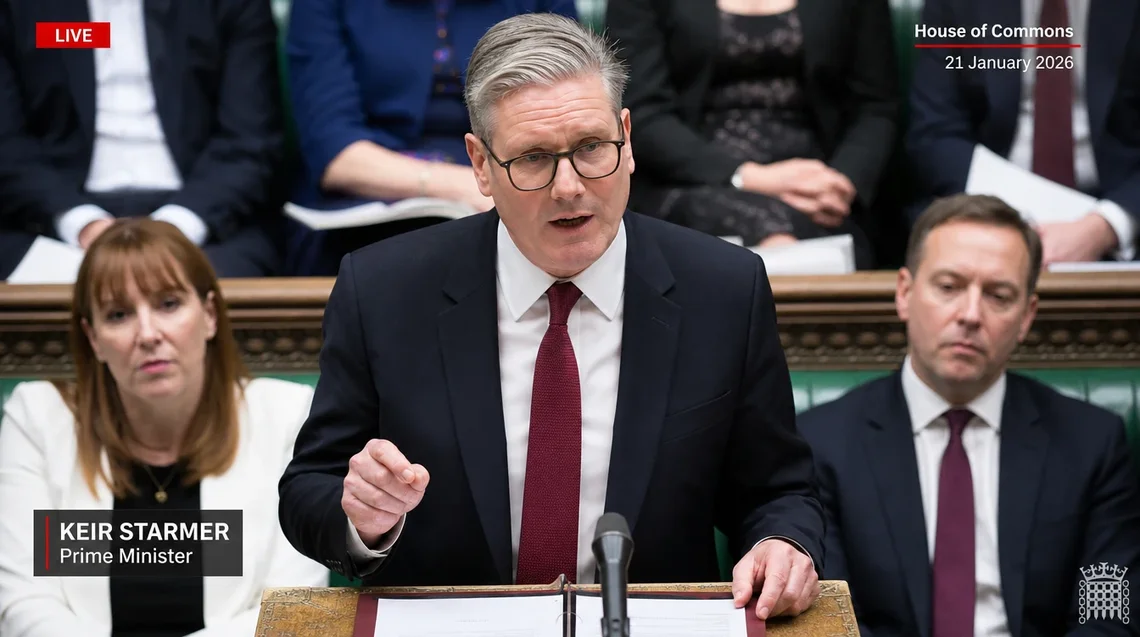
Sir Keir Starmer's government is facing renewed and intensifying resistance to its flagship NHS reform agenda, with waiting lists for elective treatment remaining stubbornly above seven million patients despite repeated ministerial assurances that structural overhaul would deliver measurable improvements. The political pressure is mounting from multiple directions simultaneously — unions, backbench MPs, opposition parties, and now an increasingly sceptical public — as Health Secretary Wes Streeting pushes forward with a programme that critics argue is too slow, too timid, or fundamentally misconceived.
The scale of the challenge was laid bare in the most recent NHS England figures, which show that while the headline waiting list total has edged downward from its historic peak, the number of patients waiting more than 52 weeks for treatment remains well above levels the government inherited — and far beyond the targets set out in Labour's general election manifesto. Officials said the trajectory of improvement falls short of what internal modelling had projected at the point the reform programme was announced.
Party Positions: Labour maintains that structural reform, including shifting care from hospitals to community settings and expanding the use of independent sector capacity, is the only sustainable route to cutting waiting times; Conservatives argue that Labour has presided over continued deterioration, has broken manifesto commitments on waiting lists, and lacks a credible delivery plan; Lib Dems are calling for a dedicated ring-fenced waiting list reduction fund and greater transparency over NHS performance data at regional level.
The State of the Waiting List Crisis
Numbers That Refuse to Fall Fast Enough
According to NHS England data published recently, the total elective waiting list in England currently stands at approximately 7.4 million treatment pathways — a figure that health economists describe as structurally embedded rather than a temporary post-pandemic backlog. The Office for National Statistics has separately identified chronic workforce shortages, particularly among consultant surgeons and diagnostic radiographers, as a compounding factor that limits the speed at which any structural reform can translate into reduced waiting times. (Source: Office for National Statistics)
Related Articles
The government points to a modest reduction from the peak figure recorded under the previous Conservative administration, and ministers insist the direction of travel is correct. However, the pace has drawn sharp criticism from patient groups and health policy analysts who argue that at the current rate of improvement, England will not return to the 18-week referral-to-treatment standard — the legal and constitutional benchmark — for several years.
Regional Disparities Deepen Political Pressure
Internal NHS data, reported by the BBC and corroborated by independent health think tanks, reveals that waiting list performance varies dramatically by region, with some integrated care systems in the north of England and the Midlands recording waiting times significantly above the national average. This geographic inequality has become a particular source of frustration among Labour MPs representing constituencies where NHS performance is visibly deteriorating even as the government claims systemic progress. (Source: BBC)
For background on how the government's original reform commitments were framed, see our earlier coverage: Starmer pledges NHS overhaul as waiting lists grow.
| Metric | Current Figure | Government Target | Source |
|---|---|---|---|
| Total elective waiting list (England) | ~7.4 million pathways | Below 7 million by end of parliament | NHS England |
| Patients waiting 52+ weeks | ~300,000 | Near elimination | NHS England |
| Public satisfaction with NHS (overall) | 24% satisfied | N/A | British Social Attitudes / NatCen |
| Approval of government NHS handling (YouGov) | 31% approve | N/A | YouGov |
| MPs voting for NHS Reform Bill (second reading) | 312 (Labour majority) | N/A | House of Commons |
| Additional NHS capital spending announced | £3.1 billion | Deployed within two years | HM Treasury |
Union Resistance and Industrial Relations Tensions
Streeting and the Unions: An Uneasy Relationship
The British Medical Association and the Royal College of Nursing have both signalled reservations about specific elements of the reform package, particularly proposals that would expand the role of private and independent sector providers in delivering NHS-funded care. Union leaders argue that outsourcing elective procedures to private hospitals, while superficially reducing waiting times, undermines long-term NHS capacity by drawing qualified staff away from public sector employment into better-remunerated private roles.
Wes Streeting has consistently rejected this framing, maintaining that Labour's priority is the patient rather than the institution, and that ideological objections to independent sector involvement are a luxury that seven million waiting patients cannot afford. However, the political cost of this position within the Labour movement has been substantial. Senior trade union figures who were among Labour's most important organisational supporters during the general election campaign have grown increasingly vocal in their opposition. For a detailed account of how union friction has developed, see: Starmer's NHS overhaul faces fresh opposition from unions.
Pay Disputes Adding Complexity
Unresolved tensions over junior doctor pay, consultant contracts, and nursing band regrading have added an additional layer of industrial relations complexity to the reform picture. While the government reached a temporary settlement with junior doctors' representatives last year, officials acknowledged that underlying pay grievances remain unresolved and could re-escalate. Any renewed industrial action would set back waiting list reduction efforts significantly, health economists warned, potentially adding hundreds of thousands of additional pathways to an already overburdened system.
The Backbench Dimension
Labour MPs Voice Doubts in Private and Public
Discontent within the Parliamentary Labour Party has been growing steadily since the autumn, according to reporting by the Guardian and political correspondents embedded at Westminster. A number of first-term Labour MPs — many of whom hold marginal seats and face significant Conservative and Liberal Democrat challenges at the next general election — have been raising concerns through the PLP liaison structure about the pace of waiting list reduction and the government's communications strategy around NHS performance. (Source: Guardian)
In recent weeks, several MPs have moved from private representations to more public expressions of concern, including interventions in Health Questions and written communications to Streeting's private office. The government has responded by convening additional briefings for concerned backbenchers, but party whips privately acknowledge that the NHS file represents one of the most politically sensitive areas of current internal management. Our earlier reporting provides essential context on how this backbench dynamic has evolved: Starmer's NHS overhaul faces growing backbench revolt and the more recent Starmer's NHS Overhaul Faces Backbench Revolt.
The Fiscal Constraint Problem
Several backbench MPs have identified what they describe as a fundamental tension at the heart of the government's NHS strategy: the reform programme is premised on significant capital investment and workforce expansion, but the fiscal rules adopted by Chancellor Rachel Reeves constrain the pace at which that investment can be deployed. Officials have acknowledged that some capital commitments are subject to phased release, meaning the full impact of announced spending will not reach frontline services for an extended period. This fiscal-operational gap, critics argue, is the primary reason waiting lists are not falling faster.
Opposition Attacks Intensify
Conservative Strategy: Accountability on Manifesto Commitments
The Conservative opposition, still recalibrating after its historic general election defeat, has identified NHS waiting lists as one of its primary lines of attack against the government. Shadow Health Secretary Edward Argar and his team have consistently pressed ministers at the despatch box over specific manifesto commitments — including the pledge to deliver two million additional NHS appointments — demanding granular evidence of progress. The Conservatives argue that Labour made undeliverable promises to voters and is now engaged in a systematic effort to redefine success on its own terms.
Polling conducted by Ipsos suggests that while the NHS remains the single issue on which the public is most likely to trust Labour over the Conservatives, that advantage has narrowed measurably since the government took office, with dissatisfaction at the pace of improvement registering strongly among voters in key demographic cohorts including over-65s and parents of young children. (Source: Ipsos)
Liberal Democrats Target Marginal Constituencies
The Liberal Democrats, whose parliamentary representation surged at the general election primarily at Conservative expense in suburban and rural England, have adopted a particularly targeted approach to NHS pressure — focusing on waiting time performance in the specific integrated care system areas that correspond to their most competitive parliamentary battlegrounds. The party has tabled a series of written questions and opposition day motions designed to extract regional-level data that ministers have been reluctant to publish proactively.
For further analysis on how pressure over waiting times has translated into parliamentary and public confrontation, see: Starmer's NHS Overhaul Faces New Pressure on Waiting Times.
What the Reform Programme Actually Contains
The Structural Shift: From Hospital to Community
At the core of Streeting's reform agenda is a long-term ambition to rebalance NHS care away from acute hospital settings and toward primary care, community health services, and neighbourhood health hubs. The theoretical basis for this model, drawn from several independent reviews including the Darzi Report commissioned by the government shortly after taking office, holds that a substantial proportion of elective demand is driven by inadequate upstream prevention and primary care access — and that treating this structural demand driver, rather than simply adding capacity at the acute end, is the only route to sustainable improvement.
This is an intellectually coherent position that commands broad support among health policy experts. The difficulty, as critics across the political spectrum point out, is the timescale: structural rebalancing of a system as complex and institutionally embedded as the NHS operates over years and decades, while patients are waiting now. The political sustainability of a reform programme that promises long-term systemic gain while delivering short-term pain is the central tension that Downing Street and the Department of Health are grappling with.
Independent Sector Expansion: The Contested Element
The most politically contentious specific element of the reform package — the accelerated use of independent sector treatment centres and private hospital capacity to deliver NHS-funded elective procedures — has generated the most sustained opposition from within the Labour family. Ministers argue that the independent sector currently has significant unused theatre capacity that can be contracted by NHS commissioners to deliver additional procedures at NHS tariff rates, reducing waiting times without requiring new NHS infrastructure. Opponents argue this model diverts NHS funding to private profit, destabilises NHS workforce supply, and represents an ideological concession that Labour explicitly rejected in opposition.
The Political Road Ahead
The political sustainability of Starmer's NHS reform programme will ultimately be determined not by the merits of the structural arguments but by whether waiting lists fall at a pace that voters can perceive before the next general election — which must be held by the summer of the year after next at the latest. YouGov polling conducted recently places NHS performance among the top three issues driving voter intention, with 64 percent of respondents saying the government is not doing enough to cut waiting times. (Source: YouGov)
Officials in both Downing Street and the Department of Health are understood to be acutely aware that the reform narrative requires a credible short-term performance story to sustain the long-term structural argument. Without visible progress on waiting lists within the next twelve to eighteen months, the political pressure — from unions, backbenchers, and opposition parties alike — is likely to become significantly harder to manage. Whether the government can deliver that progress within its own fiscal constraints, against continued workforce challenges, and in the face of coordinated political resistance, remains the defining question of this parliament's health policy chapter.