Starmer's NHS overhaul faces backbench rebellion
Labour MPs question funding plan ahead of vote
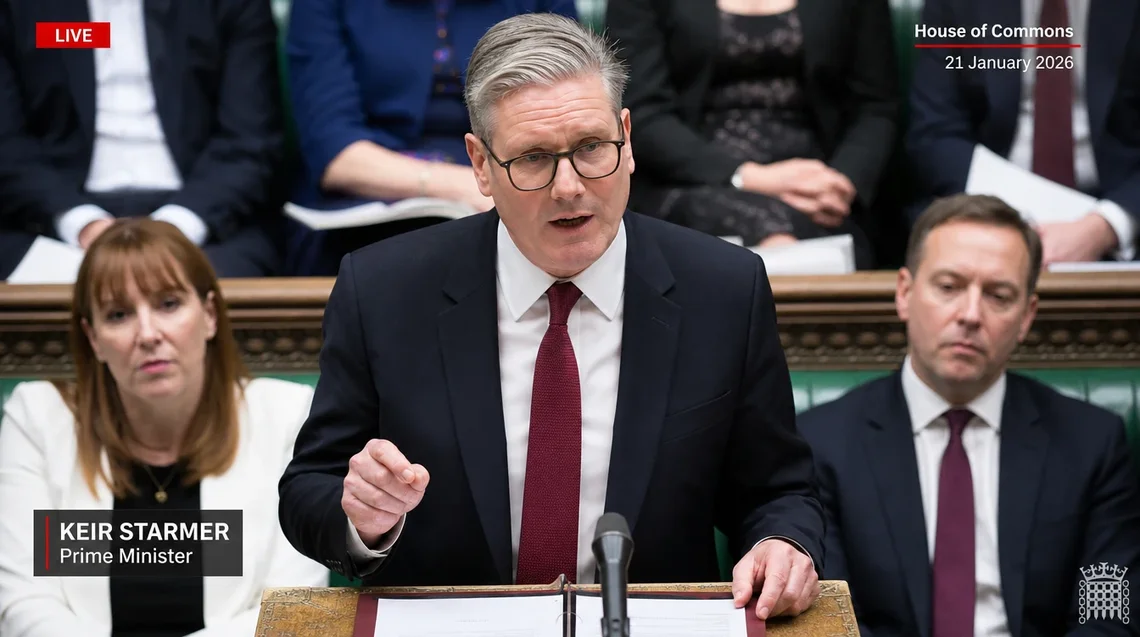
Sir Keir Starmer's flagship NHS reform agenda is facing a significant internal challenge, with more than two dozen Labour backbenchers publicly voicing concerns over the funding mechanisms underpinning the overhaul ahead of a critical parliamentary vote. The rebellion represents one of the most serious tests of Starmer's authority since taking office, threatening to derail legislation that the government has positioned as the centrepiece of its domestic programme.
Senior Labour MPs have raised questions about whether the proposed funding model — relying heavily on efficiency savings and a contested capital investment framework — is sufficient to deliver the government's stated ambition of cutting NHS waiting lists and reforming community care. Officials within the Department of Health and Social Care insist the plan is fully costed, but dissenting backbenchers argue the projections do not withstand scrutiny against current demand pressures (Source: BBC).
Party Positions: Labour — Ministers defend the overhaul as a necessary structural transformation of the NHS, arguing existing funding models are unsustainable and that the reform package will reduce waiting times over the medium term. Conservatives — The Official Opposition has attacked the plan as underfunded and ideologically driven, arguing the government is using NHS reform to expand central control rather than improve patient outcomes. Lib Dems — The Liberal Democrats have broadly welcomed reform ambitions but demanded greater transparency over the capital funding model and called for independent scrutiny of cost projections before any vote proceeds.
The Scale of the Rebellion
According to parliamentary sources, at least twenty-six Labour MPs have signed a letter to the Chief Whip expressing reservations about the vote proceeding without further debate on the financial underpinnings of the reform package. The figure is significant: while it falls short of the numbers required to defeat the government outright, a rebellion of this scale would represent an embarrassing public fracture within the parliamentary Labour Party at a moment when Downing Street has staked considerable political capital on the NHS agenda.
Related Articles
Who Is Dissenting?
The dissenters are drawn primarily from two groups: MPs representing constituencies with acute pressures on local NHS trusts, and a cluster of backbenchers with backgrounds in public health, nursing, and social care, who have questioned whether the efficiency saving assumptions are realistic. Several members of the Health Select Committee have declined to publicly endorse the package ahead of the vote, an unusual posture that senior whips have reportedly described as unhelpful (Source: Guardian).
The rebellion is not uniformly ideological. It does not map neatly onto either the left or centrist wings of the parliamentary party, suggesting the concerns are substantive rather than factional. That, according to Westminster observers, makes it harder for Downing Street to dismiss as routine internal opposition.
Whipping Operation Under Pressure
The government's whipping operation is understood to have intensified in recent days, with ministerial figures making direct contact with wavering MPs. Officials said the Chief Whip's office had convened a series of private briefings intended to address specific concerns about regional NHS trust funding allocations, though it is unclear whether those sessions have succeeded in bringing dissenting voices back into line.
The Funding Dispute at the Centre of the Row
The central argument advanced by rebel MPs concerns the government's reliance on projected efficiency savings of approximately £3.5 billion annually as a structural component of the overhaul's financial architecture. Critics argue that NHS trusts have consistently failed to deliver efficiency savings at the scale required by previous reform programmes, and that building a new overhaul on similarly optimistic projections repeats a fundamental error in NHS financial planning.
What the Data Show
Data published by NHS England show that the health service missed its efficiency targets in the majority of financial years over the past decade, with actual savings typically amounting to between fifty and sixty-five percent of the figures initially projected. Against that backdrop, several MPs argue the current reform's funding model contains a structural shortfall of between £1.2 billion and £1.8 billion over the spending review period (Source: Office for National Statistics).
Ministers have disputed this characterisation, arguing that the reform package contains structural changes — including a shift of care from acute hospital settings to community and primary care — that will change the demand profile facing trusts in a way that previous efficiency drives did not. Health Secretary officials said the comparison with earlier programmes was therefore misleading.
| Metric | Figure | Source |
|---|---|---|
| Labour MPs publicly expressing concerns | 26+ | Parliamentary sources |
| Annual efficiency savings projected by government | £3.5 billion | Department of Health and Social Care |
| Estimated funding shortfall (critic projection) | £1.2bn – £1.8bn | Backbench analysis, NHS England data |
| Public approval for NHS reform (general) | 54% in favour | YouGov |
| Public confidence in government's NHS funding plan | 31% confident | Ipsos |
| NHS efficiency target achievement rate (past decade) | 50–65% of projections | Office for National Statistics |
| Current NHS England waiting list (approx.) | 7.5 million | NHS England |
Opposition Parties Seize the Moment
The Conservatives have moved quickly to exploit the internal Labour tensions, tabling a series of written questions demanding the government publish the full independent modelling behind the efficiency saving assumptions. Shadow Health Secretary officials said the rebellion proved the government was attempting to pass legislation without adequate scrutiny of its financial basis, and called for the vote to be delayed pending an independent Office for Budget Responsibility assessment of the reform's cost projections.
Liberal Democrat Pressure
The Liberal Democrats, who hold significant electoral relevance in a number of suburban and rural English seats with above-average proportions of older NHS-dependent voters, have adopted a more calibrated position. The party's health spokesperson said publicly that the Lib Dems would not oppose NHS reform in principle but would table amendments requiring independent audit of the capital spending framework before the legislation progressed to Report Stage. That position, according to parliamentary sources, has provided some political cover for Labour rebels considering their own next steps (Source: Guardian).
Public Opinion and the Political Stakes
The political stakes of the rebellion are heightened by a polling picture that is more complicated than either side in the internal Labour dispute wishes to acknowledge. While a YouGov survey found that 54 percent of the public supports NHS reform in general terms, the same polling data showed that only 31 percent expressed confidence in the government's specific funding plan — a gap that suggests public enthusiasm for reform does not translate into trust in this particular overhaul's financial credibility (Source: YouGov, Ipsos).
That disconnect has not been lost on senior figures in the parliamentary Labour Party. Several MPs have noted privately that the public appetite for NHS improvement is a political asset the government risks squandering if the reform becomes associated in the public mind with broken financial promises rather than genuine improvements to patient care.
Waiting Times: The Underlying Pressure
Underpinning the entire debate is the scale of the NHS waiting list crisis, which has placed extraordinary pressure on the government to demonstrate concrete progress. With approximately 7.5 million people currently on NHS waiting lists, the political pressure to show meaningful reductions is intense. As explored in recent coverage of Starmer's NHS Overhaul Faces New Pressure on Waiting Times, the government's reform timeline has already come under strain from NHS trusts reporting that demand is rising faster than the structural changes can take effect.
Union Opposition Adding to Government's Difficulties
The backbench rebellion has not emerged in isolation. As detailed in earlier analysis of Starmer's NHS overhaul faces fresh opposition from unions, several major NHS trade unions have expressed reservations about specific elements of the reform, particularly workforce restructuring provisions that union officials argue could accelerate staff departures from an already depleted service. That external pressure has reinforced the doubts of backbenchers who represent constituencies with acute NHS staffing difficulties.
Unite and UNISON have both written to government ministers requesting consultations on specific clauses within the reform legislation. Officials said ministerial responses to those letters had been dispatched but declined to characterise their content ahead of the parliamentary vote.
What Happens Next
The government retains a working parliamentary majority and, under most foreseeable scenarios, the legislation is expected to pass at Second Reading even if the rebellion holds. However, the political damage of a visible fracture — and the possibility that amendments could be carried at later stages with the support of opposition parties — has concentrated minds at the highest levels of the Starmer operation.
Downing Street officials said the Prime Minister remained fully committed to the reform programme and was confident the vote would proceed as planned. The full trajectory of the internal challenge has been traced in related coverage of Starmer's NHS overhaul faces growing backbench revolt and the earlier emergence of tensions documented in Starmer's NHS overhaul faces fresh resistance, which together illustrate how a series of incremental dissents has accumulated into a more substantial political challenge than Downing Street initially anticipated.
Whether the government can hold its line through the vote and into the committee stage will depend in large part on whether the private reassurances being offered to wavering backbenchers prove sufficient — and whether the funding questions at the heart of this rebellion can be answered to the satisfaction of MPs who have staked their public credibility on demanding answers before voting in favour.