Labour pledges NHS overhaul as waiting lists remain critical
Starmer government unveils £15bn reform package

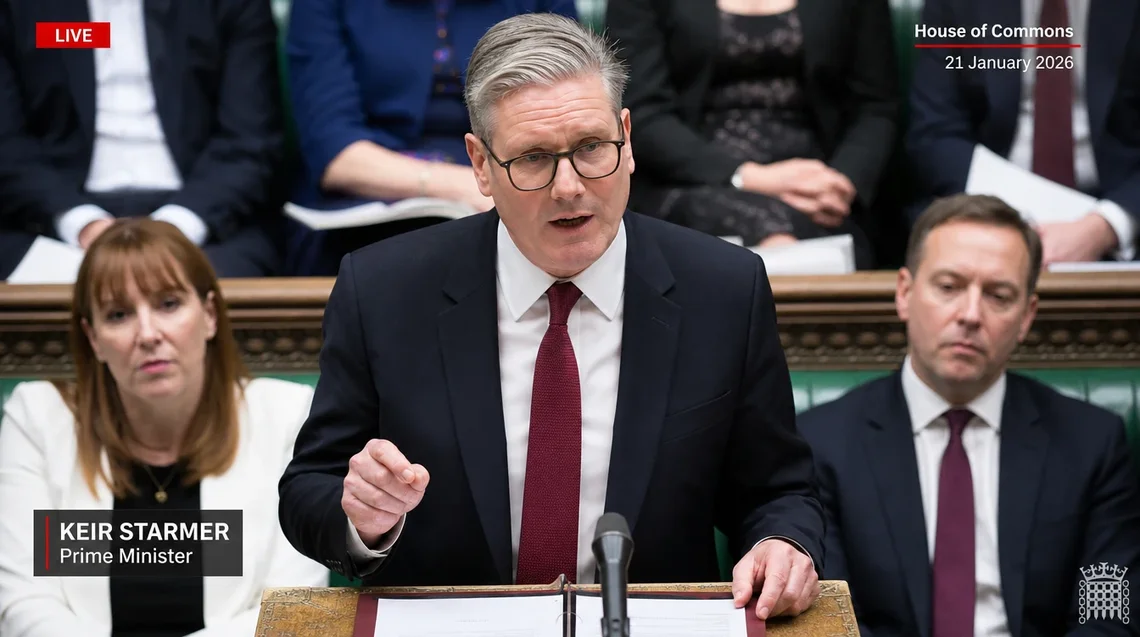
The Starmer government has unveiled a £15 billion NHS reform package aimed at tackling England's record waiting lists, with ministers warning that without structural change the health service faces an "irreversible crisis." The announcement, made by Health Secretary Wes Streeting in a Commons statement, sets out the most ambitious overhaul of NHS England in more than a decade, spanning workforce expansion, digital infrastructure investment, and a fundamental shift toward community-based care.
NHS England currently records more than 7.5 million people on elective waiting lists, according to the latest figures published by NHS England and corroborated by the Office for National Statistics. The scale of the backlog — built up over years of underfunding, compounded by the pressures of the pandemic and consecutive winters of industrial action — has become the defining domestic challenge for the Labour administration since it took office.
Party Positions: Labour argues the £15bn reform package represents a necessary structural investment to end what ministers call the "cycle of sticking-plaster politics" in NHS management, prioritising community diagnostics, workforce training, and digital record integration. Conservatives contend the spending commitment is fiscally reckless given current borrowing levels, arguing the government should focus on productivity reforms rather than headline investment figures, and accuse Labour of recycling previously announced funding. Lib Dems broadly support increased NHS investment but have called for a specific ring-fenced mental health guarantee within the package, warning that without dedicated mental health provision the reforms risk replicating the same systemic imbalances that have plagued the health service for the past fifteen years.
What the £15bn Package Contains
The reform package, titled NHS Forward: A 10-Year Plan for Sustainable Health, allocates funding across several interconnected streams. According to documents released by the Department of Health and Social Care, approximately £4.2bn is earmarked for workforce development, including the training of an additional 12,000 nurses and 3,500 GPs over the next parliamentary cycle. A further £3.8bn is directed toward 160 new community diagnostic centres designed to reduce pressure on acute hospital trusts.
Related Articles
Digital Infrastructure and Data Integration
One of the most significant structural elements within the package concerns digital modernisation. Officials said roughly £2.1bn will fund a unified patient record system intended to replace the fragmented network of legacy IT platforms currently operating across NHS trusts. The Guardian has reported that internal NHS audits identified more than 80 separate electronic records systems in use across England, creating significant delays in care coordination. Ministers described the digital overhaul as foundational to every other element of the reform programme.
Shift Toward Community-Based Care
The package reflects a philosophical commitment, articulated repeatedly by Streeting since taking office, to moving healthcare "from hospital to community." According to the Department of Health, the proportion of first appointments currently conducted in primary or community settings stands at under 40 per cent. The government's stated target is to reach 60 per cent within five years, a shift that health economists at the King's Fund have previously described as achievable but contingent on sustained GP workforce investment.
Earlier reporting on the trajectory of this policy is available in our coverage of how Starmer pledges NHS overhaul as waiting lists grow, which examined the political groundwork laid in the early months of the administration.
The Waiting List Crisis in Numbers
The political urgency behind the announcement is inseparable from the raw data. NHS England figures, independently verified by the Office for National Statistics, show that more than 1.5 million people have been waiting longer than 18 weeks for elective treatment — the statutory target threshold. A further 300,000 have been waiting more than 52 weeks, a figure that was effectively zero before the pandemic period.
| Metric | Current Figure | Pre-Pandemic Benchmark | Government Target |
|---|---|---|---|
| Total elective waiting list | 7.54 million | 4.2 million | 5.0 million (5-year) |
| Waiting >18 weeks | 1.52 million | Under 400,000 | Statutory compliance |
| Waiting >52 weeks | 302,000 | Effectively zero | Elimination within 3 years |
| A&E 4-hour target met | 68.4% | Above 95% | 78% (interim, 2-year) |
| Public satisfaction with NHS (Ipsos) | 24% | 57% (pre-2019) | Not specified |
(Sources: NHS England, Office for National Statistics, Ipsos)
Public satisfaction data from Ipsos underscores the political stakes. Approval of the NHS currently sits at its lowest recorded level, with just 24 per cent of respondents rating the service as performing well — a figure that represents a collapse of more than 30 percentage points compared to ratings recorded before the disruption of recent years. YouGov polling conducted for the BBC found that NHS performance ranks as the single most important issue for voters in every English region outside London, where cost of living marginally edges it.
Regional Disparities
The waiting list crisis is not uniformly distributed. According to NHS England data, trusts in the North East and Yorkshire record the highest per-capita waiting times, while London and the South East, despite facing greater raw demand, benefit from higher levels of specialist capacity. The reform package includes a specific regional equity fund of £680 million, officials said, targeted at the twelve integrated care systems with the worst performance metrics.
Opposition and Cross-Party Reaction
The Conservative response, delivered by shadow health secretary Ed Argar, centred on challenging the fiscal credibility of the announcement rather than opposing NHS investment in principle. Argar argued in the Commons chamber that significant portions of the £15bn figure represented recycled commitments first announced under the previous government, and called on ministers to publish a line-by-line breakdown before parliamentary recess.
The Liberal Democrats, through health spokesperson Helen Morgan, offered qualified support while pressing the government on mental health provision. Morgan told the chamber that mental health services — which account for roughly 28 per cent of the disease burden according to NHS data but receive a disproportionately smaller share of clinical investment — must be explicitly protected within the reform structure rather than assumed to benefit from general efficiency gains.
Labour Backbench Concerns
Within Labour's own parliamentary group, a number of backbenchers representing constituencies with acute trust deficits expressed concern that the timetable for visible improvement may not align with electoral cycles. According to the BBC's political unit, at least fifteen Labour MPs requested private briefings from the Department of Health ahead of the Commons statement, focusing particularly on the five-year trajectory for waiting list reduction and whether interim milestones would be legally enforceable.
The political context for these pressures is examined in detail in our earlier analysis of how Labour Pledges NHS Overhaul as Waiting Lists Surge and the mounting internal party dynamics that have shaped the government's policy approach since the general election.
Independent Assessment of the Reform Programme
Health economists and NHS governance specialists have offered measured assessments of the package's ambitions. The Nuffield Trust, responding to the announcement, said the investment levels were broadly consistent with what independent modelling suggested was necessary to stabilise services, but cautioned that workforce expansion targets had repeatedly been set and missed by successive governments over the past two decades.
The King's Fund said in a published statement that the structural shift toward community care was "directionally correct" but warned that success would depend entirely on implementation capacity within integrated care boards, many of which are themselves resource-constrained. The Health Foundation noted that capital investment in diagnostics and digital infrastructure would take between three and five years to generate measurable throughput improvements, raising questions about whether patients currently on waiting lists would see material benefit within this parliament.
International Comparisons
Officials at the Department of Health cited international evidence in defence of the reform approach. Data compiled by the OECD and referenced in the government's published impact assessment show that comparable healthcare systems in Germany and the Netherlands maintain elective waiting lists that are, on average, 60 per cent shorter than England's, despite similar or lower per-capita public health expenditure. Ministers argued this gap demonstrates that the issue is structural rather than purely financial, and that organisational reform must accompany investment.
For further context on how this policy direction developed through the current parliamentary session, our reporting on Starmer pledges NHS overhaul as waiting lists persist sets out the sequence of ministerial decisions and political pressures that preceded the current announcement.
Implementation Timeline and Accountability
The government has committed to publishing quarterly performance reports against a set of key indicators, with Streeting telling the Commons that he would personally appear before the Health Select Committee every six months to account for progress. A new NHS Productivity Commissioner role is to be created, reporting directly to the Health Secretary, with a mandate to identify efficiency savings within NHS England's administrative structures — an acknowledgement that raw investment alone is insufficient without improved operational performance.
Officials said legislation to underpin elements of the reform, including provisions governing data sharing between NHS trusts and the new community diagnostic network, would be introduced before the next parliamentary recess. The government has also indicated it will consult on a formal NHS Constitution revision to enshrine updated waiting time guarantees as statutory rights rather than aspirational targets.
Earlier coverage tracking the development of Labour's NHS policy from opposition into government can be found in our reporting on how Labour pledges NHS overhaul as waiting lists hit record, which documented the commitments made during the election campaign and the early tensions between treasury constraints and health spending ambitions.
Political Implications
The reform package represents the Starmer government's most consequential domestic policy announcement to date and carries substantial political risk alongside its policy ambition. Should waiting lists fail to show measurable reduction within two to three years, opposition parties will have a concrete and highly visible record against which to hold the government to account. YouGov tracker data, cited by the BBC, shows that NHS performance is currently the primary driver of voter dissatisfaction with the Labour administration among its own 2024 electorate — a dynamic that gives the party both the incentive to act boldly and the vulnerability that comes with having staked its reputation explicitly on delivery.
The announcement marks a clear break from what ministers have consistently characterised as the previous government's failure to confront NHS structural challenges with adequate resource or reform ambition. Whether the £15bn package translates into the tangible improvements in patient experience that voters are demanding will determine not only the political fortunes of the Health Secretary, but the broader credibility of the government's claim to be the party of public services. For now, the scale of the commitment has set an unambiguous benchmark against which the administration will be judged. (Sources: NHS England, Office for National Statistics, YouGov, Ipsos, BBC, The Guardian)