UN Security Council deadlocked on new Russia sanctions
Veto power threatens coordinated Western response
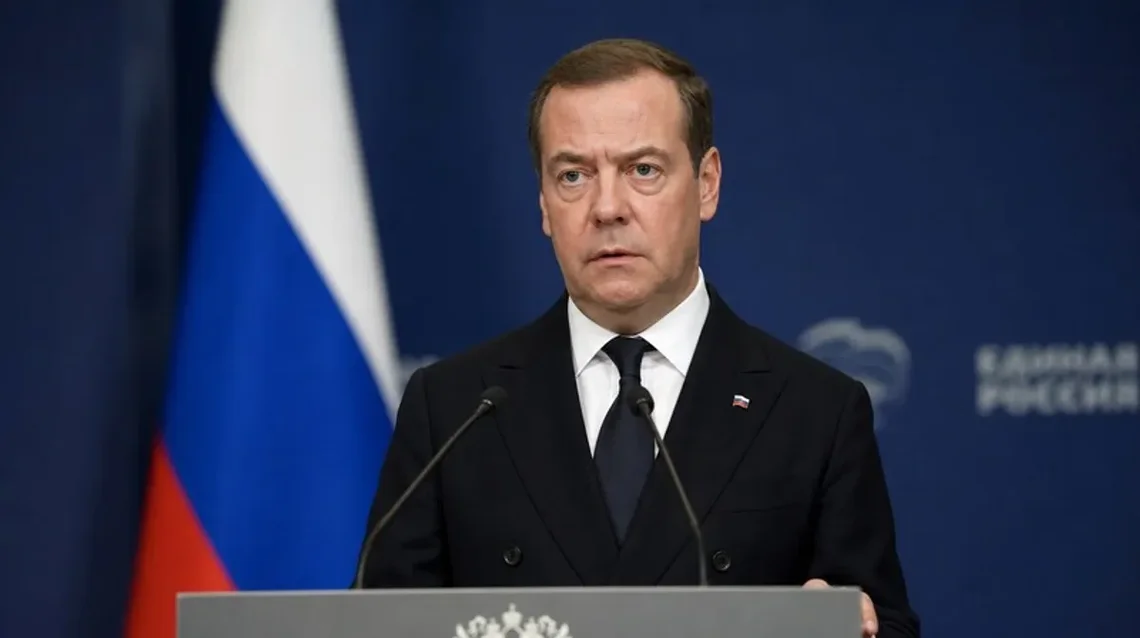
The United Nations Security Council has once again failed to reach consensus on a new package of sanctions targeting Russia over its ongoing war in Ukraine, with Moscow's permanent veto power rendering coordinated multilateral action effectively impossible. The deadlock, described by Western diplomats as "deeply frustrating" according to Reuters, underscores a structural paralysis at the heart of the world's most powerful international body at a moment of acute geopolitical urgency.
The failed vote represents the latest in a series of stalled resolutions, with Russia — and in several instances China — blocking measures that Western nations and their allies argue are essential to curtailing Moscow's capacity to wage war. The pattern has prompted renewed calls from European and Anglo-American diplomats to explore alternative enforcement mechanisms outside the Council's framework.
Key Context: Russia holds one of five permanent seats on the UN Security Council, granting it unconditional veto power over any binding resolution. Since the full-scale invasion of Ukraine began, Russia has used or threatened its veto to block more than a dozen resolutions, including those on sanctions, humanitarian corridors, and arms embargoes. The United States, United Kingdom, France, China, and Russia are the five permanent members (P5) with veto rights. (Source: UN Department of Political and Peacebuilding Affairs)
The Vote and Its Immediate Fallout
The draft resolution, co-sponsored by the United Kingdom, the United States, France, and a coalition of elected Council members, sought to impose new restrictions on Russian energy revenues, expand asset freeze designations, and tighten controls on the export of dual-use technologies believed to be feeding Moscow's military-industrial complex. Russia cast its veto within minutes of the formal session opening, officials said. China abstained, as it has done on numerous previous Ukraine-related votes.
Related Articles
Western Reaction
British Ambassador to the UN Dame Barbara Woodward called the veto "a cynical abuse of privilege that shields a state engaged in aggression from accountability," according to AP. The United States echoed the sentiment, with its representative stating that Russia's conduct at the Council "makes a mockery of the institution's founding principles." France's envoy noted that the international community could not simply accept perpetual impunity as a structural feature of the global order. (Source: AP)
Russia's Position
Russia's UN envoy Vasily Nebenzya defended the veto as a legitimate exercise of sovereign right and characterised the proposed sanctions package as "politically motivated economic warfare" rather than a genuine peace mechanism, according to Reuters. Moscow has consistently argued that Western military and financial support for Kyiv prolongs the conflict rather than bringing it to resolution. Beijing's decision to abstain rather than actively block the measure was noted by analysts as a subtle but meaningful distinction. (Source: Reuters)
A Pattern of Institutional Paralysis
This latest failure is far from an isolated incident. The UN Security Council deadlocked over new Russia sanctions on multiple prior occasions, each time exposing the same fundamental flaw: a body designed to enforce international peace is structurally prevented from doing so when one of the alleged aggressors holds a permanent veto. Analysts at Foreign Policy have described the arrangement as "a Cold War relic that increasingly serves the interests of the status quo rather than the vulnerable." (Source: Foreign Policy)
Historical Precedents of Veto Abuse
The veto mechanism was enshrined in the UN Charter to ensure that major powers would not be outvoted into conflicts against their interests — a pragmatic compromise at the Council's founding in the aftermath of the Second World War. However, its use has expanded dramatically in eras of great-power competition. Data compiled by the UN Secretariat show that Russia and its Soviet predecessor have exercised the veto more than any other P5 member in the body's history, with a sharp uptick in frequency since the annexation of Crimea. (Source: UN Secretariat)
The pattern of deadlock is not confined to sanctions alone. Separately, the UN Security Council deadlocked on Ukraine arms embargo proposals earlier, while humanitarian initiatives have fared no better — the UN Security Council deadlocked on Ukraine aid corridor discussions have similarly failed to produce binding outcomes. Even basic relief measures have been blocked, with the UN Security Council deadlocked on Ukraine aid resolution in a pattern that rights organisations say is costing civilian lives. (Source: OCHA, UN Office for the Coordination of Humanitarian Affairs)
What This Means for the UK and Europe
For Britain and its European partners, the Council's failure carries immediate and long-term strategic consequences. In the short term, it places greater pressure on autonomous Western sanctions regimes — particularly those administered by the European Union, the United Kingdom's Office of Financial Sanctions Implementation (OFSI), and the United States Treasury — to compensate for what the multilateral system cannot deliver.
The UK's Independent Sanctions Architecture
Since Brexit, the United Kingdom has developed its own autonomous sanctions regime under the Sanctions and Anti-Money Laundering Act, allowing OFSI to designate individuals and entities independently of both the EU and the UN framework. This architecture has proven operationally significant: British sanctions currently cover hundreds of Russian individuals and entities, targeting oligarchs, defence sector executives, and financial institutions. However, without UN backing, enforcement coordination across non-aligned countries remains limited, and the risk of sanctions evasion via third-country jurisdictions — Turkey, the UAE, and several Central Asian states have been cited — remains substantial, officials said. (Source: UK Foreign, Commonwealth and Development Office)
European Union Cohesion Under Strain
Within the EU, the latest Council failure arrives at a moment of internal tension over the bloc's twelfth sanctions package and ongoing disputes over Hungarian compliance. Budapest has repeatedly delayed or diluted EU measures, exploiting the bloc's own unanimity requirements — a structural vulnerability that mirrors, at a regional level, the same logic that cripples the UN Security Council. Analysts at Foreign Policy have noted that the credibility of the broader Western sanctions architecture depends not only on breadth but on consistency of implementation, and both are currently under stress. (Source: Foreign Policy)
Reform Proposals and Their Limits
The latest deadlock has reinvigorated debate over Security Council reform, a conversation that has persisted for decades without meaningful structural change. Germany, Japan, India, and Brazil — the so-called G4 — have long advocated for expanded permanent membership, while the African Union has pressed for dedicated African representation. A broader coalition of middle powers has proposed limiting the scope of the veto in cases involving mass atrocities and violations of the UN Charter.
The Uniting for Peace Mechanism
One existing tool that Western nations have increasingly turned to is the "Uniting for Peace" resolution procedure, which allows the UN General Assembly to convene in emergency special session when the Security Council is deadlocked. While General Assembly resolutions are not legally binding, they carry significant political and diplomatic weight. The General Assembly has already passed multiple resolutions condemning Russia's invasion, with overwhelming majorities — including many nations in the Global South — supporting them. However, the absence of binding enforcement authority limits their practical effect on the battlefield or in financial systems. (Source: UN General Assembly records)
Geopolitical Implications Beyond Ukraine
The broader geopolitical signal sent by the Council's repeated failures extends well beyond the immediate conflict. Diplomats and analysts warn that persistent institutional impotence risks emboldening other state actors — particularly those watching carefully how the international community responds to territorial aggression. The precedent of unenforced norms, officials said, is itself a security risk of the first order.
For more on the evolving diplomatic landscape, see our continuing coverage on the UN Security Council deadlocked over new sanctions on Russia and the wider implications for multilateral governance.
| Resolution Type | Sponsors | Russia's Vote | China's Vote | Outcome |
|---|---|---|---|---|
| Condemnation of Invasion | US, UK, Albania | Veto | Abstain | Failed |
| Humanitarian Corridor Access | France, UK | Veto | Abstain | Failed |
| Arms Embargo (Russian Forces) | US, EU aligned states | Veto | Veto | Failed |
| Energy Revenue Sanctions | UK, US, France | Veto | Abstain | Failed |
| Independent Investigation Commission | Ukraine, Western coalition | Veto | Abstain | Failed |
| New Sanctions Package (Current) | UK, US, France + elected members | Veto | Abstain | Failed |
The Road Ahead
Western diplomats are now signalling a dual-track approach: continuing to bring resolutions to the Security Council for their political and documentary value, while investing greater energy in enforcing and expanding autonomous national and regional sanctions frameworks. The UK is expected to announce additional designations through OFSI in the coming weeks, officials said, while the EU's diplomatic service is engaged in intensive talks with third-country governments over sanctions circumvention. (Source: Reuters)
The fundamental problem, however, remains unresolved. As long as Russia retains its veto at the Security Council, the body's capacity to serve as the enforcement arm of international law in this conflict is structurally nil. For the United Kingdom, Europe, and the wider community of nations committed to a rules-based international order, that reality demands both honest acknowledgement and creative statecraft — because waiting for the institution to fix itself has, by all available evidence, ceased to be a strategy.