UN Security Council deadlocked over new Russia sanctions
Beijing and Moscow veto measures targeting economy
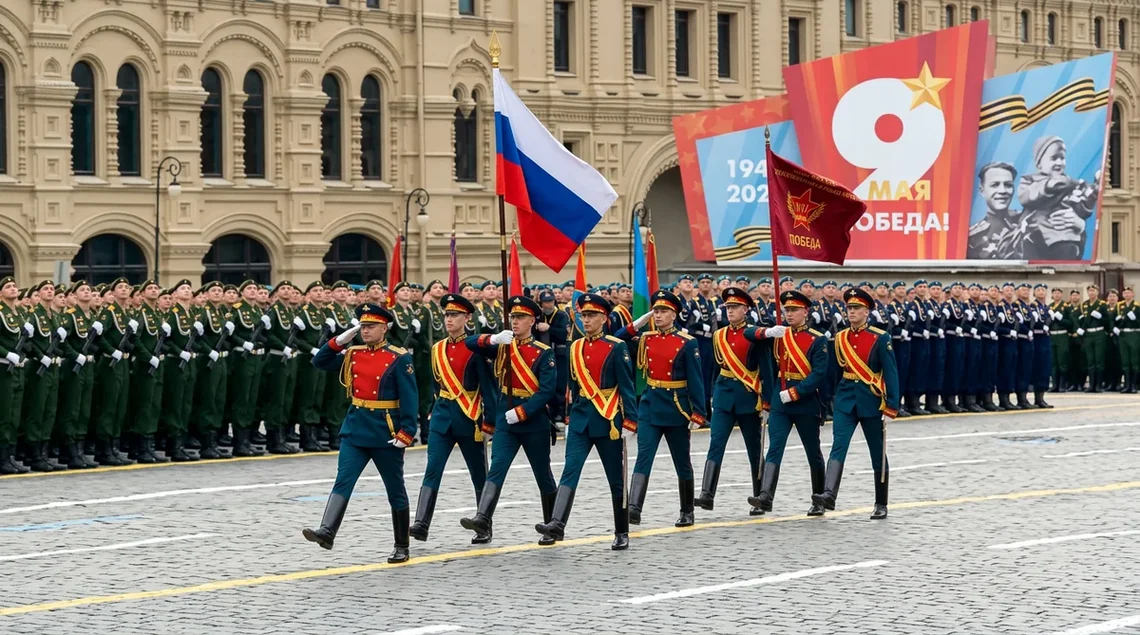
The United Nations Security Council has once again failed to act on proposed sanctions targeting Russia's economy, after China and Russia exercised their veto powers to block a resolution backed by Western nations — marking the latest in a deepening pattern of institutional paralysis that is reshaping global diplomacy and undermining the credibility of the world's foremost peace-keeping body. The double veto, cast during an emergency session in New York, leaves the international community without a multilateral enforcement mechanism as the war in Ukraine continues to grind forward with no diplomatic resolution in sight.
Key Context: The UN Security Council has five permanent members — the United States, the United Kingdom, France, China, and Russia — each holding the power of veto over any substantive resolution. Russia has used its veto more than a dozen times since the full-scale invasion of Ukraine began, effectively shielding itself from binding international action. China has repeatedly abstained or voted alongside Russia, citing principles of non-interference and opposition to what Beijing describes as "unilateral coercive measures." Western-backed sanctions packages have sought to target Russian energy revenues, defence procurement networks, and financial institutions linked to the Kremlin.
What Happened at the Security Council
The proposed resolution, tabled jointly by the United States, the United Kingdom, France, and a coalition of elected Security Council members, sought to impose sweeping new economic measures on Russian state entities, including restrictions on oil and gas exports, expanded asset freezes on senior Kremlin officials, and secondary sanctions targeting third-country entities alleged to be facilitating sanctions evasion, according to diplomats familiar with the text.
The vote failed 11-2, with two abstentions, as China and Russia cast the decisive vetoes. Western delegations condemned the outcome in unusually blunt terms. The UK's UN Ambassador said the Council's inability to act was "a profound failure of the international order," while the US representative described the vetoes as "a shield for war crimes" — language that reflected the high diplomatic temperature surrounding the session, according to Reuters.
Related Articles
The Veto Statements
Russia's UN Ambassador argued that the proposed measures constituted illegal interference in Russia's sovereign affairs and amounted to economic warfare dressed in the language of international law. China's representative reiterated Beijing's position that sanctions imposed outside the UN framework are illegitimate, and called instead for renewed dialogue, citing its own peace initiative as a more constructive path forward. Neither delegation offered a timeline for any alternative proposal, according to AP.
Procedural Manoeuvring
Prior to the vote, Western delegations attempted to introduce procedural amendments that would have required a higher threshold for veto use — a measure that itself required Security Council approval and was blocked before it could be formally introduced. This underscores the structural trap that reformers face: any meaningful change to the Council's architecture requires the very members most likely to abuse the veto to consent to its own limitation (Source: UN reports).
A Pattern of Paralysis
The latest deadlock does not exist in isolation. It is the most recent episode in a sustained pattern of Security Council dysfunction that has characterised the Council's response to the Ukraine conflict since the beginning of hostilities. Analysts and former diplomats have described the Council as functionally incapacitated on issues directly involving a permanent member.
Related failures include the Council's inability to establish humanitarian corridors, enforce arms embargoes, or agree on a coherent peace framework. Readers tracking this recurring dysfunction may recall that the Council previously failed to reach agreement on a UN Security Council deadlocked on Ukraine aid corridor resolution, a setback that left millions of civilians without guaranteed access to emergency assistance. Similarly, earlier attempts to pass a binding humanitarian measure collapsed, as detailed in coverage of the UN Security Council deadlocked on Ukraine aid resolution episode, which exposed deep fissures between Western and Russian interpretations of international humanitarian law.
The Cumulative Diplomatic Toll
Foreign Policy has characterised the Security Council's repeated failures as not merely symptomatic of geopolitical rivalry, but as actively corrosive to the broader architecture of multilateral governance. When the body tasked with maintaining international peace and security cannot act on the most visible armed conflict in Europe since the Second World War, it sends a signal to state and non-state actors globally that the rules-based order has enforceable limits — and that those limits can be exploited by any actor powerful enough to hold a veto seat (Source: Foreign Policy).
The pattern extends beyond Ukraine. The Council's inability to coordinate on humanitarian access in the Middle East — visible in the earlier failure to pass measures on UN Security Council deadlocked on Gaza aid access — has compounded perceptions of selectivity and double standards, further eroding trust in the institution among Global South nations whose support Western governments are actively courting.
Russia's Economic Resilience and the Limits of Existing Sanctions
A key driver behind the push for new Security Council-backed sanctions is the acknowledged reality that existing bilateral and EU-level measures have produced mixed results. While Russia's economy has contracted and experienced significant inflationary pressure, it has demonstrated a degree of resilience that surprised many Western economists, partly through redirection of trade toward China, India, Turkey, and the Gulf states (Source: Reuters).
Sanctions Evasion Networks
Western intelligence services and treasury officials have documented elaborate networks designed to circumvent existing restrictions — using shell companies in third countries, re-routing financial flows through non-sanctioning jurisdictions, and exploiting gaps in enforcement capacity. The proposed Security Council resolution specifically targeted this evasion infrastructure by introducing secondary sanctions provisions, which would have penalised non-UN member states found to be facilitating circumvention. It was precisely this provision that drew the sharpest opposition from Beijing, which views secondary sanctions as an assertion of extraterritorial legal jurisdiction incompatible with international norms, according to AP.
Energy Revenue Flows
Russia continues to earn substantial revenue from hydrocarbon exports, despite the G7 price cap mechanism on Russian oil. Data from international energy monitoring bodies show that the price cap has been inconsistently enforced, and that shadow fleets operating outside Western insurance and regulatory frameworks have enabled Russian crude to reach global markets at prices above the intended ceiling (Source: UN reports). New Security Council-backed measures were intended to close this gap with binding multilateral authority — an authority that now remains absent.
China's Strategic Calculus
Beijing's decision to cast a veto — rather than abstain, as it has done on some previous Ukraine-related votes — represents a notable hardening of China's public posture. Analysts at several Western think tanks have interpreted the move as a signal that China is increasingly willing to absorb diplomatic costs to protect its partnership with Moscow and to oppose what it characterises as Western-led attempts to weaponise international institutions.
China's position is also shaped by its own concerns about precedent. Any Security Council resolution authorising expansive secondary sanctions against Russia could, in Beijing's calculation, serve as a template that might one day be directed at Chinese entities in contexts involving Taiwan or the South China Sea (Source: Foreign Policy).
What This Means for the UK and Europe
For the United Kingdom and its European partners, the failed Security Council vote has immediate and medium-term consequences that extend beyond the symbolic. Without multilateral cover from a binding UN resolution, European governments face continued pressure to expand and enforce their own unilateral sanctions regimes — a task that is politically costly domestically, legally complex internationally, and increasingly dependent on enforcement cooperation with non-European partners who have shown limited appetite for economic sacrifice.
The UK, which has one of the more comprehensive national sanctions frameworks among Western nations, has already listed hundreds of Russian individuals and entities. However, British officials have acknowledged that unilateral measures are inherently limited in their reach and are susceptible to evasion through jurisdictions outside London's enforcement authority, according to Reuters. The Foreign Office has indicated that it will pursue enhanced coordination with the EU, the US, and G7 partners in lieu of the now-blocked Security Council route, though officials declined to specify what additional measures are under consideration.
For the European Union, the failure reinforces the argument made by an increasingly vocal bloc of member states — notably the Baltic states and Poland — that Europe cannot rely on the UN system as a functional instrument of collective security and must accelerate investment in its own defence and sanctions enforcement architecture. The failure also complicates diplomatic efforts to maintain unity on Ukraine support at a moment when economic pressures and electoral shifts in several member states are testing the consensus (Source: AP).
The deadlock further undermines the prospects of a negotiated settlement. Previous attempts to forge a framework for peace have also stalled within the Council, as highlighted in reporting on the UN Security Council deadlocked on Ukraine peace plan — a failure that left Western and Ukrainian diplomats without a multilateral diplomatic vehicle and forced negotiations into fragmented bilateral and minilateral formats. The companion failure to agree on an arms embargo framework — covered in detail in the earlier breakdown over the UN Security Council deadlocked on Ukraine arms embargo — has similarly left the legal architecture of conflict management in disarray.
The Road Ahead: Reform or Irrelevance?
The question of Security Council reform has moved from academic discussion to urgent diplomatic priority for a growing number of member states. The UN General Assembly has held multiple debate sessions on the issue, and a formal intergovernmental negotiation process on Council reform — stalled for years — has seen renewed energy from mid-sized powers including Brazil, India, Germany, and Japan, all of which have long sought permanent seats and are now pointing to the current dysfunction as evidence of institutional obsolescence (Source: UN reports).
Prospects for Structural Change
The structural obstacles to meaningful reform remain formidable. Any amendment to the UN Charter requires approval by two-thirds of the General Assembly and ratification by all five permanent members — meaning that Russia and China retain an effective veto over any reform that would diminish their own veto power. Short of Charter amendment, some scholars and diplomats have proposed procedural innovations such as the "Uniting for Peace" resolution mechanism, which allows the General Assembly to convene emergency special sessions when the Security Council fails to act due to lack of unanimity among permanent members. This instrument, used during the Korean War and more recently on Gaza-related resolutions, is non-binding but carries political and reputational weight (Source: Foreign Policy).
The immediate outlook for a breakthrough on Russia sanctions at the Security Council level is, by all accounts, bleak. With China's strategic partnership with Russia showing no sign of fracturing and Moscow showing no indication of altering its military posture in Ukraine, the Council's role as a meaningful actor in this conflict appears structurally foreclosed for the foreseeable future. Western governments are left to pursue the slower, less certain, but ultimately more tractable path of coalition-based pressure — building enforcement coalitions, tightening evasion loopholes, and working within the General Assembly to isolate Russia diplomatically, even as the Security Council itself remains, once again, paralysed.