EU to tighten Iran nuclear curbs amid stalled talks
Brussels signals shift toward harder line on Tehran
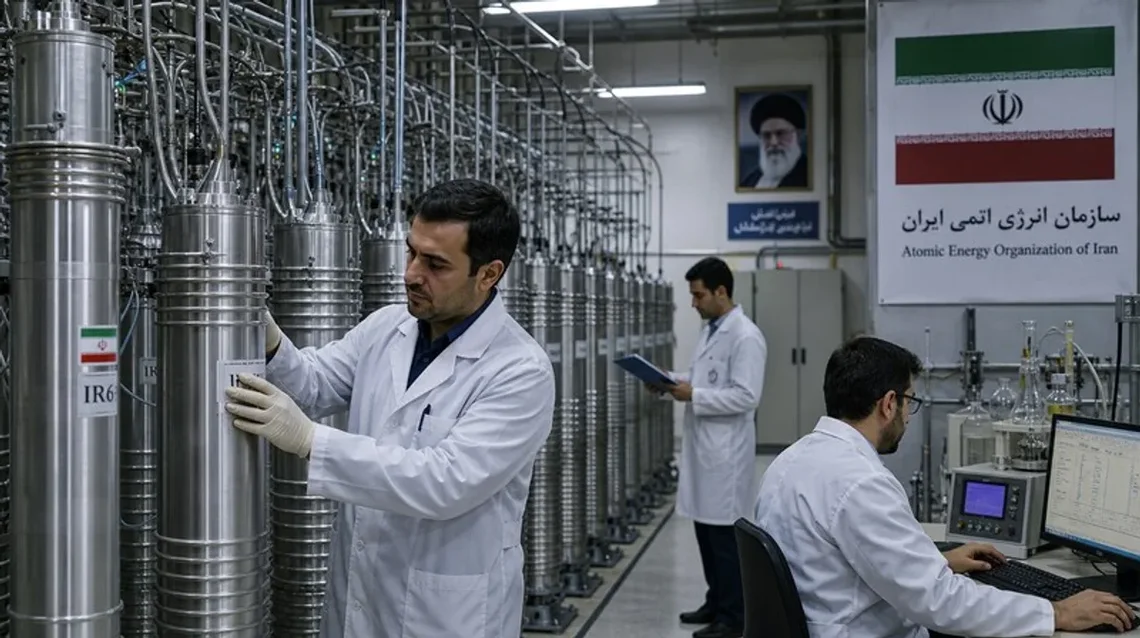
European powers are preparing to escalate pressure on Iran over its nuclear programme, with Brussels signalling a significant hardening of diplomatic and economic policy as negotiations over a revived nuclear deal remain deadlocked. Senior EU officials have described the current trajectory of Iran's uranium enrichment activities as "increasingly untenable," according to diplomatic sources cited by Reuters, with fresh sanctions packages and potential treaty mechanisms now under active consideration.
Key Context: Iran is currently enriching uranium to 60% purity — a technical step away from weapons-grade levels — far exceeding the 3.67% limit set under the 2015 Joint Comprehensive Plan of Action (JCPOA). The International Atomic Energy Agency (IAEA) has repeatedly reported that Tehran has accumulated sufficient enriched material to produce multiple nuclear devices if further processed. Formal negotiations between Iran and Western powers have stalled for well over a year, with no confirmed resumption date. (Source: IAEA, UN reports)
The Diplomatic Breakdown: Where Talks Collapsed
The effort to revive the JCPOA — the landmark multilateral nuclear agreement abandoned by the United States — has been faltering for years, but recent months have seen dialogue effectively freeze. Iranian officials have continued to insist that Western preconditions are unacceptable, while European diplomats from France, Germany, and the United Kingdom — collectively known as the E3 — have grown increasingly impatient with what they describe as Tehran's deliberate obstructionism, according to officials cited by AP.
The Role of the E3 in Sustaining Pressure
Britain, France, and Germany have historically served as the diplomatic backbone of European engagement with Tehran on nuclear matters. That architecture is now being tested. The E3 is understood to be weighing whether to trigger the JCPOA's "snapback" mechanism — a legal clause that would automatically reimpose all UN Security Council sanctions on Iran without requiring a new vote, thereby bypassing any potential Russian or Chinese veto. According to Foreign Policy, internal discussions among E3 governments have reached an advanced stage, with legal teams preparing the technical groundwork for a formal trigger notice.
Related Articles
For the UK, which retains its status as a JCPOA signatory despite leaving the European Union, this represents a rare area of sustained post-Brexit alignment with Brussels. London has consistently coordinated its Iran policy with Paris and Berlin, and officials in Whitehall have confirmed that Britain remains committed to the snapback option if diplomatic movement does not materialise, according to Reuters.
What New EU Sanctions Could Look Like
Beyond the snapback mechanism, the European Union is also considering unilateral measures that would expand existing restrictions on Iranian entities, financial institutions, and individuals linked to the nuclear programme. Current EU sanctions on Iran already cover a wide range of sectors, but Brussels is examining whether to extend designations to additional petrochemical revenues, shipping networks, and technology transfers that have continued despite existing prohibitions. (Source: Reuters, AP)
Targeting Dual-Use Technology Networks
One area of particular focus is the network of front companies and intermediaries used to procure dual-use technology — equipment with both civilian and potential military applications — that has allegedly been channelled into Iran's nuclear and ballistic missile infrastructure. EU officials are reportedly examining supply chains originating in third countries, including some with ties to Russia, which has added a layer of geopolitical complexity to the sanctions architecture. This mirrors patterns observed in other EU sanctions efforts, including measures the bloc has taken against entities facilitating weapons transfers in the context of the Ukraine conflict.
The intersection of Iran and Russia policy has become increasingly difficult to navigate for European policymakers. Tehran's supply of drones to Moscow for use in Ukraine has deepened European mistrust and strengthened the political case for a harder line. Analysts at Foreign Policy have noted that this convergence of concerns has effectively removed some of the earlier reluctance among EU member states to escalate against Tehran.
Readers following related European sanctions policy may refer to coverage of how the bloc has approached enforcement challenges in other theatres: EU tightens Russia sanctions over Ukraine supply lines offers useful comparative context on the mechanisms Brussels deploys when existing measures prove insufficient.
Iran's Current Nuclear Posture
The IAEA has documented a sustained and accelerating expansion of Iran's nuclear infrastructure. Enrichment capacity at the Fordow and Natanz facilities has grown substantially, and Iran has installed advanced centrifuge cascades capable of producing highly enriched uranium at significantly faster rates than earlier models permitted. Tehran has also reduced IAEA inspector access, limiting the international community's ability to verify exactly how much material has been produced and where it is stored. (Source: IAEA, UN reports)
The Breakout Timeline Question
Perhaps the most alarming metric being tracked by Western intelligence agencies is the so-called "breakout timeline" — the estimated time Iran would need to produce enough weapons-grade material for a single nuclear device if it chose to do so. According to UN reports and independent assessments cited by AP, that timeline has been compressed to a matter of weeks under current conditions, compared to roughly a year when the JCPOA was in force. This has fundamentally altered the risk calculus for European governments and underscored the urgency behind the renewed push for pressure measures.
| Indicator | Under JCPOA (2015–2018) | Current Status |
|---|---|---|
| Uranium Enrichment Level | Capped at 3.67% | Up to 60% purity |
| Enriched Uranium Stockpile | Limited to 300kg | Multiple tonnes (estimated) |
| Centrifuge Installations | Restricted to ~6,000 IR-1 units | Advanced IR-6 cascades operational |
| IAEA Inspector Access | Comprehensive monitoring | Significantly curtailed |
| Estimated Breakout Timeline | Approximately 12 months | Estimated weeks |
| UN Sanctions Status | Suspended under deal terms | Snapback mechanism available |
What This Means for the UK and Europe
For European capitals — and for London specifically — the stakes of a nuclear-armed or near-nuclear Iran extend well beyond the Middle East. A collapse of the non-proliferation framework in the region could trigger a cascade of proliferation pressures among neighbouring states, destabilise energy markets on which European economies remain partially dependent, and complicate an already fraught security environment on Europe's southeastern periphery.
Economic and Energy Security Implications
Europe's dependence on stable Gulf energy flows, while reduced in recent years through diversification efforts, has not been eliminated. A serious escalation involving Iran — whether through military action by Israel, a US response, or Iran's own decisions — could affect oil and gas prices in ways that reverberate through already strained European economies. UK energy security analysts have flagged this scenario as a secondary but significant risk factor, particularly given ongoing inflationary pressures. (Source: Reuters)
British foreign policy under the current government has emphasised the importance of alliance coherence on Iran. Whitehall officials have repeatedly stressed that UK sanctions policy on Tehran will remain closely aligned with European partners, even as broader post-Brexit divergence in foreign policy frameworks continues in other areas. The snapback question, if triggered, would place UK diplomatic credibility squarely on the line, given that London would need to formally co-sponsor or endorse any notification to the UN Security Council.
Those tracking the broader pattern of EU sanctions evolution can also consult prior reporting on EU weighs stricter sanctions on Iran nuclear program, which examined the internal deliberations that preceded the current round of escalation signals.
Geopolitical Calculations: Russia, China, and Regional Actors
Any European escalation on Iran must be understood within a broader multipolar context. Russia and China, both permanent members of the UN Security Council, have consistently opposed tightened measures against Tehran and would veto any new resolution seeking to reimpose sanctions through the conventional Council process. This is precisely why the snapback mechanism — which does not require a vote — has become the instrument of choice for Western powers. (Source: UN reports, Foreign Policy)
Moscow's deepening strategic partnership with Tehran, reinforced by the drone supply relationship that has drawn intense European condemnation, has effectively closed the door on Russian cooperation over the nuclear file for the foreseeable future. EU officials have drawn direct connections between this dynamic and their own posture on Iran, noting in background briefings cited by Reuters that Tehran has chosen to embed itself within an adversarial axis that leaves European patience with a diplomatic-only approach severely depleted.
The parallel between European responses to Iranian and Russian challenges is increasingly acknowledged in Brussels policy circles. Analysts have observed that the institutional and legal architecture developed to manage Russia sanctions is now being studied for applicability to Iran-related enforcement. Related coverage of how the EU has adapted its sanctions tools under pressure includes reporting on EU tightens Russia sanctions over Ukraine escalation, which details the legal and enforcement frameworks the bloc has refined in response to deliberate circumvention.
Tehran's Response and the Path Ahead
Iranian officials have publicly dismissed European threats of renewed sanctions as counterproductive and have indicated that further pressure would prompt Tehran to accelerate rather than reverse its nuclear activities, according to AP. This posture has been consistent across multiple Iranian administrations and is widely interpreted by Western analysts as a negotiating tactic rather than a firm red line — though the distinction is becoming harder to rely upon as technical thresholds are crossed.
The coming weeks are expected to be decisive. EU foreign ministers are scheduled to review the Iran file as part of broader discussions of the bloc's external action agenda, and the E3 is understood to be preparing a formal position paper that will set out conditions for either renewed engagement or escalated pressure. Whether that paper translates into concrete action — or becomes another document in a long archive of unimplemented warnings — will depend heavily on political will across three governments that have their own domestic pressures to manage.
For the UK and Europe, the choice is no longer between a good outcome and a bad one. It is, increasingly, between managing a difficult situation with resolve and coherence, or allowing drift to substitute for strategy as Iran's nuclear programme advances beyond any easy diplomatic remedy. Brussels appears, for now, to have chosen the former path — though the road ahead remains deeply uncertain. (Source: Reuters, AP, UN reports, Foreign Policy)