Labour Announces Major NHS Funding Plan Amid Service Crisis
Starmer government pledges £20bn investment over five years
The Starmer government has announced a £20 billion NHS funding package spread over five years, framing it as the most significant injection of public money into the health service in over a decade and a direct response to mounting evidence of systemic crisis across NHS England. The announcement comes as waiting list figures remain at historically elevated levels and polling consistently shows the NHS as the dominant concern among British voters.
Speaking from Downing Street, government officials said the funding commitment would be underpinned by a combination of general taxation and a restructured NHS levy, with the majority of investment directed toward cutting waiting times, expanding mental health provision, and modernising ageing hospital infrastructure. The plan has already drawn sharp criticism from Conservative and Liberal Democrat benches, each disputing both the scale of the commitment and the credibility of its financing.
Party Positions: Labour says the £20bn funding plan represents a generational reset for NHS England, prioritising waiting list reduction, mental health services, and capital investment in hospital estates. Conservatives argue the pledge is fiscally irresponsible, contending that Labour's spending plans will require either significant tax rises or unsustainable borrowing, and point to what they describe as a lack of accompanying structural reform detail. Lib Dems broadly welcome additional NHS investment but insist the government has failed to adequately address the social care funding gap, arguing that without parallel reform of adult social care, hospital discharge bottlenecks will continue to undermine any gains made by new NHS spending.
The Scale of the Commitment
At £20 billion over five years, the announced package represents an average annual uplift of £4 billion to NHS England's baseline funding. Government officials said the first tranche of investment would be front-loaded, with an estimated £6 billion allocated within the first two financial years to address what ministers described as the most acute pressures on emergency and elective care.
Related Articles
Waiting Lists and Elective Care
According to NHS England data cited by officials, the number of patients waiting for elective treatment currently stands at approximately 7.5 million, a figure that has remained stubbornly high despite previous government pledges to bring it down. A substantial share of the new funding — officials indicated roughly one third of the total envelope — is earmarked for elective recovery, including expanded surgical hubs, additional diagnostic capacity, and extended theatre hours at NHS trusts judged to have the greatest volume of delayed procedures. (Source: NHS England)
Related reporting on the evolution of this policy can be found in earlier ZenNewsUK coverage: Labour's NHS reform and funding priorities and the broader strategic picture outlined in analysis of Starmer government NHS investment plans.
Mental Health Provision
Approximately £3 billion of the five-year envelope is designated for mental health services, addressing what the government described as a decades-long underfunding of community mental health teams, crisis services, and Child and Adolescent Mental Health Services (CAMHS). Officials said the investment would fund several thousand additional mental health practitioners and expand the number of crisis resolution and home treatment teams operating across NHS trusts in England. According to data published by NHS Digital, referrals to mental health services have increased significantly in recent years while staffing levels have not kept pace with demand. (Source: NHS Digital)
Political Context and Parliamentary Arithmetic
The announcement arrives at a politically significant moment for the Starmer administration. YouGov polling published recently showed that 68 percent of respondents identified the NHS as the single most important issue facing the country, ahead of the cost of living and economic management. A separate Ipsos survey conducted for the BBC indicated that public satisfaction with the NHS had fallen to its lowest recorded level, with only 24 percent of adults describing themselves as satisfied with the service overall. (Source: YouGov; Source: Ipsos; Source: BBC)
Commons Reaction
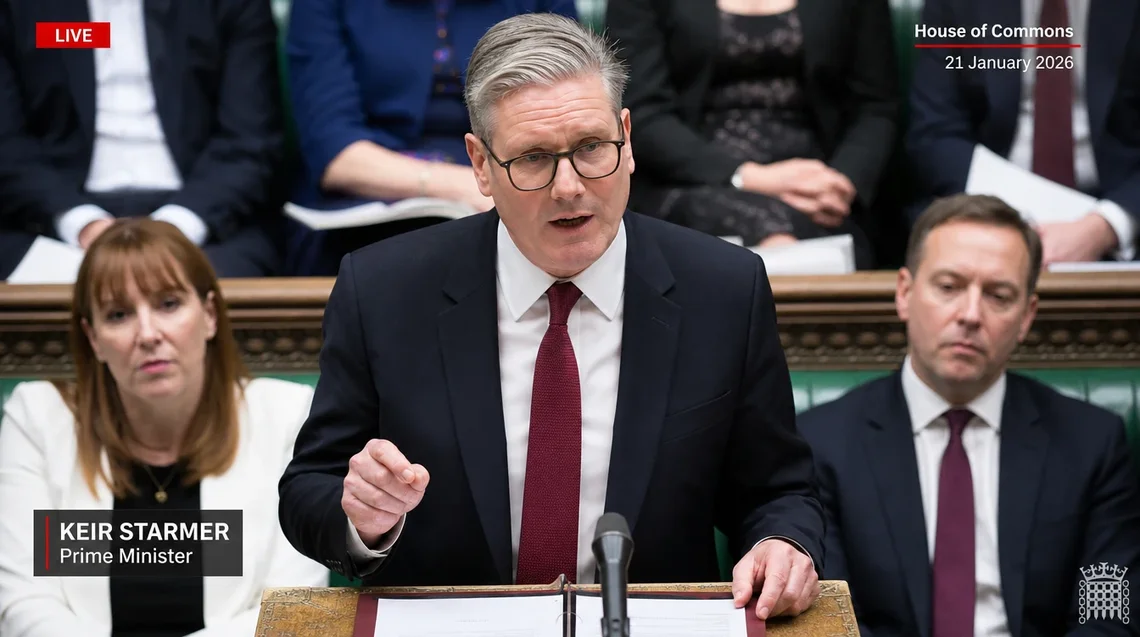
During an emergency statement in the House of Commons, the Health Secretary faced sustained questioning from opposition benches. Conservative MPs argued that the government had failed to produce credible independent costings for the package and demanded the Office for Budget Responsibility be instructed to publish a full assessment before any spending commitments are locked in. The Liberal Democrats tabled an amendment calling for a statutory ringfence for social care within the overall health budget, which was defeated on a government majority. The Guardian reported that at least seven Labour backbenchers abstained on a procedural vote related to the announcement, signalling some internal unease over the financing model, though no Labour MP voted against the government. (Source: The Guardian)
| Metric | Current Figure | Previous Benchmark | Source |
|---|---|---|---|
| Public satisfaction with NHS (adults) | 24% | 53% (pre-pandemic high) | Ipsos / BBC |
| NHS as top voter concern | 68% of respondents | 42% (cost of living peak) | YouGov |
| Elective waiting list (England) | ~7.5 million patients | 4.4 million (pre-pandemic) | NHS England |
| Mental health referrals (annual) | Record high | Significantly lower five years prior | NHS Digital |
| NHS workforce vacancy rate | ~110,000 posts unfilled | Under 90,000 (three years prior) | NHS England |
Workforce and Infrastructure Investment
Beyond direct service funding, officials said a meaningful share of the package would be directed at the NHS capital estate, addressing what the Office for National Statistics has previously categorised as a significant maintenance backlog across NHS hospital buildings in England. The ONS has recorded the NHS maintenance backlog at over £10 billion, with a portion classified as posing a high or significant risk to patient safety. (Source: Office for National Statistics)
Staffing Pressures
The workforce vacancy figure — estimated at approximately 110,000 unfilled posts across NHS England — was repeatedly cited by ministers as evidence that investment alone would be insufficient without parallel workforce expansion. Officials said the funding plan includes provisions for training bursaries, international recruitment pipelines, and improved pay progression for band five and six NHS staff, the latter having been identified in NHS England's own workforce data as a key driver of attrition among nursing staff. The government did not confirm whether the pay progression commitments would require a separate settlement with NHS unions or would fall within the existing pay review body framework.
Criticism and Independent Assessment
Health economists and independent analysts have offered a mixed assessment of the announcement. While the headline figure has been broadly welcomed by NHS trusts, several health policy institutes noted that the real-terms value of the investment would be contingent on inflation projections, particularly given the persistent inflationary pressure on NHS pay and procurement costs recorded in recent financial years.
Think Tank and Sector Response
The King's Fund and the Health Foundation, two of the UK's leading health policy organisations, both published initial responses indicating that while the scale of investment represented a step in the right direction, it fell short of the sustained annual increase — frequently cited as closer to four to five percent in real terms — that independent modelling suggested would be required to genuinely close the gap between NHS capacity and projected demand over the next decade. NHS Providers, which represents NHS trusts and foundation trusts in England, said the announcement was "significant" but cautioned that delivery would depend on the speed with which funding reached frontline services rather than being absorbed by central administration costs. (Source: King's Fund; Source: NHS Providers)
For further context on the structural reform dimensions of this policy and the debate around NHS reorganisation, see ZenNewsUK's earlier coverage of the Starmer administration's NHS reform agenda and the ongoing policy dispute documented in Labour's NHS overhaul plans amid the funding crisis.
Devolved Nations and Geographic Equity
The £20 billion figure applies to NHS England only. Under the Barnett formula, the spending announcement will trigger consequential allocations to the devolved administrations — Scotland, Wales, and Northern Ireland — though the precise figures are subject to HM Treasury calculation and have not yet been confirmed. Officials in Edinburgh and Cardiff have already indicated that their respective health services face distinct pressures and that Barnett consequentials, while welcome, would not be ring-fenced for health spending unless the devolved administrations chose to apply them accordingly.
Regional Disparities Within England
Within England itself, health equity campaigners and academic researchers have raised concerns about whether the funding formula used to distribute investment across NHS integrated care systems adequately accounts for the higher burden of disease and deprivation in parts of the North East, Yorkshire, and the West Midlands. Officials said the allocation methodology would be reviewed as part of the implementation process, but declined to confirm whether a specific health equity weighting would be applied to the distribution of the new capital and elective recovery funds.
What Happens Next
The government has indicated that a full implementation plan will be published alongside the next Spending Review, with NHS England expected to submit integrated care system-level delivery plans within six months of royal assent on any underpinning legislation. Oversight will fall to a newly constituted NHS Performance and Investment Board, the membership and remit of which have yet to be formally announced. Opposition parties have said they will scrutinise both the board's independence and its reporting obligations to Parliament, with the Health and Social Care Select Committee expected to open a formal inquiry into the delivery framework in the coming weeks.
The political stakes attached to this announcement are considerable. For the Starmer government, the NHS pledge represents the centrepiece of a domestic agenda under sustained pressure from a difficult economic inheritance and a restless parliamentary party. For the Conservatives and Liberal Democrats, the funding plan offers an opportunity to contest both Labour's economic credibility and its reform ambitions in the health service — two lines of attack likely to define much of the parliamentary session ahead. Whether the investment translates into measurable improvements in patient outcomes before the next general election will, in all likelihood, determine a significant share of the political dividend either side can claim from the NHS debate. Further background on how this announcement fits into the wider trajectory of health policy under this administration is available in ZenNewsUK's ongoing coverage of Labour's NHS funding commitments amid service pressures.