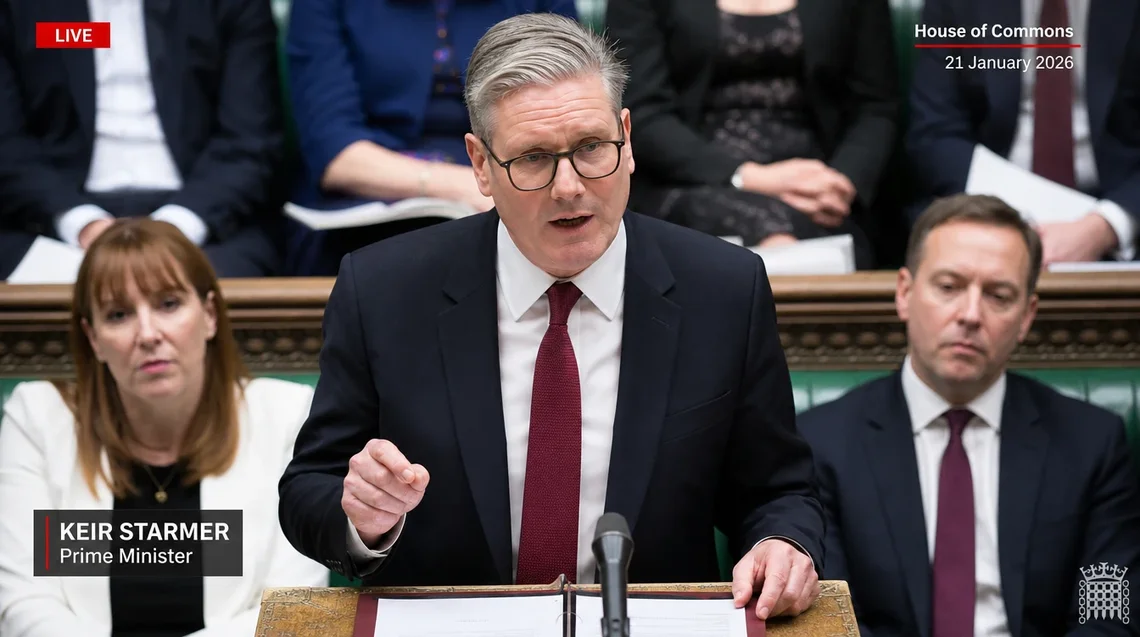
Starmer's NHS Overhaul Faces Fresh Backlash
Labour pushes waiting list reforms amid staff concerns

Sir Keir Starmer's flagship programme to reform the National Health Service is facing intensifying resistance from frontline medical staff and trade unions, as the government presses ahead with sweeping changes to reduce England's record waiting lists — currently standing at over 7.5 million people, according to NHS England figures. The overhaul, billed by ministers as the most significant restructuring of health service delivery in a generation, has drawn sharp criticism over implementation timelines, workforce conditions, and funding adequacy.
Health Secretary Wes Streeting has repeatedly insisted the reforms are non-negotiable, framing the programme as essential to rescuing an institution he has described as being "on its knees." But opposition is mounting from multiple directions — inside the Labour movement, across the parliamentary chamber, and increasingly among the general public — raising difficult questions about whether the government can sustain the political momentum needed to see the changes through.
Party Positions: Labour supports accelerated NHS restructuring, shifting care toward community settings and expanding independent sector capacity to cut waiting times; Conservatives argue the reforms lack a credible funding plan and risk destabilising existing hospital trusts, calling instead for management reform over structural upheaval; Lib Dems back elements of the waiting list reduction agenda but have called for a full workforce impact assessment before implementation proceeds, and have pressed ministers on GP access and rural health inequality.
The Scale of the Challenge
The government inherited a health service under extraordinary pressure. Waiting lists accumulated significantly during and after the pandemic, and despite modest reductions in recent months, the backlog remains at a historically high level. According to data published by NHS England, millions of patients are waiting more than 18 weeks for consultant-led treatment — a threshold the service is legally required to meet but has repeatedly failed to honour in recent years.
Related Articles
Waiting Time Targets and the Performance Gap
The core target at the centre of the reform agenda is a government pledge to return to the 18-week standard within a defined electoral cycle. Ministers have not specified precise intermediate milestones, drawing criticism from health policy analysts who argue that without clear benchmarks, accountability becomes impossible. The Institute for Fiscal Studies and independent health economists have separately warned that the timescales being discussed may be optimistic given current elective capacity constraints.
Streeting's plan relies heavily on expanding activity in the independent sector, increasing weekend and evening operating lists in NHS hospitals, and deploying new diagnostic technology across community health hubs. Staff unions, particularly the British Medical Association and the Royal College of Nursing, have warned that demanding higher throughput from an already exhausted workforce without addressing underlying pay and conditions is a strategy that carries serious risk of accelerating attrition. Related coverage of workforce resistance can be found in reporting on Starmer's NHS overhaul faces fresh opposition from unions.
Staff Concerns and Union Opposition
The most persistent criticism of the reform programme centres not on its goals — which command broad support — but on the conditions under which frontline workers are being asked to deliver them. Senior nurses, consultants, and junior doctors have raised concerns through their representative bodies about mandatory rota changes, the pace of service reconfiguration, and what several union officials have described as insufficient consultation before structural decisions are taken.
The BMA's Position
The British Medical Association has stopped short of calling for industrial action at this stage but has written formally to NHS England raising concerns about the proposed expansion of weekend working without accompanying pay reform. BMA council representatives have said publicly that doctors broadly support the ambition to cut waiting lists but cannot accept implementation frameworks that treat workforce resilience as a secondary consideration. Union officials said the reforms, as currently structured, risk repeating the mistakes of earlier restructuring rounds that promised efficiency gains while delivering staff burnout.
Nursing and Allied Health Professionals
The Royal College of Nursing has focused its intervention on community health hub proposals, which would see significant numbers of nursing posts relocated away from acute hospital settings. RCN officials said members have expressed anxiety about job security, career progression pathways, and the adequacy of training support during the transition period. The college has requested an urgent meeting with ministers, according to statements published on its official communications channels.
Further analysis of the evolving resistance to the programme is available in coverage of Starmer's NHS overhaul faces fresh resistance, which examines the political dynamics behind the growing coalition of critics.
Parliamentary Scrutiny and Opposition Attacks
The reforms have become a focal point in the Commons, with Prime Minister's Questions and Health Oral Questions sessions dominated in recent weeks by exchanges over NHS spending, management reform, and waiting list data. The Conservative benches have challenged ministers to explain how the programme will be financed, pointing to what they describe as a gap between the ambition of the stated targets and the resources allocated in the most recent spending settlement.
The Funding Debate
Shadow Health Secretary Edward Argar has repeatedly pressed Streeting on the specifics of the financial model underpinning the reforms, arguing that efficiency savings projected by the Department of Health and Social Care are based on assumptions that independent analysts consider optimistic. The government has maintained that productivity gains from digital investment and pathway redesign will offset implementation costs, a position contested by several health economists who have submitted evidence to the Commons Health and Social Care Select Committee.
The funding questions are examined in depth in the investigation into Starmer's NHS overhaul faces fresh funding pressure, which details the Treasury's internal projections and the gap between departmental bids and final settlements.
| Indicator | Figure | Source |
|---|---|---|
| NHS England waiting list (current) | 7.5 million patients | NHS England |
| Public approval of NHS reform agenda | 44% support, 31% oppose | YouGov polling |
| Public trust in government to improve NHS | 38% trust Labour to improve NHS | Ipsos |
| Patients waiting over 18 weeks | Approx. 3.2 million | NHS England / ONS analysis |
| NHS staff vacancy rate (England) | Approximately 8.4% | Office for National Statistics |
| MPs voting in favour of NHS Reform Bill second reading | 321 (majority of 46) | House of Commons records |
Public Opinion and Political Risk
Polling data presents a complicated picture for the government. While there is broad public support for the principle of cutting waiting times and reforming NHS structures, satisfaction with the pace of change and confidence in Labour's ability to deliver has remained stubbornly below majority levels. YouGov surveys conducted in recent months show that 44 percent of respondents support the government's reform agenda, while 31 percent oppose it and a significant proportion remain undecided. Ipsos data shows that only 38 percent of the public currently trusts Labour to improve NHS performance — a figure that ministers privately acknowledge is below where they need it to be heading into the next electoral cycle. (Source: YouGov; Ipsos)
Regional Variation and Inequality Concerns
The Office for National Statistics has published analysis showing significant regional variation in waiting list performance across NHS trusts, with patients in parts of the North East and Midlands facing disproportionately longer waits than those in London and the South East. This geographic inequality has become a political pressure point for Labour MPs representing constituencies in those areas, several of whom have raised concerns through the parliamentary party that the reform programme as designed does not sufficiently address structural regional disadvantage. (Source: Office for National Statistics)
The Guardian has reported that at least a dozen Labour backbenchers have privately expressed reservations about elements of the reform package, particularly the reliance on independent sector capacity in areas where NHS provision is already fragile. The BBC has separately documented cases of NHS trust leaders raising implementation concerns directly with NHS England regional directors, according to correspondence seen by its health team. (Source: The Guardian; BBC)
The Government's Defence
Ministers have pushed back forcefully against the criticism, arguing that the scale of the problem demands urgent and sometimes uncomfortable action. Health Secretary Streeting has said publicly that those who oppose reform must answer for the consequences of inaction, pointing to the direct harm being done to patients by prolonged waits for treatment. Downing Street officials said the Prime Minister remains fully committed to the reform programme and views it as central to Labour's offer to voters.
The Darzi Review and Its Legacy
The government has repeatedly cited the findings of the independent review conducted by Lord Darzi as the evidence base for its structural proposals. The Darzi review concluded that the NHS had become too hospital-centric, that community and preventative services were chronically underfunded, and that digital transformation had lagged behind comparable health systems internationally. Ministers argue the reform package directly addresses those conclusions, and that critics who challenge the direction of travel are effectively rejecting an independent expert assessment.
Broader political pressures on the programme are tracked in coverage of Starmer's NHS Overhaul Faces Fresh Pressure, which charts how the accumulation of individual controversies is beginning to shape the overall political narrative around the reforms.
Costs, Transparency, and Accountability
One of the most significant flashpoints in recent weeks has been the government's reluctance to publish granular cost modelling for individual elements of the reform programme. Opposition parties, health journalists, and the Commons Public Accounts Committee have all pressed the Department of Health and Social Care to release more detailed financial projections, arguing that the public interest demands transparency about how taxpayer money is being allocated.
Ministers have maintained that full publication of working assumptions could undermine commercial negotiations with independent providers, a position critics have dismissed as inadequate. The National Audit Office is understood to be monitoring implementation closely, and officials said a formal review of reform spending could be commissioned if concerns about financial oversight persist. Detailed reporting on cost transparency issues can be found in the investigation into Starmer's NHS overhaul faces fresh scrutiny over costs.
What Comes Next
The coming months represent a critical test for the government's NHS agenda. Several major NHS trust reconfiguration decisions are due to be confirmed by regional commissioners, and the outcome of ongoing pay negotiations with medical staff will determine whether the reform programme can be delivered without the threat of further industrial action. The Health and Social Care Select Committee is expected to publish findings from its ongoing inquiry into waiting list reform in the coming weeks, and its conclusions are likely to set the terms of parliamentary debate through the autumn.
For a government that made the NHS central to its election campaign and has staked considerable political capital on demonstrating visible improvement, the window for delivering tangible results before public patience erodes is narrowing. Whether Starmer and Streeting can navigate the opposition from unions, the scepticism on their own benches, and the scrutiny of an emboldened parliamentary committee, while actually moving the waiting list figures in the right direction, will define whether this reform programme is remembered as a turning point or a missed opportunity.