Labour extends NHS funding pledge amid staffing crisis
Starmer government commits additional £3bn to healthcare reform

The Starmer government has committed an additional £3 billion to NHS reform in England, extending a funding pledge designed to address a deepening staffing crisis that has left millions of patients waiting for treatment. The announcement, confirmed by health officials, represents one of the most significant financial interventions in the health service since Labour returned to power, and sets the stage for an intensifying political battle over the future of public healthcare in Britain.
The additional funding is intended to accelerate hiring across nursing, general practice, and mental health services, where vacancy rates remain at historically elevated levels, according to NHS England data. Ministers have framed the commitment as a direct response to findings published by the Office for National Statistics, which documented sustained pressure on workforce capacity across health trusts in England and Wales.
Party Positions: Labour has committed £3bn in additional NHS funding, prioritising workforce expansion, reduced waiting times, and investment in community health infrastructure. Conservatives have criticised the pledge as insufficiently costed, arguing the government has failed to set out a credible long-term productivity framework and warning of further tax rises to fund public sector expansion. Lib Dems have broadly welcomed investment in NHS staffing but called for a specific ringfenced mental health workforce fund and greater transparency over how recruitment targets will be met and measured.
The Scale of the Funding Commitment
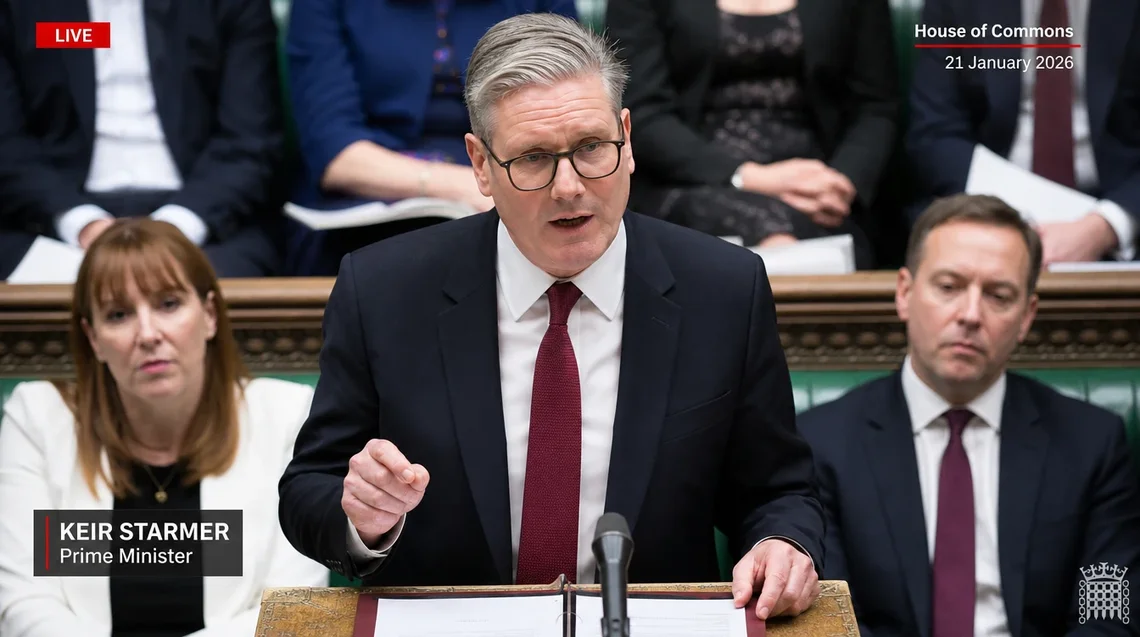
Health Secretary Wes Streeting confirmed the allocation in a statement to the House of Commons, describing the funding as essential to delivering on the government's central manifesto promise to cut waiting lists and rebuild a health service he acknowledged had been "left in a critical condition." Officials said the money would be distributed over a multi-year spending cycle, with an initial tranche allocated to NHS trusts facing the most acute workforce shortages.
Related Articles
Where the Money Will Go
According to Department of Health and Social Care briefing documents, the majority of the new funding is earmarked for frontline staffing, including a recruitment drive targeting nurses, allied health professionals, and GPs. A secondary allocation will support capital investment in diagnostic equipment and the expansion of surgical hubs intended to reduce elective care backlogs. Officials said a further portion would be directed toward mental health services, which have faced what NHS leaders have described as chronic underinvestment relative to physical health provision.
For further context on earlier iterations of the government's healthcare strategy, see Labour Pledges NHS Overhaul Amid Staffing Crisis, which outlined the foundational commitments made in the weeks following the general election.
The Staffing Crisis in Numbers
The workforce emergency underpinning the funding decision has been extensively documented. NHS England data show that tens of thousands of posts across hospital and community settings remain unfilled, with vacancy rates in mental health nursing and specialist surgery particularly severe. Burnout and attrition among existing staff have compounded the challenge, with retention emerging as a problem as acute as recruitment itself.
Waiting Lists and Patient Impact
The elective care backlog, which ballooned during and after the Covid-19 pandemic, remains one of the most politically sensitive metrics facing the government. According to figures cited by NHS England, the number of patients waiting for treatment in England continues to run into the millions, with a significant proportion having waited beyond the 18-week constitutional standard. The BBC and Guardian have both reported extensively on the human impact of extended waits, including patients experiencing deteriorating conditions while awaiting routine procedures.
| Indicator | Reported Figure | Source |
|---|---|---|
| Patients on elective waiting list (England) | Approx. 7.5 million | NHS England |
| NHS advertised vacancies (England) | Approx. 100,000+ | NHS Digital / NHS England |
| Public approval of government NHS handling | 38% satisfied | Ipsos Political Monitor |
| Voters naming NHS as top priority issue | 54% | YouGov tracker poll |
| Mental health referrals vs. capacity gap | Estimated 1.8m unmet | NHS Confederation |
| GP full-time equivalent posts: vacancy rate | Approximately 4.2% | NHS England workforce data |
(Source: NHS England, Ipsos, YouGov)
Political Reaction at Westminster
The announcement has sharpened dividing lines between the parties ahead of what is widely expected to be a sustained parliamentary argument over public spending priorities. Shadow Health Secretary Edward Argar told the Commons that while no responsible politician would oppose investment in healthcare, the government had yet to produce a credible productivity strategy alongside the new money. He argued that increasing headcount without reforming working practices risked repeating the mistakes of previous spending cycles.
Liberal Democrat Response
Liberal Democrat health spokesperson Helen Morgan welcomed the headline commitment but pressed ministers for clarity on whether the funding included a protected mental health allocation. She cited Office for National Statistics data showing that rates of anxiety and depression among working-age adults remain significantly elevated, and argued that mental health services cannot again be treated as a secondary consideration when NHS budgets are distributed.
For a broader account of how the government has framed its NHS agenda in recent months, readers can refer to Starmer pledges NHS funding boost amid staffing crisis, which covers the Prime Minister's direct interventions on health policy and the political context in which those statements were made.
Labour's Strategic Calculation
For Keir Starmer, the NHS represents both the government's greatest political liability and its most potent source of electoral differentiation from the Conservatives. Polling conducted by YouGov consistently places the health service among the top two issues for British voters, and internal Labour analysis is understood to reflect the view that tangible progress on waiting lists is essential to securing a second term. Officials close to the Prime Minister have been careful to frame the £3bn commitment not as a one-off intervention but as part of a structural long-term reform programme.
The Productivity Question
Critics, including some within the health policy community, have raised questions about whether funding increases alone are sufficient to address systemic inefficiency. Think tanks including the King's Fund and the Health Foundation have argued that productivity within NHS settings has lagged behind pre-pandemic levels, and that workforce expansion must be accompanied by changes to how elective care is organised, how outpatient appointments are structured, and how digital infrastructure is deployed. The government has indicated that productivity reform will form a central pillar of the forthcoming NHS ten-year plan, details of which are expected to be published in the coming months.
Previous reporting on the trajectory of Labour's NHS commitments is available via Labour pledges new NHS funding as waiting lists persist, which traces the evolution of the party's position from opposition through to government and examines how policy pledges have been refined in the face of fiscal constraints.
NHS Reform: The Broader Policy Framework
Beyond the immediate funding announcement, the government has signalled its intention to pursue structural changes to how the NHS is managed and held accountable. Integrated Care Boards, introduced under the previous administration, are to be subject to a performance review, with ministers indicating that those failing to meet access and workforce targets could face intervention. Officials said the review was not intended as a precursor to structural reorganisation but rather as a mechanism for driving consistency across regions where outcomes diverge sharply.
International Context
Britain is not alone in grappling with post-pandemic healthcare pressures. Data published by the Organisation for Economic Co-operation and Development show that health systems across Europe and North America are contending with workforce shortages, rising demand, and the long-term consequences of deferred care. The Guardian has reported on comparative international approaches, noting that some European systems have moved faster on task substitution — allowing pharmacists, nurses, and paramedics to perform functions previously reserved for doctors — as a means of stretching capacity without a proportionate increase in consultant-level recruitment.
Health officials in England have indicated that scope-of-practice reform will form part of the government's long-term workforce strategy, though implementation timelines remain subject to negotiation with professional bodies including the British Medical Association and the Royal College of Nursing.
What Comes Next
The £3bn commitment will face sustained scrutiny as the parliamentary year progresses. The Public Accounts Committee is expected to examine the distributional mechanics of the funding, pressing NHS England and the Department of Health and Social Care on how performance against the new investment will be measured and reported. Independent health economists have already called for robust outcome metrics to be established before funds are disbursed, warning against a repeat of previous cycles in which large NHS funding announcements failed to translate into measurable reductions in patient waiting times.
For a detailed examination of the specific waiting list dimensions of this crisis and Labour's earlier funding proposals, see Labour pledges NHS funding boost amid waiting list crisis, which provides essential background on the scale of the backlog challenge the government inherited.
Further analysis of the overarching reform agenda can also be found in Starmer pledges NHS overhaul amid funding crisis, which sets out the structural ambitions behind the headline spending commitments and the political risks attached to them.
Whether the Starmer government's extended NHS funding pledge translates into a measurable improvement in patient outcomes — and on what timetable — will define much of its political credibility on domestic policy. With public satisfaction in NHS management running at just 38 percent according to the most recent Ipsos Political Monitor, ministers face the dual challenge of demonstrating both that the money is being well spent and that the fundamental experience of accessing healthcare in England is genuinely improving. The next major test will come when NHS England publishes its quarterly performance data, at which point the gap between political commitment and operational reality will become considerably harder to manage.