Labour pledges £15bn NHS funding boost in manifesto
Starmer targets waiting lists ahead of expected 2027 election

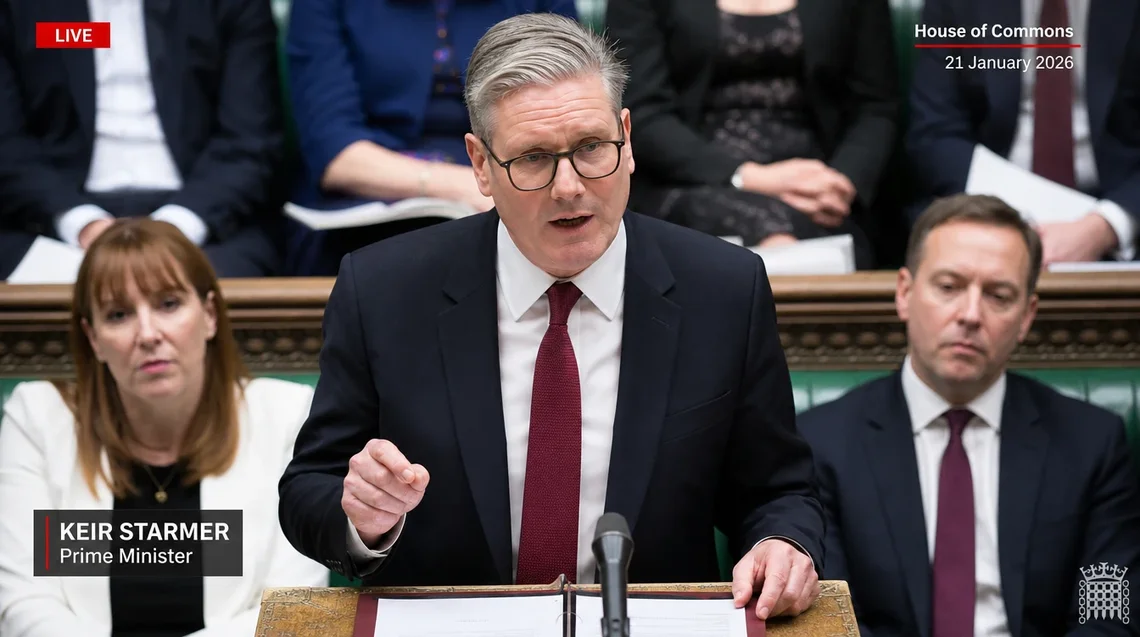
Labour has committed to a £15 billion annual boost to NHS funding as a central plank of its policy platform, with Sir Keir Starmer positioning the pledge as the defining domestic offer ahead of a general election widely anticipated no later than the spring of next year. The commitment, one of the largest proposed increases to health spending in a generation, is designed to tackle waiting lists that have left millions of patients in England waiting more than 18 weeks for treatment.
The announcement places NHS reform at the heart of Labour's political strategy, intensifying pressure on the Conservative government over its stewardship of the health service. According to Office for National Statistics figures, the NHS waiting list in England has hovered near seven million patients in recent months, a record high that has become a defining political liability for Rishi Sunak's administration. Labour officials said the £15 billion commitment would be funded through a combination of tax reforms targeting non-domiciled residents, a reversal of certain corporation tax reliefs, and efficiency savings identified across Whitehall.
Party Positions: Labour pledges a £15 billion annual NHS funding increase to eliminate waiting lists, funded through tax reform and efficiency savings, with a target of meeting the 18-week treatment standard for all patients within a parliament. Conservatives argue they have already committed record levels of NHS spending since the pandemic and warn Labour's fiscal plans are uncosted and would risk economic instability. Lib Dems have proposed their own NHS recovery plan, including a right to see a GP within seven days and a £3 billion mental health investment fund, positioning the party as a credible alternative voice on health policy in key marginal seats.
The Scale of the Commitment
The £15 billion figure represents a substantial uplift on the NHS's current base budget and would, according to Labour's own projections, bring England's per capita health spending closer to the European average. Party officials said the money would be deployed across capital investment in new diagnostic equipment, recruitment of additional clinical staff, and an expanded elective surgery programme running seven days a week across major hospital trusts.
Related Articles
Waiting List Targets
At the centre of the policy is a legally binding commitment to restore the NHS 18-week referral-to-treatment standard, a benchmark that has not been consistently met since the mid-2010s. Labour's shadow health team said the party would legislate within its first year in office to enshrine the target in statute, creating an accountability mechanism that ministers in England would be required to report against quarterly. The commitment has been welcomed by patient advocacy groups, though health economists have urged caution about the pace at which additional funding can be translated into tangible reductions in waiting times given persistent workforce shortages. Related coverage on the ongoing staffing challenge can be found in our earlier reporting on Labour Pledges New NHS Funding Push Amid Staff Shortages.
Capital Investment Plans
Beyond revenue spending, Labour has signalled a significant capital programme aimed at replacing ageing diagnostic infrastructure. Shadow Chancellor Rachel Reeves has indicated that a portion of the £15 billion envelope would be ring-fenced for new MRI and CT scanners, digital records systems, and the expansion of community diagnostic centres first piloted under the current government. Officials said the capital strand of the plan had been developed in consultation with NHS Providers and the NHS Confederation, organisations representing hospital trusts across England.
Political Context and Electoral Timing
The pledge arrives as polling consistently shows health to be the dominant concern for British voters. YouGov survey data gathered this year placed the NHS as the top issue for more than 55 percent of respondents, ahead of the cost of living and immigration. Ipsos tracking data similarly shows that Labour holds a double-digit lead over the Conservatives on perceived competence to manage the health service — a reversal of the position that existed as recently as several years ago. (Source: YouGov; Source: Ipsos)
Sir Keir Starmer has been deliberate in framing the NHS commitment as a test of economic credibility as much as compassion. Speaking at a series of campaign-style visits to hospital sites, he has argued that a failing health service creates a drag on economic productivity — through long-term sickness absence, delayed returns to work, and the burden placed on social care — that makes NHS reform an economic imperative as well as a moral one. Our earlier analysis of Labour's approach to NHS spending in the context of the autumn fiscal statement provides further background: Labour pledges major NHS funding boost in autumn budget.
Conservative Response
Downing Street has pushed back sharply on Labour's figures, with Treasury officials disputing Labour's claim that existing NHS budgets are insufficient. Ministers have argued that real-terms NHS spending has increased by more than 40 percent over the past decade, and that Labour's proposed tax measures would not generate the revenues projected without damaging broader economic confidence. The Health Secretary has also questioned whether the 18-week target is achievable within a single parliament given the structural nature of workforce and capacity constraints, noting that similar commitments had been made by governments across the political spectrum without success. (Source: BBC)
Polling Landscape and Public Trust
| Metric | Labour | Conservatives | Lib Dems | Source |
|---|---|---|---|---|
| Best party to manage NHS (%) | 47 | 22 | 12 | YouGov (current) |
| Voters citing NHS as top concern (%) | 55 | YouGov (current) | ||
| Satisfied with NHS overall (%) | 24 | Ipsos (current) | ||
| Support for increased NHS taxation to fund health (%) | 61 | Ipsos (current) | ||
| Trust Labour more on health spending (%) | 44 | 19 | — | YouGov (current) |
The polling data underscores why NHS funding has emerged as the electoral battleground of this political cycle. Ipsos figures show that public satisfaction with the NHS has fallen to its lowest recorded level, with fewer than one in four respondents describing themselves as satisfied with the service overall — a finding that cuts across demographic and geographic lines. (Source: Ipsos) The Guardian has noted that even in traditionally safe Conservative seats, local NHS performance is increasingly cited by constituency-level focus groups as a factor that could influence voting intention.
Workforce and Implementation Challenges
Health policy experts and independent analysts have broadly welcomed the scale of Labour's financial commitment while flagging the complexity of converting budgetary increases into clinical outcomes within a compressed timeframe. The NHS currently employs more than 1.5 million people in England, and demand for clinical staff outstrips domestic training supply across nursing, general practice, and several specialist disciplines.
Training Pipeline and International Recruitment
Labour's plan includes a doubling of the number of medical school places over a decade, alongside an expanded nursing degree apprenticeship scheme. Officials acknowledged, however, that training pipelines operate over multi-year horizons and that any government would remain reliant on international recruitment in the short term. The party has sought to navigate this carefully, committing to an NHS international recruitment code that officials said would prevent unethical poaching of health workers from countries with their own workforce deficits. Further detail on how Labour plans to address ongoing staffing gaps is available in our reporting on Labour pledges new NHS funding as waiting lists persist.
Social Care Integration
One element of the commitment that has attracted less scrutiny but considerable interest from health policy professionals is Labour's proposal to create a formal integration framework linking NHS acute trusts with local authority social care provision. Officials said the party intends to legislate for a new duty of collaboration, backed by pooled funding streams, that would reduce the delayed discharges — so-called bed-blocking — that currently consume significant NHS capacity. Independent health think-tanks have argued this structural issue is as consequential as the raw funding question in determining whether waiting lists can be meaningfully reduced. (Source: Guardian)
Historic Commitments and Broader Reform Push
Labour's £15 billion pledge sits within a wider narrative the party is attempting to construct about state investment and public service reform. Shadow ministers have repeatedly drawn a comparison with the post-war settlement of the late 1940s, arguing that the current juncture demands a similar scale of ambition. Critics within the health economics community have described such analogies as politically effective but analytically imprecise, noting that the challenges facing a twenty-first century healthcare system — an ageing population, multi-morbidity, technological transformation — are structurally different from those that shaped the NHS at its founding.
For a broader perspective on how this pledge has evolved across Labour's policy development process, our earlier analysis of the party's reform agenda offers useful context: Labour Pledges Major NHS Funding Boost Amid Reform Push. The trajectory of the commitment — from early signals through to its current, fully costed form — reflects both the pressure of opposition scrutiny and the influence of health professionals who engaged with Labour's policy review process. Full background on earlier iterations of the commitment, including the initial announcement that drew widespread media attention, is also examined in our report on Labour pledges NHS funding boost amid waiting list crisis.
What Happens Next
With an election anticipated no later than the first half of next year, both major parties are expected to intensify their NHS messaging in the months ahead. Analysts at the BBC and the Guardian have noted that health spending pledges historically carry significant credibility risks — voters are experienced in evaluating promises made in opposition against the fiscal realities of government — and that Labour's ability to sustain public trust on the issue will depend heavily on the coherence and specificity of its costing documents. (Source: BBC; Source: Guardian)
Labour's campaign operation is acutely aware that health performance under any future Labour government would be judged against the very targets it is now setting. Sir Keir Starmer's political calculation appears to be that the scale of the problem — a record waiting list, record-low public satisfaction, and an NHS workforce stretched to its limits — is sufficiently severe that ambitious commitments carry less risk than caution. Whether the electorate reaches the same conclusion will be determined at the ballot box, where the NHS, for the first time in a generation, is positioned not merely as background noise but as a primary determinant of how Britain votes.