Labour pledges £15bn NHS overhaul amid waiting list crisis
Starmer government announces major funding push for healthcare reform

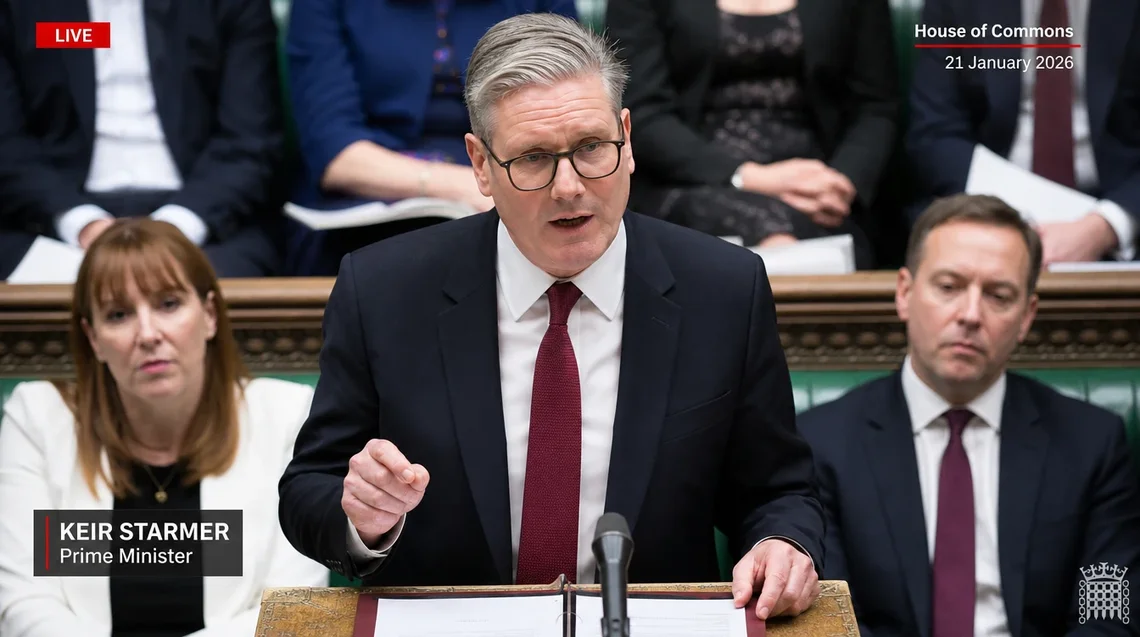
The government has announced a £15 billion funding package for the National Health Service, the largest single injection of healthcare investment since the founding of the welfare state, as Sir Keir Starmer's administration confronts a waiting list backlog that currently stands at approximately 7.6 million patients across England. The announcement marks the centrepiece of Labour's domestic agenda and sets the stage for a major confrontation with opposition parties over the pace, scale, and accountability of NHS reform.
Party Positions: Labour supports a £15 billion NHS overhaul funded through a combination of borrowing, efficiency savings, and a levy on private healthcare providers, arguing the investment is essential to reduce waiting times and modernise outdated hospital infrastructure. Conservatives oppose the scale of borrowing involved, contending that the plan lacks fiscal discipline and risks repeating the waste of previous large-scale public spending programmes, while calling for greater focus on productivity targets before new money is committed. Lib Dems broadly welcome increased NHS funding but have called for ring-fenced mental health spending within the package and stronger independent oversight mechanisms to ensure the money reaches frontline services rather than administrative costs.
The Scale of the Crisis Driving the Announcement
Ministers framed the £15 billion commitment explicitly as a response to what health officials have described as a systemic failure accumulated over more than a decade. The waiting list figure, published by NHS England and cited across government briefings, represents patients waiting for consultant-led elective care and has remained stubbornly elevated despite pledges from successive administrations to bring it down. According to the Office for National Statistics, the pressure on NHS services is compounded by demographic shifts, with the over-65 population projected to grow significantly in the coming two decades, placing further structural demand on hospital and primary care capacity.
What the Data Show on Waiting Times
The waiting list crisis is not uniform across England. Patients in parts of the North West and the Midlands face disproportionately longer average waits than those in London and the South East, a disparity health economists have attributed to regional underfunding, workforce shortages, and legacy infrastructure deficits. Data published by NHS England and analysed by the Health Foundation indicate that patients waiting more than 52 weeks for treatment, while reduced from their pandemic peak, remain at historically elevated levels by pre-2019 standards. The government has pointed to these figures as justification for the scale of intervention proposed, officials said.
Related Articles
| Indicator | Current Figure | Target / Benchmark | Source |
|---|---|---|---|
| Total elective care waiting list (England) | ~7.6 million | Reduce to under 5 million within Parliament | NHS England |
| Patients waiting over 52 weeks | ~300,000 | Eliminate 52-week waits by end of term | NHS England |
| Public satisfaction with NHS (net) | 24% satisfied | Baseline; lowest recorded level | British Social Attitudes / Nuffield Trust |
| Voter support for increased NHS spending | 68% in favour | N/A | YouGov |
| Total announced investment package | £15 billion | Deployed over current Parliament | HM Treasury / DHSC |
| NHS England capital spending backlog (maintenance) | ~£11.6 billion | Addressed within investment package | NHS England Estates Report |
How the £15 Billion Will Be Allocated
The Department of Health and Social Care has set out a broad framework for how the funding will be distributed, though detailed allocations at the integrated care system level are expected to follow after consultation with NHS England and regional bodies. The headline figure breaks down into three broad categories: capital investment in hospital estates and equipment, workforce expansion and training, and digital transformation of patient records and appointment systems, according to government documents circulated ahead of the formal announcement.
Capital Investment and Infrastructure
Approximately £6 billion of the total package is earmarked for capital spending, targeting the substantial maintenance backlog that has accumulated in NHS buildings and equipment. Reports cited by the BBC and the Guardian have documented instances of hospitals operating with outdated diagnostic machinery and crumbling ward infrastructure, conditions that clinicians argue directly affect patient outcomes and staff retention. The investment is intended to fund new surgical hubs, diagnostic centres, and the accelerated completion of hospital building projects that were announced but not fully financed by the previous administration, officials said.
Workforce and Retention Measures
A further portion of the package, understood to be in the region of £5 billion, is directed toward expanding the NHS workforce and addressing the retention crisis that has seen experienced clinicians leave the service in significant numbers. The government has committed to training additional nurses, doctors, and allied health professionals, with a particular focus on primary care and mental health services, where vacancy rates remain acutely high. Independent analysis by the King's Fund, cited in parliamentary briefings, has consistently identified workforce shortfalls as the primary constraint on reducing waiting times, warning that capital investment alone cannot achieve meaningful improvement without parallel investment in staffing.
Political Reaction at Westminster
The announcement has sharpened the dividing lines between the major parties at Westminster in ways that are likely to define the health debate for the duration of this Parliament. For readers following the trajectory of this policy area, earlier reporting on Labour Pledges NHS Overhaul as Waiting Lists Surge provides useful context on how the government's position evolved from opposition commitments to governing reality.
Conservative Response and Fiscal Criticism
Shadow Health Secretary opposition figures have zeroed in on the borrowing element of the funding package, arguing that the Chancellor has failed to demonstrate how the commitment sits within a credible medium-term fiscal framework. Conservative spokespeople have pointed to what they describe as an absence of binding productivity targets attached to the new money, arguing that without measurable output requirements NHS trusts will absorb the funding without proportionate improvement in patient outcomes. The party has called for an independent productivity audit before any further tranches of capital are released, a position the government has rejected as a delaying tactic, officials said.
The broader context of Conservative attacks has been complicated by the party's own record in office, with Labour ministers repeatedly citing the growth of the waiting list during the period the Conservatives held power. Analysis published by the Nuffield Trust and referenced in Guardian reporting indicates the list grew by more than four million patients between the previous general election and the transition of power.
Public Opinion and the Electoral Calculus
Polling conducted by Ipsos and YouGov consistently shows the NHS ranking as either the first or second most important issue for British voters, a pattern that has held across multiple electoral cycles and which the Starmer administration has been acutely aware of in crafting its domestic programme. According to YouGov survey data, 68 percent of adults support increasing NHS funding even if it requires additional government borrowing, providing the government with a degree of political cover for the fiscal implications of the announcement. (Source: YouGov)
However, separate polling by Ipsos suggests that public confidence in the government's ability to deliver on NHS pledges remains qualified, with a significant proportion of respondents expressing scepticism about whether new funding will translate into tangible improvements in their personal experience of the health service. (Source: Ipsos) This sentiment is reflected in commentary published by the Guardian, which has noted that the government faces a credibility challenge given the frequency with which NHS funding announcements have been made by successive governments without producing the waiting list reductions promised.
For deeper background on the political evolution of this commitment, coverage of Labour pledges NHS overhaul as waiting lists hit record tracks the specific moments at which the party hardened its position during the period in opposition.
Digital Transformation and System Reform
Beyond the headline capital and workforce numbers, the government has placed considerable emphasis on what it describes as the digital transformation component of the overhaul. Ministers have argued that the NHS's fragmented and often paper-based patient record infrastructure represents a fundamental inefficiency that inflates costs, delays diagnoses, and prevents the kind of system-wide data analysis that would allow resources to be deployed more effectively.
Electronic Patient Records and Interoperability
The digital strand of the programme is intended to accelerate the rollout of fully interoperable electronic patient records across all NHS trusts in England, a project that has been in various stages of development for more than a decade without reaching completion. Officials said the new investment will include funding for trusts that have fallen behind on digital adoption, with a target of full interoperability across secondary care settings within the current Parliament. Independent observers, including health technology researchers cited in parliamentary evidence sessions, have cautioned that previous digital programmes have encountered significant implementation difficulties, including procurement delays and resistance from clinical staff inadequately trained on new systems.
Implementation Timeline and Accountability Structures
One of the central questions hanging over the announcement concerns how the government intends to ensure accountability for the money committed. Previous large-scale NHS investment programmes, including those under the Blair government in the early part of the century, delivered measurable improvements in waiting times but were also associated with significant cost overruns and PFI liabilities that continue to burden NHS trusts. The current government has stated that it will establish a dedicated NHS Performance and Investment Board to oversee the deployment of funds and report publicly on progress against waiting list targets on a quarterly basis, officials said.
Health economists and independent analysts have broadly welcomed the scale of the commitment while urging caution about timelines. Research published by the Health Foundation, referenced in BBC reporting, suggests that even with optimal implementation, reducing the waiting list to pre-pandemic levels will take several years and will require not just funding but sustained reform of how elective care is commissioned and delivered. (Source: BBC)
The Lib Dems, while supporting the funding direction, have tabled amendments in committee calling for a statutory ringfence on mental health expenditure within the package, arguing that without legal protection mental health budgets risk being raided to cover overspends in acute services, as has occurred in previous spending cycles, according to party officials.
For the most recent parliamentary context on how the government has presented this commitment to the House, reporting on Labour pledges NHS funding boost amid waiting list crisis covers the statements made at the despatch box and the immediate parliamentary response in detail.
What Comes Next
The government faces a series of near-term pressure points that will test whether the political ambition behind the £15 billion announcement translates into operational delivery. NHS England is expected to publish system-level plans for absorbing the new investment within weeks, and integrated care systems will face scrutiny over their capacity to spend capital allocations within the financial year without the procurement and project management bottlenecks that have historically slowed infrastructure programmes. Analysis tracking the longer arc of this policy, including earlier commitments made before the government took office, is available in coverage of Starmer pledges NHS overhaul as waiting lists grow, which documents the progression from manifesto commitment to governing programme.
The NHS announcement places health at the centre of the government's political identity at a moment when it is under pressure on multiple fronts, from economic growth figures to immigration statistics. For Sir Keir Starmer, the £15 billion pledge represents both a statement of governing priority and a hostage to political fortune: the waiting list numbers will be tracked closely by voters, opposition parties, and the media throughout the Parliament, and any failure to demonstrate meaningful progress risks transforming the NHS from a political asset into a liability. The scale of the ambition is not in dispute; whether the delivery machinery of the NHS and Whitehall can match it remains the central unanswered question.