Labour pledges major NHS funding boost in autumn budget
Starmer government seeks to address critical staffing shortages

The Labour government has announced plans for a significant injection of funding into the National Health Service as part of the upcoming autumn budget, with Chancellor Rachel Reeves expected to outline billions in new spending designed to tackle chronic staffing shortages and cut waiting lists that have left millions of patients enduring record delays. The announcement represents one of the most substantial commitments to NHS financing in a generation, officials said, and will test the government's ability to deliver on its central electoral promise of reforming a health service widely regarded as in crisis.
Party Positions: Labour supports a major NHS funding uplift through the autumn budget, framing increased investment as essential to reducing waiting lists and addressing staffing shortfalls, with a longer-term commitment to shifting care from hospitals into the community. Conservatives argue that Labour's spending plans are fiscally irresponsible, warning that tax rises will be required to fund NHS commitments and that structural reform, not additional spending alone, is the answer to NHS inefficiency. Lib Dems back increased NHS investment but have called for greater transparency over how funding will be allocated, particularly regarding mental health services and rural GP access, urging the government to publish detailed implementation timelines.
The Scale of the Funding Commitment
According to government officials, the autumn budget will set out a multi-year funding framework for the NHS in England, with early indications pointing to an increase in the NHS budget running into tens of billions of pounds over the spending review period. The Treasury has not formally confirmed precise figures ahead of the budget statement, but briefings to Westminster correspondents have indicated that the settlement will be the largest real-terms increase since the years immediately following the NHS's post-financial-crisis funding squeeze.
What the Money Is Meant to Cover
Senior health officials have indicated that the new funding will be directed at several priority areas, including workforce recruitment and retention, capital investment in crumbling hospital infrastructure, and the expansion of diagnostic capacity. Data from NHS England show that the health service currently has tens of thousands of vacancies across nursing, general practice, and allied health professions, a structural problem that successive governments have acknowledged but failed to resolve. The government has said it intends to use a portion of the new funding to honour pay review body recommendations for NHS staff, following a period of industrial action that severely disrupted elective care. (Source: NHS England)
Related Articles
For more on how this fits into Labour's broader healthcare agenda, see Labour Pledges New NHS Funding Push Amid Staff Shortages, which outlines earlier commitments made before the budget announcement.
Waiting Lists: The Political Pressure Point
No issue has done more to frame the politics of NHS reform than the waiting list crisis. According to data published by NHS England, the elective care waiting list in England contains millions of patients, with a significant proportion waiting beyond the 18-week target the NHS is legally required to meet. The figures represent a structural failure built up over several years, and the political cost for any government seen as presiding over further deterioration is severe. (Source: NHS England)
Public Confidence in NHS Management
Polling conducted by Ipsos found that public satisfaction with the NHS has fallen to its lowest recorded level in decades, with a majority of respondents saying they believe the health service has deteriorated significantly in recent years. A separate YouGov survey found that NHS reform ranks among the top three concerns for voters, sitting alongside cost of living pressures and economic management. (Source: Ipsos, YouGov) The political salience of these findings has sharpened Labour's resolve to be seen acting decisively, officials suggested, even as critics from the left argue that the funding increase does not go far enough to address systemic undercapacity.
| Indicator | Current Position | Government Target | Source |
|---|---|---|---|
| Elective care waiting list (England) | Over 7.5 million patients | Reduce to pre-pandemic levels within five years | NHS England |
| NHS staff vacancies | Approx. 100,000+ posts unfilled | Halve vacancy rate by end of Parliament | NHS England / DHSC |
| Public satisfaction with NHS (Ipsos) | 24% satisfied (record low) | Return to majority satisfaction within term | Ipsos / King's Fund |
| 18-week referral-to-treatment compliance | Below 60% of patients treated in time | Return to 92% compliance | NHS England |
| GP appointments per day (England) | Approx. 1.3 million daily | Increase by 50 million appointments annually | NHSE / DHSC |
Starmer's Reform Agenda and Wes Streeting's Role
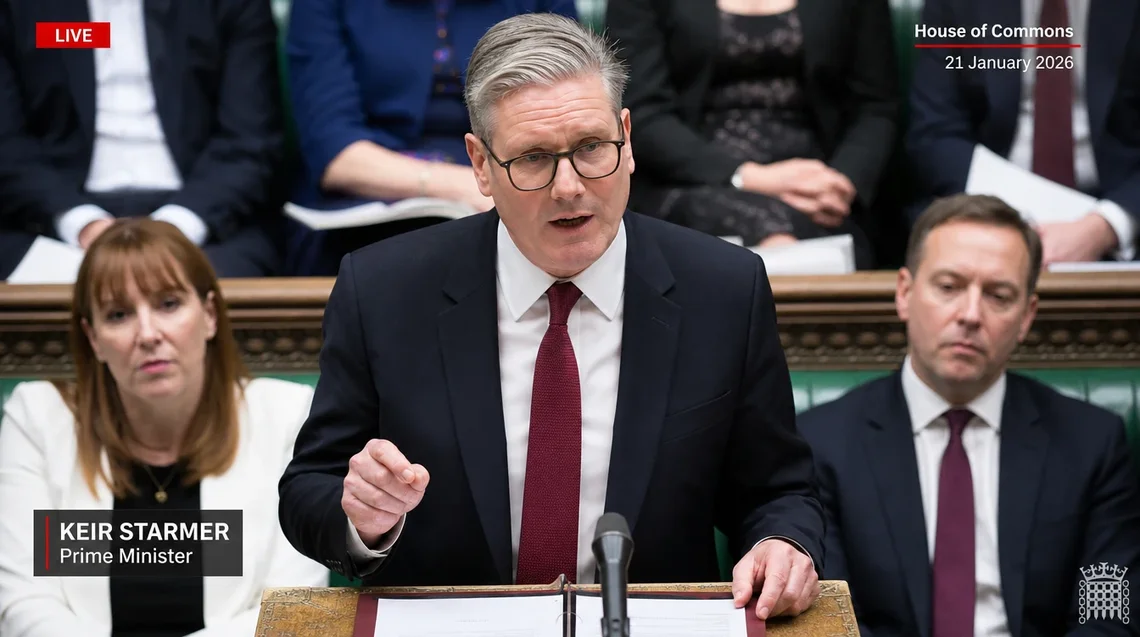
Prime Minister Sir Keir Starmer has made NHS reform a defining mission of his government, and Health Secretary Wes Streeting has positioned himself as the minister most willing to challenge NHS orthodoxy. Streeting has repeatedly argued in public statements that the NHS needs to reform as well as receive additional money, insisting that simply increasing the budget without structural change would be insufficient to meet patient demand over the long term. His approach has attracted both praise and criticism, with unions cautious about language that implies privatisation, while reform advocates argue it signals a welcome realism about the service's structural challenges.
The Shift Toward Community and Primary Care
A significant element of the government's NHS strategy involves redirecting care away from acute hospitals and into primary and community settings. Officials have said the new funding package will include ring-fenced investment for general practice, community nursing, and mental health services, reflecting a strategic commitment to what the Department of Health and Social Care describes as a "neighbourhood health" model. The BBC and the Guardian have both reported that internal government modelling suggests this shift could reduce pressure on accident and emergency departments, although independent analysts have cautioned that the benefits would take years to materialise. (Source: BBC, Guardian)
The broader context of this policy direction is examined in detail at Starmer pledges major NHS overhaul amid funding row, which covers the political tensions within the party over the pace and nature of reform.
Opposition Response and Parliamentary Scrutiny
The Conservative opposition has argued that Labour's NHS spending plans are fiscally reckless and have warned that the funding will require tax increases that will damage economic growth. Shadow Health Secretary Victoria Atkins has argued in parliamentary exchanges that the government inherited a health service that was already on a recovery trajectory, a claim disputed by Labour and by independent analysts. The Liberal Democrats, meanwhile, have called for greater specificity about how mental health services and rural communities will benefit from the funding uplift, arguing that past NHS settlements have disproportionately benefited urban acute trusts at the expense of community provision.
Parliamentary Votes and Committee Scrutiny
The Health and Social Care Select Committee has indicated it intends to hold the government to account on NHS funding commitments through a programme of evidence sessions in the coming months. According to the Office for National Statistics, NHS expenditure as a proportion of gross domestic product has fluctuated significantly over the past two decades, and any new settlement will be closely examined against international comparators to assess whether the UK's health spending remains competitive with peer nations. (Source: Office for National Statistics) Parliamentary arithmetic currently favours the government comfortably, meaning the budget measures are expected to pass without significant legislative difficulty, though internal Labour voices on the left of the party may seek amendments to strengthen commitments on social care.
Readers seeking further background on the parliamentary and policy history of this issue can consult Labour pledges NHS funding boost amid waiting list crisis, which provides detailed context on earlier commitments and the evidence base for intervention.
The Social Care Question
Any serious analysis of NHS funding must engage with the unresolved crisis in adult social care, which remains structurally underfunded and which directly affects NHS capacity. Delayed discharges — patients medically fit to leave hospital but unable to do so because adequate care packages are not in place — have cost the NHS billions in bed-days and have been identified by NHS England as one of the leading causes of emergency department congestion. Officials have said the autumn budget will address social care financing, though the government has yet to confirm whether it will adopt recommendations from independent reviews calling for a substantial new social care settlement.
Demographic Pressures and Long-Term Sustainability
The Office for National Statistics projects that the UK population aged 65 and over will increase substantially over the coming decades, placing intensifying demand on both NHS and social care services. (Source: Office for National Statistics) Officials have acknowledged that the funding announced in the autumn budget, while significant, represents a down payment on a longer-term programme rather than a comprehensive resolution of systemic pressures. Health economists cited in reporting by the Guardian have argued that without a serious settlement on social care alongside NHS funding, the health service risks being unable to discharge patients efficiently enough to benefit from the additional investment. (Source: Guardian)
The interconnection between NHS reform and social care financing is further explored at Labour Pledges Major NHS Funding Boost Amid Reform Push, which analyses how the two policy agendas interact at the operational level.
What Comes Next
The autumn budget statement will set the formal parameters for NHS spending, but the real test will come in implementation. Government officials have said that NHS England will be expected to publish detailed delivery plans within weeks of the budget, setting out how the additional funding will be allocated across regions, specialties, and care settings. Independent health think tanks, including those whose analysis has been cited by the BBC and the Guardian, have welcomed the direction of travel while urging the government to be transparent about trade-offs and realistic about the timescales involved in translating funding into reduced waiting times. (Source: BBC, Guardian)
For the latest analysis of how the government's commitments are evolving in the context of broader healthcare pressures, see Labour pledges new NHS funding as waiting lists persist, which tracks the development of policy against the backdrop of continued waiting list growth.
The coming weeks will determine whether the government's autumn budget marks a genuine turning point for the National Health Service or whether, as critics contend, the scale of the challenge simply outpaces the ambition of the response. What is beyond dispute is that the political stakes could not be higher: the NHS was the central battleground of the general election, and it will remain the measure by which the Starmer government is ultimately judged.