Labour pledges NHS overhaul as waiting lists remain high
Starmer government announces £20bn reform package

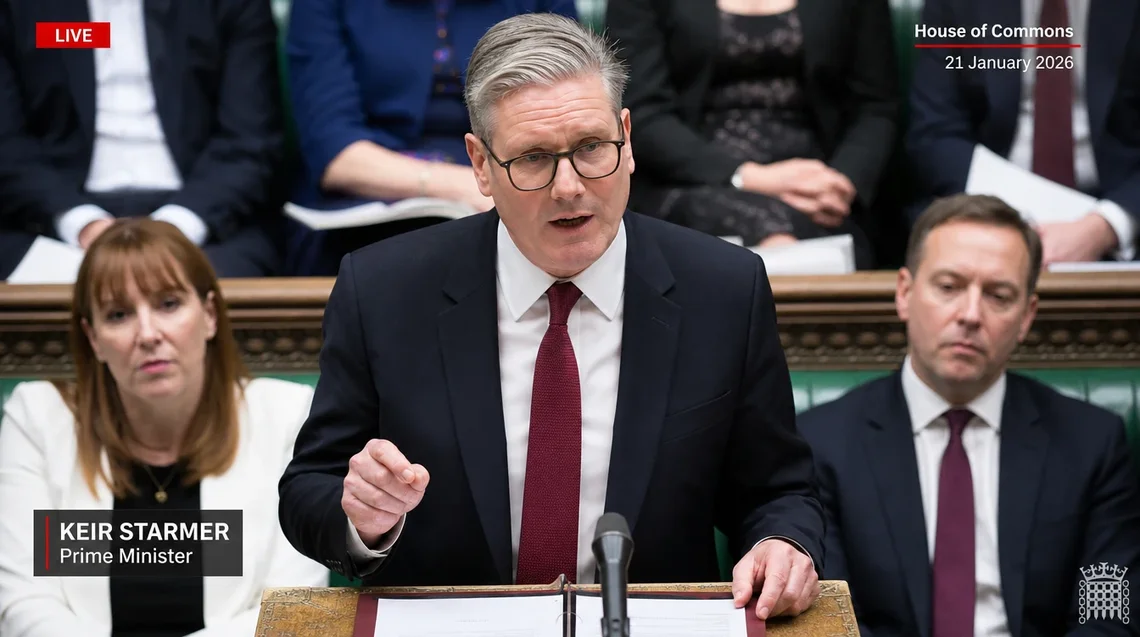
Sir Keir Starmer's government has unveiled a £20 billion NHS reform package aimed at tackling England's persistently high waiting lists, with health officials describing the announcement as the most significant restructuring of the National Health Service in a generation. The package, confirmed by Health Secretary Wes Streeting, sets out sweeping changes to how primary, secondary and elective care is delivered across England, drawing immediate responses from opposition parties and patient groups.
The announcement comes as NHS England data show more than 7.5 million people are currently waiting for consultant-led treatment — a figure that has remained stubbornly elevated despite government commitments made during and after the last general election. Ministers say the new funding envelope will be directed at expanding surgical hubs, recruiting additional clinical staff, and shifting greater volumes of care out of hospital settings and into the community. (Source: NHS England)
Party Positions: Labour says the £20bn package represents a fundamental reset of NHS delivery, prioritising community-based care and cutting elective backlogs through expanded surgical hubs and a new productivity drive. Conservatives argue the announcement lacks credible delivery timelines and that the government is recycling commitments made under the previous administration without explaining how efficiency savings will be achieved. Lib Dems broadly welcome investment in primary care but are calling for specific guarantees on mental health waiting times and rural GP access, warning that urban-focused reforms risk leaving rural and coastal communities behind.
The Scale of the Reform Package
Officials from the Department of Health and Social Care confirmed the £20bn commitment will be spread across a multi-year spending period, with the first tranche of capital funding earmarked for surgical hub expansion and diagnostic centre upgrades. The government says it expects the investment to reduce the headline waiting list figure by more than two million over the course of the parliament, though independent health economists have noted that such projections depend heavily on workforce availability and whether demand continues to grow at its current rate.
Related Articles
Surgical Hubs and Community Diagnostics
A central plank of the reform is the acceleration of the community diagnostic centre programme, which Labour says will be extended to additional sites not previously covered under plans inherited from the previous government. Ministers argue that separating elective and planned procedures from emergency pathways is essential to protecting surgical productivity during periods of high urgent care pressure. Health officials said the surgical hub model, already operating in parts of the country, had demonstrated measurable gains in throughput when insulated from acute hospital pressures. (Source: Department of Health and Social Care)
Workforce and Retention Measures
The package also includes commitments on medical and nursing workforce, with the government pledging to publish an updated long-term workforce plan later in the parliamentary session. Streeting has previously acknowledged that the previous workforce plan, widely praised by NHS leaders, lacked sufficient funding guarantees, and officials said the new document will be accompanied by a firm financial settlement. The British Medical Association and the Royal College of Nursing have both signalled cautious optimism, though union leaders stressed that pay parity and safe staffing ratios remain outstanding concerns. (Source: British Medical Association)
Political Context and Opposition Response
The announcement lands at a politically sensitive moment for the Starmer administration. Polling conducted by YouGov and Ipsos consistently identifies the NHS as the single most important issue for British voters, and Labour's internal research is understood to reflect anxiety that the public has not yet seen tangible improvements in health service access despite repeated ministerial pledges. (Source: YouGov; Source: Ipsos)
For further context on the trajectory of this policy area, see our earlier reporting on Labour pledges NHS overhaul as waiting lists remain critical, which documented the government's initial position after taking office.
Conservative Criticism
Shadow Health Secretary Edward Argar told the Commons the announcement was "a repackaging of existing commitments dressed up as a new settlement," and challenged Streeting to confirm what proportion of the £20bn represented genuinely new money rather than funds already allocated in the previous spending review. The Conservatives have consistently argued that structural reform, not additional spending, is the primary solution to NHS productivity challenges, pointing to what they describe as a management culture within NHS England that resists efficiency measures. Argar's position reflects the broader Conservative argument that Labour has inherited a health service that was already on a trajectory of improvement — a claim contested by independent analysts at the Nuffield Trust and the Health Foundation. (Source: Nuffield Trust)
Liberal Democrat and Cross-Bench Pressure
Liberal Democrat health spokesperson Helen Morgan welcomed the scale of investment but said the government had again failed to produce a credible plan for mental health waiting times, which according to NHS data currently affect more than a million people awaiting talking therapies alone. Morgan called for ring-fenced mental health funding within the package, arguing that without explicit protection, mental health services would continue to lose ground to acute and elective care in local commissioning decisions. Several independent and cross-bench peers are expected to raise similar concerns when the associated legislation reaches the Lords. (Source: NHS England)
| Metric | Figure | Source |
|---|---|---|
| Total patients waiting for consultant-led treatment (England) | 7.5 million+ | NHS England |
| Patients waiting over 52 weeks | Approx. 300,000 | NHS England |
| Voters citing NHS as top priority issue | 52% | YouGov / Ipsos |
| Government satisfaction rating on NHS handling | 34% approve | Ipsos Issues Index |
| Announced reform investment | £20 billion | Department of Health and Social Care |
| Target waiting list reduction over parliament | 2 million patients | HM Government |
The 10-Year Health Plan and Structural Reform
Underpinning the funding announcement is Labour's 10-Year Health Plan, a consultation-led strategy document that ministers say will set out a long-term framework for how the NHS operates. The plan, drawn up with input from patients, clinicians and public health experts, is expected to recommend a significant shift in the balance between hospital-based and community-based care — a direction that Streeting has consistently described using the shorthand of moving care from "analogue to digital, from hospital to community, from sickness to prevention."
This reform trajectory has been reported on extensively. Our coverage of Labour pledges NHS overhaul as waiting lists hit record examined earlier milestones in this policy direction, while Labour Pledges NHS Reform as Waiting Lists Remain Critical explored the structural challenges the government faces in converting spending commitments into measurable patient outcomes.
Digital Transformation and Data Infrastructure
A significant portion of the reform package is directed at NHS digital infrastructure, including investment in shared patient records, AI-assisted diagnostics and an upgrade to legacy IT systems that NHS England has identified as a material drag on productivity. Officials said the government intends to mandate the use of a single patient record standard across all NHS trusts in England within the parliament, a commitment that has been made — and not fully delivered — by successive administrations. Independent analysis from the Office for National Statistics has previously highlighted the difficulty of measuring NHS productivity in a way that captures quality improvements alongside volume metrics, a methodological tension that complicates political narratives about service performance. (Source: Office for National Statistics)
Funding Mechanisms and Treasury Relations
The £20bn figure has raised questions among health finance analysts about how it sits within the broader fiscal envelope agreed at the most recent spending review. The BBC and the Guardian have both reported that senior Treasury officials pushed back against initial proposals from the health department that were understood to exceed the figure ultimately announced, suggesting that some elements of the original reform blueprint were scaled back during inter-departmental negotiations. (Source: BBC; Source: Guardian)
The Institute for Fiscal Studies has noted that real-terms NHS spending growth under the current government is broadly in line with historical averages, and that the headline £20bn figure needs to be assessed against inflationary pressures on NHS pay and procurement costs before its true scale can be judged. Ministers have contested that framing, arguing that the composition of the spending — weighted toward capital investment and community infrastructure rather than recurrent pay costs — makes direct historical comparisons misleading. (Source: Institute for Fiscal Studies)
NHS England Abolition and Accountability
Running parallel to the funding announcement is the government's previously confirmed plan to abolish NHS England as a separate arm's-length body and bring its functions back under direct ministerial control. Officials said this structural change is intended to sharpen accountability for delivery and eliminate what Streeting has described as a "a blurred line" between government policy and operational management. Critics, including several former NHS chief executives writing in the health trade press, have warned that politicising operational decisions could expose ministers to day-to-day pressures that historically led governments to make short-term decisions damaging to long-term system health.
Patient and Public Response
Patient advocacy groups responded to the announcement with measured support but consistent calls for transparency on delivery milestones. Healthwatch England said it would be scrutinising the timetable for surgical hub expansion and called on the government to establish clear patient-facing metrics so that the public could hold ministers to account. Cancer Research UK welcomed the diagnostic investment but said that early detection ambitions could only be met if the workforce delivering screening programmes was expanded in parallel with capital infrastructure.
For earlier analysis of the funding commitments that preceded this package, readers can also refer to our report on Labour Pledges £15bn NHS Overhaul as Waiting Lists Persist, which assessed the government's interim spending position before the full reform framework was confirmed.
The reform package will face its first significant parliamentary test when the associated Health Service Reform Bill is introduced for its second reading, expected before the House of Commons summer recess. With NHS performance polling as the central domestic battleground between Labour and the Conservatives, and with patient groups, trade unions and opposition parties all demanding measurable progress within the current parliament, Streeting and the wider Starmer government face a substantial burden of delivery on a promise that has defined Labour's electoral identity for more than two years. Whether the £20bn commitment translates into a waiting list that voters can recognisably see coming down will, by most political assessments, determine a significant share of Labour's standing at the next general election.