Starmer Pledges NHS Funding Boost Amid Reform Debate
Labour government outlines healthcare spending plans
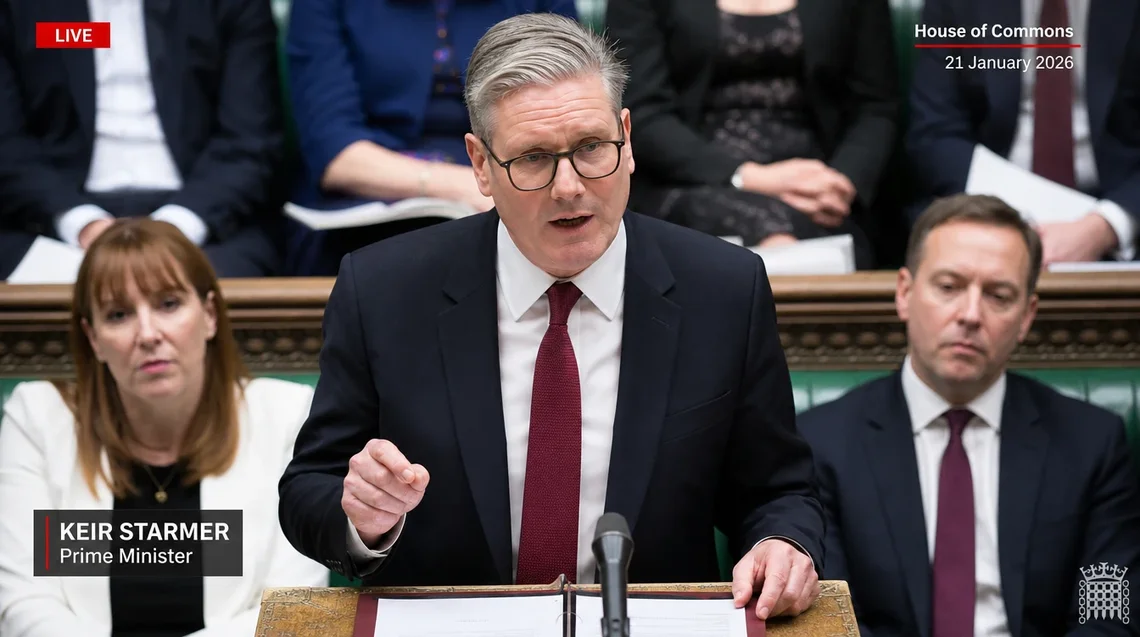
Sir Keir Starmer has announced a significant increase in NHS funding as part of a broader Labour government commitment to overhaul Britain's health service, pledging billions in additional investment to cut waiting lists, recruit frontline staff, and modernise ageing infrastructure. The announcement, made in the Commons this week, has reignited a fierce cross-party debate over whether money alone can fix a health service widely regarded as operating at the limits of its capacity.
The Prime Minister told MPs that the government would prioritise NHS spending above other departmental budgets, describing the health service as "the single most important institution in this country" and framing the investment as a direct fulfilment of a core Labour manifesto commitment. Opposition parties, however, were swift to challenge both the scale of the pledge and the structural reforms accompanying it, setting the stage for a prolonged parliamentary battle over healthcare policy.
Party Positions: Labour supports a substantial multi-year NHS funding settlement tied to productivity reforms and a shift toward community and preventative care; Conservatives argue the spending commitment is insufficiently detailed and risks repeating previous funding announcements that failed to reduce waiting times; Lib Dems back increased NHS investment but are calling for a dedicated cross-party health commission to oversee reform and spending priorities independently of government.
The Scale of the Commitment
According to Downing Street briefings and Treasury documents circulated ahead of the Commons statement, the government is directing additional resource funding toward the NHS in England, with a focus on elective care recovery, mental health services, and primary care capacity. Health Secretary Wes Streeting confirmed that the settlement represents the most substantial real-terms increase in NHS day-to-day spending since before the pandemic, though independent economists at the Institute for Fiscal Studies have cautioned that the headline figures require careful scrutiny once inflation, workforce costs, and legacy debt repayments to NHS trusts are accounted for.
Related Articles
Waiting List Reduction Targets
Central to the funding package is a commitment to bring the NHS England elective waiting list below 18 weeks for the vast majority of patients — a target enshrined in the NHS Constitution but consistently missed since the pandemic. NHS England figures, cited by the Health Secretary in his Commons appearance, show millions of patients currently awaiting elective treatment, with a significant proportion waiting beyond a year. Officials said the new money would fund additional weekend and evening theatre sessions, expanded use of independent sector providers under NHS contracts, and incentive schemes designed to retain experienced surgical and anaesthetic staff. (Source: NHS England)
Capital Investment and Infrastructure
Alongside the revenue spending commitment, officials confirmed a capital allocation earmarked for hospital maintenance, digital infrastructure, and diagnostic equipment. The announcement revives elements of the previous administration's "New Hospital Programme," though government sources were careful to distance the current plans from that project's troubled delivery record. Health economists have long argued that the NHS capital backlog — estimated by NHS England at tens of billions of pounds — represents one of the most significant drags on clinical productivity, and the government signalled it intends to address this through a combination of direct Treasury funding and private sector partnerships. (Source: NHS England)
Reform Alongside Investment
Ministers have been insistent that funding increases are conditional on what they describe as a "reform partnership" with the health service — a framing that has caused unease among some NHS trade unions and Labour backbenchers. The Health Secretary has outlined a ten-year plan for the NHS, the full details of which are expected to be published following a public consultation process currently under way. The plan's core tenets, according to Whitehall briefings, include moving care "from hospital to community," "from analogue to digital," and "from reactive to preventative" — language the government has used repeatedly in public-facing communications.
For further context on the structural proposals underpinning this agenda, see the detailed reporting on Starmer pledges major NHS overhaul amid funding row, which examined the political fault lines within Labour over the pace and scope of service restructuring.
Primary Care and GP Services
Among the most politically sensitive elements of the reform agenda is the government's plan to shift resources toward general practice and community health services, which ministers argue have been chronically underfunded relative to acute hospital care. GP leaders have welcomed the direction of travel in principle, but the British Medical Association has warned that a net increase in GP numbers — rather than simply additional funding recycled through existing contracts — is essential if the strategy is to have any measurable impact on patient access. Data published by NHS England show that the number of fully qualified, full-time equivalent GPs has declined over the past decade even as the patient list size per GP has grown substantially. (Source: NHS England, Office for National Statistics)
Mental Health Services
The government has also ring-fenced a portion of the new settlement for mental health services, responding to sustained pressure from campaign groups, NHS leaders, and a cross-party group of MPs who have argued that mental health has historically received a disproportionately small share of NHS budgets relative to the burden of illness it represents. NHS Providers, the body representing NHS trusts, said the additional mental health investment was "welcome but overdue," and cautioned that the workforce pipeline for psychiatrists, psychologists, and mental health nurses would need to be substantially expanded to avoid a situation in which funding outpaced the supply of available staff. (Source: NHS Providers)
| Indicator | Current Position | Government Target | Source |
|---|---|---|---|
| Elective waiting list (England) | Over 7 million patients | Below 18-week standard for majority | NHS England |
| NHS capital maintenance backlog | Estimated £11.6bn+ | Reduction via capital settlement | NHS England |
| Public satisfaction with NHS (GB) | 24% satisfied (record low) | Not specified by government | British Social Attitudes / NatCen |
| GP numbers (FTE, fully qualified) | Declined over past decade | Net increase pledged | NHS England / ONS |
| Public support for NHS reform with more funding | 64% favour combined approach | — | YouGov / Ipsos polling |
Opposition Response
The Conservatives accused the government of repackaging previously announced commitments and failing to provide a credible productivity plan. Shadow Health Secretary Edward Argar argued at the despatch box that Labour had yet to demonstrate it could deliver tangible improvements in waiting times, pointing to what he described as "a pattern of headline announcements without measurable outcomes." The Liberal Democrats, meanwhile, used the debate to press for what their health spokesperson described as an "independent, cross-party NHS commission" — a proposal the government rejected, with Streeting arguing it would delay rather than accelerate reform.
Polling conducted by YouGov and Ipsos in recent months consistently shows that the NHS ranks as the top domestic concern for British voters, with large majorities telling pollsters they want both more funding and structural reform rather than investment alone. (Source: YouGov, Ipsos) The political salience of the issue places significant pressure on the government to demonstrate early progress, particularly on waiting times, which remain the most visible measure of NHS performance in the public mind according to focus group research cited by the BBC and the Guardian. (Source: BBC, Guardian)
Scottish and Welsh Dimensions
Because health is a devolved matter, the spending announcements apply directly only to NHS England. Scotland, Wales, and Northern Ireland will receive consequential Barnett formula funding, with decisions on its deployment left to the devolved administrations. The Scottish Government, led by the SNP, has indicated it will direct a significant portion of consequential funding toward its own NHS recovery programme, while Welsh Labour ministers said they welcomed the Barnett consequentials but maintained that the funding formula itself does not adequately reflect the additional health needs of the Welsh population.
Labour Backbench and Trade Union Pressure
The announcement has not been without internal friction. A number of Labour backbench MPs, particularly those representing constituencies with significant numbers of NHS workers, have raised concerns about whether the reform agenda — specifically the expanded use of independent sector providers — represents a step toward further privatisation of NHS services. Ministers have strenuously rejected that characterisation, with Streeting stating publicly that the NHS will remain "free at the point of use" and that independent sector involvement is a pragmatic tool for capacity rather than an ideological commitment. For a broader account of these internal pressures, readers can follow reporting on Labour pushes NHS reform bill amid funding debate, which tracks the legislative and political obstacles facing the government's health agenda.
NHS trade unions, including Unison and the Royal College of Nursing, gave a cautious welcome to the funding announcement while emphasising that sustainable workforce pay, safe staffing ratios enshrined in law, and genuine investment in workforce training pipelines are their primary benchmarks for assessing whether the settlement translates into meaningful improvement for staff and patients alike.
Economic Context and Fiscal Constraints
The NHS funding announcement comes against a backdrop of tight public finances, with the Chancellor having set strict departmental spending envelopes across most areas of government. The decision to prioritise health spending means real-terms reductions in other departmental budgets remain likely, a trade-off that has generated criticism from councils, local government bodies, and sectors including justice and education. The Office for National Statistics has highlighted that health spending already accounts for the largest single share of day-to-day public expenditure in England, a proportion that has grown markedly over the past two decades as demographic pressures and the complexity of treatments have increased. (Source: Office for National Statistics)
Independent analysis from the Health Foundation and the King's Fund has argued that the level of investment announced, while significant, falls short of what modelling suggests is required to restore the NHS to pre-pandemic performance levels within this Parliament. Both organisations have called for a longer-term, multi-parliament funding settlement rather than year-by-year allocations, which they say create planning uncertainty for NHS trusts and make strategic workforce recruitment more difficult.
What Comes Next
The ten-year NHS plan is expected to be formally published in the coming months, following the conclusion of the public consultation. Parliamentary scrutiny of the associated legislation — including provisions on integrated care board governance, data-sharing frameworks, and the regulatory landscape for independent providers — is anticipated to dominate the health select committee's programme into next year.
The government's ability to translate this funding commitment into measurable improvements for patients will be the central test of its health policy. As detailed in coverage of Labour pledges major NHS funding boost amid reform push and earlier analysis of Starmer pledges NHS funding boost amid staffing crisis, the structural challenges facing the health service — workforce shortages, capital underinvestment, and fragmented community provision — have accumulated over many years and will not be resolved by any single spending settlement. What the government can control is the pace and coherence of its reform programme, and it is on that ground that its health legacy will ultimately be judged.