Starmer's NHS Plan Faces Funding Reality Check
Labour seeks compromise with Treasury on healthcare costs

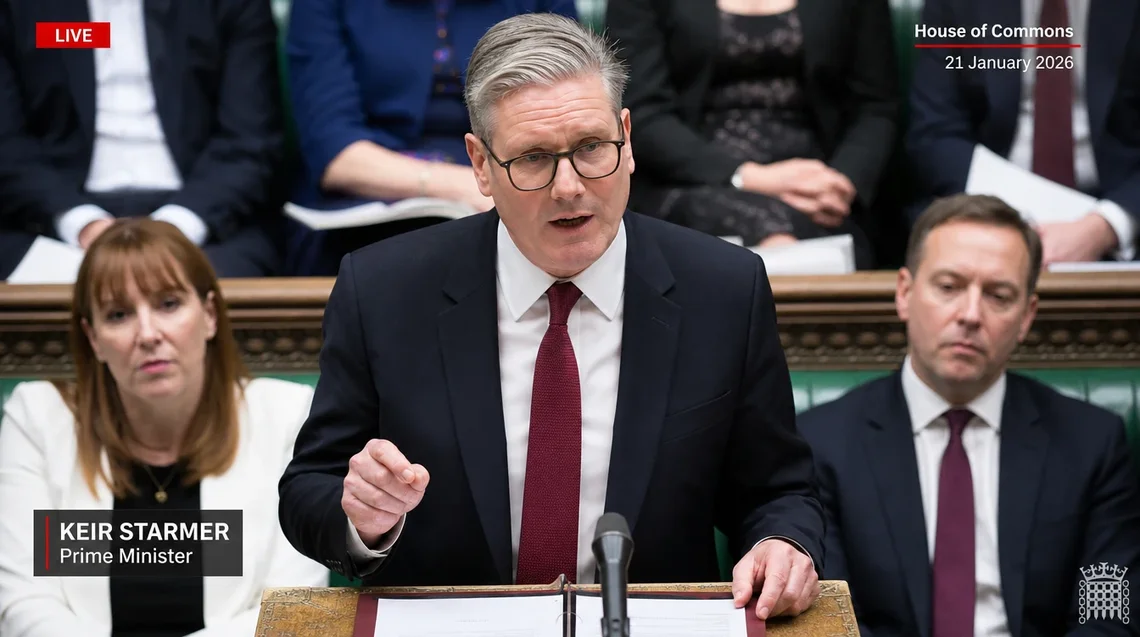
Prime Minister Keir Starmer's flagship National Health Service reform agenda is facing a significant funding reality check, with Treasury officials pushing back against the scale of investment demanded by health ministers and signalling that any new money will come with strict conditions attached. The standoff between Downing Street's ambitions and the Chancellor's fiscal constraints has thrust NHS financing back to the centre of Westminster's political debate, raising fundamental questions about whether Labour's promises to patients can be delivered within the boundaries of current spending plans.
Negotiations between the Department of Health and Social Care and HM Treasury have intensified in recent weeks, according to officials familiar with the discussions, as both sides attempt to reconcile a commitment to reducing record waiting lists with the government's broader pledge to maintain fiscal discipline. The outcome of those talks is expected to shape the direction of NHS policy for the remainder of this parliamentary term.
Party Positions: Labour has committed to cutting NHS waiting lists as a central manifesto pledge, proposing additional elective appointments funded through a combination of new investment and efficiency savings, though the precise funding envelope remains subject to Treasury agreement. Conservatives argue that Labour has failed to provide a credible costing for its NHS promises and accuse the government of raising patient expectations without securing the resources to meet them, calling instead for productivity reforms before any additional spending. Lib Dems have called for a cross-party commission on long-term NHS funding, arguing that the structural financial challenges facing the health service cannot be resolved within a single parliamentary term and require a sustainable, ring-fenced settlement that transcends party political cycles.
The Scale of the Fiscal Challenge
The NHS in England is currently operating under severe financial pressure, with NHS England's own figures indicating a system-wide deficit running into billions of pounds across trusts and integrated care boards. Health economists have consistently warned that closing waiting lists to pre-pandemic levels will require sustained capital and revenue investment over multiple years, not a single budgetary injection.
Related Articles
Treasury's Fiscal Red Lines
According to sources close to the negotiations, the Treasury has made clear that any additional NHS funding must be offset either through identified efficiency savings within the health budget or through measures that do not breach the government's self-imposed fiscal rules on debt and day-to-day spending. Officials said the Chancellor's office has been particularly resistant to open-ended commitments that could create structural pressures in future spending reviews. The Institute for Fiscal Studies has previously noted that the NHS has historically received real-terms increases in almost every spending round since its founding, yet demand has consistently outpaced supply (Source: Institute for Fiscal Studies).
What Labour Originally Promised
During the general election campaign, Labour set out a plan to deliver two million additional NHS appointments by recruiting clinical staff for evenings and weekends, funded in part through a crackdown on tax avoidance. Health ministers have since indicated that the policy framework is being refined in light of the fiscal inheritance from the previous administration, a formulation that has drawn accusations of diluting commitments before they have been fully implemented. Readers seeking context on the original proposals can review background on how the Starmer government unveiled its NHS funding plan in the earlier phase of this administration.
Polling Signals Political Risk for Labour
The political stakes of the NHS funding dispute could hardly be higher. Public satisfaction with the health service remains at historically depressed levels, and voters consistently rank NHS performance among their top concerns. Any perception that Labour is retreating from its central domestic promise risks significant electoral damage, particularly in the English constituencies that swung to Labour and will be most closely contested at the next general election.
What the Data Show
| Polling Measure | Figure | Source | Period |
|---|---|---|---|
| Voters naming NHS as top priority | 54% | YouGov | Recent polling |
| Satisfaction with NHS overall | 24% | Ipsos | Current tracker |
| Labour lead on NHS competence vs Conservatives | +11 points | YouGov | Current wave |
| Voters who believe NHS needs more funding | 71% | Ipsos | Recent survey |
| Approval of government's NHS handling | 31% | YouGov | Latest tracker |
The figures illustrate a paradox at the heart of the government's position: Labour retains a substantial advantage over the Conservatives on NHS credibility, yet its own approval ratings for health management are well below majority support. This gap suggests voters continue to trust Labour more than the opposition on health policy in relative terms, while simultaneously expressing dissatisfaction with the pace and scale of improvement under the current administration (Source: YouGov, Ipsos).
The Waiting List Crisis in Numbers
Office for National Statistics analysis of NHS England referral-to-treatment data shows the elective waiting list remains at a level far above the benchmark figures that prevailed before the pandemic disrupted routine care at scale. While there has been modest progress in reducing the longest waits, the aggregate list size has proven resistant to rapid reduction, partly because increased activity has been offset by rising demand from an ageing population with multiple long-term conditions (Source: Office for National Statistics).
Regional Disparities
The waiting list burden is not evenly distributed across the country. NHS trusts in parts of the Midlands, the North of England, and parts of London are carrying a disproportionate share of the backlog relative to their population size, a fact that complicates any uniform national solution. Health economists argue that targeted investment in the highest-pressure systems would deliver more measurable outcomes per pound spent than a blanket allocation, a view that has found some sympathy within the Department of Health and Social Care but faces political resistance from MPs representing areas that might receive less under such a formula.
Further analysis of the pressure on the government's position is available in reporting on how Starmer's NHS plan faces funding scrutiny from parliamentary committees and external health bodies.
Labour's Internal Debate
Behind the formal government position, there is a genuine debate within Labour's parliamentary party and among allied think tanks about the appropriate level of ambition for NHS reform within current fiscal constraints. A faction of backbench MPs, several of whom represent constituencies with acute waiting list problems, has been pressing ministers to make a stronger public case for additional health investment and to resist Treasury pressure to dilute the spending commitment. Their argument, made in internal party forums according to people familiar with the discussions, is that the political cost of failing on the NHS will exceed any short-term fiscal benefit from tighter spending controls.
The Wes Streeting Factor
Health Secretary Wes Streeting has positioned himself as both a reformer willing to challenge NHS institutional orthodoxies and an advocate for adequate resourcing of the service. Officials said he has argued internally that structural reform and investment are complementary rather than alternative strategies, pushing back against a Treasury framing that implies efficiency gains must precede new money. His public statements have carefully avoided any suggestion of a split with the Chancellor, but the substance of the negotiations makes the tension clear to Westminster observers. The BBC and the Guardian have both reported on the pressures surrounding the health secretary's reform agenda as it encounters the realities of the public finances (Source: BBC, Guardian).
Those looking for a fuller account of how the reform agenda developed can consult earlier coverage of how Starmer unveiled his major NHS reform plan amid a funding row that prefigured the current standoff.
Conservative and Liberal Democrat Responses
The opposition has moved quickly to frame the Treasury-Health Department tension as evidence of Labour's inability to translate campaign promises into deliverable policy. Shadow Health Secretary Edward Argar has argued in the Commons that the government must publish a fully costed plan for waiting list reduction or acknowledge that its manifesto commitment was not credible. The Conservatives have tabled a series of written parliamentary questions seeking the Treasury's internal modelling on NHS funding scenarios, though ministers have declined to release the detail on the grounds that it constitutes pre-decisional advice.
Liberal Democrat Positioning
The Liberal Democrats, who made significant gains in seats with large numbers of older voters and a correspondingly high concern about NHS access, have sought to position themselves as the party most willing to have an honest conversation about long-term health funding. Their call for a cross-party royal commission on NHS finance has received sympathetic coverage in health policy circles, though Labour ministers have consistently rejected it as a mechanism for deferring rather than delivering reform.
What a Compromise Might Look Like
Westminster sources familiar with the trajectory of the negotiations suggest a compromise is more likely than a complete breakdown, with the most plausible outcome involving a phased commitment to additional elective activity funding tied to verifiable productivity metrics within NHS trusts. Under such an arrangement, health systems that demonstrate measurable improvements in throughput per pound spent would become eligible for additional central funding, while those that cannot demonstrate efficiency gains would face more intensive scrutiny before receiving new resources.
Such a model would allow both sides to claim a degree of vindication: the Treasury could present it as disciplined, conditions-based spending, while health ministers could argue it represents new money flowing to the NHS. Critics, including several health policy academics, argue that conditions-based funding models have a mixed track record in the NHS and risk creating perverse incentives that distort clinical priorities.
The full trajectory of how the funding dispute has evolved is documented across a series of reports, including analysis of how Starmer's NHS plan faces funding shortfall criticism from health economists and patient groups who argue the numbers have never fully added up.
Outlook
The resolution of the NHS funding dispute will serve as an early and significant test of Keir Starmer's government's capacity to manage the distance between campaign commitments and the constraints of office. With patient waiting times showing only incremental improvement, public satisfaction at depressed levels, and a restive parliamentary party watching closely, the pressure on ministers to produce a credible and adequately resourced plan is acute. The coming weeks of negotiations between the Department of Health and Social Care and HM Treasury are likely to determine not only the shape of NHS policy for the near term, but also the broader political credibility of a government that staked much of its electoral offer on its willingness and ability to fix the National Health Service. Officials said a formal announcement on the funding framework is expected before the next major parliamentary recess, though that timetable remains subject to the pace of internal agreement.