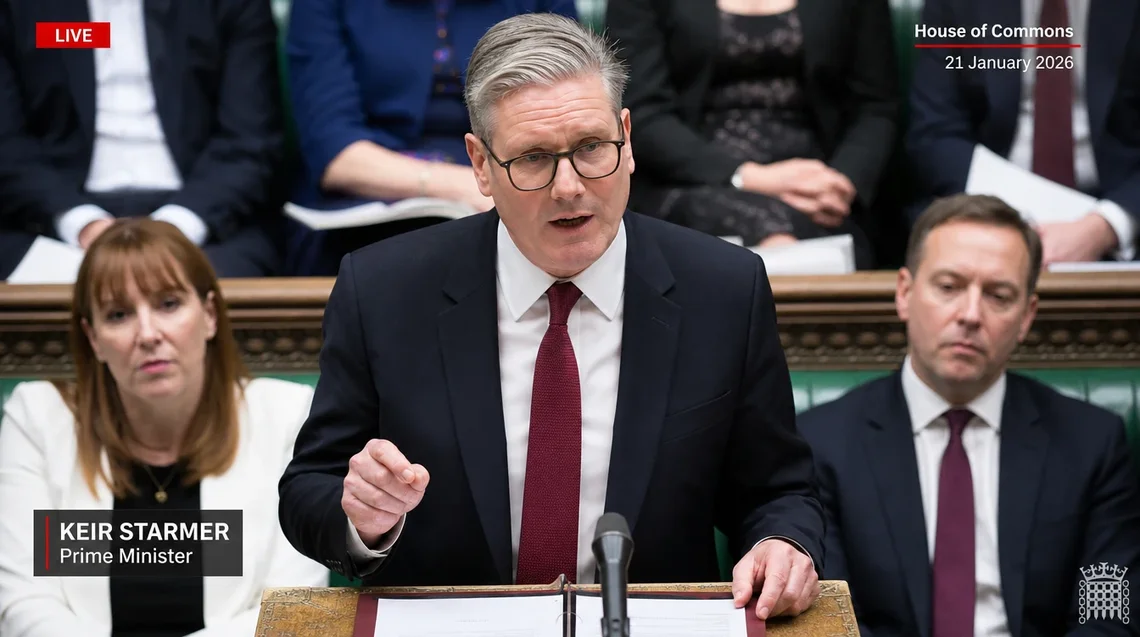
Labour Pledges NHS Overhaul as Waiting Lists Surge
Starmer government accelerates health service reform plan

The government has announced a sweeping reform programme for the National Health Service as official figures show NHS England waiting lists remain at historically elevated levels, with more than 7.5 million people currently waiting for elective treatment. Prime Minister Keir Starmer and Health Secretary Wes Streeting have pledged to cut waiting times as a central plank of the Labour government's domestic agenda, committing new funding and structural changes intended to transform how care is delivered across England.
Party Positions: Labour has pledged to deliver 40,000 extra appointments per week, fund expanded evening and weekend NHS activity, and pursue a "neighbourhood health" model shifting care away from hospitals. Conservatives argue the government has failed to produce a credible workforce plan and accuse ministers of overselling inherited NHS investment commitments. Lib Dems are calling for an emergency dental access plan and greater transparency on waiting list data, arguing the government's targets lack enforceable timelines.
The Scale of the Waiting List Crisis
NHS England data published recently confirm the total elective waiting list stands at approximately 7.54 million cases, representing one of the highest sustained backlogs in the health service's history. While the headline figure has edged marginally downward from its peak, health analysts caution that the reduction masks significant regional variation and a growing concentration of patients waiting beyond 52 weeks for treatment. The Office for National Statistics has separately flagged deteriorating health outcomes in working-age adults, a trend officials link in part to delayed access to secondary care. (Source: Office for National Statistics)
Long Waits and Demographic Pressure
Among the most acute pressure points are orthopaedics, ophthalmology, and gastroenterology, where demand has outpaced capacity for an extended period. NHS Providers, which represents trust chief executives, has warned that demographic pressures from an ageing population are compounding the backlog problem, making short-term fixes insufficient without a parallel investment in community and preventive care. Data published by NHS England indicate that patients in some regions face median waits of more than 20 weeks for routine procedures, well above the 18-week constitutional standard.
Related Articles
The Government's Reform Programme
Health Secretary Wes Streeting has framed the NHS overhaul around three strategic pillars: shifting care from hospital to community settings, embracing technology and data to improve efficiency, and reforming staff contracts to expand service hours. The Department of Health and Social Care confirmed that a ten-year plan for the NHS is being developed, with an interim framework expected to be published in the coming months. Ministers have described this as the most significant structural review of the health service in a generation.
For further context on the development of these pledges, see earlier reporting on how Starmer pledges NHS overhaul as waiting lists hit record levels, which traces the policy commitments back to their initial articulation during the general election campaign.
Neighbourhood Health and Community Care
A central element of the government's approach is the creation of what officials are calling "neighbourhood health centres," intended to bring GP services, diagnostics, mental health support, and social care coordination under one roof at a local level. Streeting has argued that diverting patients away from accident and emergency departments and reducing unnecessary hospital admissions will free capacity within the acute sector. Independent health economists have broadly welcomed the principle while cautioning that workforce availability remains the binding constraint on delivery.
Technology Investment and Digital Infrastructure
The government has separately committed to accelerating the digitisation of patient records and expanding the use of AI-assisted diagnostic tools across NHS trusts. Officials at NHS England said the rollout of a unified patient record system has the potential to reduce duplicated appointments and administrative delays. However, health technology analysts have noted that previous NHS IT programmes have a mixed track record, and several trusts are still operating on legacy systems incompatible with proposed new platforms. (Source: BBC)
Funding Commitments and Budget Context
The Treasury confirmed an additional allocation for day-to-day NHS spending as part of the autumn budget settlement, with NHS England receiving a real-terms increase in its resource budget. Ministers have pointed to the funding increase as evidence of prioritisation, though NHS Confederation officials have argued that the settlement, while welcome, does not fully account for the cost pressures from inflation, pay awards, and rising demand. The government has also pledged to ring-fence funding for the elective recovery programme, directing money specifically at trusts with the highest waiting times.
| Indicator | Figure | Source |
|---|---|---|
| Total elective waiting list (England) | ~7.54 million cases | NHS England |
| Patients waiting over 52 weeks | ~300,000+ | NHS England |
| Public satisfaction with NHS (overall) | 24% (lowest recorded) | British Social Attitudes / Ipsos |
| Voters naming NHS as top issue | ~52% | YouGov |
| Government approval on NHS handling | Net -18 | YouGov |
| Real-terms NHS budget increase (current settlement) | Approx. 3.1% per year | HM Treasury / OBR |
Opposition Response and Parliamentary Debate
Shadow Health Secretary Edward Argar has accused the government of recycling existing commitments and presenting previously announced funding as new investment. Speaking in the Commons, Argar argued that the ten-year plan lacks urgency given the immediate scale of patient harm caused by prolonged waits, calling on ministers to publish specific, time-bound targets with independent verification mechanisms. The Conservatives have also raised concerns about staff morale and the pace of consultant contract negotiations, which remained unresolved at the time of publication.
Liberal Democrat and Cross-Party Pressure
Liberal Democrat health spokesperson Helen Morgan has pushed for an emergency dental access programme, pointing to data showing millions of adults are unable to access an NHS dentist within a reasonable timeframe. The Lib Dems have tabled a series of written questions in the Commons pressing ministers on regional disparity in waiting times, a line of attack the party has deployed successfully in recent parliamentary by-elections where NHS access featured prominently as a doorstep issue. Cross-party concern has also emerged from Labour backbenchers in constituencies with the longest waits, with several MPs writing to Streeting demanding accelerated timelines. (Source: Guardian)
Public Opinion and Electoral Stakes
Polling conducted by YouGov consistently places the NHS among the top two issues for British voters, making the government's performance on health a key determinant of its political standing. The most recent Ipsos political monitor data show that while Labour retains a lead over the Conservatives on the question of which party is most trusted to run the NHS, that lead has narrowed compared with the position at the general election. Satisfaction with the health service, as measured by the British Social Attitudes survey, hit its lowest recorded level recently, a finding that independent researchers said reflects public frustration that has accumulated over several years. (Source: Ipsos)
Related analysis of how the government's approach has evolved is available in reporting on how Starmer Pledges NHS Overhaul as Waiting Lists Surge and on the funding dimension covered in depth under Labour pledges new NHS funding as waiting lists persist, both of which provide additional context on the legislative and budgetary trajectory of health policy under the current administration.
Implementation Challenges and Expert Assessment
Health policy analysts at the King's Fund and the Nuffield Trust have broadly endorsed the direction of the government's reform agenda while raising practical concerns about the pace and sequencing of change. Both organisations have published assessments noting that structural reform and short-term waiting list reduction are not always compatible objectives — reorganising services takes time and can temporarily reduce throughput during transition periods. The workforce remains the central challenge: NHS England's own modelling suggests demand for clinical staff will continue to outpace supply without sustained investment in training pipelines, international recruitment, and retention incentives.
Workforce and Retention Questions
The government's workforce plan, inherited and revised from the previous administration, sets out long-run projections for training places in medicine, nursing, and allied health professions. However, trade unions representing NHS staff have argued that unless pay and conditions are addressed sustainably, recruitment gains will be offset by departures. NHS figures show that vacancy rates in nursing and midwifery, while improved from their recent peak, remain significantly above pre-pandemic norms. Officials at the Department of Health and Social Care said workforce strategy would be central to the forthcoming ten-year plan. For further background, earlier coverage tracking the persistence of these structural challenges can be found in reporting on how Starmer pledges NHS overhaul as waiting lists persist across multiple policy cycles.
Outlook
The government faces a dual test in the months ahead: demonstrating measurable progress on waiting list reduction while building the case for longer-term structural reform that will take years to yield results. Ministers have staked significant political capital on NHS delivery, and the trajectory of waiting list data will be scrutinised closely by opposition parties, health think tanks, and a public that polling data indicate is running low on patience. Whether the combination of new funding, structural reform, and technology investment can bend the curve on waits at the pace the government has implied remains the defining domestic policy question of this parliament.