Labour pledges NHS overhaul as waiting lists hit record
Starmer government unveils £15bn funding plan

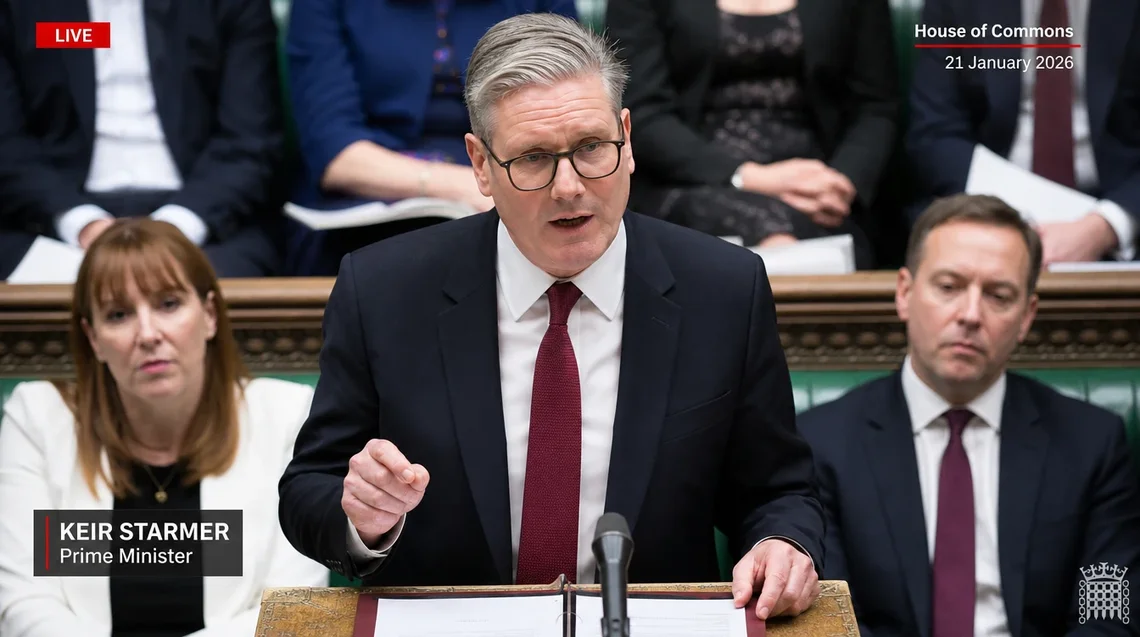
The government has announced a £15 billion funding package to overhaul the National Health Service, as official figures show NHS waiting lists in England have reached record levels, with more than 7.6 million people currently awaiting treatment. Prime Minister Sir Keir Starmer described the crisis as "the most urgent domestic challenge facing this country" and pledged that the investment would deliver measurable reductions in waiting times within the current parliament.
The announcement, made by Health Secretary Wes Streeting at a Downing Street press conference, represents the largest single injection of NHS funding in more than a decade and follows sustained pressure from opposition parties, medical professionals, and patient advocacy groups who have warned that the health service is operating at a level of demand it cannot sustainably absorb. According to the Office for National Statistics, the proportion of patients waiting longer than 18 weeks for elective treatment has risen sharply over the past three years, with winter pressures, staff shortages, and post-pandemic backlogs cited as primary drivers.
Party Positions: Labour has committed £15 billion to NHS reform, prioritising elective care, GP access, and workforce expansion, with ministers framing the plan as a structural reset rather than a short-term funding boost. Conservatives have criticised the announcement as fiscally irresponsible, arguing it risks increasing borrowing without addressing systemic inefficiencies, with shadow health secretary Edward Argar calling it "a headline figure without a credible delivery plan." Lib Dems have welcomed the scale of investment but demanded a specific ringfenced commitment to mental health services and rural GP practices, with the party's health spokesperson warning that without those protections the funding could be absorbed by acute hospital trusts at the expense of community care.
The Scale of the Crisis
Record Waiting Lists and System Pressure
NHS England data, cited by the Department of Health and Social Care, currently shows 7.6 million people on the elective waiting list, a figure that has more than doubled since the pre-pandemic period. Approximately 300,000 of those patients have been waiting longer than a year for treatment, a threshold that health economists and clinicians consider a marker of systemic failure rather than temporary pressure. According to analysis published by the Guardian, the backlog is distributed unevenly across specialties, with orthopaedics, ophthalmology, and gastroenterology among the most severely affected.
Related Articles
The BBC has reported that accident and emergency departments are also experiencing sustained strain, with four-hour target performance at its lowest recorded level. Ambulance response times for life-threatening calls have improved marginally from their recent nadir, officials said, but remain below pre-pandemic benchmarks in most NHS regions outside London.
Workforce Shortages as a Structural Driver
Senior NHS officials have identified workforce capacity as the central constraint on reducing the backlog. The NHS Long Term Workforce Plan, published previously, projected a shortfall of tens of thousands of nurses and doctors unless training pipelines were significantly expanded. According to the Office for National Statistics, vacancy rates across the NHS remain elevated, with more than 100,000 posts currently unfilled across England, Wales, and Northern Ireland combined. The government's announcement includes a commitment to fund an additional 7,500 medical school places and accelerate the training of specialist nurses in high-demand disciplines.
For broader context on the trajectory of waiting list pressures and the policy debates surrounding them, readers can refer to earlier ZenNewsUK reporting on how Starmer pledges NHS overhaul as waiting lists hit record, which traced the political response to rising figures from the moment Labour took office.
The £15 Billion Funding Plan
How the Money Will Be Allocated
The Treasury has outlined a multi-year spending commitment, with £15 billion to be deployed across a rolling five-year settlement. Of that total, officials said approximately £6 billion is designated for elective care recovery, including the expansion of surgical hubs and community diagnostic centres. A further £3.5 billion is earmarked for primary care, covering GP surgery infrastructure upgrades and the recruitment of additional pharmacists and physiotherapists into community settings. The remaining allocation covers digital transformation, mental health provision, and capital investment in hospital estate maintenance, which independent analysts at the King's Fund have previously described as critically underfunded.
The Chancellor, Rachel Reeves, confirmed that the majority of the new money represents genuine additional spending rather than a reclassification of existing budgets, though the Institute for Fiscal Studies is expected to publish its own assessment of the settlement's real-terms value in the coming days. Officials said the funding will be subject to a new outcomes framework, with NHS trusts required to demonstrate measurable waiting time reductions in exchange for accessing the full allocation.
Surgical Hubs and Diagnostic Expansion
A significant component of the delivery plan centres on the acceleration of dedicated surgical hubs — standalone facilities designed to process high volumes of lower-complexity elective procedures such as cataracts, hip replacements, and hernia repairs, insulated from the disruption caused by emergency admissions. Ministers said the number of operational surgical hubs would be increased from the current figure to more than 160 sites across England by the end of the parliament. Community diagnostic centres, which allow patients to receive scans and blood tests without attending hospital, are also due to expand substantially, officials confirmed.
This approach mirrors recommendations made by Lord Darzi in his independent review of NHS performance, commissioned by the government shortly after taking office. That review concluded that the NHS requires not simply more money but a fundamental restructuring of where and how care is delivered, with a shift away from acute hospital settings toward community-based provision.
| Metric | Current Figure | Government Target |
|---|---|---|
| Total elective waiting list (England) | 7.6 million patients | Reduce below 5 million within parliament |
| Waiting over 18 weeks | Approx. 58% of list | Return to 92% treated within 18 weeks |
| Patients waiting over 1 year | Approx. 300,000 | Eliminate by end of parliament |
| NHS vacancy rate | 100,000+ unfilled posts | Halve vacancy rate within five years |
| Total new funding commitment | £15 billion (five-year) | Subject to outcomes framework |
| Public approval of NHS handling (YouGov) | 28% satisfied | — |
(Source: NHS England, Office for National Statistics, Department of Health and Social Care, YouGov)
Political Reaction and Opposition Response
Conservative Criticism
The Conservative Party moved quickly to challenge the government's announcement, with shadow health secretary Edward Argar arguing in a statement to the Commons that the £15 billion figure obscured what he described as "a lack of structural reform and an absence of any credible productivity plan." The Conservatives have pointed to the government's record on NHS management, arguing that previous Labour administrations oversaw significant increases in NHS spending without commensurate improvements in outcomes. Argar called for the independent National Audit Office to scrutinise the funding allocation before parliamentary recess.
Internal Conservative debate over their own NHS legacy has complicated the opposition's response, however. Former health secretaries speaking to the BBC acknowledged that waiting lists had grown substantially under the previous government, a point Labour ministers have been swift to emphasise at every available opportunity during Commons exchanges.
Liberal Democrat and Cross-Party Reaction
The Liberal Democrats, who have made NHS access a central campaign issue in their target constituencies — particularly in rural England and the South West — welcomed the headline investment but stopped short of unconditional endorsement. The party's health spokesperson said the plan "fails rural communities unless mental health and GP funding is explicitly ringfenced and protected from reallocation by NHS England." Polling by Ipsos conducted recently found that NHS performance ranks as the top concern among voters in Liberal Democrat-held and target seats, above the cost of living and housing. (Source: Ipsos)
The Scottish National Party, whose MPs do not vote on English health matters at Westminster, nonetheless used the announcement to press the government on Barnett consequential funding for Scotland, with SNP health spokesperson Dave Doogan calling for transparency on the precise consequential sums flowing to Holyrood.
Public Opinion and Electoral Context
YouGov polling published recently shows that only 28 per cent of the British public are satisfied with how the NHS is currently performing, the lowest figure recorded by the pollster in its series on health service satisfaction. A separate Ipsos survey found that 67 per cent of respondents believe the NHS is in crisis, with the proportion holding that view having increased markedly since the start of the current parliament. (Source: YouGov, Ipsos)
For Labour, the political stakes of the NHS pledge could not be higher. The party won its historic parliamentary majority in part on a platform of public service renewal, with NHS recovery a centrepiece commitment. Failure to demonstrate visible progress on waiting lists before the next general election risks significant electoral damage, particularly in the Red Wall seats the party recaptured and in suburban English constituencies where NHS performance is a dominant voter concern. Analysis by the Guardian's political desk has noted that health policy is now the single largest driver of voter intention volatility among the demographic groups Labour most needs to retain. (Source: Guardian)
Readers seeking further context on the evolution of Labour's NHS strategy since taking office can consult ZenNewsUK's detailed coverage of how Starmer pledges NHS overhaul as waiting lists grow, which examined the internal government debates over pace and scope of reform in the first months after the election.
Implementation Challenges and Expert Assessment
Delivery Risk and NHS Capacity to Absorb Funding
Health policy analysts and former NHS chief executives have consistently cautioned that large funding injections carry significant delivery risk if the underlying workforce and management infrastructure is not in place to utilise the money effectively. The King's Fund, in a briefing published recently, warned that NHS trusts are currently operating under such financial and operational pressure that absorbing new capital investment while simultaneously managing existing demand requires exceptional organisational capacity. The think-tank called for a dedicated implementation unit within the Department of Health with direct accountability to Parliament.
Officials at NHS England said the new money would be governed through integrated care board structures, with regional accountability built into the disbursement model. Critics, including some Labour-aligned health academics, have questioned whether integrated care boards — still a relatively new organisational tier — have the management depth to function as effective spending authorities at the scale envisaged.
International Comparisons and Structural Reform
Ministers have pointed to healthcare systems in comparable economies — including Germany, France, and the Netherlands — as evidence that moving toward a more mixed model of elective provision can deliver faster throughput without compromising universal access principles. Health Secretary Streeting has previously argued that the NHS cannot solve its productivity challenge through funding alone and has signalled openness to expanding the role of independent sector providers in delivering NHS-funded treatment, a position that has generated tension with trade unions and sections of the parliamentary Labour Party.
The government has insisted that any use of independent sector capacity will remain fully within the NHS funding model, with no patient charges introduced. Officials said negotiations with independent providers on framework agreements are ongoing and that further details will be published in a forthcoming NHS reform white paper expected before the summer recess.
ZenNewsUK's earlier reporting provides additional background on the persistent challenges that have defined this policy area, including analysis published under the headline Starmer pledges NHS overhaul as waiting lists persist, which examined why previous reform commitments failed to translate into sustained waiting list reductions.
What Comes Next
The government has committed to publishing a full NHS reform white paper within weeks, which officials said will set out the legislative and regulatory changes required to deliver the five-year plan. A Commons debate on NHS funding has been scheduled, and the Health and Social Care Select Committee has announced it will hold an emergency evidence session with senior NHS England officials and independent experts to scrutinise the spending commitments before the money is formally allocated through supplementary estimates.
For patients currently on the waiting list, officials said the most immediate impact would be felt through an accelerated programme of evening and weekend surgical sessions at surgical hubs, with the Health Secretary pledging that 2 million additional appointments would be delivered within the first twelve months of the plan. Whether that commitment is met will become one of the defining political tests of the Starmer government's first term and a benchmark against which NHS reform promises will be measured at the next general election.
Further reporting on the legislative and political dimensions of Labour's health agenda is available in ZenNewsUK's continuing series, including the foundational overview published as Labour Pledges NHS Overhaul as Waiting Lists Surge, which details the policy architecture underpinning the government's approach to health service transformation.