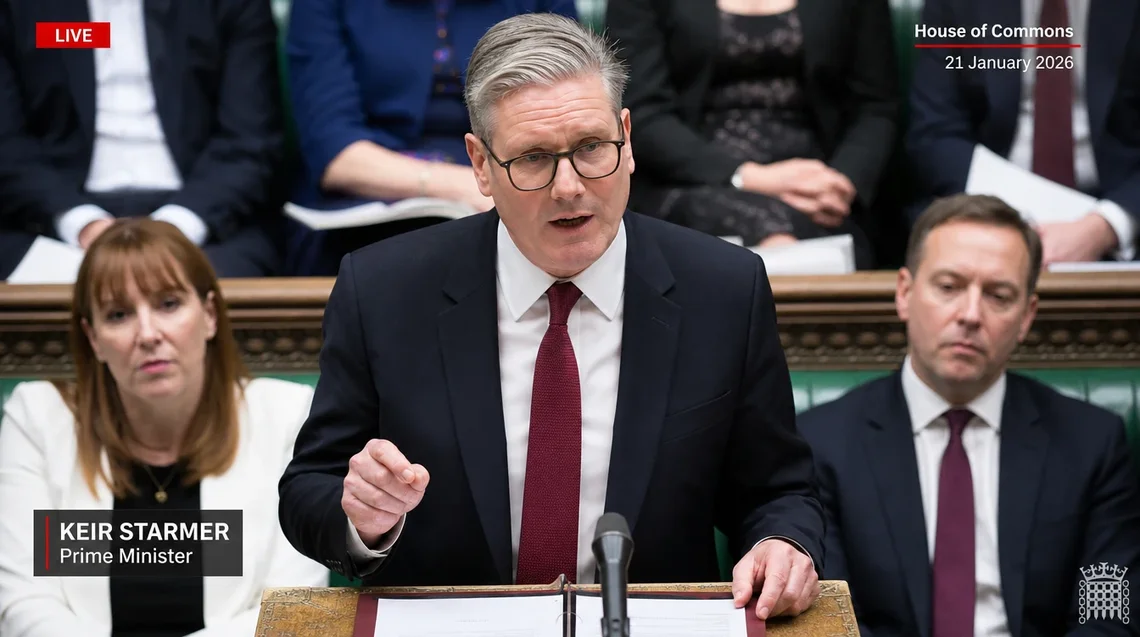
Labour Pledges NHS Reform as Waiting Lists Remain Critical
Starmer government outlines funding strategy amid healthcare crisis

The Keir Starmer government has set out an ambitious strategy to overhaul National Health Service funding and reduce England's record-breaking waiting lists, with ministers insisting that structural reform — not merely additional spending — will define Labour's healthcare legacy. NHS England data currently show more than 7.5 million people waiting for elective treatment, a figure that has become the most politically charged statistic in British public life and the measure against which the Starmer administration will ultimately be judged.
Health Secretary Wes Streeting has placed himself at the centre of the reform drive, arguing publicly that the NHS must change the way it delivers care rather than simply receiving repeated cash injections. The approach has drawn both praise from reformers and scepticism from trade unions, NHS staff organisations, and opposition parties who question whether the government's funding commitments match the scale of the crisis it inherited.
Party Positions: Labour has committed to cutting NHS waiting times as a central first-term pledge, backing both increased capital investment and structural reform including expanded use of independent sector capacity. Conservatives argue that Labour has failed to outline a credible productivity plan and that spending pledges lack detail on delivery mechanisms. Lib Dems have called for an emergency funding package specifically targeting mental health waiting lists and GP access, accusing both larger parties of neglecting community and primary care.
The Scale of the Crisis
Any serious assessment of the NHS waiting list challenge must begin with the raw numbers. NHS England figures show elective waiting lists remain at historically elevated levels, with millions of patients — many of them in pain or facing deteriorating conditions — waiting months or years for procedures ranging from hip replacements to cataract surgery.
Related Articles
What the Data Show
According to NHS England published statistics, approximately one in eight people in England are currently on a waiting list for hospital treatment. The 18-week referral-to-treatment standard, which requires that patients begin treatment within 18 weeks of referral, is currently being met for fewer than 60 per cent of patients in many specialties — a significant departure from the target of 92 per cent. Cancer treatment waiting times have also come under sustained pressure, with NHS data indicating that the 62-day urgent referral-to-treatment target is consistently being missed. (Source: NHS England)
The Office for National Statistics has separately documented the human cost of the waiting list crisis, with data linking prolonged waiting times to measurable deteriorations in patient health outcomes, increased emergency admissions, and significant economic costs through lost working days. (Source: Office for National Statistics)
Regional Disparities
The crisis is not uniformly distributed. NHS Integrated Care Boards in the Midlands, the North East, and parts of London report disproportionately long waits compared with more affluent regions in the South East, a disparity that has reinforced long-standing concerns about healthcare inequity. The government has said it intends to address regional imbalances through the reformed NHS England structure, though critics argue that pledges on levelling up healthcare access have been made and broken by successive governments without meaningful change.
Labour's Funding Strategy
The Starmer government's approach rests on several pillars: increased capital investment in NHS infrastructure, a productivity drive targeting the use of surgical hubs and diagnostic centres, an expanded role for the independent sector in clearing the backlog, and workforce reforms aimed at retaining experienced clinicians.
Surgical Hubs and Diagnostic Centres
One of the most concrete elements of the government's plan involves accelerating the rollout of dedicated surgical hubs — facilities designed to concentrate high-volume, low-complexity procedures in environments separated from emergency pathways. Officials said the hubs model, piloted under the previous administration, had demonstrated meaningful improvements in throughput when properly resourced, and that Labour intended to significantly expand their footprint across England. Alongside this, investment in Community Diagnostic Centres is intended to reduce the bottleneck between GP referral and specialist assessment, with ministers arguing that faster diagnosis is as important as faster treatment. For more detail on the government's structural proposals, see Labour targets NHS waiting lists in major reform push.
Independent Sector Capacity
Perhaps the most politically contentious element of Labour's strategy is the continued and expanded use of independent sector providers to treat NHS-funded patients. Streeting has argued that the ideological resistance to using private hospitals to clear backlogs is a luxury the NHS cannot afford given current waiting list levels. However, this position has placed the Health Secretary in direct conflict with elements of his own party and with trade unions representing NHS workers, who argue that redirecting NHS funding to the private sector undermines the long-term financial sustainability of the public health system. The debate reflects a broader tension within the Labour movement about the boundaries of public service delivery, one that shows no sign of resolution in the near term.
Workforce and Retention
No waiting list strategy can succeed without addressing the severe workforce shortages that constrain NHS capacity. The government has acknowledged that staff vacancies — currently running at tens of thousands across nursing, medical, and allied health professions — represent a structural constraint that limits the impact of any capital investment programme.
Staffing Plans Under Scrutiny
A long-term workforce plan published under the previous government set out projections for training and recruitment, but critics including NHS Providers and the King's Fund have noted that the plan was not fully funded and that retention remains as serious a problem as recruitment. Officials within the Department of Health and Social Care have said the Starmer government will publish updated workforce projections, though the timeline and the degree to which these will be backed by new Treasury commitments remain subjects of internal government debate. The nursing profession in particular has voiced frustration that pay disputes and working conditions, rather than headline funding figures, are the primary drivers of attrition. (Source: BBC)
For the latest reporting on how workforce pressures intersect with the waiting list challenge, readers can follow coverage in our series on Labour pledges new NHS funding as waiting lists persist.
Political Pressure and Public Opinion
The political stakes of NHS performance are acute for a Labour government that ran explicitly on a platform of NHS rescue after fourteen years of Conservative administration. Polling data consistently show the NHS as the top issue for British voters, and the gap between public expectation and delivery has historically determined the fate of governing parties at general elections.
What Polling Tells Us
YouGov polling conducted recently found that a majority of respondents rated NHS waiting times as either the most important or one of the most important issues facing the country, with satisfaction with NHS services at its lowest recorded level in decades. Ipsos research has similarly documented declining public confidence in the government's ability to improve NHS performance within a single parliamentary term, reflecting a scepticism born of repeated failed reform cycles. (Source: YouGov; Source: Ipsos) The government's strategists are acutely aware that while voters credit Labour with good intentions on the NHS, trust in delivery is a separate and harder metric to shift.
Conservative and Opposition Attacks
The Conservative opposition, led by Kemi Badenoch, has pressed the government on the absence of specific delivery milestones. Shadow Health Secretary Edward Argar has argued in the Commons that Labour's NHS pledges lack the granularity required to be meaningful, and that the government is repeating the pattern of its predecessors by announcing headline spending figures without credible implementation plans. The Liberal Democrats, meanwhile, have sought to differentiate their position by focusing on primary care and mental health — areas where waiting times have received less political attention than acute elective care but where patient impact is, according to health economists, at least as significant. The Guardian has reported on internal Liberal Democrat strategy documents suggesting the party sees NHS performance as a key battleground in the next parliamentary cycle. (Source: The Guardian)
For context on how the current political debate compares with earlier Labour reform commitments, see Starmer pledges NHS reform as waiting lists persist and the earlier analysis published as Labour pushes NHS reform as waiting lists remain elevated.
Funding Numbers and Fiscal Context
Any assessment of Labour's NHS strategy must be set against the constraints of the public finances. The Chancellor has made clear that there is limited headroom for additional unplanned expenditure, and health spending — already the largest single item in the departmental budget — faces competing demands from social care, capital infrastructure, and workforce costs.
| Metric | Current Position | Government Target | Source |
|---|---|---|---|
| Elective waiting list (England) | 7.5 million+ | Substantial reduction within parliament | NHS England |
| 18-week RTT standard compliance | Below 60% (many specialties) | Return to 92% target | NHS England |
| Public satisfaction with NHS | Lowest recorded level | Measurable improvement | Ipsos / BSA Survey |
| NHS workforce vacancies | Tens of thousands | Reduction via retention strategy | NHS England / DHSC |
| Voter priority ranking (NHS) | No. 1 issue nationally | N/A | YouGov |
| 62-day cancer referral target | Consistently missed | Return to standard compliance | NHS England |
Treasury Constraints
Officials in both the Treasury and the Department of Health have indicated that the government's preferred mechanism for funding NHS reform is a combination of efficiency savings, productivity improvements, and targeted capital investment rather than a large-scale revenue increase. This approach has been criticised by health economists and NHS trust chief executives, who argue that without a genuine uplift in baseline funding, productivity reforms alone cannot generate the savings required to close the capacity gap. The NHS Confederation has said publicly that NHS organisations need certainty over multi-year funding settlements in order to plan workforce and capital investments effectively — a position that aligns with the recommendations of multiple independent reviews over the past decade.
What Comes Next
The government has signalled that a formal NHS reform document — described by officials as a ten-year plan for the health service — will be published in the coming months, setting out both the structural changes and the funding commitments that will underpin Labour's long-term approach. The document is expected to address the relationship between NHS England and the Department of Health following recent structural changes, the role of integrated care systems in delivering local health priorities, and the government's approach to the social care crisis that sits alongside — and directly affects — NHS capacity.
Whether Labour's strategy will prove sufficient to meet public expectations remains genuinely uncertain. The structural problems of the NHS — workforce shortages, ageing infrastructure, rising demand driven by an older population, and a social care system in crisis — did not emerge overnight and will not be resolved within a single parliamentary term. What the government can credibly aim for is a demonstrable reduction in waiting times, restored public confidence in NHS responsiveness, and the establishment of a reform trajectory that outlasts any individual administration. The political and human cost of failing to deliver on those metrics is one that ministers, and the Prime Minister personally, are acutely aware of. Full coverage of how Labour's reform plans have evolved can be found in our ongoing series, including the earlier report Labour pledges NHS overhaul as waiting lists remain critical.