Starmer Faces Pressure Over NHS Waiting Lists
Labour govt seeks new funding amid backlog crisis
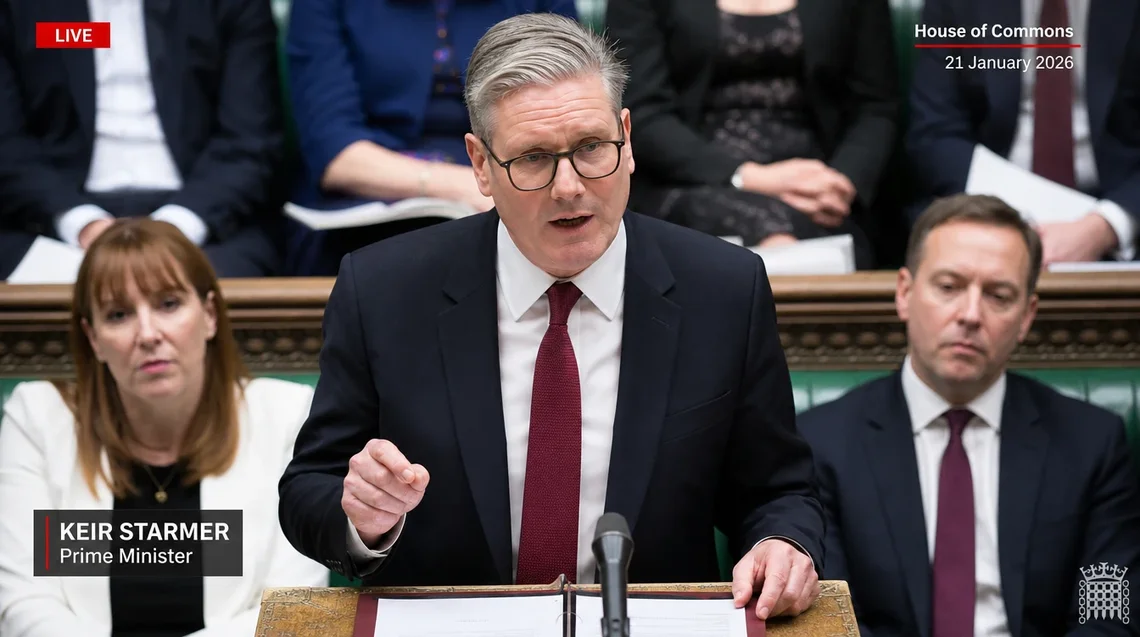
Sir Keir Starmer's government is facing mounting political pressure over NHS England's stubbornly high waiting lists, with official figures showing more than 7.5 million people currently on the waiting list for elective care — a record backlog that has become the defining domestic test of Labour's first term in office. Ministers are now actively pursuing a new funding settlement to accelerate treatment, even as critics across the political spectrum question whether the government's existing commitments are sufficient to deliver meaningful reform.
Party Positions: Labour insists it inherited the worst NHS backlog in history from the Conservatives and has committed to delivering an additional 40,000 appointments per week, backed by increased capital investment and a renewed workforce plan. Conservatives argue that Labour has failed to match its pre-election rhetoric with action, pointing to continued ambulance delays and deteriorating A&E performance as evidence that structural reform — not simply additional spending — is required. Lib Dems have called for a cross-party NHS emergency summit, insisting the waiting list crisis demands political consensus rather than partisan point-scoring, and have proposed ring-fenced funding specifically for mental health waiting times, which they describe as a "hidden emergency" within the broader backlog.
The Scale of the Crisis
The sheer size of the NHS waiting list has become politically toxic for a government that made health service renewal a centrepiece of its general election campaign. Official data published by NHS England show the total elective waiting list currently stands at approximately 7.5 million treatment pathways — a figure that, while marginally lower than its peak, remains far above the pre-pandemic baseline of around 4.4 million recorded before the health system was upended by Covid-19.
How the Backlog Broke Records
The accumulation of unmet demand did not begin under Labour. Analysis from the Office for National Statistics and NHS England's own performance data confirm that waiting times deteriorated sharply during the final years of Conservative government, as the health service struggled to recover from pandemic-era disruption compounded by industrial action from junior doctors and nurses. More than 300,000 people are currently waiting longer than 52 weeks for treatment, a number that campaigners and clinicians describe as clinically unacceptable. The government acknowledges the severity of the situation but insists meaningful progress requires sustained investment over multiple years, not a single budgetary intervention. (Source: NHS England)
Related Articles
For a deeper look at how the numbers have evolved, see our earlier reporting on how Starmer faces NHS crisis as waiting lists hit new peak, which set out the trajectory of the backlog since Labour took office.
Labour's Funding Strategy Under Scrutiny
Health Secretary Wes Streeting has been at the forefront of the government's public messaging, arguing that the NHS requires not only more money but structural transformation — shifting care out of hospitals and into community settings, expanding the role of pharmacists and paramedics, and investing in digital infrastructure that could reduce administrative bottlenecks. Streeting has repeatedly acknowledged that the public's patience is finite, telling MPs during a recent Commons session that the government "cannot ask people to wait indefinitely for reform to bed in."
Treasury Negotiations and Budget Pressures
Behind the scenes, officials said negotiations between the Department of Health and Social Care and His Majesty's Treasury have intensified, with ministers seeking to unlock additional capital funding above what was outlined in the most recent spending review. The government's fiscal headroom remains constrained, and Chancellor Rachel Reeves has been clear that any new commitments must be consistent with the government's self-imposed fiscal rules. Health economists cited in reporting by the Guardian have warned that without a sustained real-terms uplift in NHS funding, the waiting list target of halving the number of people waiting more than 18 weeks by the end of this parliament is unlikely to be met on current projections. (Source: The Guardian)
The political stakes of those negotiations are significant. Our analysis of Starmer faces pressure over NHS waiting list targets outlines the specific milestones the government has set for itself and the risks attached to missing them.
The Independent Sector Question
One area of genuine policy movement has been the government's expanded use of independent sector hospitals and clinics to provide NHS-funded treatment. Officials said agreements with private providers have helped add tens of thousands of additional appointments in areas including orthopaedics, ophthalmology and dermatology — specialties where waiting times have been particularly acute. The approach has attracted criticism from some trade unions and Labour backbenchers who argue it undermines the principle of a publicly delivered health service, though Streeting has defended it as a pragmatic measure that prioritises patients over ideology.
| Metric | Current Figure | Previous Year | Government Target |
|---|---|---|---|
| Total elective waiting list | ~7.5 million | ~7.8 million (peak) | Reduce to pre-pandemic levels |
| Waiting over 52 weeks | ~300,000 | ~400,000 | Eliminate by end of parliament |
| Waiting over 18 weeks | ~58% seen within target | ~56% within target | 92% within 18 weeks |
| A&E four-hour target | ~74% within four hours | ~73% within four hours | 78% by end of parliament |
| Public satisfaction with NHS (Ipsos) | ~24% | ~29% | No formal target set |
(Source: NHS England; Ipsos)
Public Opinion and Political Vulnerability
Polling conducted by YouGov indicates that the NHS remains the single most important issue for voters, with roughly six in ten respondents consistently ranking health as their top concern when evaluating the government's performance. Labour's lead over the Conservatives on health policy — historically one of the party's strongest electoral assets — has narrowed noticeably since the election, with YouGov data showing the gap has compressed from double digits to approximately five percentage points. (Source: YouGov)
Voter Trust and the Starmer Premium
Starmer entered Downing Street with an explicit promise that improving NHS performance would be a defining measure of Labour's success in government. That framing, strategists now privately acknowledge, created a high bar that has proven difficult to meet in a single parliamentary term. Ipsos research published recently found that while a majority of voters still believe Labour is better placed than the Conservatives to manage the NHS, fewer than a third express confidence that waiting times will improve significantly during this parliament. (Source: Ipsos)
The political context is explored in detail in our coverage of how Starmer faces pressure as NHS waiting lists swell, including internal party dynamics and the risk of backbench rebellions over health spending decisions.
Opposition Attacks and Parliamentary Pressure
The Conservatives, under Kemi Badenoch's leadership, have sought to weaponise the waiting list figures at Prime Minister's Questions and in the chamber's health debates, arguing that Labour's management of the NHS demonstrates a broader inability to translate progressive rhetoric into operational results. Shadow Health Secretary Edward Argar has called for an independent audit of the government's progress against its own waiting time pledges, accusing ministers of "governing by press release" while the backlog remains stubbornly entrenched.
Liberal Democrat Manoeuvres
The Liberal Democrats, who made significant gains in constituency seats at the last election partly on the back of NHS campaigning, have continued to apply pressure from a different angle — focusing on mental health waiting times, which they argue receive disproportionately less attention than elective physical health pathways. Party leader Sir Ed Davey has called on the government to publish a dedicated mental health recovery plan with binding targets, a proposal the government has so far declined to adopt in the form proposed. The BBC has reported that NHS mental health waiting lists for young people in particular have reached levels that senior clinicians describe as dangerous. (Source: BBC)
The broader trajectory of the government's reform agenda is set out in our reporting on how Starmer pledges NHS overhaul as waiting lists grow, which covers the structural proposals at the heart of Labour's NHS strategy.
The Road Ahead: Reform or Retreat?
Government officials have indicated that a formal NHS reform white paper is expected to be published in the coming months, setting out a ten-year vision for the health service that goes beyond waiting list targets to address workforce planning, prevention, and the integration of health and social care. Whether that document will satisfy the immediate political demand for visible improvement in patient experience remains an open question.
International Comparisons and Structural Debates
Health policy analysts have pointed to comparable healthcare systems — including those in France, Germany and Scandinavia — as evidence that universal health systems can achieve significantly lower waiting times than NHS England currently delivers, though they note that direct comparisons are complicated by differences in funding models, insurance structures, and demographic pressures. The King's Fund and the Nuffield Trust, two of the UK's leading independent health policy organisations, have both argued that the NHS requires a combination of short-term investment and long-term structural reform, warning that either in isolation will prove insufficient. (Source: Office for National Statistics)
For the most current analysis of how the government's reform agenda is holding up under political scrutiny, our investigation into Starmer's NHS Overhaul Faces New Pressure on Waiting Times examines the gap between ministerial ambition and on-the-ground delivery across NHS trusts in England.
Conclusion: A Government on Notice
The NHS waiting list crisis is not a problem of Labour's making, but it has become unambiguously Labour's problem to solve. With polling showing sustained public anxiety, opposition parties increasingly confident in their attacks, and fiscal constraints limiting the pace of investment, Starmer's government faces a genuinely difficult path. Ministers argue — with some justification — that the scale of the inherited backlog means tangible progress will take time. But in the febrile atmosphere of Westminster, where perception and momentum matter as much as raw data, the government has limited runway before the waiting list question begins to do lasting political damage. The next spending review, the forthcoming reform white paper, and the monthly NHS performance statistics will each serve as critical tests of whether Labour can convert its ambitious health rhetoric into the one thing voters are waiting for: measurably shorter waits.