Starmer Faces NHS Pressure as Labour Weighs Tax Rise
Health funding demands mount ahead of budget review
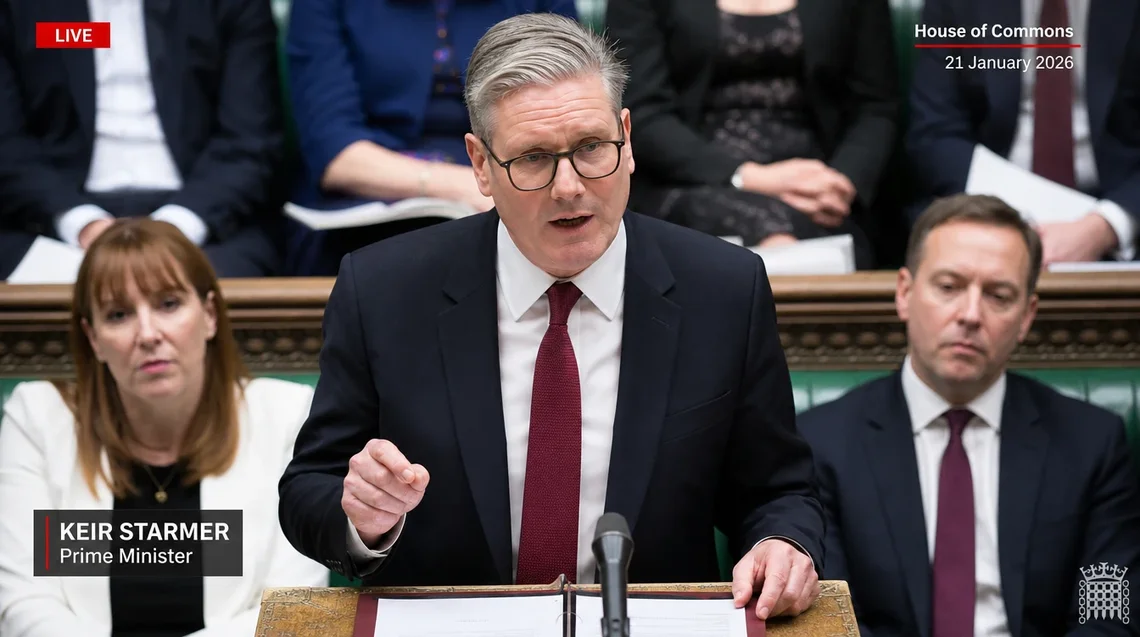
Prime Minister Sir Keir Starmer is facing intensifying pressure from within his own party and from health campaigners to commit to a significant increase in NHS funding ahead of a critical budget review, as waiting list figures remain stubbornly high and public confidence in the health service continues to erode. With Chancellor Rachel Reeves conducting a sweeping spending review, the question of whether Labour will raise taxes to fund the NHS has moved from backroom debate to the front line of British politics. The stakes could not be higher: polling consistently shows the NHS remains the single issue most likely to define Labour's electoral fortunes.
The Scale of the Funding Crisis
The NHS in England is currently managing one of the most prolonged periods of financial strain in its history, with integrated care boards warning that existing budgets are insufficient to meet rising demand. NHS England has signalled that without additional investment, targets on waiting times — a central Labour pledge — cannot be met within the promised timeframe. Officials have described the gap between current funding trajectories and service requirements as "significant and growing," according to briefings reported by the BBC and the Guardian.
Waiting Lists and the Numbers Behind the Crisis
The headline waiting list figure, tracked quarterly by NHS England and cross-referenced by the Office for National Statistics, remains in the millions, covering patients awaiting elective procedures. While there has been modest incremental movement in some categories, independent analysts argue the pace of reduction falls well short of what Labour promised during the general election campaign. For those waiting longest — in some cases more than a year for routine surgery — the political pressure on Downing Street is acute.
ZenNewsUK has previously reported in depth on this developing crisis. Readers seeking background on the trajectory of delays can follow ongoing coverage of Starmer faces pressure as NHS waiting lists swell, which charts how the numbers have evolved since Labour took office.
Related Articles
| Indicator | Current Figure / Status | Source |
|---|---|---|
| NHS England elective waiting list (approx.) | 7.5 million+ patients | NHS England / ONS |
| Public satisfaction with NHS (recent poll) | 24% satisfied — historic low | British Social Attitudes / Ipsos |
| Share of voters citing NHS as top concern | 54% | YouGov tracker (recent) |
| Labour poll lead on NHS management | +9 points over Conservatives | YouGov |
| Projected NHS funding shortfall (England) | £6.4 billion over current settlement | Health Foundation estimate |
| Parliamentary votes on NHS funding amendments (this session) | 3 defeated government amendments tabled | Hansard / UK Parliament |
Labour's Internal Divisions
Within the Parliamentary Labour Party, a bloc of backbench MPs has been pressing Treasury ministers for a clearer commitment to NHS investment ahead of the spending review. These MPs, drawn largely from constituencies with high NHS dependency and significant public sector employment, argue that vague assurances are no longer politically viable. The Guardian has reported that at least thirty Labour backbenchers have raised concerns in internal party forums, a figure that officials neither confirmed nor denied.
The Backbench Revolt Brewing in Westminster
The internal dynamics have become sufficiently volatile that senior party managers have moved to manage messaging from the centre, according to sources familiar with the parliamentary situation. For a full account of how dissent is forming inside the Labour benches, ZenNewsUK's coverage of Starmer's NHS overhaul faces growing backbench revolt provides detailed context on the individuals and coalitions involved.
Health select committee hearings have added to the pressure, with NHS England executives and health economists presenting testimony that directly challenged Treasury assumptions about the pace of efficiency savings. Officials said the government's productivity targets, while achievable in theory, were premised on capital investment that has not yet materialised.
Party Positions: Labour has pledged to bring NHS waiting lists down within a parliament through a combination of additional clinical capacity and reform, but has stopped short of committing to a specific tax-raising mechanism for NHS funding, with Chancellor Reeves emphasising fiscal discipline and a desire to avoid repeat tax announcements mid-parliament. Conservatives have attacked Labour's record as falling below election promises, arguing that structural reform rather than increased taxation is the route to NHS sustainability, and pointing to what they describe as waste within integrated care systems. Lib Dems have gone furthest in explicitly calling for a dedicated NHS and social care tax rise, proposing a one penny increase on income tax ringfenced for health spending, a policy their leader has repeated at recent Prime Minister's Questions.
The Tax Rise Question: What the Treasury Is Weighing
At the centre of the political storm is whether the Chancellor will use the upcoming budget review to announce new revenue measures directed at health and social care. The Treasury has not publicly confirmed or denied that such options are under active consideration, and officials declined to comment on the specifics of internal modelling when approached by ZenNewsUK.
Options Under Discussion
Policy analysts and former Treasury advisers, speaking to broadcasters and broadsheet correspondents, have outlined the principal options available to the government. These include an employer National Insurance adjustment, a hypothecated levy akin to the Health and Social Care Levy introduced and then reversed under the previous Conservative administration, or a restructuring of existing NHS budget settlements to front-load capital spending. Each option carries distinct political risks — a National Insurance move would test Labour's pre-election commitments, while a new levy would require careful public communication.
Health economists cited by the BBC and the Guardian have argued that without structural recapitalisation of NHS estate and technology, efficiency savings will remain insufficient. The Health Foundation, an independent research body, has published analysis suggesting the NHS requires real-terms funding growth above the current settlement to stabilise services, let alone reduce waiting lists at pace. (Source: Health Foundation)
Public Opinion and the Political Calculus
Polling data from YouGov and Ipsos consistently shows that the public is more willing to accept tax increases for NHS investment than for most other areas of public spending. A recent YouGov survey found that a majority of respondents would support a moderate tax rise if proceeds were ringfenced for the NHS, though support fell sharply when the question was framed around general government spending. (Source: YouGov)
For Labour strategists, these numbers present a double-edged argument. On one hand, there is a political mandate for bolder NHS investment. On the other, the memory of the Health and Social Care Levy — introduced by Boris Johnson and scrapped by his successors — has left both parties wary of hypothecated taxation as a communications strategy. Officials within Downing Street are said to be acutely aware that any announcement must be framed as a long-term investment rather than a crisis response.
Regional Variation in Pressure
The political pressure is not evenly distributed across England. NHS trusts in the North of England, the Midlands and parts of the South West are disproportionately affected by workforce shortages and aging estate, according to NHS England data cross-referenced with regional productivity figures from the Office for National Statistics. Labour MPs in these regions face the most direct constituency pressure, making them the most vocal internal advocates for an accelerated funding settlement. (Source: Office for National Statistics)
Reform Agenda vs. Raw Investment
The government's position, as articulated by Health Secretary Wes Streeting, has been that investment must be paired with structural reform. Streeting has repeatedly stated that simply "pouring money" into existing structures will not deliver the outcomes patients need, and he has backed a model that ties new funding to productivity commitments and a shift toward more community and preventative care.
This framing has generated its own friction, both with health unions — notably the British Medical Association and NHS unions affiliated with the TUC — and with some NHS trust executives who argue that reform capacity itself requires capital. The tension between transformation and stabilisation funding is one the government has not yet fully resolved in public.
ZenNewsUK has tracked the evolution of Streeting's reform programme in detail. Our coverage of Starmer's NHS Overhaul Faces New Pressure on Waiting Times examines how specific operational targets are bearing down on the reform agenda, while analysis of Starmer Faces Pressure Over NHS Waiting Lists addresses the political dimensions of the waiting list pledge in granular detail.
The Social Care Dimension
No serious discussion of NHS funding is complete without addressing social care, and ministers are understood to be acutely aware that without reform of the social care system — which feeds patients into and out of the acute hospital sector — NHS efficiency gains will be structurally limited. A cross-departmental working group has been meeting to examine options, officials said, though no conclusions have been published. The Lib Dems have argued that social care must be included in any tax-raising measure, and polling by Ipsos suggests the public increasingly makes no distinction between the two systems when evaluating health policy. (Source: Ipsos)
What Comes Next
The budget review, expected in the coming weeks, will be the definitive political moment. If the Chancellor opts for a tax rise — whether through National Insurance, income tax or a new levy — she will need to carry not just Parliament but a Labour Party that came to office on explicit promises of fiscal credibility. If she holds back, the pressure from the backbenches, health unions and the opposition will intensify through the winter, when NHS demand traditionally spikes and headline performance figures come under greatest scrutiny.
Officials declined to preview specific announcements, but the accumulation of evidence — from parliamentary testimony, health body analysis, and persistent polling data — suggests the government cannot indefinitely defer a substantive response. For a Labour Party that staked its electoral identity in part on being the natural custodian of the NHS, the coming weeks represent one of its most consequential tests in government. The decisions taken now will shape both policy and politics well into the parliament — and, by all available evidence, the public is watching with unusual attentiveness.