Labour pushes NHS reform as waiting lists remain elevated
Starmer government seeks parliamentary backing for healthcare overhaul

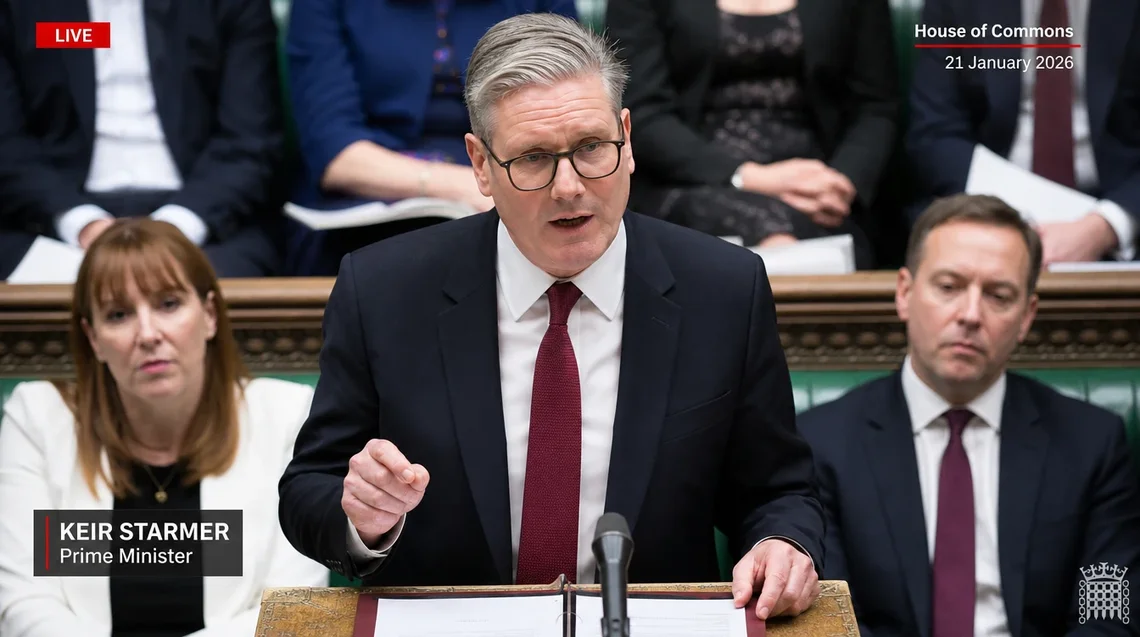
The government is pressing ahead with sweeping NHS reforms as official data show waiting lists across England remain at historically elevated levels, with ministers seeking parliamentary backing for a healthcare overhaul that has already drawn fierce opposition from Conservative benches and stirred unease among some Labour backbenchers. Prime Minister Sir Keir Starmer has placed the health service at the centre of his domestic agenda, framing the proposed changes as the most significant restructuring of NHS governance and delivery in over a decade.
Party Positions: Labour supports a comprehensive NHS reform package including investment in community diagnostic centres, expanded GP appointment availability, and a restructured hospital trusts framework — presented as essential to reducing waiting times and modernising service delivery. Conservatives oppose what they describe as a top-heavy reorganisation that risks destabilising frontline services and repeating the costly management upheavals of previous reform cycles. Lib Dems back targeted investment in primary and mental health care but have raised concerns about transparency in the reform's funding projections and called for an independent review of proposed structural changes before parliamentary approval.
The Scale of the Waiting List Challenge
Any serious legislative effort on NHS reform must begin with the numbers. Official figures maintained by NHS England show that millions of patients in England are currently waiting for elective treatment, a figure that has remained stubbornly resistant to reduction despite successive government pledges. The pressures span surgical backlog, diagnostic delays, and mental health referral queues, creating what health economists describe as a systemic rather than temporary strain on capacity.
What the Data Show
According to Office for National Statistics analysis, health-related inactivity among working-age adults has increased markedly in recent years, with long-term illness cited as a primary driver — a trend directly linked to delayed treatment and prolonged waiting periods. Separate NHS performance data indicate that the proportion of patients being seen within the standard 18-week referral-to-treatment target has remained below pre-pandemic levels, officials said. The performance gap is particularly acute in orthopaedics, ophthalmology, and general surgery, where demand has outpaced the rate at which capacity has been restored.
Related Articles
Polling conducted by Ipsos and separately by YouGov has consistently placed the NHS among the top concerns for British voters, with dissatisfaction over waiting times ranking as the primary complaint ahead of staffing levels and hospital infrastructure. (Source: Ipsos, YouGov) These findings have provided the political justification for the government's legislative timetable, with ministers arguing that electoral pressure obliges swift action rather than incremental policy adjustment.
The Government's Reform Proposals
The reform package being advanced through Parliament encompasses several distinct policy streams. Ministers have proposed consolidating some of the administrative functions currently spread across integrated care boards, directing resources more directly toward frontline diagnostic and treatment capacity. A new performance accountability framework for NHS trusts is also central to the legislation, giving ministers enhanced powers to intervene in underperforming organisations without requiring the lengthy formal processes that have historically slowed corrective action.
Community Diagnostic Centres and Workforce Strategy
A cornerstone of the government's approach involves the further rollout of community diagnostic centres — facilities designed to decongest major hospital sites by relocating routine scanning, blood testing, and screening services into accessible local settings. Health ministers have argued this model can reduce waiting times for diagnostic appointments while also freeing up hospital capacity for more complex interventions. The government has pointed to existing centre performance data as evidence the model is scalable, officials said. Critics, including several NHS trust chief executives who have spoken to industry bodies, have cautioned that the workforce required to staff expanded diagnostic capacity is not yet available at the necessary scale, raising questions about delivery timelines.
Workforce planning sits uncomfortably at the intersection of the reform debate and the ongoing tensions between the government and health unions. The British Medical Association has indicated it is monitoring the legislative proposals closely, particularly provisions that could alter junior doctor deployment arrangements. For ongoing coverage of the funding dimensions of this debate, see Labour pushes NHS reform bill amid funding debate and Labour pushes NHS reform bill amid funding row.
Parliamentary Arithmetic and the Path to Legislation
The government holds a substantial Commons majority following the general election result, meaning the reform package is unlikely to be defeated at second reading. However, the more significant challenge lies in managing a committee stage likely to produce substantial amendment activity, both from opposition parties and from Labour MPs with close ties to NHS trade unions and patient advocacy groups.
Opposition Strategy
Conservative shadow health ministers have framed their opposition primarily around cost and disruption risk, drawing on institutional memory of previous NHS reorganisations — including the Health and Social Care Act changes from the coalition era — which critics argued consumed management attention and financial resource without proportionate patient benefit. The opposition has tabled a series of amendments designed to require independent cost-benefit analysis before key provisions take effect, a procedural approach intended to slow the legislation's progress and generate political pressure on Labour MPs from marginal seats.
The Liberal Democrats, whose parliamentary strength following the election gives them influence in select committee settings, have focused their scrutiny on mental health provision and primary care access — areas they argue are underweighted in the current legislative text relative to acute hospital reform. Party spokespeople have called for binding outcome targets to be written into the legislation rather than left to secondary regulation, officials said.
| Indicator | Current Position | Source |
|---|---|---|
| Patients on elective waiting list (England) | Approximately 7.5 million (NHS England) | NHS England performance data |
| 18-week referral-to-treatment target compliance | Below pre-pandemic benchmark | NHS England / ONS |
| Voters citing NHS as top concern | Consistently above 60% in recent polling | Ipsos / YouGov |
| Government Commons majority | Substantial — reform unlikely to fall at second reading | House of Commons records |
| Community diagnostic centres operational | Over 160 sites across England | Department of Health and Social Care |
| Public satisfaction with NHS (most recent survey) | At historically low level | British Social Attitudes Survey / ONS |
Funding and Fiscal Constraints
No discussion of NHS reform is complete without confronting the resource question. The government has committed to real-terms increases in NHS funding as part of the spending review settlement, but health economists and the Health Foundation have cautioned that the sums available fall short of what would be required to simultaneously clear the waiting list backlog, invest in workforce expansion, and fund the capital programme underpinning the new diagnostic infrastructure. (Source: BBC, Guardian)
Treasury Tensions
Reports carried by the Guardian and BBC have indicated that health ministers have had to navigate significant Treasury resistance to the more ambitious capital spending components of the reform programme, with the Chancellor's officials applying pressure to sequence investment more gradually than the Department of Health had originally proposed. This fiscal constraint has material implications for the credibility of the reform timetable: if diagnostic centres cannot be built and staffed at the pace the legislation implies, the government faces the prospect of having created accountability mechanisms for targets that the system is not resourced to meet.
Senior figures within NHS England have reportedly raised these capacity concerns in internal submissions, according to reporting by the Guardian. The government has not publicly acknowledged a gap between legislative ambition and funded delivery, but independent analysts at the King's Fund and Nuffield Trust have documented the discrepancy in published assessments. (Source: Guardian)
Historical Context and Lessons From Previous Reforms
British health policy has a recurring pattern of structural reform cycles that absorb administrative energy without reliably improving patient outcomes at the pace political timetables demand. The current proposals have prompted comparisons — including from within the NHS itself — to the Lansley reforms of the coalition period, which involved a wholesale reorganisation of commissioning structures and were widely regarded as having imposed significant transition costs on the system. Ministers have been emphatic that the current package is fundamentally different in character, focused on accountability and delivery rather than structural fragmentation, officials said.
International Comparisons
Government advisers have pointed to healthcare reform models in Scandinavia and parts of the Commonwealth as evidence that publicly funded systems can achieve substantial waiting list reductions through a combination of targeted investment and reformed governance, without resorting to wholesale privatisation or insurance-based models. These international comparisons have featured in ministerial speeches and select committee testimony, though critics have noted that direct system comparisons are complicated by differences in funding levels, workforce structures, and population health profiles.
For further background on the evolution of the government's position on this issue, readers can also consult earlier coverage: Labour Pledges NHS Reform as Waiting Lists Remain Critical, Labour targets NHS waiting lists in major reform push, and Labour pledges NHS overhaul as waiting lists remain critical.
Political Stakes and the Road Ahead
For Sir Keir Starmer, the NHS reform agenda carries risks that extend beyond legislative management. Having campaigned heavily on health service renewal, the government's credibility on domestic policy is substantially bound up with demonstrable progress on waiting times. If the legislation passes but waiting lists do not fall at a pace visible to voters within the electoral cycle, the political dividend of reform will not materialise — regardless of the structural merits of the policy design.
Health select committee hearings scheduled in the coming weeks are expected to receive evidence from NHS England leadership, patient groups, and independent economists, providing the most detailed public scrutiny the proposals have yet faced. Ministers will be watching closely for any signs that the parliamentary arithmetic, comfortable at the macro level, begins to develop pressure points as the detailed provisions are examined line by line. The political and policy stakes of the NHS reform programme remain among the highest of this Parliament — and the government's ability to deliver tangible change for patients will be the measure by which the legislation is ultimately judged.