Labour targets NHS waiting lists in major reform push
Starmer government unveils five-year healthcare plan

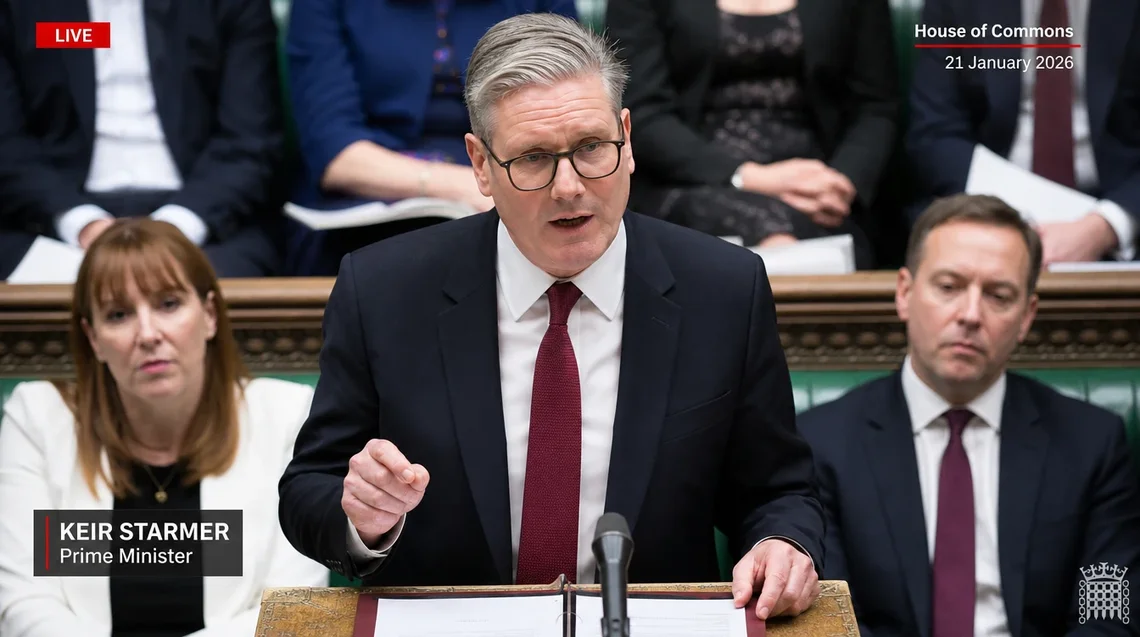
Sir Keir Starmer's government has unveiled an ambitious five-year plan to overhaul NHS waiting lists, with ministers pledging to eliminate routine waits of longer than 18 weeks for elective care as part of the most significant restructuring of health service delivery in over a decade. The announcement, made by Health Secretary Wes Streeting, sets out a series of targeted reforms combining additional clinical capacity, expanded community care, and a new productivity drive across NHS trusts in England.
With more than 7.5 million people currently on NHS waiting lists, according to NHS England data cited by the Department of Health and Social Care, the government faces intense political pressure to demonstrate measurable progress within its parliamentary term. Officials said the plan draws on recommendations from Lord Darzi's independent review of the health service and represents a formal commitment to reform rather than what ministers described as the previous administration's "sticking-plaster approach" to healthcare backlogs.
Party Positions: Labour has committed to eliminating 18-week waits for elective treatment by the end of this parliament, funding expanded evening and weekend NHS capacity and restructuring primary care referral pathways. Conservatives have criticised the plan as lacking sufficient detail on capital investment and warned that workforce shortages will undermine delivery targets, calling instead for an independent fiscal audit of NHS productivity spending. Lib Dems have broadly welcomed the waiting list focus but are pushing for specific mental health waiting time guarantees to be included in the legislation, arguing the current plan disproportionately favours physical health elective care.
The Scale of the Challenge
The NHS waiting list crisis has become the defining domestic policy battleground of the current parliament. Office for National Statistics analysis indicates that delayed or cancelled medical treatment is now among the top concerns cited by the public in wellbeing surveys, sitting alongside cost-of-living pressures and housing affordability. Health economists at The King's Fund have previously estimated that persistent backlogs cost the wider economy hundreds of millions of pounds annually in lost productivity, though the government has not formally adopted a single headline figure for that calculation.
Related Articles
What the Figures Show
NHS England's published performance data, cited in Streeting's Commons statement, show that the median waiting time for consultant-led elective treatment currently stands at approximately 14.5 weeks, though that average masks significant regional variation. In some NHS trusts in the Midlands and North East, median waits exceed 20 weeks for certain specialisms including orthopaedics, ophthalmology, and dermatology. The government's stated target is to bring all specialisms to within the 18-week statutory standard within five years, with an interim milestone at the end of the second year. Officials said independent assessments of progress will be published annually to ensure transparency.
For further background on the legislative dimension of these pledges, see earlier reporting on Labour's NHS reform bill and the ongoing funding row that preceded the current announcement.
Key Pillars of the Five-Year Plan
The reform document, running to more than 100 pages according to officials briefing Westminster correspondents, is structured around five principal commitments: increasing NHS surgical and diagnostic capacity; reforming primary care to reduce unnecessary secondary referrals; expanding community-based treatment hubs; overhauling NHS IT infrastructure to reduce administrative delay; and introducing a new performance framework tying NHS trust funding allocations more directly to waiting time outcomes.
Community Diagnostic Centres and Surgical Hubs
Central to the capacity expansion is a commitment to open additional community diagnostic centres and dedicated surgical hubs that operate independently of busy acute hospital sites. Officials said this model, piloted under the previous government but expanded significantly under the current administration, allows high-volume, low-complexity procedures to be completed more efficiently, freeing up acute beds for complex or emergency cases. The Guardian has reported that at least 16 new surgical hubs are planned for regions where waiting times are currently worst, though final site selections have not been confirmed by ministers as of this publication.
Primary Care Referral Reform
A significant element of the plan involves restructuring the referral pathway from GP surgeries to hospital specialists. The government argues that a substantial proportion of current outpatient appointments could be handled through enhanced community services or specialist GP clinics, reducing pressure on hospital waiting lists without requiring patients to enter the secondary care system at all. Officials acknowledged that delivering this shift depends on the recruitment and retention of additional GPs and advanced nurse practitioners, areas where NHS workforce data show persistent shortfalls. NHS England's own workforce reports indicate that GP numbers per capita have declined over the past several years in many parts of England, a trend the government says it intends to reverse through newly announced training bursaries and updated pay frameworks.
Political Reaction at Westminster
The announcement drew immediate scrutiny from opposition benches. Shadow Health Secretary Edward Argar told the Commons that while the broad ambition was not in dispute, the government had failed to set out how it would fund the plan beyond existing budget allocations, pointing to what he described as a gap between ministerial rhetoric and Treasury sign-off. Argar's intervention reflected wider Conservative unease about whether the government's fiscal headroom allows for the level of capital investment the plan implicitly requires.
Liberal Democrat and SNP Positions
Liberal Democrat health spokesperson Helen Morgan welcomed the 18-week target but tabled a formal amendment calling on the government to include binding mental health waiting time standards within the same legislative framework. Morgan told journalists outside the chamber that excluding mental health from headline waiting time guarantees sent the wrong signal about parity of esteem within the NHS. The SNP's Westminster health spokesperson noted that health is a devolved matter and said the Scottish Government would assess which elements of the plan might be applicable to NHS Scotland's separate planning framework.
This report builds on months of prior coverage tracking the government's legislative programme; earlier analysis of Labour's radical NHS reform plan outlined the ideological shift driving current policy direction.
Public Opinion and Polling Context
The political salience of NHS reform is underscored by consistent polling data showing health is among the top two or three priorities for voters when evaluating government performance. YouGov tracker data published earlier this year indicated that more than 70 percent of respondents rated reducing NHS waiting times as either "very important" or "fairly important" to their assessment of the government. Ipsos monthly issues polling similarly places healthcare among the dominant domestic concerns, ahead of immigration and economic management in several recent waves, though margins vary depending on question framing (Source: YouGov; Source: Ipsos).
| Polling Measure | Figure | Source |
|---|---|---|
| Voters rating NHS waiting times "very/fairly important" | 71% | YouGov tracker |
| NHS ranked as top public concern in Ipsos monthly issues index | 38% cite health as top issue | Ipsos |
| Patients currently on NHS elective waiting list (England) | 7.5 million+ | NHS England / DHSC |
| Current median elective waiting time (England) | ~14.5 weeks | NHS England performance data |
| Government's 18-week target deadline | Within 5-year parliament | DHSC reform document |
| Share of trusts currently missing 18-week standard | Majority of acute trusts | NHS England |
Workforce and Funding Questions
Analysts and opposition politicians alike have focused scrutiny on whether the plan's ambitions are matched by credible workforce and capital funding commitments. The BBC has reported that NHS England's own internal modelling suggests meeting the 18-week target across all specialisms would require a sustained increase in the number of consultants, theatre staff, and diagnostic radiographers over the coming years, categories where current vacancy rates remain elevated. The government has pointed to its workforce plan, published separately, as the vehicle for delivering those numbers, though trade unions representing NHS clinical staff have cautioned that workforce targets in recent plans have historically not been met on schedule (Source: BBC).
Treasury Constraints and Spending Review Implications
Officials were cautious about pre-empting the forthcoming spending review, declining to confirm exact capital allocations for the surgical hub and diagnostic centre expansion. Treasury sources, speaking without attribution to Westminster correspondents, indicated that the NHS settlement within the review would reflect the government's reform commitments, but that capital and revenue spending envelopes had not yet been finalised. That ambiguity has drawn criticism from health economists who argue that announcing structural reform targets without concurrent budget confirmation risks repeating errors of previous NHS long-term plans that set aspirational goals ahead of confirmed funding streams.
The funding dimension has been a persistent thread in coverage of this government's health policy since its early months in office, as documented in prior reporting on Labour's new NHS funding pledges and separately on Starmer's broader reform commitments as waiting lists have persisted.
Implementation Timeline and Accountability
The government has set out a phased implementation framework. In the first phase, covering the next 18 months, the focus is on expanding existing surgical hub capacity, piloting the reformed primary care referral model in six NHS regions, and completing the rollout of a new national digital referral system intended to replace the current patchwork of trust-level IT platforms. The second phase shifts to scaling proven models nationally and embedding the new NHS performance framework, with the third phase targeting the statutory 18-week standard being consistently met across all trusts and all specialisms by the end of the parliament.
Ministers have committed to publishing an annual progress report, audited independently by NHS England's oversight function, with results laid before Parliament. Streeting told the Commons that if interim milestones are not met, the government would trigger a formal review mechanism rather than allow underperforming trusts to continue without intervention — a signal that officials described as a departure from the historically permissive approach to trust-level variation in waiting time performance.
The five-year plan lands at a moment when public expectations of the government are high but patience is finite. With more than 7.5 million people waiting for treatment, the political arithmetic is straightforward: tangible reductions in waiting times are now central to Labour's re-election calculus, and every quarterly performance data release will be scrutinised by opposition parties, patient groups, and an electorate that has made clear, through consistent polling, that the NHS remains the single most powerful measure by which governments are ultimately judged. Whether the structural reforms announced this week prove equal to that challenge will depend, as officials and independent analysts agree, as much on workforce delivery and Treasury follow-through as on the ambition of the plan itself.